


| Rank | Name | Country | Group | Speeches | |
|---|---|---|---|---|---|
| 1 |
|
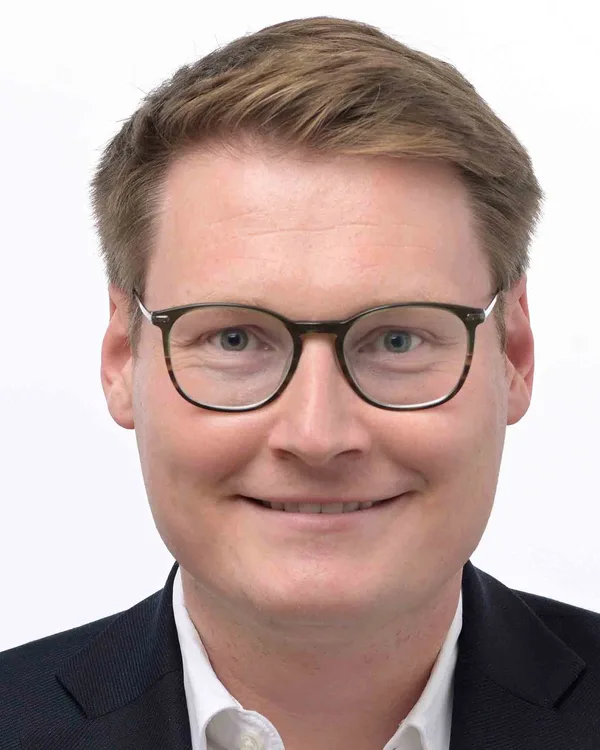
Lukas Sieper | Germany DEU | Non-attached Members (NI) | 390 |
| 2 |
|
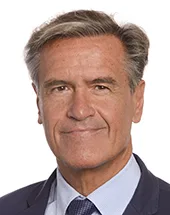
Juan Fernando López Aguilar | Spain ESP | Progressive Alliance of Socialists and Democrats (S&D) | 354 |
| 3 |
|
Sebastian Tynkkynen | Finland FIN | European Conservatives and Reformists (ECR) | 331 |
| 4 |
|
João Oliveira | Portugal PRT | The Left in the European Parliament (GUE/NGL) | 232 |
| 5 |
|
Vytenis Povilas Andriukaitis | Lithuania LTU | Progressive Alliance of Socialists and Democrats (S&D) | 227 |
All Contributions (131)
Implementation report on the EU LGBTIQ Equality Strategy 2020-2025 (debate)
Madam President, Commissioner, ladies and gentlemen! We have just received terrible news from Yemen, where 13 people have been sentenced to death for their sexuality. Fortunately, this is unimaginable in Europe. European values are tolerance and diversity. In Europe, it doesn't matter who you love. But we also see that our values, our European values, are being attacked. Liberal democracy is under threat from within and from without, including from Russia, and we see that, at the same time, the first thing that is targeted is minorities. We must oppose this. This is another reason why the European Commission's LGBTIQ strategy is an important step and the report in which we record progress is a good one together; I would like to thank the rapporteur. As a liberal negotiator, I have tried to help ensure that we actually do more. Because as long as queer teens still have a higher suicide rate, we haven't done enough. As long as there are still conversion therapies in Europe, we haven't done enough. That is why in this report we support the European Citizens' Initiative to ban conversion therapies. We need to do more to protect our citizens. Right-wingers are now trying to present themselves as particularly queer-friendly with their amendments – with their Islamophobic amendments. But if at the same time they question the rights of LGBTIQ, of rainbow families with their applications, then they actually only show their ugly face. Stop it! Help us to fight together for tolerance and democracy in Europe!
The fight against hate speech and disinformation: responsibility of social platforms within the Digital Services Act (topical debate)
Madam President, Commissioner, ladies and gentlemen! Rutgers University in the US recently presented a study showing that TikTok systematically reduces or less plays out content that does not match China’s interests – content that informs about the Uyghurs, support for Ukraine and also support for Israel. This is very worrying, because our debates, especially among young people, are shaped by TikTok. Currently, the educational institution Anne Frank warns that speed radicalization of young people to anti-Semitism is taking place on TikTok. That's really worrying. Let's use the rules that the Digital Services Act gives us in this context! Let's actually create transparency about whether TikTok systematically reduces this content or also contributes to radicalization! We have these possibilities. Commissioner, I ask you that, as soon as the DSA comes into force, we also apply these rules now, especially with TikTok.
Conclusions of the European Council meetings, in particular the special European Council meeting of 1 February 2024 (debate)
Madam President, ladies and gentlemen, Now we've all celebrated: the great unity on the summit and so on and so forth. But we have to say: Why did this special summit take place? This was only because the summit was blocked by Viktor Orbán in December. That's why we actually have to draw conclusions and think: What happened? How do we prevent this Putin disciple and demolitionist from further blocking our European future in the future? We saw two summits. One in December: We tried to smear him with 10 billion euros and sold off the rule of law like in a winter sale. And then we saw another summit where the heads of state and government remained clear, drew a clear line, even speculated on what to do with the Article 7 procedure. That is, Viktor Orbán only understands the language of power, and we must speak it more clearly in the future. When will the Council, when will the Heads of State and Government finally understand who they are dealing with? You have to draw the conclusion and learn now that this is the way we need to deal with Viktor Orbán in the future. Otherwise, we will see again and again that he is blocking the European future.
Conclusions of the European Council meeting of 14-15 December 2023 and preparation of the Special European Council meeting of 1 February 2024 - Situation in Hungary and frozen EU funds (joint debate - European Council meetings)
Mr President! Mrs. von der Leyen, you've been blackmailed. They have released 10 billion euros for Viktor Orbán once going to the toilet and thus the accession talks with Ukraine could begin. However, he can block every further step and immediately did so again with the funds. So they have achieved little for Ukraine. Instead, however, they have squandered the rule of law in the European Union as in a winter sale. They are to blame for the fact that 10 billion euros are now further seeping into corrupt pockets in Hungary. They say that this is all constitutional and necessary. But you know that's nonsense. The opposite is the case! As soon as the reforms were decided on paper, you released the money in an urgent procedure so that you could appease Viktor Orbán before the summit. This appeasement does not work, but it damages the rule of law in Europe. You do not live up to your role as guardian of the treaties. But you support Putin's disciple Orbán. We will take your decision to the European Court of Justice. And if you continue to release money to Hungary without appropriate reforms, we will table a motion of censure in this Parliament. Finish your zigzag course! First, we had to force you to apply the rule of law mechanism. Then you presented yourself as a great fighter for the rule of law, and in the end you release everything again. Fight with us for the rule of law. Otherwise, make it clear: You don't care about values, you don't care about rules, you don't care about the rule of law in Europe!
Amendments to the Markets in Financial Instruments Directive (MiFID II) - Amendments to the Markets in Financial Instruments Regulation (MiFIR) (joint debate - Markets in financial instruments regulations)
Madam President, ladies and gentlemen, I'm really pissed off tonight because we're attacking stock culture in Europe right now. Especially since the pandemic, young people in particular have invested, with small amounts: the student or trainee who puts something aside and invests, simply via neobrokers on the stock market – and very, very cheaply. Instead of doing more now to strengthen the stock culture even more, we are now putting a stop to the prohibition of payment for order flow. Instead of a blanket ban now, we could work with transparency to show customers the advantages and disadvantages – instead of simply banning everything as it is here. This will not make our companies, the neobrokers, more innovative. It makes sure that we put the stop there. It will also cause the stock culture in Europe to collapse. This is exactly the Europe we don't need. It is an anti-future, it is a bureaucratizing Europe. It is not a Europe that gives young people and stock savers a chance.
Planned dissolution of key anti-corruption structures in Slovakia and its implications on the Rule of Law (continuation of debate)
The question does nothing at all. First, I was already there on the last and visited Slovakia on site. But the question just shows again that here a Whataboutism takes place by you, by the rights, that you actually do not want to deal with the fundamental question, that you do not want to deal with the fundamental questions, where the rule of law, where corruption control in Europe still works. And unfortunately I have to say: Those people there who want to trample on the rule of law and European values and then are so cheeky to come up with whataboutisms – Ms von der Leyen has still given them the greatest gift today. It's a shame!
Planned dissolution of key anti-corruption structures in Slovakia and its implications on the Rule of Law (continuation of debate)
Madam President, ladies and gentlemen, The events in Slovakia are indeed dramatic and the Commission has correctly described that it is very concerned. But I have to be honest: If I experience this debate here tonight, at the same time, really at the same time, as the same Commission, which is now very concerned about the rule of law there, at the same time releases 10 billion euros in blocked funds to Hungary, then it must be said: What are we even debating here? Robert Fico is a mini-Orbán. And tonight, the European Commission sent him the loud and clear signal: It doesn't matter in the end. Even if you apply the rule of law mechanism, even if you take all the measures, you only need to veto the EU Commission to pressure and blackmail it and it will release the money. As a result, the credibility of the European Commission on rule of law issues is dying tonight. You are personally responsible for this, Mrs von der Leyen, and this great responsibility that you bear for the destruction of the core values of the European Union, which we will chalk up to you. I think you should step down. (The speaker agreed to answer a question on the blue card procedure.)
One year after Morocco and QatarGate – stocktaking of measures to strengthen transparency and accountability in the European institutions (debate)
Mr President, ladies and gentlemen. One year after Qatargate – you can now read more information, you just have to look at Politico. It is written in great detail: an Excel list, where all cases are there, where you really wanted to influence the institution, then the nice SMS exchanges, where Mrs Kaili tried to offer the President of Parliament tickets for the World Cup in Qatar, which Mrs Metsola, by the way, refused – so many nice details are still there. And now we are all discussing here, suggesting again what we have done in terms of measures, but the central point is: A year later, we still have no charges in this case. However, we have a conflict of interest of the chief investigator of the Belgian authorities, and this clumsiness of the Belgian corruption investigations extends the investigation incredibly long. I say here quite clearly: The more mistakes the Belgian authorities make, the more our institutions are actually damaged. The scorners of democracy in Europe are rubbing their hands – especially in Hungary – to whom we are now giving an additional billions, which will once again end up in corrupt pockets. I am always in favour of more transparency and anti-corruption rules, but anyone who takes 100,000 euros in cash will not enter them into a transparency register in the future. We must regulate this with criminal law, and we must take a clear approach to this.
Fighting disinformation and dissemination of illegal content in the context of the Digital Services Act and in times of conflict (debate)
Mr President, Commissioner, ladies and gentlemen! Of course, we must protect our democracy against disinformation, lies, hatred and hate speech. Freedom of speech is just as important to our democracy. And exactly this balancing act – what is hate speech, what is hate, what is wrong, what is an opinion that I do not like? – it is very, very narrow in a democracy. This is precisely why the Digital Services Act should be a liberal regulatory framework. We didn't want to pretend exactly what was wrong, we should say: Illegal content is deleted, but otherwise we set processes for how we want to moderate it better. I fear now that in this crisis, with very rapid measures, we run the risk of being too harsh. To be honest, I find it a bit worrisome that we criticise Twitter – or X, as it is now called – but that the Commission is now communicating exactly how it is taking action against the platforms. Honestly, that doesn't quite go together. Let's make sure that we protect democracy, freedom of expression, that we take action against fake news, but let's also be careful with it. Let's take action, let's take action with evidence. We should enforce that. And this is more difficult than the quick message, the quick opinion in such a crisis.
Presentation of the Court of Auditors' annual report 2022 (debate)
Mr President, Commissioner, Mr President of the European Court of Auditors! Thank you for this report, which shows that we still have a lot to do when it comes to controlling EU funds. And of course, we are all a bit surprised and horrified to see how the error rate has increased. But if we're honest, we can't be surprised. We are now at the end of the cohesion funding period and we are desperately trying to spend the money in those Member States that still have a lot of money. And of course, the error rates go up, which is a matter of course. And as parliamentarians, we also have to ask ourselves how we actually want to fight this. There is more than enough money, there is no retrieval, there are the huge absorption problems – and at the same time we now have a budget with more budget commitments than ever before, with more debt than ever before. In other words, we have the pressing problems that we discussed yesterday in budgetary policy: On the one hand, we need money very, very urgently in some areas – where interest rates are now pushing us down and where we need more for migration and for Ukraine. And in other areas, the money lies around and is spent with desperate means to then produce mistakes. That is the whole of the European budgetary policy set out here. We all know that in Parliament, in the Commission, and the Court of Auditors says so. We just need to change it. And we'd have to go and say, Cohesion policy, as it is, has failed. We need to set them up differently, we need to focus them more on future priorities.
General budget of the European Union for the financial year 2024 - all sections (debate)
Mr President, ladies and gentlemen. The tightness of the budget and the interest burden are actually forcing us to set even stronger priorities. We have to ask ourselves where we really want to invest in the budget, and we also have to look at what funds do not flow out, such as cohesion funds. Again, we are still not prepared to set enough priorities - not in the Council, not in the Member States, but also in the European Parliament, we need to pay even more attention to how we actually get along with the funds made available to us. But I also want to say something about the current events here. We were all shocked by the images from Israel, and I would have liked the news of Monday that the Commission had given to the world to become a reality. That we really would have said: We stop the money first and then make sure that really no cent can flow towards Hamas. But that's exactly what we're doing, unfortunately, far too little now. Of course, there must be humanitarian aid again. But today we have to say: Never again may even one cent indirectly get close to these terrorists, never again may only one cent flow into anti-Semitic textbooks. Never again is now – this must also be the case in the European budget!
The spread of ‘anti-LGBTIQ’ propaganda bills by populist parties and governments in Europe (debate)
I will make it short, Mr President. The colleague did not answer the first question put by the colleague. You have pointed out that there is a difference between heterosexual and homosexual relationships, because a child can emerge from heterosexual relationships. Do you want to take rights away from heterosexual couples who can't have children biologically? That would be the consequence of your argument. How do you see that then?
The spread of ‘anti-LGBTIQ’ propaganda bills by populist parties and governments in Europe (debate)
Mr President, Commissioner! Netflix currently has one of its most popular series, Heartstopper. Nick and Charlie, two teenagers in high school, fall in love, a series that is really great. I highly recommend them to everyone in the house, especially the right. You'll learn a lot about tolerance when you watch the series. But I can assure you one thing: You don't get gay from watching Netflix. Nevertheless, there are countries in Europe that want to ban series, films, books, anything where homosexual characters occur, anything that is so-called LGBT propaganda and dangerous for children and adolescents. But what actually happens when a heterosexual adolescent, for example, Heartstopper Is it looking? He may be a little more tolerant, able to put himself in someone else's shoes. A gay teenager will feel taken care of, who sees someone who realizes that he is not alone. And this is urgently needed. Even today, young people in Europe are ten times more likely to commit suicide if they are not heterosexual. Therefore, if you really want to protect children - as you claim - you would have to invest more in education, in tolerance, in an environment in which everyone can feel comfortable. They don't want to protect children. I have not heard a single argument in the debate that is really about protecting children. It's about your propaganda, it's about making your mood at the expense of minorities, and that hasn't lost anything in Europe.
Interim report on the proposal for a mid-term revision of the Multiannual Financial Framework 2021-2027 (A9-0273/2023 - Jan Olbrycht, Margarida Marques) (vote)
Madam President, ladies and gentlemen, This morning, reports have reached us that the Commission is considering releasing parts of the money that has been frozen vis-à-vis the government of Hungary in exchange for support for a stronger EU budget. I think we need to make it clear today: Just as a pro-European group, we fought for this rule of law mechanism. It is a success of this European Parliament. We make it clear: There must be no dirty deal with Orbán, Mrs. von der Leyen! (Applause) No money can be released until all criteria are met and we have a stronger rule of law in Hungary again! That is why I am reading the corresponding oral amendment: Insists that changes to the MFF shall have no negative impact on the protection of the EU budget against breaches of the rule of law. Reiterates that funds that are currently withheld shall not be released to Member States as long as the conditions for freeing the funds have not fully been met. Please support this amendment.
Interim report on the proposal for a mid-term revision of the Multiannual Financial Framework 2021-2027 (debate)
Madam President, Commissioner! Of course, this report sets the right priorities. We need more money, especially in supporting Ukraine and also for other priorities of Parliament, and of course we have to pay the interest for NextGenerationEU, which has risen. But it will be difficult to get more money for the EU budget in the Member States, because there too, these financial constraints are there, there too, more must be spent on interest. That's why we should take a look: We have packed 750 billion euros on top with NextGenerationEU, and already now we see that the money is flowing badly; We see that cohesion funds are flowing even worse. We should be so courageous as to set new priorities here and reallocate money there that is not needed there. At the same time, however, we are also receiving new media reports today that the Commission is planning to release parts of the money to Hungary in order to get the Hungarian support to raise more money for the EU budget. I want to say quite clearly for Parliament: If you go in that direction, Mrs von der Leyen, you will have the bitter resistance of the European Parliament. It can't be that we buy the approval of more money with a dirty deal with Orbán. There must be no more rebates on the rule of law in Europe.
2023 Annual Rule of law report (debate)
Madam President, Commissioner, ladies and gentlemen! The Rule of Law Report is an important step, and it is again a good report that presents the situation in the Member States, which could make it even clearer. But we are looking closely at the rule of law in all Member States. This is always the great reproach of Poland and Hungary, of the right: Oh, it's always just looking at individual countries. No, it looks at each individual Member State with this rule of law report. And then today we saw the next big argument: Ah, we are now looking at all the Member States, and we can no longer use that as an argument. So now: Oh, it wasn't even looked at Brussels in the Qatargate scandal and so on and so forth. I can reassure everyone, enough has been discussed here, and this has also been elucidated accordingly. And by the way, the difference is that corruption here in the European Parliament leads to investigations taking place. This is the difference between Hungary and Poland, where this is not the case. But we have to look now: What do we do with the report? What happens to the concrete recommendations and where is this discussed? And here I ask the Council: Should the rule of law report be passed through Hungary next year or then through Poland? What follows would really be like turning the buck into a gardener. It can't be. We need a consequence, including on the rule of law in the Council.
Investigation of the use of Pegasus and equivalent surveillance spyware - Investigation of the use of Pegasus and equivalent surveillance spyware (draft recommendation) (debate)
Mr President, ladies and gentlemen. What we have on our mobile phone, what we look at, what data we have, what private messages we write, that's very, very personal data. What a creepy thought it is when this phone is hacked by a spyware like Pegasus and everything can be read at any time, because you have the phone with you at any time! But that is exactly what has happened to opposition politicians and journalists in Europe. This surveillance scandal is a disgrace to Europe, and we in the Committee of Inquiry have worked hard in recent months to clarify this. A lot of work, a lot of information, a lot of pages of committee of inquiry, little no, actually no cooperation with the Member States in this case. It was really unbearable. It must be clear: We finally need – and these are our recommendations – clear rules for spyware in Europe, a moratorium. That must finally be the consequence. We call on the Member States and the Commission to take action here at last.
Electronic evidence in criminal proceedings: legal representatives directive - Electronic evidence regulation: European production and preservation orders for electronic evidence in criminal matters (debate)
Mr President, Commissioner, ladies and gentlemen! First of all, I would like to thank the rapporteur and also the shadow rapporteurs for the really tough negotiations in this case over many years. With this law, we are setting new standards in the fight against cross-border crime. I would like to thank the Member States in the Council and also the other political groups for responding to my calls for greater protection of fundamental rights in these long and tough negotiations. E-evidenceIn concrete terms, this means better European cooperation, faster investigations. This is what it is about, but – and this is the difference – it is about: e-evidence Always a very specific suspicion. There is always a judicial authority that is investigating and that can now investigate more quickly in Europe. But it is not about mass surveillance without cause, as is planned in another proposal of the European Commission, namely the so-called chat control. It's about checking our communication. Here, too, we should finally focus on the goals. We are also concerned with protecting children, protecting fundamental rights and putting criminals behind bars. All this cannot be done by chat control, and therefore it has to be withdrawn and completely reworked. It must be clear: As in the case of e-evidence only surveillance of real suspects may take place, not general mass surveillance. Encryption must be protected and anonymous internet use must be preserved. Network locking and client-side scanning must not become mandatory. Very, very important is: European cooperation, better equipment of the authorities, that is how we actually put the criminals behind bars, no more mass surveillance in Europe.
Threat to democracy and the rule of law in Poland, in particular through the creation of an investigative committee (debate)
Mr President, ladies and gentlemen. In the past few days I have read The Moscow Connection, a very worth reading book about Russian influence, especially in Germany on the SPD. And when I hear my colleague Daly's understanding of Putin here, I sometimes wonder what influence is behind it. Yes, we have to clarify this, we have to investigate what Russian influence there was. But this commission in Poland is not a committee of inquiry. It's not about education, it's about a mock court. For years, opposition leader Tusk was portrayed by the PiS as a Nazi, now he is said to have been a Russian collaborator. So you have to decide in your accusations. The absurdity is actually obvious. It is also about other candidates. It must be clear: Any attempt by the Polish ruling parties to use this commission to exclude candidates from the elections without due process will cast doubt on the Polish election results. And we cannot allow this danger to our European democracy.
Breaches of the Rule of law and fundamental rights in Hungary and frozen EU funds (debate)
Mr President, ladies and gentlemen, Commissioners, Today is Viktor Orbán's birthday, but we don't give him a gift of money. The Commissioners have just made it very clear: The corresponding milestones have not been reached, and therefore no money can flow yet. But we have also pointed out in our resolution – and frankly I am appalled that we as Parliament must point out, and not the institution itself, the Council – that a Member State subject to Article 7 proceedings is subject to a rule of law procedure in which the funds are withheld, that this country is not fit to actually take over the Council presidency next year. In fact, it would be like choosing the schoolyard racket as the school director. It can't be. Of course, the Council must find a solution here. It may also be the case, for example, that the rule of law issues are taken out of the Council Presidency. This is legally possible, this is the minimum that can actually be expected. Because if Viktor Orbán were to negotiate fundamental rights with us – I do not want to negotiate with this autocrat – if Viktor Orbán were to negotiate fundamental rights with us in Europe, then we would really make the goat a gardener, ladies and gentlemen! But I also want to make it very clear that the Council must recognise: It is about finally seeing that we are no longer dealing with a normal Member State and a democratic state. In any case, we as a Parliament will not accept this. We will take the appropriate measures if the Council is unwilling to change this accordingly. We will not, in fact, negotiate fundamental rights with Viktor Orbán.
Adequacy of the protection afforded by the EU-U.S. Data Privacy Framework (debate)
Mr President, ladies and gentlemen. It did not protect the civil rights of our citizens. That's why I fought for him to get away. It's also good that he got away, because we really need an exchange of data that actually protects our civil rights, and that's not the case. This is what the ECJ has said for the second time. If you have failed twice, I would honestly be very, very careful. The third time, the attempt really has to sit. Mr. Schrems has already announced that he will complain again, because it is not yet Schrems-proof This is because it is not yet the case that we can actually assume that this agreement can also hold before the European Court of Justice. Let's finally protect our civil rights, our data! But above all, we are finally creating legal certainty for companies! I am frankly horrified to hear what the EPP is saying here and how it will come back tomorrow with amendments and say: It's not all that bad. I urge you to: But then also take responsibility when this fails the third time before the European Court of Justice, when small companies stand there again and say: But now we have the legal uncertainty, because we can start all over again. This has already happened twice, now it should come back for the third time. That's what this is all about. Talk to small and medium-sized companies and not only with Business Europe, who do not have good arguments in the matter, but want to have such an agreement as quickly as possible here. Let's actually create legal certainty for our companies, who can rely on data being transferred safely to the US, and let's secure our civil rights! That's what it's about. The US must stop spying on us, and we finally need a legally secure agreement. This is what tomorrow's vote is about.
Impact on the 2024 EU budget of increasing European Union Recovery Instrument borrowing costs - Own resources: a new start for EU finances, a new start for Europe (debate)
I would doubt that this was solely due to the recovery fund, because at the time when we stretched it and the funds actually flowed, we were already a bit further. We now see that the funds from the recovery fund are flowing very poorly. Most Member States are not in a position to spend all the money. I have not been against this crisis instrument in principle, I have supported it here as well. But I've always warned that we don't just put the money into a nationalization program. Unfortunately, this has become a major part of the recovery fund. They are recovery programmes, they are addressed to the individual Member States. I could have imagined saying: Let's really invest it in European common priorities in this crisis. I already proposed a programme, for example, for European energy infrastructure at that time. I think it would have been a more correct step with regard to Ukraine than this recovery programme.
Impact on the 2024 EU budget of increasing European Union Recovery Instrument borrowing costs - Own resources: a new start for EU finances, a new start for Europe (debate)
Mr President, Commissioner, ladies and gentlemen! Now we actually notice: Debt costs something. There have been many colleagues who have said that this is how debt can be made, interest rates are low, and the solution has been more and more debt. All of a sudden we see inflation, and all of a sudden debt costs something. That's why we have to be clear: A policy that makes sure that not too much debt is made is just right, because in the end NextGenerationEU must not mean that the next generation pays for it. We have to hold on to that. Of course, we need sufficient funding for the EU budget, and it is precisely for our common priorities in the future that we also need the right funding. But we also have to ask the question here: Where are the priorities in our budget? Maybe at some point we can ask as MEPs: Where can we save? Instead, a huge amount of new taxes is being demanded here again. That's always the solution. Now, when debt is no longer the solution, it's new taxes. This means that we cannot organise competitiveness and sound finances in Europe, ladies and gentlemen. (The speaker agreed to answer a question on the blue card procedure.)
Universal decriminalization of homosexuality, in light of recent developments in Uganda (debate)
Mr President, ladies and gentlemen. If I lived in Uganda today, I'd probably already be in prison, and I'd probably expect the death penalty because I'm the person I am and I love who I love. This is all the incredible bewilderment that this law is making a reality in Uganda. I feel an incredible sympathy today with the people who are now victims of this incredible criminal law there. I feel great gratitude today for being able to live in the European Union, where sexual orientation is protected in the Charter of Fundamental Rights. But I see that we have to fight for these universal rights all over the world. And we cannot take them for granted in the European Union either, because the rights in this House today are even too cowardly or too lazy to take part in this debate at all, but otherwise they want to speak for the traditional family in every way possible and take away our rights. Everyone should be able to live as they love and as they live, and not have to fear the death penalty for it.
2022 Rule of Law Report - The rule of law situation in the European Union - Rule of law in Greece - Rule of law in Spain - Rule of law in Malta (debate)
Mr President, Commissioner, ladies and gentlemen! The rule of law is the basis of European cooperation, because only common rules actually enable us to enforce law and also the civil rights of all Europeans. And that is why it is right that we look neutrally at the rule of law in every member country. The accusations that we only deal with individual states today show exactly that with the Rule of Law Report: That is wrong, we are looking everywhere, and it is right that the Commission has also developed this rule of law report further with recommendations, which we also praise very much. But because precisely the Pegasus, the Cyber, the Spyware has been mentioned, Commissioner, it is not enough to write this here only in the report. Do something about it in a very concrete way and work for us to put an end to these injustices. And one last point: We will also be voting on this report today. And when you look at the voting list, the right-wingers here in Parliament basically remove everything from this report - the recommendations, the neutral reports. In principle, they do not want a common rule of law in Europe. Citizens need to know that. The rule of law and common values are not defended here by them.