
| Rank | Name | Country | Group | Speeches | |
|---|---|---|---|---|---|
| 1 |

|
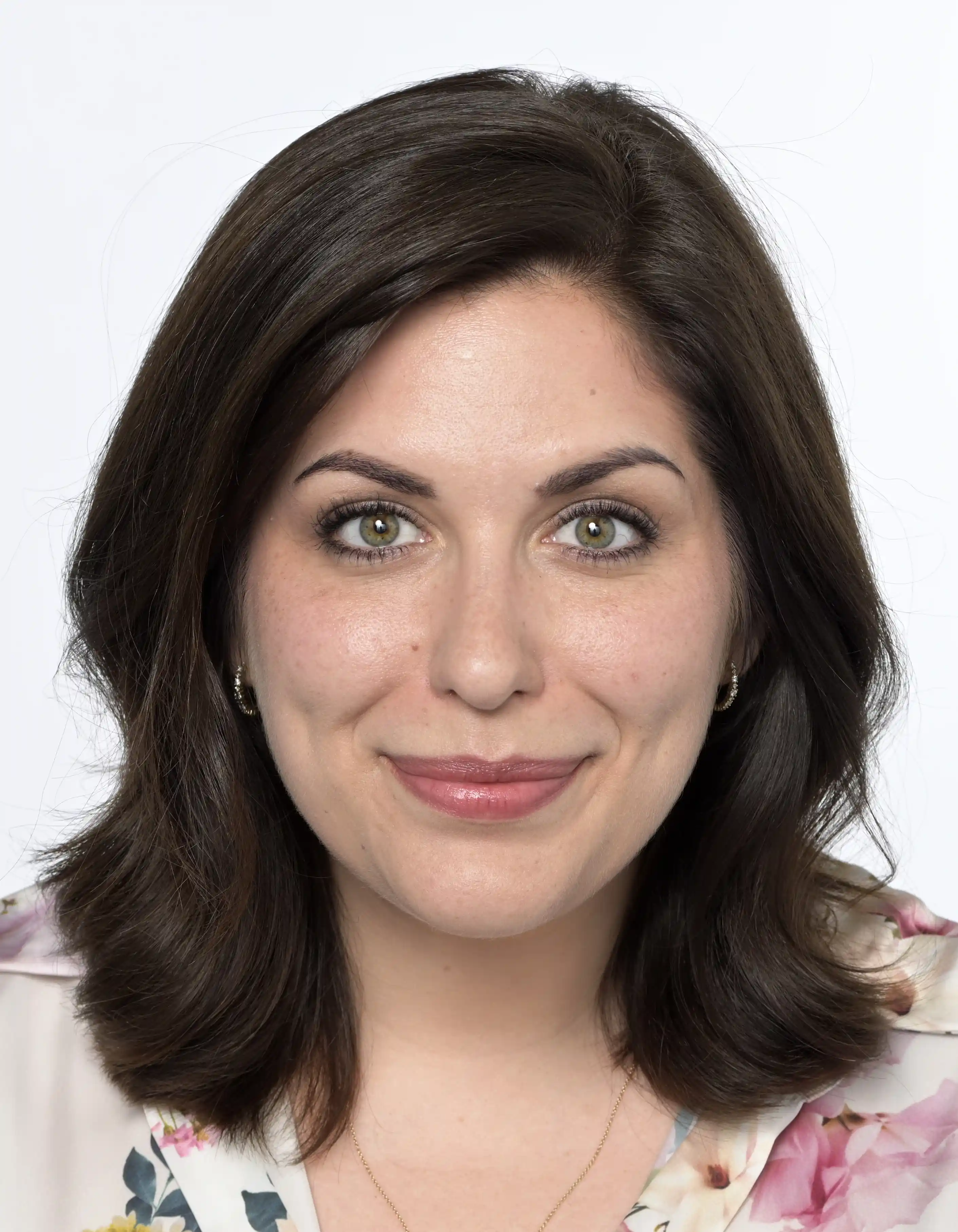
Lukas Sieper | Germany DE | Renew Europe (Renew) | 494 |
| 2 |

|
Juan Fernando López Aguilar | Spain ES | Progressive Alliance of Socialists and Democrats (S&D) | 463 |
| 3 |

|
Sebastian Tynkkynen | Finland FI | European Conservatives and Reformists (ECR) | 460 |
| 4 |

|
João Oliveira | Portugal PT | The Left in the European Parliament (GUE/NGL) | 288 |
| 5 |

|
Vytenis Povilas Andriukaitis | Lithuania LT | Progressive Alliance of Socialists and Democrats (S&D) | 276 |
All Speeches (85)
Madam President, More trade with more partners makes the EU more independent, even if many left-wing colleagues disagree today. It is more trade with more democracies that strengthens our economy and democracy worldwide. Free trade with New Zealand will grow our economy and our value partnership. Our EU exports can increase by 4.5 billion euros per year, our companies save around 140 million in tariffs. But the free trade agreement with New Zealand is above all a strategic success. It is a sign that the EU is still in a position to conclude free trade agreements. That is why this success must above all be a spark that finally launches an offensive for more free trade. I expect the Commission to make trade policy its absolute top priority, in particular the negotiations with Australia and India. And in the European Parliament, we still have to ratify the trade agreements that have been concluded in this legislature, above all the Mercosur agreement – that is what I am saying so clearly here. New Zealand can only be the beginning of an offensive for more free trade. The time to act is now.
Mr President, I believe the EU-US summit has shown very clearly that we stand united in our fight for democracy and against the autocrats of this world. But the transatlantic partnership is so much more than just standing against autocrats. It is also working closer together than we do with other partners. It is also growing together. And the best way to do so is by trade. And in that regard, the result of the summit has been disappointing. And in the EU, just like in the US, we want to strengthen our economic security. More trade with more partners will make us less dependent and more trade with more democratic partners will make our economies and our democracy stronger. And the dispute remaining from the Trump tariffs needs to be solved by the end of this year. We need to see the promised agreement on sustainable steel and aluminium, and we need to see an agreement on critical minerals to ensure fair competition for European companies. Let us strengthen the transatlantic partnership by abolishing tariffs, foster more cooperation through the Trade and Technology Council, and let us work towards a vision for EU-US free trade agreement.
Need to complete new trade agreements for sustainable growth, competitiveness and the EU’s strategic autonomy (debate)
Date:
04.10.2023 19:14
| Language: DE
Speeches
Madam President, Those who say ‘strategic independence’ often mean protectionism. Trade with more partners is the strategic independence we need, especially from autocratic regimes. Prosperity does not come from subsidies, wealth comes from competition. That is why we must now put the brakes on additional bureaucracy. The EU needs to become more attractive for investment in the future and ideas that can become big. Because we must not forget: The EU is not a foreign policy power. The strength of our single market determines our role in the world, and the focus of recent years in trade on defensive rather than offensive has stunned many of our partners. I want the EU to be a reliable partner. That is why we must now ignite the turbo for economic growth; I therefore expect the Commission to press ahead with ongoing negotiations, such as with India or Australia. In Parliament, we still have to ratify the trade agreements concluded during this parliamentary term, in particular with New Zealand and Mercosur. We now need an offensive for more trade, for the strategic independence of the European Union.
Madam President, ladies and gentlemen. We know very well: The conflict of our time is autocracy versus democracy. We see this in foreign policy, in digital policy, but especially in economic policy. Authoritarian countries such as Russia or China are specifically building dependencies in order to then be able to use them as a weapon against us. We need a strong trade offensive. We need more trade with more partners so that we are not dependent on individual countries. We also need a strong defense. We must be able to defend ourselves as the EU when authoritarian countries put pressure on us – putting pressure on our companies, on individual countries or on the EU as a whole. If countries no longer follow the rules, if trade is no longer an instrument of cooperation, then we as the EU must defend our economic interests – confidently and unequivocally. That is why I will also agree to the instrument against coercive measures. Because as a liberal, I will always fight for the strength of the right to win, not the right of the stronger. Because we must stand firm against the cooperation of autocracies and their targeted attacks against us democracies. For me, the basis of an alliance of democracies is the unity of the European Union. And it is also our shared determination to defend democracy, freedom and rules-based free trade.
Human rights situation in Bangladesh, notably the case of Odhikar
Date:
13.09.2023 21:07
| Language: EN
Speeches
Mr President, colleagues, you mentioned it: the human rights situation in Bangladesh is deteriorating. We see reports on extrajudicial killings and forced disappearances and restriction on freedom of expression. The decade-long case against Odhikar is such an example. We see human rights defenders and the opposition being oppressed ahead of the elections next year. It is this serious violation of international conventions that has led to the EU and Bangladesh being in an enhanced engagement on the current trade preferences. The minimum criteria for preferential access to the single market is meeting international human rights standards. Therefore, we must see Bangladesh comply with ILO core standards and they must guarantee free and fair elections in 2024. The human rights commitments in order to gain EU trade preferences are not just a checkbox to cross off once. I expect the Commission to work closely with Bangladesh to live up to their current human rights obligation, and in order to meet further commitments under the soon-to-be-revised GSP scheme, because if the human rights situation does not improve, we must draw the conclusions also on the trade side.
Madam President, We are talking about the Single Market Emergency Instrument. The name says it's about emergencies. There are a lot of good things in there, but I want to make one thing very clear: Under the heading of crisis management, the EU Commission will be able or should be able to intervene in production in the EU. The Commission wants to prioritise work orders or require companies to create strategic reserves. That would be massive interventions in the market economy. Above all, these would also be disproportionate interventions and would be unnecessary interventions. Because we saw in the corona crisis, how clothing companies have produced masks, how distillers have produced disinfectants instead of drinks. We don't have to dictate politically how responsibility goes. We must make it easier for them to fulfil this responsibility and to implement it. We must ensure that Europe is able to act in the event of a crisis. That is why I also find measures such as the emergency measures, such as the fast lanes or the quick approval for critical goods good or the temporary suspension of product-specific rules. But I must say quite clearly that I strongly oppose interventions in the market economy by state production specifications for companies.
Mr President, ladies and gentlemen. The potential of artificial intelligence is so great that we cannot even imagine it today. With the AI Act, we want to set a framework above all else: What kind of applications do we want to have in a liberal democracy? If we create a law that will cover all sorts of challenges for all time – no. Do we have to do this? No, no! I think we need to look more: What is the technological development? Are there real loopholes in the law? And then we have to close them. But I experienced exactly the opposite when ChatGPT got bigger and bigger. It quickly became very loud that we have to regulate generative AI as strictly as possible, perhaps even ban it, because you don't know exactly what you can do with it, and that would be highly dangerous. Dear colleagues, out of fear of calling for bans, we should not do that. We'd rather watch: How can we become a continent of progress? How can we use openness to technology and the joy of innovation in such a way that it characterizes us as a society, that it characterizes us, that we also secure our prosperity through progress? Of course, we must not be naive either. We must not close our eyes to the fact that opportunity always comes with a risk. Because in the conflict of our time – autocracy versus democracy – dealing with technology will be crucial. Is AI becoming a tool that makes our lives easier? Does generative AI help me in my job, does it make me cooking suggestions or does it help me with holiday planning? Or will artificial intelligence become a means of oppressing the population, as we see it in China? Will generative AI become a fire accelerator for disinformation and an attack on democracy? I believe our goal must be that it is the democracies that set the benchmark for how we as a society want to use the potential of artificial intelligence. In my opinion, it is absolutely essential that we lead the way with our international partners. Cooperation as in the Hiroshima AI Process or Commissioner Vestager’s Code of Conduct or Commissioner Jourová’s initiative are important initiatives in this regard. I am convinced that a common global framework on generative AI would be a real milestone for a democratically shaped technological future.
Mr President! The potential of artificial intelligence is so great that we can hardly imagine it today - for all areas of life, be it education, work or health. That is why it is so important that with the Artificial Intelligence Act we now want to lay the foundation for what kind of application of artificial intelligence we want to have in a liberal democracy. Opportunity and risk are always in the application. Face recognition - super convenient to unlock a cell phone, but biometric face recognition for surveillance in public spaces, dear colleagues, we know that from China. This has nothing to do with a European Union. We need to put a clear stop to such dangers while at the same time innovating. Made in Europe promote. For example, we strengthen experimentation in real-world laboratories. That's why we decided to rely on quality standards for general-purpose AI and generative AI, such as ChatGPT, and not on prohibitions or a high-risk rating. Because we must not follow fantasies of surveillance or overregulation in the Artificial Intelligence Act. Our goal must be to strengthen citizens' rights, boost business and innovation so that we can make the European Union a hotspot for progress and artificial intelligence.
Myanmar, notably the dissolution of democratic political parties
Date:
10.05.2023 21:06
| Language: EN
Speeches
Madam President, dear colleagues, this is the fifth time since the coup in February 2021 that were debating in this plenary about this. We have been calling on the Commission and we’ve been calling on the Member States to act and the only thing that has happened is the number of victims has been rising. There have been about 22 000 people arrested, 3 500 being killed. The military junta has ousted the democratically elected parliament and the government. For two years, the junta has been killing, banishing, arresting and raping people with impunity. And now they want to legitimise their rule by sham elections because they know they want to boost their image, but they don’t want a real democracy. They dissolved 40 political parties. They prevented opposition leaders from running by sentencing them on politically motivated charges, because it’s the autocrats and the despots of this world that terrorise and murder because of their fear of freedom and democracy. And it’s the fifth time and hopefully the last time that I’m calling in this Chamber on the Commission to ensure that none of the military conglomerate benefits from the preferential access to our single market. Because as the European Union we need to act and we need to stand in solidarity by those seeking freedom and democracy in Europe and the world.
Council of Europe Convention on preventing and combating violence against women and domestic violence – EU accession: institutions and public administration of the Union - Council of Europe Convention on preventing and combating violence against women and domestic violence - EU accession: judicial cooperation in criminal matters, asylum and non-refoulement (debate)
Date:
09.05.2023 17:20
| Language: EN
Speeches
Madam President, dear colleagues, we see it, we feel it: women’s rights are under attack all over the world. And it’s generations of women before us that fought hard for the rights we have today, and I and so many women and allies here today, make clear that we are not going to be the generation that stands by while a wave of conservative and right wing extremists try to wash away our rights. Because it’s not only happening in some faraway and undemocratic country, it’s happening right inside our very own European Union. We see that one in three women have experienced violence and we see Member States on the same side wanting to deny women their EU-guaranteed fundamental rights. I don’t know what’s so hard to believe about the fact that fundamental citizens’ rights, that women’s rights are human rights. And to be quite honest, it makes me very furious to hear this nonsense propaganda coming from the right side of this House about women’s rights and the Istanbul Convention today. Because the Istanbul Convention is the basic minimum that I expect as a commitment to safety and well-being from the State, as a citizen, as a female citizen. And it’s a shame that not all EU countries have ratified the Istanbul Convention. And I’m very proud that the European Union steps in to ratify this, to at least safeguard what can be done on a European level, a harmonised response to this gender-based violence, that we’re going to see prevention of this, that we’re going to see protection as female citizens and that we’re going to see punishment of the perpetrators.
The need for a coherent strategy for EU-China Relations (debate)
Date:
18.04.2023 11:42
| Language: DE
Speeches
Mr President, ladies and gentlemen. I'm a hamburger. Our beautiful port has just become the latest symbol of dependence on China. A container terminal under Chinese influence does not sound relevant until you assemble the puzzle pieces. Then you see Rotterdam, you see Piraeus, you see 14 European ports. When we put together the puzzle pieces between the EU and China, we see systemic competition in all policy areas. We are at the beginning of an age of artificial intelligence with so many opportunities for our society. At the same time, the Chinese surveillance state must also be a reminder to us where our journey must not go. We must not be dependent on technologies made in China. Because dependence is a specialty of China, which we have seen in recent years. If autocracies are to reintroduce the right of the stronger, then our offer must be more free trade with more partners, more cooperation on an equal footing. Dear colleagues, the EU was founded to ensure peace, freedom and democracy. We must carry these values forward in an alliance of democracies, in an alliance that takes joint responsibility for these values and opposes the autocracies of the world.
Mr President, colleagues, you’ve all been very clear, and I think we’re very much sharing a line here. It is very clear the Hun Sen regime has dismantled democracy in Cambodia. The democratic opposition is in exile, if they’re lucky, or in prison. Now, in the sham trial, Kem Sokha, the former opposition leader, has been sentenced to 27 years in house arrest, stripped of all political rights. The regime is not even trying to hide their intentions about manipulating the elections in July. Kem Sokha and other political prisoners must be released immediately and unconditionally, and the Council must finally prepare to implement targeted sanctions against the autocratic leaders. The Commission must make clear that the legitimacy of the Cambodian Government will depend on the legitimacy of these elections. If the independent electoral observers find evidence of unfair elections, it is more than overdue that the Commission is finally fully withdrawing the EPA preferences because the conflict of our time is autocracy versus democracy. We cannot forget this and we should not fool ourselves. The autocrats of the world are united in the fight against freedom and democracy, and that is why the EU must always, must always, always, always stand by those fighting for our democratic values.
Mr President, as a person born in the western part of the European Union, I only know a close European Union. And I must say I am so humbled and inspired when I see people taking to the streets fighting for their country to take the European path. But it is their government letting them down over and over again, it is the ruling party breaking commitments on uniting the country, backing out of international agreements and not doing the slightest bit to work for the reforms to make their way into the EU candidate. Their free media is suppressed. The political opposition is being oppressed. Former President Saakashvili is being left to die in prison. An opposition leader has been detained and beaten in prison last week, and the Russia-inspired foreign agents law is just the latest tip of the Russia-inspired anti-democratic iceberg. It would massively limit NGOs. It would limit civil society. It is only thanks to those brave people taking to the streets that this law is off the table for now. So our message today must be very clear: to the Government of Georgia, the international world is watching your actions very closely. And to the people of Georgia, this House stands by you in solidarity when you stand up for your freedom, for your European future. We are with you.
Madam President, ladies and gentlemen. We have just heard from Commissioner McGuinness: China supplies 98% of our rare earths, Turkey 98% of borates, South Africa 71% of our platinum. The figures are from 2020, but we have known for a long time that we have large dependencies on critical raw materials, large dependencies on individual countries, and that these are often the countries with which we are still in a systemic competition. Since this realization, however, too little action has happened. We need more trade with more countries in the world so that we are not dependent on individual autocrats. The raw materials partnership with Canada, for example, is a good start. I also see a lot of potential in this Trade and Technology Council with India, and, Minister Roswall, I am very grateful that you mentioned the rare earth finds in Kiruna, because we must also be prepared to look literally at our own doorstep and use our own resources in the EU. Because critical raw materials are critical, because they are not easily replaceable and are so critical for modern technology. They are critical for a sustainable economy, jobs and prosperity in Europe in the future. And they are therefore equally critical of the independence of the European Union from dictators and autocrats and therefore also critical of our European values.
Mr President, ladies and gentlemen. For round birthdays, you like to review the past and make plans for the future. And by the 30th. We have rightly said today that the single market is at the heart of the European Union. And that's why I have three birthday wishes to keep it that way in the future: fair competition, economic cooperation and social opportunities. Fair competition means, above all, that Made in Europe It must be created by attractive ideas and good location conditions such as affordable electricity prices, but not by protectionism and a spiral of subsidies. Economic cooperation in the single market has much more potential. We need to complete the Digital Single Market so that good ideas can grow businesses, and we also need to strengthen the internal market from the outside through free trade, especially with democratic partners. Social opportunities need smart laws that advance digitalization and progress. We need to unleash technological progress, we need the brightest minds. We need mobility, and we also need qualified immigration. A strong single market is the best engine for a thriving economy, for good jobs and for opportunities for every European. Commissioner Vestager, minister Roswall, jag hoppas att jag can räkna med he.
I think this is actually an excellent question. We have a different situation of youth unemployment throughout the whole of Europe. Young people have many shared dreams – the first apartment, the first love, and also trying to find a good education, trying to find a job. The fact is the situation varies throughout the European Union. But also the fact is we have different circumstances. We have governments that make laws that make it harder for young people to get into employment, that favour older colleagues over newer colleagues. We have different education levels and systems in different countries. I come from a country where we have a different education system that also is very training—based. So I think, especially on fighting youth unemployment, we need to come together to learn from best practice examples to really enable young people into the labour market. Because young people are not just cheap labour; young people are the future. Young people are the hope for better employment. They are the bright ideas of the future. They are the ones that will create jobs in the future. They are the ones that will create new companies in the future. So it all really comes down to what we bring for education. This is really where I see the Member States in responsibility. On the European level, we can ensure, for example, by being against unpaid internships, by having best practice exchange and knowledge trainings and really bringing young people together, that we also help our Member States to put young people first.
Madam President, dear colleagues, when I entered this Parliament three years ago, I was president of the European Liberals, and in that capacity I had the great honour to travel through 35 European countries. I’ve met many young people from all over Europe. I’ve demonstrated for abortion rights in Poland. I’ve protested against upload filters. I joined the fight against youth unemployment. All those young people I met had very similar hopes and dreams, filled with expectations for the future. There was always one thing that I heard from them when I was a youth politician, but now also being a parliamentarian: ‘listen to us’. Also, in the Year of Youth, I’ve been to many events, and at every single one of them, I was asked to ensure that this year of the youth will be more than just a show, that it will have a lasting effect, that there will be better processes to include young people. When I hear the disrespect from the colleagues on the right, from these populists, the disrespect for young people and their involvement, I can just say I am so proud that the Bundestag, the German Parliament, has just approved voting rights for people as of the age of 16. Young people want to be heard, young people deserve to be heard and, dear Commissioner Breton, you should really listen to young people, especially after the Year of Youth. (The speaker agreed to respond to a blue-card speech)
The Media freedom crackdown in Myanmar, notably the cases of Htet Htet Khine, Sithu Aung Myint and Nyein Nyein Aye
Date:
05.10.2022 19:36
| Language: EN
Speeches
Mr President, colleagues, today we once again want to be a voice for the democracy activists, human rights activists, journalists and so many more that are oppressed by the Tatmadaw. Human rights and democracy in Myanmar have eroded in a landslide since the military coup. In fact, Myanmar is now the world’s second largest jailer of journalists. This is seriously a list you don’t want to be so high on. Colleagues, the conflict of our time is autocracy versus democracy. The autocrats and despots of the world terrorise and murder in their fear of freedom and democracy. And that is why, to be very frank, it’s so unbearable to me that the Commission has done so little to support Myanmar. In fact, we’re discussing it the fourth time, and Mr Borrell is not even here for the fourth time. But, nevertheless, I’m going to call on the Commission for a fourth time – hopefully the last time – to ensure that none of the military companies are benefiting from the preferential access to our single market. Suspend the trade benefits because as the European Union, we must live up to our responsibilities as an economic and democratic power. We need to stay strong and united by the side of freedom and democracy in Europe and the world.
The continuous crackdown of political opposition in Cambodia
Date:
04.05.2022 18:54
| Language: EN
Speeches
Madam President, the Hun Sen regime has dismantled democracy in Cambodia, with the opposition in exile or in prison, and now they’re cracking down on freedom of speech with the Chinese model of censorship of the Internet. But the flame of democracy can never be stamped out. Democracy in Cambodia can be restored. The opposition and civil society are not giving up. They’re running in June’s local elections. The EU and the Commission need to closely monitor these elections. Let the warning to Hun Sen be loud and clear: if these elections will be unfair, the EU will not look away. If these elections are stolen, it will be more than overdue that the Commission is getting ready for a full withdrawal of the EBA. The preferential access to our Single Market is meant to help less fortunate communities to build a better life. It is not meant to help regimes that do not respect human rights. Every day the Hun Sen regime benefits from this is one day too long. The way back to democracy won’t be easy. But the people of Cambodia deserve our support because the great conflict of our time is autocracy versus democracy. The autocrats of this world are united in their fight against freedom and democracy. That is why the EU must always, always stand by those fighting for our values. Thank you, and thank you to our freedom fighters from Cambodia here tonight.
Mr President, ladies and gentlemen. The final report of the Special Committee presents no less than a vision for artificial intelligence for Europe. This is so important if we want to play in the first tech league. Because we should not always hyperventilate only about worst-case scenarios, but awaken the EU completely, very urgently from its sleep. We must find our European way into the technological future, a way beyond the totalitarian surveillance state à la China and the risky anything goes of a US market that is unregulated in many respects. The framework for the use of artificial intelligence must always be our fundamental rights. State mass surveillance or discrimination is unacceptable, especially if we want to make our European democracies weatherproof for the future. Then we lay the foundation for the innovation continent Europe, and then we can also tap into incredible potential for our society and open up completely new spaces for ideas for our companies: Research into new drugs that smart cities Tomorrow is a modern industry. The potential of AI is so great, we can hardly imagine it today. Therefore, the political balancing act, I would almost say, must also succeed in not over-regulating what is already there and, above all, in not over-regulating what could be there tomorrow. First and foremost, we need courage. More courage to see opportunities and to promote those they also seize, so that our developers don't stumbling stones to get in the way, but stepping stones to build. I want the EU to become a global leader in tech innovation. Artificial intelligence needs the Digital Single Market, as do many other technologies. If our civil rights are the cornerstone, then we are giving the digital future the face of Europe and democracy. Thank you to the rapporteur Voss and my group colleague Andrus Ansip for their work and to our Chairman Dragoș Tudorache for his leadership.
Outcome of the EU-China Summit (1 April 2022) (debate)
Date:
05.04.2022 20:38
| Language: DE
Speeches
Mr President! Autocracy versus democracy – this is the conflict of our time. We must resolutely oppose any attempt to replace our international order with the law of the stronger. Because we see this brutal grimace of this conflict right now in Ukraine. Russia's war makes Ukraine a battleground for democracy and freedom. The autocrats of this world fear and despise these values. And they stand by each other. Because one autocrat doesn't pick out the other's eye. This is another reason why the EU must finally stand united against China and oppose it. It is unacceptable that another EU-China summit ends without substance. This relationship burns at all ends. Massive human rights violations, Hong Kong, Taiwan, pressure on EU countries, unfair competition – the list is endless. I want an EU that not only carries values as a monstrance, but actually makes them the foundation of all its actions.
Madam President, For a year now, Myanmar’s military junta has been murdering, expelling, arresting and raping with impunity – so perversely planned and systematic that we need to speak clearly of crimes against humanity and war crimes. And there is no end in sight for the cruel military rule. Last year, my colleagues and I had the opportunity to meet Myanmar's elected representatives online. They had to go into hiding to protect their lives or that of their families. The civilian government is in exile, on the run, murdered or imprisoned after sham trials. It must be the interest of all democracies to restore Myanmar's still young democracy. Therefore, there must be no international cooperation for us with Myanmar's rulers, especially when we see who the friends of the military junta are: China and Russia are reliably supplying weapons for the killings and blocking the UN Security Council. They are destabilizing a country that hopes for a democratic future. They are destabilizing an entire emerging region. The great conflict of our time is called autocracy versus democracy. This conflict is more than just economic competition. The autocrats and despots of this world terrorize and murder worldwide because they despise and fear the desire for freedom and democracy. It is therefore completely incomprehensible and, frankly, intolerable to me that the Commission has still not initiated an examination of Myanmar's trade advantages. Thank you, Commissioner Jourová, for being here today, but I repeatedly ask myself in foreign policy debates: Where is Mr. Borrell? I ask the Commission to: Finally, make sure that no military company benefits from preferential access to our single market! Expose the trading benefits! As a European Union, we must live up to our responsibilities as a democratic and economic power. No democratic country can be too small or too far away for us not to stand by the side of freedom and democracy. Thank you for your commitment, colleagues!
The need for an ambitious EU Strategy for sustainable textiles (debate)
Date:
10.03.2022 10:35
| Language: DE
Speeches
Madam President, ladies and gentlemen, Commissioner! Responsible and sustainable consumption is important to many consumers. And yet, it is very likely that each of us has a sweater or a T-shirt from forced labour hanging in our closets, because 20% of the world's cotton comes from China's forced labour region of Xinjiang alone. As consumers, we have great power. We can make a difference. But we cannot all bear responsibility. This requires a legal framework: The textile strategy. The textile strategy must set this fair framework. In a globalized world, responsibility is global. Fair rules of the game in a social market economy strengthen responsible entrepreneurship and sort out black sheep. The textile strategy must advance the global circular economy. We hear: Reuse, recycle and reduce That's the credo. The textile industry accounts for around 10% of global emissions, more than aviation and shipping combined. The textile strategy and the textile industry must finally strengthen human rights. The textile strategy must be a building block in the fight against child labour and forced labour. The textile strategy must therefore also be closely linked to the Supply Chain Act. However, the Commission proposal on the Supply Chain Act still needs to be improved in some places. Dear colleagues, with clothing we associate emotions above all else. Clothing is warmth and protection, clothing is an expression of our personality. Some garments are special memorabilia. Clothing also has an environmental and social footprint. And with the textile strategy, we finally have to go to the collar.
Gender mainstreaming in the European Parliament – annual report 2020 (debate)
Date:
08.03.2022 21:37
| Language: DE
Speeches
Mr President! I was 29 years old in the last European election campaign. At that time, I had many conversations about my political goals. But I was also asked surprisingly often if I wanted to have children, because that would be difficult to reconcile with such a mandate. Because women who make politics are always reminded that they must not forget the kitchen table when they are already striving for the tables of power. Women who hold an opinion are often attacked solely for their participation in public discourse. Insulting, degrading or threatening – for me and other politicians, this is part of our everyday lives. It's part of a culture that prefers to keep women out of the public eye. As a society, we must consistently oppose this culture of discrimination and hatred, solidarity and visibility. As parties, we need more resources and more commitment to get women engaged in political work, to strengthen their candidatures. Only about 40% of the European Parliament is made up of women. That is still good on average in Europe, but that cannot be enough for us. We need to make our parliaments more inclusive and family-friendly. There is no parental leave in our European Parliament. Living and working between three countries is a particular challenge. Colleagues, let's make parental leave possible! Let us enable young MPs to be parents and at the same time to be able to continue to represent the votes of their constituents. Because when I talk to young women about my work, the first thing I'm often asked is what kind of discrimination I experience as a woman in politics. Because as a girl, as a teenager, as an adult woman, in school, at work, in politics, they repeatedly experience that they have to work against prejudice because of their gender. I argue that gender no longer plays a role in individual opportunities and gender no longer plays a role in political participation. We start with ourselves and will make the European Parliament more equal. Thank you to our co-rapporteurs and, above all, to Irene from my group for your important work.
The recent human rights developments in the Philippines
Date:
17.02.2022 10:23
| Language: EN
Speeches
– Mr President, since President Rodrigo Duterte took office, the human rights situation in the Philippines has eroded in a landslide. There has been an appalling number of extrajudicial killings and human rights violations. This has been going on for years. This House last asked the Commission to act in 2020, and it pains me that the Commission has in fact not acted. The only thing that has happened since is that human rights in the Philippines have worsened. More Filipinos have suffered. In fact, the UN High Commissioner for Human Rights estimates that between 12 000 and 30 000 people have been killed in Duterte’s so-called war on drugs. Around 6 000 people lost their lives during police drug raids alone. For me, as a democrat, it is unbelievable that President Duterte personally encouraged extrajudicial executions and even promised immunity to perpetrators. Another way – and I’m sad to say this, but a popular way – to silence anyone who does not support the regime is the alleged fight against communism. The so—called red—tagging has even been institutionalised in the anti-terrorism law. This red—tagging is the procedure where the authorities link organisations and individuals to communist groups and use this as an excuse for killings, threats, warrantless arrests, harassment and sexual violence against human rights defenders, opponents and journalists. One can ask now, what leverage does the European Union even have to react to this? Trade policy. The generalised system of preferences (GSP), the preferential access to the single market, is a tool to support less-developed countries in their economic growth. It is a tool to help communities and individuals enhance their opportunities through trade. But this access comes with conditions, and respect for human rights is the most important requirement a country has to meet to even qualify for these preferences. The Philippines does not respect the agreed human rights standards and still the regime profits from these trade benefits. I have said it many times before, and I will repeat it today: the European Union is not yet the diplomatic power we strive to be, but we are an economic power, promoting value—based trade. But this will only stay true if, while we wholeheartedly advocate for free trade, we also make sure that the agreed conditions are actually met. Colleagues, I’m going to be very precise. Today, we ask the Commission to set clear goals and benchmarks and, if there is no substantial improvement and willingness from the Philippines Government to actually meet their human rights obligations under GSP, then we expect you to withdraw the trade preferences. This House will no longer accept inactivity and we will not compromise on our European values.