
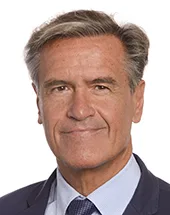
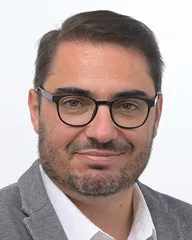
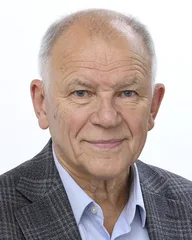
| Rank | Name | Country | Group | Speeches | |
|---|---|---|---|---|---|
| 1 |
|
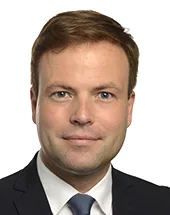
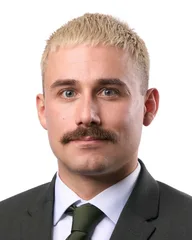
Lukas Sieper | Germany DEU | Non-attached Members (NI) | 390 |
| 2 |
|
Juan Fernando López Aguilar | Spain ESP | Progressive Alliance of Socialists and Democrats (S&D) | 354 |
| 3 |
|
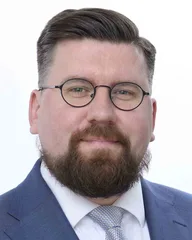
Sebastian Tynkkynen | Finland FIN | European Conservatives and Reformists (ECR) | 331 |
| 4 |
|
João Oliveira | Portugal PRT | The Left in the European Parliament (GUE/NGL) | 232 |
| 5 |
|
Vytenis Povilas Andriukaitis | Lithuania LTU | Progressive Alliance of Socialists and Democrats (S&D) | 227 |
All Contributions (66)
100 days of the new Commission – Delivering on defence, competitiveness, simplification and migration as our priorities (topical debate)
Mr President, ladies and gentlemen, 100 days of the European Commission: In fact, time for a first review. A change of mindset has started, a change of course. The fact that the left side of the house is not pleased with this, I am pleased again. You thought you had overcome democracy and this whole left-wing, illiberal course continues – but an election has taken place. And that is why it is good, Commissioner, that the new Commission is now focusing more on economic competitiveness and security. This is good because you have noticed that small-scale regulation and excessive bureaucracy have long prevented the European Union from reaching its full potential. The central question you always have to ask yourself: First, do we need regulation at all? And secondly, will regulation achieve the goal you want to achieve? This is not the case in the area of the Green Deal and many other regulations that have left the European continent behind. Therefore: Congratulations on the bus packages. You have to imagine that we managed to create 13,000 new regulations in five years – the Americans got by with 3,000. Congratulations on the proposals in the field of defence – however, the legal basis is wrongly chosen and we must now finally wake up to jointly develop and produce European weapons so that we can become autonomously defence-ready.
Enhancing Europe’s civilian and defence preparedness and readiness (debate)
Madam President, colleagues, ladies and gentlemen, we must confront the fact that, in defence, Europe is utterly unprepared. The numbers are clear: while the European Union maintains 178 different weapon systems, the United States operates with 27. Our defence industry is paralysed by inefficiencies and fragmentation. In supporting Ukraine, we have procured 80 % of our military supplies from outside the European market. That doesn't make sense. Last November, President von der Leyen put forward urgently needed reforms to strengthen the European Defence Agency and accelerate industry production. So far, Member States have shown an alarming lack of engagement. Putin sees the West as weak. That, we must change! We Europeans, ladies and gentlemen, must move beyond the zero-sum game of national interests and become capable of defending ourselves.
Strengthening Moldova's resilience against Russian interference ahead of the upcoming presidential elections and a constitutional referendum on EU integration (debate)
Mr President, colleagues, Moldova finds itself at a crossroads ahead of its elections. Will the country continue its path of European integration? Or will it be dragged into an oligarchic past? This choice will shape the country for a generation, and this choice must be taken by the people of Moldova and them alone, without foreign interference. Yet at the same time, we as Europeans have to live up to our own responsibility. It is not enough to say that Moldova's place is in Europe. We need to follow this statement with political action. We need to do more to make the promise of a European future credible. To the critics of enlargement in my own country and across western Europe, let me remind you of what Pope John Paul II famously said. Europe needs both wings of her lungs, the western and the eastern, to breathe freely. If we don't act accordingly, others will fill the vacuum that we leave. European unification, colleagues, will only be complete if it includes the Europeans in Moldova.
One year after the 7 October terrorist attacks by Hamas (debate)
Madam President, ladies and gentlemen. I would like to begin by repeating what Daniel Caspary and the previous speaker said: Commissioner Borrell, it is already a late insight for a High Representative for Foreign Affairs and Security Policy of the European Union to realize today, after the end of your term of office, that we Europeans do not play a role in the region, although we are perhaps the only ones who could mediate in the conflict as honest negotiators. October 7 marks a turning point. Hamas' barbaric massacres were designed to lead to the situation we are witnessing today. The statement ‘Never again’ has become a ‘yes, but’ in many places. We can't let that happen. Too many Jews no longer feel safe here in Europe. They are afraid to live in Europe again. We must never accept that. A society that is silent about anti-Semitism is complicit. And so today's message must be: We stand with Jews in Europe – not only in words or gestures, but in actions against all forms of anti-Semitism.
Interinstitutional Body for Ethical Standards (A9-0181/2024 - Daniel Freund) (vote)
Madam President, colleagues, the last day of our mandate is such a sad day for parliamentarism in Europe that I lost my voice! According to Rule 200(4), I call, on behalf of the EPP, for the vote to be adjourned. Colleagues, this draft on the so-called interinstitutional agreement has so many legal uncertainties, which need to be clarified before we vote. There is no legal basis. First, it was argued Article 295. Then the Legal Service said the customs. Now it is written in the resolution Article 232 of the Treaty on the Functioning of the European Union. But that would mean that this decision which we take today would need a majority of the component members. Colleagues, do you really know what was negotiated here? The Council will, in the future, set moral standards, not clear legal rules. They will not apply those moral standards they ask us to apply. And there is one final thing I could not get my head around, colleagues: the secretariat – the powerhouse of this body – shall be hosted in the Commission. We, Parliament, are supposed to control the Commission. In future, the Commission will control us on moral standards. So I ask you: if you don’t follow me, postpone. If you cannot postpone, then I urge you to at least vote on Amendment 93 in favour that the secretariat of that body will be in this House, in our House, in this independent House, with freely elected Members, and not in the government, in the Commission.
Interinstitutional Body for Ethical Standards (debate)
Madam President, colleagues, this last day of our mandate is such a sad day for parliamentarism that I lost my voice. I was shocked how badly this interinstitutional agreement was negotiated. It is a retrial of parliamentarism. It is a frontal attack against the independence of freely elected Members of Parliament, and you know that. In your case, it is intentionally. This draft needs to be renegotiated. First of all, there is no legal basis. First, you started with Article 295, then the Legal Service argued tradition, custom. Now you write in the resolution Article 232 of the Treaty on the Functioning of the European Union. If that would be the legal basis, then we would need a majority of the component Members. It is a blatant violation of the principle of separation of powers. The Council will set moral standards, not legal rules. You talked about legal rules; we are talking about ethics, moral standards. It’s not only the European Council, it’s the Council which sets the rules; it’s not bound by it. The secretariat will be hosted in the Commission – unbelievable! We, the Parliament, are supposed to control the Commission. Now they will control us. We would agree to a standard-setting commission, but we cannot agree to a body that is supposed to discipline freely elected representatives based on moral ideas.
European Central Bank – annual report 2023 (debate)
Mr President, Madam President, Commissioners, recent media reports have quoted a senior executive board member of the ECB as stating if you are critical of greening policies, then you are not welcome to work at the European Central Bank. ‘If you’re not green, you’re not wanted’ – this was the headline. Madam President, I was at first doubtful whether this reporting could be true. But after your statement during the monetary dialogue, I grew increasingly concerned. Your answer on this incident was rather ambiguous and I have to say that you have been sometimes ambiguous in that concern in the past two years, even though I always thought we were in agreement. The European Central Bank has a mandate for price stability. That does include, indeed, taking into account climate-change-related risks for the financial sector and evaluating the implications for central bank balance sheets and their own management of risk. Undertaking an active climate policy, however, is not covered by the mandate and this would not only be illegal, but also put our currency at risk. And for that reason, I would like to kindly invite you today to take the opportunity to clearly distance yourself from this statement: ‘if you’re not green, you’re not wanted’, or further explain what was meant with that, and I am sure you can do that.
This is Europe - Debate with the President of Romania, Klaus Iohannis (debate)
Madam President, Mr President Iohannis, you are a president who has always campaigned for reforms in his own country. They stand for a strong rule of law. Their fight against corruption is exemplary. And it is to your credit that Romania is now becoming part of the Schengen Agreement. It is precisely this reform strength that we now need at European level. The European Union was created to protect Europeans from each other. Today we need to develop them further to protect Europeans for each other in the world. A few months ago, the European Parliament put forward proposals for reform with the aim of making the European Union more capable of acting. The Council is struggling with an answer, the choice of a Convention. You mentioned, Mr President, that we could change a lot without Treaty changes. But if we really want to improve internal resilience, as you said, and external capacity to act, we need a Convention. I therefore ask you today to support the Council in convening this Convention.
The European Elections 2024 (debate)
Madam President, ladies and gentlemen, Five points to conclude this debate: Firstly, it has shown once again that this Parliament simply suffers from the fact that too few colleagues are sitting here in plenary. We need a debate. The culture of debate needs to improve. This needs to be changed next time. We need more presence. Secondly: It has become clear that most of my colleagues see the same design flaw in the Lisbon Treaty as I have mentioned. We have created a political union – well, rightly so – we have a political commission, but it must be electable and de-elected in a democracy. It is necessary to put an end to the fact that the Member States send their Commissioners and that the election has no impact on the composition of the Commission. Thirdly: The accusation that Mrs von der Leyen is not running, even though she may run again as President of the Commission – this accusation is nonsense, because she would run for a Parliament in which she could not keep the seat. She would actually cheat the electorate more if she ran for Parliament and had to relinquish the seat immediately afterwards, because she really wanted to run for President of the Commission if necessary. Fourth point: The summit of the debate was the accusation made by Mr Eroglu – the colleague of the Free Voters and the Renew Group – who said that Mr Weber was responsible for the fact that the Spitzenkandidaten principle did not work last time. This is really downright grotesque nonsense, because it has now been his faction, the Renew faction, which has not come forward, which has evaded the Council, so that the Spitzenkandidaten principle is destroyed at this point. It was really a political frenzy. And last point: We need a European public. What the right-wing side of the House has said – Mr Hoogeveen – that we need to nationalise this again is nonsense, because it is decided at European level. We need a European debate, a European public. And democracy in Europe, just as everywhere else in the world, must become electable and deselected – at European level.
The European Elections 2024 (debate)
Mr President, ladies and gentlemen, ladies and gentlemen, ladies and gentlemen, After the 2019 European elections, many people were disappointed. The parties were running with top candidates, and then something happened that you don't have to call democratically responsible: The Socialists did not recognize the lead candidate of the European People's Party, even though he had won the election. The Liberals were unreachable for days because they had other plans in the Council. We can be glad that the President-elect of the Commission has proved to be a stroke of luck for the European Union. During the pandemic, the EU took a bold stance and took care of the vaccine supply, despite the fact that the European Union had no real responsibility for it. It held us Europeans together in Russia's terrible war of aggression against Ukraine and did what it could. Ursula von der Leyen has literally given Europe a face. We are well represented with her, on an equal footing with the world. Nevertheless, we need to better organise the process after the next European elections. This report serves that purpose. In a democracy, voting also counts. Therefore, the outcome of the European elections on 9 June must have an impact on the election of the Commission Presidency. That is the purpose of Spitzenkandidaten – to show face, to be selectable and to be de-selectable. Unfortunately, the European elections have no influence on the composition of the European Commission. This is, in my view, a flaw in the construction of the Lisbon Treaty. It is therefore all the more important that we follow the process described in this report. The report is firstly a negotiating mandate for an agreement with the Council. Secondly, we expect the European parties to vote with a lead candidate and name them. Thirdly, after the election, the negotiating mandate must lie with the candidate who can unite the largest political group in Parliament, as described above, with an attempt to form a majority. If this fails, it will be transferred to the second largest group. In this way, we ensure that principles of parliamentary democracy are also lived in Europe. Ladies and gentlemen, we are facing great challenges that no state in Europe alone can overcome. Europeans must be able to defend themselves. It's about security inside and out. People expect us to stop illegal mass migration, finally put an end to dying in the Mediterranean and no longer leave it to the gangs of traffickers who come to Europe. They expect Europe to become competitive again and we renew the promise of prosperity. Finally, European leadership and global standards are needed to shape the digital transformation. We need to develop the Green Deal in a sensible way. For all this, we need an orderly procedure after the European elections, which is described in this report. It should also enable the European Union to act institutionally. Until we make the responsibilities at European level more visible through a change in the Treaties, we need these agreements between Democrats. In Europe, too, the following must apply: Voting has to count. I therefore ask you to agree with this report.
Proposals of the European Parliament for the amendment of the Treaties (debate)
Mr President, colleagues, do we change the Treaties with this report? No. This week we have to answer two questions. First, do we want a convention to discuss Treaty change? Second, is this draft a sufficient basis to open up a discussion? My answer to those questions is ‘Yes’. 16 years ago, the Lisbon Treaty was signed. But the world has changed since then. We are facing new challenges. The financial crisis, Brexit, migration, Russia’s war on Ukraine are forcing us to act. I have with this report three priorities. I want the European Union to become more focused, more capable to act, and more democratically accountable. It is not about old ideas of federalism versus the Europe of nations. It is about improving the European Union where it really matters to the Europeans. We must create a defence union, bringing the defence industries together in order to be able to defend ourselves, which is not the case today. Colleagues, if you think about the fact that we in Europe have 178 main weapon systems and the United States has 30, it comes with no surprise that we waste taxpayers’ money – pay more, get less. We must strengthen our energy cooperation to achieve energy independence and decarbonisation. We must ensure that the internal energy market does not just exist on paper, but also functions in reality. I want to fulfil the voters – my voters’ – demands and protect our borders against illegal migration and trans-national crime. But for this, we have to change and amend the Treaties. The European Union does nearly have no competency and we are blocked by vetoes and unnecessary bureaucracy. It is true that we need to improve the protection of the rule of law, but the legal procedure needs to be in front of a court. This would stop the blame game in this House, which doesn’t bring us any further, but divides us all the more. It was a structural mistake of the Lisbon Treaty that the European elections have no influence on the Commission, on the composition of the Commission. We need a European Commission that can be elected and voted out of office. Colleagues, this report is a very substantial one. It may be those are right who say it is simply too much, too difficult to understand, not the right time, and too difficult to explain, especially when you have to fight against right-wing populists at home who instrumentalised the whole thing. I’m also aware that we have totally different debates in different Member States. But those colleagues who are concerned, let me say: this is a very first step on a long road to go; a road that requires the consent of all Member States; that will include lengthy discussions. As in any compromise in this House, it is not a perfect report for anyone. Every political group had to make concessions, but at the end of the day, there are again two questions on the table. First, do we want a convention? Second, do we think that this draft is a sufficient basis to open up a discussion? Not more, not less. For me, the answer to those questions is a very convinced yes. Colleagues, we have no time to waste. Depending on the outcome of the next US election, Europe is only a little more than a year away from losing its nuclear umbrella. We need to wake up. We as Europeans need to grow up as a Union and grow up fast. The way to get there is through a reform of competences and institutions. Let us take the first step by voting for this report.
A true geopolitical Europe now (topical debate)
Madam President, ladies and gentlemen, Commissioner for Foreign Affairs! You may have overdrawn the speaking time by 14 minutes, but you said nothing, except a little bullshit. Ladies and gentlemen, at the beginning of the 20th century, Europeans were 20 percent of the world's population. Today we are still 7 percent. At the beginning of 2050, we will be 5 percent. The African continent is growing by one million people almost every week. The others become more, and we become less. Economically, it is no longer so well ordered around us. 90% of global growth takes place outside Europe. We only have a 20 percent share of the global gross national product. That is why Mr Stéphane Séjourné is absolutely right: It is absolutely urgent that we now agree on a geopolitical union. Former Secretary of State Henry Kissinger once said: What phone number do I have to dial if I want to call Europe? Ursula von der Leyen is the first Commission President who has managed to give an answer. It is clear: You have to call her. It has given Europe a face. This has become clear again just now in dealing with the terrible attack against Israel. The Commission must become more political. The external representative must act on behalf of the President of the Commission and not for his own profiling. We need majority decisions in the Council in order not to always be blackmailed by a Member State. We must significantly increase the resources in security policy in order to be able to act credibly. Ladies and gentlemen, it is burning on our borders, in Ukraine, in North Kosovo, in Nagorno-Karabakh and now in Gaza. We Europeans must wake up to the fact that, united as a geopolitical union, we are once again playing a role in the world and not oversleeping this situation.
European Media Freedom Act (debate)
Yes, of course, we should look at that. That's what we're looking at. It's all transparent, it's accessible, but there's a big difference: concentration of media. As far as the question of which medium is owned by a person or a society is concerned, that is one. The abuse of a monopoly position and the intimidation of journalists is something else, and this is happening to you in a particularly bad way in the country.
European Media Freedom Act (debate)
Madam President, ladies and gentlemen, The Media Freedom Act is an important step in protecting pluralism and diversity of opinion in the European press landscape. We are introducing new rules against market concentration in the media sector, Europe-wide standards for public service broadcasting, better source protection for journalists through a ban on the use of espionage software. Of course, this is a European competence and a European issue. But as always, if the European Union harmonises something, there are concerns – possibly justified ones – that functioning national systems will be overshadowed by inappropriate rules. In this case, I am nevertheless convinced that journalists in all Member States will benefit from this law. Lack of pluralism in the media landscape is a problem in more Member States than we cliché. I am particularly grateful to Mrs Sabine Verheyen for having designed this law with such great experience and a clear view. Because when I hear here what comes from the right-wing extremist side, then media freedom is really threatened in Europe as soon as right-wing and right-wing extremists come to the government. But even among the Greens, media freedom and pluralism are obviously not in good hands. Today is a good day for press freedom and press diversity. Thank you, Sabine Verheyen and all the colleagues who have worked so constructively on this. (The speaker agreed to respond to a question about the "blue card" procedure.)
Parliamentarism, European citizenship and democracy (debate)
Mr President, ladies and gentlemen, A lot of clever things have been said here. I want to pick out two quotes. One is from Mr Othmar Karas, who, I think, said something very clever. He said: "The achievements of one generation can be lost in the next", and we must always keep that in mind. I will always stand up for liberal democracy. And I also believe that, in coping with the pandemic, liberal democracy has demonstrated that it is the superior system to authoritarian regimes, such as China, where people have been locked away for many, many more months. However, this also means that I am deeply convinced that representative, parliamentary democracy is the form of government with which we have had the best experience. And so we have to be careful at different points. First of all, this concerns citizen participation. Of course, citizens can be involved and become smarter. But basically we run around in the constituency all the time and involve citizens, so be careful. Secondly: When it comes to crisis management, we in Europe have allowed decisions to be taken without parliamentary participation. When the Rules of Procedure were amended yesterday, the free mandate and parliamentary democracy were trampled underfoot. It is weakened by the nonsense that has been decided. And what we cannot simply allow is for a colleague to be locked away for six months without the immunity having been lifted.
India, the situation in Manipur
Madam President, ladies and gentlemen, The situation in the state of Manipur in northeastern India is serious. Since May, more than 120 people have been killed in clashes between two ethnic groups, the predominantly Hindu Meitei and the predominantly Christian Kuki. More than 50,000 people are on the run. Over 250 churches, theological institutes, Christian schools and hospitals were burned down without the perpetrators being prevented from doing so by local authorities. We call on the Indian government to do everything it can to restore order, hold perpetrators accountable and stop the excesses of violence. From this point on, we do not want to teach anyone with an uplifted index finger. With this European Parliament resolution, we are only calling on the world's most populous country to do what it has committed itself to in its constitution: Respect for religious freedom, including for Christians in Manipur. One thing really irritated me in the negotiations with the other groups: How difficult it is for the green and left-wing colleagues to say that Christians are the ones affected! One writhes with platitudes about discrimination in general and religious intolerance around naming the obvious: Persecutions of Christians are also real in the present, and it is our job to fight for them to stop worldwide, including in Manipur.
Recommendations for reform of the European Parliament’s rules on transparency, integrity, accountability and anti-corruption (debate)
Madam President, dear colleagues, Benjamin Franklin is often credited with the quote: ‘Those who would give up liberty to purchase a little temporary safety deserve neither liberty nor safety.’ The same applies to the functioning of this House. Those who disregard the freedom of the mandate, those who aim to severely restrict it in order to have waterproof security against illegitimate influence, will ultimately harm this institution, this Parliament. The resolution before us today has a serious impact on the functioning of the House. Members of Parliament should disclose their assets, and open—source checks will be introduced for employees. All this is suggested against a backdrop of very different political cultures within the EU. The disclosure of assets is common practice in some Member States – in others it constitutes an unthinkable infringement on fundamental rights. The resolution does not sufficiently take into account these differences. I fear that in practice its proposals will not lead to concrete improvements, but rather to plenty of opportunities for cheap headlines. What we must always keep in mind and take into account is that, in the Kaili case, a colleague, a network, infringed criminal law intentionally. We will not hinder that with any of the kind of proposals in this resolution.
Composition of the European Parliament (A9-0214/2023 - Loránt Vincze, Sandro Gozi) (vote)
Mr President, colleagues, I think with this vote on the composition of the next Parliament, we send different messages in different Member States. In some Member States, increasing the number of seats will be understood as a free-for-all at the expense of the taxpayer. In other Member States, taking seats away from them will equally not be understood, and will strengthen Eurosceptics in these places. As pro-Europeans, we can do two things at the same time: be mindful of our responsibility towards the taxpayers and stand in solidarity with our colleagues in the East and South-East who are affected by demographic changes. In our time, colleagues, European unity is more important than decimal points on a distribution scale. That is why I ask for the following amendment to Article 3(1): ‘The composition of the European Parliament remains as it is.’ I ask you to allow the vote on that amendment. Those who rise against it, rise against a solution that would unite us all.
Negotiations on the European Electoral Law (debate)
Madam President, colleagues, the problem I have now is from a legal perspective. I’m on the side of Mr Gozi because I also think that the President should call to order a colleague who is talking on the content of the European electoral law and not on the topic of negotiations, because it is right that the topic of this debate, in a way, is that the Council is really disappointing with its behaviour. I mean, you were not today because you gave arguments why you perhaps are not starting with the negotiations, but you could start with the negotiations and bring on the table and make public why Member States are against it. And then you would come in, and I think you are also right, because when we speak on why the negotiations are not started, that has to do with the content. So I think you are both right and that is the peaceful part of the moment. But no, really, tonight we are talking about why the Council is not starting negotiations. I think this is really a behaviour which has to be stopped by the Council. Perhaps also some behaviour by Parliament has to be stopped, that Parliament is always blaming the Council for everything which goes wrong in Europe and that is also not true. But it would be best if we bring the arguments on the table – why Member States are against a voting age of 16, as you said, why Member States are against the transnational lists and why Member States are against the parity list and the ‘zipped list’ or how they call it in this House. And then we can discuss in a democracy and we can come to a result and we can also come to the result that the negotiations have to go on. But for that, we would have to start the negotiations and this is what we ask for today.
Establishment of the EU Ethics Body (debate)
Madam President, Commissioner Jourová, first of all, I’d like to thank you for the proposal of the so-called ethics body. It’s quite balanced. It reflects the different positions here in the House. Would this so-called ethics body have prevented the case of Eva Kaili? Of course not. No, the Eva Kaili case is about a network of socialist MEPs and staff who are supposed to have received money from Qatar through an NGO. First, they infringed – intentionally – criminal law, and the Belgian authorities are dealing with that issue. Secondly, and that is perhaps for us more important, our own rules have been infringed. Our own enforcement mechanism here in the House must be improved. And we didn’t work hard enough on that. I liked it very much when you said in the committee that each institution has to do its homework, and I think the European Parliament hasn’t done its homework. I still don’t know why we are so focused on an ethics body from outside, but we don’t do any reforms so that the enforcement mechanism of our own rules in our own House is better functioning. It’s not about ethics. It’s not about morals. It’s about standard setting. And for that reason, I think the proposal of the Commissioner is right. We don’t want a disciplinary chamber like they established in Poland against Polish judges, and here an ethics body establishing a committee against MEPs, what we want is standards, rules and an enforcement mechanism that is functioning in this House. And that is what I’m fighting for.
Adequacy of the protection afforded by the EU-U.S. Data Privacy Framework (debate)
Mr President, ladies and gentlemen, The protection of personal data is a fundamental right. With the General Data Protection Regulation, we have set global standards that we can be proud of. However, if we now find in many areas that the application of this regulation – at least according to the German interpretation – leads to absurd situations, then we must of course react to it. Cities and municipalities should be banned from using Facebook or Instagram to inform their citizens. The federal government, many state parliaments with us in the country have to switch off digital offers. In schools and universities, we are no longer allowed to use American videoconferencing systems. This is grotesque when we consider that we are using it here in Parliament and in the Commission itself. All this because the equivalence of European data protection on American servers should not be formally ensured. Now the Americans have reacted, with Executive Order 14086 responding to our concerns, introduced significant improvements for the protection of European data – by the way, another point that we Europeans can be proud of. Acknowledging equivalence would solve all GDPR application problems for schools, town halls and universities. What annoys me now is that data protection issues are, of course, fundamental rights issues and must always be weighed up. But the way in which this debate is going today, as inconceivable as Social Democrats, Greens, Liberals and the Left block the agreement in this House, is no longer comprehensible. Therefore: Vote in favour of Amendment No 12 of the European People's Party! Stop the GDPR madness at our schools and universities!
Need for immediate reform of the internal rules of the Commission to ensure transparency and accountability in light of alleged conflicts of interests (debate)
Madam President, ladies and gentlemen, ladies and gentlemen, First of all, I would like to thank you very much for your transparency and, above all, for telling us that the rules have now been changed, that business trips can only be paid for by public authorities, by international organisations or by universities when it comes to academic purposes. It is very surprising that Commission officials are paid for missions by the states with which they negotiate. Of course, this is not possible! Second point: We do not need an ethics body, nor do we need a disciplinary chamber. What we need are clear rules, and these rules must, of course, be respected. The third point, and I have one more question, is that I would, frankly, agree with Mrs Daly's request: We have to think about whether the air transport agreement with Qatar needs to be frozen. I would even demand that we suspend it. Because it is now the second case with the state of Qatar, and I already believe that we must at least check this. Then my specific question would be whether the Commission has taken such steps or whether you are specifically examining whether this air transport agreement – in particular because it also concerns an airline that has somehow established very unfair competition – is not now frozen, suspended or at least seriously discussed with the contractual partners whether they think that these are fair conditions?
This is Europe - Debate with the President of Lithuania, Gitanas Nausėda (debate)
Madam President, Mr President! You said, I quote: “Violence and lies are meant to destroy what is precious and valuable to us in Europe.” That is how it is. Ladies and gentlemen, the brutal Russian war of aggression against Ukraine has brought us two insights into European unification. Firstly: The states in Europe depend on each other in their defense. NATO and a European Defence Union are more important than ever. Secondly: We are also dependent on each other in the energy supply. Germany – as has already been said – would have been well advised in recent years to follow the urgent appeals from Estonia, Latvia, above all Lithuania and Polish colleagues in energy policy. We used to say in Germany: The future of the Baltic states lies in Europe. Today, as a German Member of Parliament, I say this with regard to defence, energy, but above all, Mr President, also with regard to the clear orientation that you have put forward here, I can say: The future of Europe is in the Baltics. You said, I quote again: “The spirit of the Baltic Way must guide Europe.” I would also like to agree with you. In fact. But when we sometimes talk about the future of Europe, there are concerns that further steps towards European integration could curtail the voices of small states. I think the Baltic way shows us: The opposite is the case. Joint European decisions can save us from national loneliness. Therefore, this cruel war of aggression must be a wake-up call. You said it: We are at a historic crossroads. When we talk about Europe's ability to defend itself, we must no longer depend on who is elected to the White House by chance. We are facing important steps that we can only give unitedly as a European response: Defense, energy, you have mentioned many other examples and topics. Jean-Claude Juncker once said: We have two types of states in Europe, small states and those that know they are small. And Mr Cañas said: With the right policy, you can become a very big country in Europe as a small country. We in the European Parliament have done it. From a small Member State, a Member can become something very big. After a year, I am still proud that we elected Roberta Metsola from a small country as president. You can also see it symbolically: From a small country you can become and do something big.
European Central Bank - annual report 2022 (debate)
Madam President, Colleagues, what can be better than spending six hours in this beautiful city of Strasbourg? My colleague François-Xavier Bellamy knows that I will fight to keep the seat of the Parliament in Strasbourg. I have two remarks on this report where I perhaps disagree: one on proportionality and the other on climate change. In paragraph 30, we stressed that where the ECB faces a choice between different sets of policies that are equally conducive to price stability, it will choose those that best support the general economic policies of the EU. No, it’s not about economic policies of the EU. When we talk about proportionality, it is not a question of whether the ECB acts proportionally in relation to the economic policies of the EU. However, it will exceed its mandate if the effects of its measures disproportionately affect the economic policies of the Member States, because economic policies lie in the competence of the Member States. We had this dispute involving the German Constitutional Court, and then it went up to the Commission and back to the government. I would like to thank you for the cooperative and constructive engagement from the ECB in solving this problem. Secondly, climate change: Commissioner McGuinness mentioned that in paragraph 36 of the report, it notes that price stability and a stable macroeconomic environment are needed to encourage green investment and would help, among other things, to create the right conditions for the implementation of the Paris Agreement, and invites the ECB to assess to what extent climate change affects its ability to maintain price stability. The last sentence is right, but with the first I have problems. Climate change will have implications for central bank balance sheets and policy objectives – that is true. When we say the ECB should help to create the right conditions for the implementation of the Paris Agreement, no, definitely not. Impacts of climate change and policy transitions have consequences for the primary objective of price stability, but of course the ECB must not help to create the right conditions for the implementation of the Paris Agreement. It has to fulfil its task of price stability and thereby take into account climate change implications which might influence its policy objectives. That is something totally different, but obviously hard to understand.
Establishment of an independent EU Ethics Body (debate)
Mr President, I have already mentioned that we have one problem in this debate. We talk the whole debate about ‘ethics’. But this is not the case. This is not our problem. We have a problem with the rule of law and the enforcement of the rule of law. For that reason, we have to have a clear distinction between criminal actions, breaches of institutional rules. That is what we are talking about here: breaches of institutional rules and legal but unethical behaviour. The Qatargate case was a case where four Members were charged with committing criminal acts and, of course, an ethics body would not have prevented that because they intentionally violated criminal law. What we need to do first is our institutional rules need to be enforced. And we have to ask our colleagues in this committee, why don’t you enforce the rules we already have and why don’t you put sanctions on those Members who infringe our own rules? This is at stake here, and this is important.