
| Rank | Name | Country | Group | Speeches | |
|---|---|---|---|---|---|
| 1 |

|
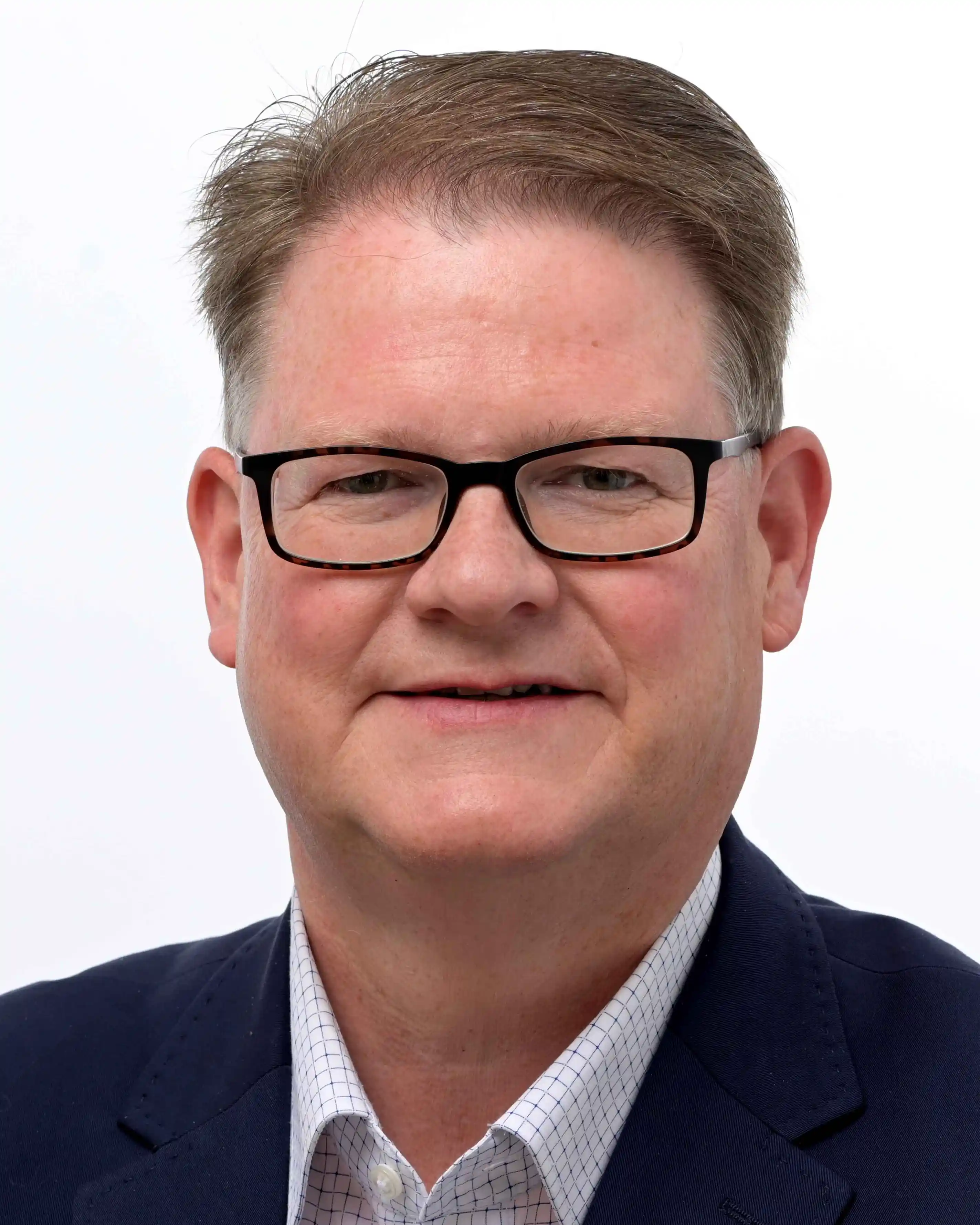
Lukas Sieper | Germany DE | Renew Europe (Renew) | 487 |
| 2 |

|
Juan Fernando López Aguilar | Spain ES | Progressive Alliance of Socialists and Democrats (S&D) | 454 |
| 3 |

|
Sebastian Tynkkynen | Finland FI | European Conservatives and Reformists (ECR) | 451 |
| 4 |

|
João Oliveira | Portugal PT | The Left in the European Parliament (GUE/NGL) | 284 |
| 5 |

|
Vytenis Povilas Andriukaitis | Lithuania LT | Progressive Alliance of Socialists and Democrats (S&D) | 273 |
All Speeches (20)
Savings and Investments Union: time to accelerate the process to deepen market integration (debate)
Date:
11.03.2026 16:09
| Language: DE
Speeches
No text available
No text available
Madam President, I would like to thank my colleagues for their participation in this important debate. Although many areas of the Banking Union are characterised by very different partisan policies – as was also noted in the discussion – but above all by national interests, I think we have nevertheless managed to present an ambitious report. The report now forms the basis for the discussion around the Banking Union for the coming years. The Union is at a turning point at which the economic future of the coming decades will be decided. The Letta and Draghi reports stress that the EU needs a realignment in order to compete with the US or China. Against this background, the Banking Union is certainly a crucial cornerstone for our competitiveness. Only a strong Banking Union will allow the EU to raise the necessary capital to make the European economy safe and sustainable.
Madam President, ladies and gentlemen, Commissioner! We have negotiated a very balanced and at the same time ambitious annual report, which has also recognised the signs of the times and offers meaningful solutions. While the 2022 and 2023 annual reports focused very much on the war in Ukraine and Russia’s ongoing aggression, we have again focused more on the very core elements of the Banking Union and the EU’s current priorities in this legislature. It is a strong signal that in the Economic Committee a broad majority in the democratic centre voted in favour of my report. I would therefore like to thank the shadow rapporteurs and their teams once again for their good and trusting cooperation. It was a hard piece of work, after all, the first annual report of a new legislature is always the most labour-intensive. The fact that a very pragmatic approach was adopted across the parties in the negotiations also makes me very confident about the upcoming challenges in this legislature. A strong banking sector is crucial for the economic growth and financing of small and medium-sized enterprises. We have learned the right lessons from the financial crisis and have achieved a lot since the financial crisis: We have achieved better supervisory mechanisms, better resolution mechanisms and a high standard in the area of deposit insurance. We have created a new money laundering authority and closed regulatory gaps in the fight against money laundering. Great progress in key legislation has made the banking sector more resilient. Now we are focusing on competitiveness without losing sight of the resilience of our banks. Currently, EU banks are struggling with lower profitability than US banks due to too many prudential hurdles and a full Banking Union. It is therefore extremely important to improve the profitability of EU banks, as it allows banks to give households better and easier access to affordable credit. Only if our banking systems are also internationally competitive will more capital be available to finance key European objectives, including the digital transition, strategic autonomy and improving our defence capabilities, for which we will need a lot of money. An important point that was particularly close to my heart is the sufficient consideration of our national banking structures with their many small savings banks and cooperative banks. Our national institutional protection systems should be complemented and strengthened by European legislation, but not replaced.
Madam President, ladies and gentlemen, ladies and gentlemen! The EU is at a turning point in history. Our actions for the coming years will certainly be decisive for the economic future of the coming decades and the preservation of our prosperity. We must therefore draw the right conclusions from Letta's and Draghi's reports. Three points, I think, are crucial for promoting European competitiveness: on the one hand, reducing bureaucracy, strengthening the European single market and, of course, boosting our economic growth. But we certainly do not achieve change only by distributing billion-dollar funding programmes. To believe the structural problems we can fight with money from the watering can, that will certainly not work. We need practical laws. We also need fewer laws and, above all, a reduction in bureaucracy.
Mr President! If 70% of savings are in savings accounts, we have a lot of untapped potential that could benefit our citizens and our economy. Private savings should go to innovative European companies, especially SMEs, small and medium-sized enterprises, which are the backbone of our economy. A better securitisation market or a European savings product could help deepen capital markets. That is why we also need the retail investment strategy. Nur wenn Anleger auch Vertrauen in die Kapitalmärkte haben, können wir das dringend notwendige Kapital für unseren erheblichen Investitionsbedarf auch erschließen. It is not good that the Commission is considering withdrawing the retail investment strategy, although we are on the right track. The SIU is an important step. We need more incentives, and we need a plan if we want to remain competitive internationally.
Fight against money laundering and terrorist financing: listing Russia as a high-risk third country in the EU (debate)
Date:
13.11.2024 22:00
| Language: DE
Speeches
Mr President, ladies and gentlemen! Dealing with Russia has played a central role in the negotiations on the new Anti-Money Laundering Regulation. In order to make it a little harder for the Russian oligarchs to launder money in the EU and circumvent sanctions, many adjustments were made. Among other things, increased due diligence requirements and an asset register for luxury cars, yachts and aircraft were introduced for very wealthy private individuals. Now, however, action must also be taken consistently. Instead of creating bureaucratic hurdles, it could be much easier to blacklist Russia. In any case, it is important to avoid excessive bureaucracy. In order to uphold international standards, the Commission follows the FATF’s recommendations when identifying high-risk third countries – but there, of course, Russia’s allies continue to block blacklisting. Even if, for objective reasons, there is much to be said for Russia's inclusion in this famous list, this is of course prevented by these states for political reasons. The EU Commission should therefore no longer wait for the long overdue decision of the FATF, but take the matter into its own hands and blacklist Russia.
Organised crime, a major threat to the internal security of the European Union and European citizens (topical debate)
Date:
18.09.2024 14:05
| Language: DE
Speeches
Madam President, ladies and gentlemen! The report of the Federal Criminal Police Office in Germany published in September shows that the economic damage from organised crime in Germany has more than doubled – EUR 2.7 billion for 2023. Cybercrime alone has caused €1.7 billion in damage. 70% of criminal organisations are active in more than three Member States. We have been working very successfully on an anti-money laundering framework over the last two years, which will greatly improve cross-border cooperation and hopefully gradually close the loopholes. This will make it more difficult to circulate money from criminal activity in the future. With Europol, Eurojust and, of course, the European Public Prosecutor's Office, we have the right tools to continue to fight crime in this context and to put an end to it. This may sometimes seem like a drop in the ocean due to the current figures, but we certainly need a long breath. Only through coordinated European cooperation and the optimisation of processes through digitalisation can we effectively combat organised crime accordingly. Processes also need to be further optimised within the Member States. The more fragmented the organization, the easier we make it for organized crime. The police authorities of the individual countries must therefore cooperate more intensively and much better. The exchange of information must be optimised, and data protection – which I think is also particularly important – must not become the protection of perpetrators in the fight against crime. We all know that crime doesn't stop at borders, and that's why: We need more cooperation.
The sixth Anti-Money Laundering Directive - Anti-Money Laundering Regulation - Establishing the Authority for Anti-Money Laundering and Countering the Financing of Terrorism (joint debate - Anti-money laundering)
Date:
24.04.2024 16:08
| Language: DE
Speeches
Mr President, ladies and gentlemen, I am pleased that, after almost three years of negotiations, we can finally vote today on this money laundering package. I would like to express my sincere thanks to all my colleagues for the good cooperation. A very big praise to the Belgian Presidency of the Council, which ensured that we were finally able to negotiate the final package. We have created an ambitious European framework without losing any measure or centre. It was crucial that a risk-based approach finally prevailed. As a result, we avoid unnecessary audit work and avoid competitive disadvantages for our European companies. It is crucial that anti-money laundering is also feasible in practice and that our citizens and our economy are not disproportionately overwhelmed with bureaucracy. The AMLA money laundering authority in Frankfurt will certainly continue to make an important contribution to this effective fight against money laundering in the future. I am pleased that the agency is located in Germany.
Extending the list of EU crimes to hate speech and hate crime (debate)
Date:
17.01.2024 17:18
| Language: DE
Speeches
Madam President, ladies and gentlemen. Hate speech and hate crime are unfortunately becoming an increasing social problem and a threat to our rule of law. We must protect young people and marginalised groups in particular from all forms of hatred. There must also be no categorization. In particular, the Internet must not be a legally free space. We must fight hatred or cyberbullying with all the force of the law. But even on the open road, hatred is now part of everyday life. More and more Jewish citizens are also openly hostile because of their religious affiliation. More and more citizens are also being attacked, for example, because of a disability. Hate speech and hate crime must not become socially acceptable. We have to be careful about that. There are many construction sites here. A first step would be the establishment of European minimum standards. I very much regret that the Council has not made any progress in the last two years. It is high time to act.
Mr President, ladies and gentlemen, The European economy is under pressure. Russia's war of aggression against Ukraine, as well as other geopolitical shifts, are challenging us. It is therefore right that the Commission should react and specifically analyse the strategic dependencies in areas such as raw materials, energy and technology. It is also good that it has been recognised that we need to promote the competitiveness of the EU. What I observe with concern, however, is that with this proposal the Commission is once again trying to solve problems in a bureaucratic manner. We must finally be able to move away from this approach and offer our European companies realistic and practice-oriented solutions. Too much state influence – ultimately for over-regulation – contradicts the principle of open markets. Please take companies into the decision-making process, de-bureaucratize and do not over-regulate the markets.
Madam President, ladies and gentlemen, Yes, inflation, high energy prices, supply chain difficulties are putting us all under pressure, putting our companies under pressure above all else. And targeted measures in tax policy are or should also be levers for securing liquidity, jobs and also investments. For the future business location, modernization and simplification of corporate taxes are therefore certainly elementary. Of course, we all want fairer taxes at all levels – after all, countries have it a bit in their hands. And certainly we also have to look at the tax administrative burden of companies. This must be reduced, it must become more digital, so that it can even be mastered in times of scarcer resources. I know a lot of examples from my home country, Germany, that hardly anyone in Germany can fill out a tax return on their own, because everything is far too complicated – and in times of crisis it is all the more difficult. This is why, unfortunately, some SMEs have not made it through the crisis in difficult times without reserves. That is why we need a simplification of tax law, a fairer tax law, but ultimately we must also go in this direction in order to meet people to a certain extent, in order to simplify taxes accordingly and not to build up even more bureaucracy. It's difficult, I know that. But it is worth the sweat of the nobles that we orientate ourselves to it. How not to do it, you can finally see that with the traffic light government at the moment in Germany. Everything is complicated, there is far too much ideology in the action, and we do not help anyone if we drive the companies outside Europe, if the bureaucracy and the tax burden are far too high for us.
Cyprus Confidential - need to curb enablers of sanctions-evasion and money-laundering rules in the EU (debate)
Date:
22.11.2023 19:04
| Language: DE
Speeches
Mr President, ladies and gentlemen. The events in Cyprus show that it is really high time that we finally adopt and create a single set of rules and frameworks in the Union with the new regulation. But it has also become clear that we need to put more emphasis on the actual priorities. While we are currently negotiating between the European Parliament and the Council which merchandise dealers or football clubs we want to burden with further obligations, elsewhere Russian black money is laundered completely unmolested and sanctions are circumvented and generous golden visas are issued. The stricter rules that we have been negotiating for over two years are of no use if some Member States do not sufficiently take care of the implementation of the rules that are already in place. Member States must also want to catch the big fish. The Commission must finally take action and ensure that the current rules are enforced and sanctions implemented. Only then will the new rules, which we negotiate with great commitment, make sense.
Schengen area: digitalisation of the visa procedure - Schengen area: amending the Visa Sticker Regulation (Joint debate – Schengen area)
Date:
17.10.2023 15:06
| Language: DE
Speeches
Madam President, ladies and gentlemen, Commissioner! Yes, the digitalisation of the visa process is overdue, and that is why we certainly find it very, very good – many colleagues – that we are setting the right course for this digital future here in Parliament this week. The digital visa procedure will facilitate the application procedures for non-European travellers, relieve the administrative burden, in any case continue to make the theft of visas more difficult and prevent, and will certainly also reduce the falsification of visas to a certain extent. It will be important to establish a simple digital platform that allows visas to be issued without hurdles. Here, as the EU, we should be at the forefront and not take an example of the sometimes very complicated application procedures of other countries. I am glad that, as an EPP, we have managed to note that the application for a visa for entry by a third-country national when he or she submits an application for international protection directly remains outside the scope of the Visa Code. Overall, a good result was negotiated in the trilogue. We should also agree to this accordingly in the plenary votes.
Mr President, ladies and gentlemen, We have a very high investment need to meet the climate targets of the Paris Agreement and the European Green Deal. However, to finance the transition to a more sustainable economy, we need private capital. With state investments alone, we cannot meet this enormous investment need. For this, it is important to bring enough investors to the capital market and to have a uniform standard for green bonds. The current confusion of standards is an obstacle to a rapidly growing market. However, in order to create an international gold standard for sustainable financing, we need a pragmatic framework. I am relieved that in long negotiations it has been possible for pragmatism to win in the end. Only with this approach and without unnecessary bureaucratic hurdles can we ensure that the rules are also adopted by the market. It is important that sustainable bond rules are easy for companies to use and easy for investors to understand. The framework must provide guidance and create transparency in a confusing market and Greenwashing reduce. It is also the right approach to focus more on volunteering and thus prevent excessive bureaucratic effort.
The 10th consecutive increase in reference interest rates decided by the ECB and its consequences (debate)
Date:
03.10.2023 22:00
| Language: DE
Speeches
Mr President, Commissioner, ladies and gentlemen! It was only in July 2022 that the ECB raised its key interest rates for the first time, certainly initiating a long overdue interest rate turnaround. Under pressure of record inflation of 10%, ten further interest rate steps followed. In Germany they say: Better late than never. Now we have finally arrived at a point where monetary policy is having an impact. But there is no reason to breathe a sigh of relief. The inflation rate is still far too high. That's why the ECB has to keep the current course, even if not everyone will like it. Price stability is and will remain an important goal. Unfortunately, we are still a long way from an inflation rate of 2%. As long as inflation does not come close to this price target, monetary policy easing is certainly the wrong way to go. High inflation rates must not become the new normal. Above all, the ECB needs to lower the inflation expectations of economic operators. It is also about your own credibility. We need stable prices with which the economy and consumers can plan. Our citizens must also be able to reach interest rates again with their savings deposits. Otherwise, we get into a vicious cycle from which we can no longer get out, above all certainly not with green ideology politics.
Madam President, Commissioner! It is completely clear: If we want to meet our ambitious CO2 reduction targets, passenger and freight transport must also play its part and become less polluting. In order for the sector to achieve this goal, we as politicians must create the right and, above all, technology-neutral framework conditions. In concrete terms, this means that we must enable the development of a networked mobility system. This includes strengthening and promoting the use of intelligent transport systems. The advantages of such systems are obvious: Traffic flows and safety will be improved, costs will be reduced and multimodality will be strengthened. Unfortunately, some Member States have still poorly implemented their obligations, in particular to national access points. This means that neither businesses nor citizens can benefit from this system. It is therefore good that the European Parliament was able to assert itself in the negotiations with the Member States. Where Member States once again wanted to put the digitalisation of the transport sector on the back burner, we have made a strong commitment to finally tackle the digital transformation while improving the safety, sustainability and efficiency of our transport systems accordingly. Thanks to the revised Directive, we will be able to advance the integration and combinability of different modes of transport and promote the development of technologies such as vehicle-to-vehicle communication, real-time data traffic, intelligent traffic light systems and automated traffic controls. In this way, we reduce congestion, shorten travel times and at the same time increase safety on the roads – a real success that will certainly benefit everyone.
Mr President, ladies and gentlemen, Unfortunately, the results in the fight against money laundering are quite manageable. Although the damage to the treasuries has accumulated to several billion euros, the EU does not yet have a single strategy to combat money laundering and terrorist financing. The Directive has been revised five times. On a regular basis, there have been infringement proceedings, unfortunately also, as Mr Ferber has already indicated, against our beautiful country of Germany. That is why it is so important that the Commission has now put forward a proposal for a regulation. This regulation finally has this binding character, which we also need very, very urgently. We also need strict and well-coordinated supervision. The new authority to be established can be an important building block. But that is not the case. Member States' specialised authorities also need to work more effectively and thoroughly. The new EU authority must therefore not only support the country authorities, but also coordinate their cooperation. However, we must be careful not to make the work of the national authorities more bureaucratic and complicated.
Natural disasters during the summer 2021 - Impacts of natural disasters in Europe due to climate change (debate)
Date:
14.09.2021 11:31
| Language: DE
Speeches
Mr President, ladies and gentlemen, In my hometown, in my home state of Rhineland-Palatinate in Germany, the storm raged in July in the Eifel, on the Moselle, and the Ahr Valley was worst affected. We have 133 dead. Three people are still missing. In the Ahr Valley, 62 bridges, 40 schools, 55 kindergartens and five hospitals were destroyed. More than 3,000 companies have been affected by the disaster. The extent can only be judged if you have looked at it on the spot. I've been there. The television pictures were depressing, but I'll tell you: On site, it makes a completely different, deeper impression. 14 days after the disaster, I visited my friend there, and although a lot of damage had already been repaired, it still looked like a bombing attack. My friend and other affected people told me about the flood night and also talked about the fears of death that the people there have endured. Out of respect for these people and the many dead, it is therefore forbidden to politically abuse the flood catastrophe. This would be shabby and would not do justice to the matter. Rather, it is our job to help people build. It is therefore important that aid from the EU Solidarity Fund is released quickly as soon as applications are received. Should the pot be empty, as one has learned today from various media, it must be redeployed in the household. The Commission must be able to react more flexibly, ladies and gentlemen, and we owe this to the people affected on the ground. The construction will take many years. The reappraisal and root cause research must also be carried out quickly and centrally in Europe.
Financial activities of the European Investment Bank - annual report 2020 - Control of the financial activities of the European Investment Bank - annual report 2019 (debate)
Date:
05.07.2021 17:57
| Language: DE
Speeches
Mr President, ladies and gentlemen, The EIB has made a significant contribution to stabilisation through its 2020 support programme. 420,000 small and medium-sized enterprises were supported. This has supported and secured 4 million jobs, including in the SME sector. Jobs have been secured, crisis-stricken sectors have been boosted accordingly, and the most severe economic impact has been mitigated. The EIB has also not forgotten the long-term objectives. Especially in economic times, it is particularly important to promote the economy in a sustainable manner and to support it accordingly. Of particular importance is the promotion of our small and medium-sized enterprises. We must not forget these, Mr President. This is particularly important from our point of view. They are the backbone of our economy, and without SMEs we will not achieve the climate targets. And these SMEs need transitional technologies, whether they suit the Greens or not, and we need to be aware of that. Please continue to support our medium-sized industry and also the transition technologies.