
| Rank | Name | Country | Group | Speeches | |
|---|---|---|---|---|---|
| 1 |
|
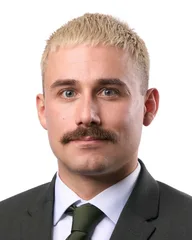
Lukas Sieper | Germany DEU | Non-attached Members (NI) | 390 |
| 2 |
|
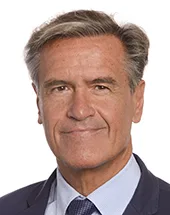
Juan Fernando López Aguilar | Spain ESP | Progressive Alliance of Socialists and Democrats (S&D) | 354 |
| 3 |
|
Sebastian Tynkkynen | Finland FIN | European Conservatives and Reformists (ECR) | 331 |
| 4 |
|
João Oliveira | Portugal PRT | The Left in the European Parliament (GUE/NGL) | 232 |
| 5 |
|
Vytenis Povilas Andriukaitis | Lithuania LTU | Progressive Alliance of Socialists and Democrats (S&D) | 227 |
All Contributions (63)
Use of vehicles hired without drivers for the carriage of goods by road (debate)
First of all, I would like to absolutely commend this legislative proposal because, for example, some kind of car carrier from Croatia will be able to rent a vehicle in another Member State in a much simpler way, which is absolutely acceptable. We know that any such agreement reduces paperwork, has greater efficiency and, of course, saves time. But as a member of the Transport Committee, I would like to say another thing, another topic, because I am sure that we need a common European policy also for the development of autonomous vehicles. We urgently need such legislative proposals that are valid for the whole of Europe, not just for one single country. Otherwise, in fact, we will be put in a situation where we pass a directive by directive, a law by law, and time goes, and goes, and goes. And that's why I want, dear Commissioner, that we immediately start drafting uniform laws, I would say an umbrella law, to develop rules for driving autonomous vehicles. And yes, Europe must be ahead of the competition because, you know, technology does not wait, science does not stagnate and so let's give a wind in the sails of the economy and innovation and, in essence, our European economy.
Strengthening the system for protecting PDO and PGI denominations in the EU after the Prosecco/Prosek case (G-001003/2021 - B9-0004/2022)
I am very pleased to hear from the Honourable Chair, the Honourable Commissioner, that the system of protection of protected designations of origin and geographical indications across the European Union will be strengthened in the future. This, of course, is good news for our loyal farmers and for better and stronger protection of quality indigenous agricultural products. But here I want to say clearly and loudly that the so-called ‘case’prosecco- ‘prošek’ does not exist. Neither the struggle between Croatia and Italy nor the slow nor the war, as you mentioned, dear Mrs. Bizzotto. Namely, prosecco and Prošek are two completely different wines. While prosecco is a mature dessert wine, prosecco is a young, fresh, sparkling wine. The two wines in the production process have a completely different technological approach, and this needs to be known and understood. And that's why, Mrs. Bizzotto, there's no conflict or standard, and God forbid, there's no war, as you say. Because we know very well that wine needs to connect people, not separate them. And of course it is important to protect Prošek in order to prevent disloyal practices for wine that were first mentioned in 1844. Again, in 1844: And just as we have protected quality indigenous agricultural products – olive oil, Istrian teran, prosciutto – we want to do the same with prosecco. And I don't see a problem here because I know, after the example and the battle for our teran, that proper product labelling does not cause any consumer confusion. That is why I look forward to strengthening the designations of origin and that is why I am sure that Prošek will proudly wear this designation in the future. Dear Commissioner, I would like to ask you to be guided by this kind of thinking in your future activities, so that you can spend your energy on protecting quality agricultural, indigenous products, and thus help both farmers and consumers. Cheers to Prosecco, alla salute con prosecco.
Empowering European Youth: post-pandemic employment and social recovery (debate)
–Respected Commissioners, colleagues, it is now quite clear that the coronavirus pandemic will have many negative consequences, unfortunately, and one of the most affected groups will certainly be our young people. In 2022, the European Year of Youth. I'm not going to talk about their lack of entertainment, social life, education, of course, social inclusion, but I want to talk about the problem of unemployment. Here, I think that the Commission, together with the Member States, has a huge responsibility. All of this, of course, should be seen in the light of the demographic problems of the whole of Europe, and especially the country from which I come, Croatia. Namely, unemployment directly negatively affects the mental health of young people, creates fear, insecurity and defines the behavior of a young person and of course determines his thinking about plans in the future and the formation of a family. Dear colleagues, I believe that after two years we are finally moving towards the end of this unfortunate pandemic, but this is by no means a moment for celebration, but for the urgent preparation of post-pandemic relief measures and concrete programs. I ask that the top priority be young people who have been severely ill and suffering for almost two years and who urgently need concrete measures and programs to facilitate life and work and try to return them and the whole society to the old as soon as possible, I would say only normal. We need a common European response, because as covid knows no borders, so must the response to covid be borderless, be a European, common response, and in this way we will help young people and our entire society to recover faster. Therefore, we only consider investing in young people as an important investment and not as a cost.
Barriers to the free movement of goods (debate)
The Honourable Chair, the Honourable Commissioner, our colleagues, we know that, unfortunately, the COVID crisis has disrupted European transport and mobility, especially due to the many restrictions on our internal borders. Of course, transport and tourism are the most vulnerable activities in all of this, and on the other hand, supply chains are crucial for the functioning of the internal market in the European Union, and we can see very, very many examples of how they are very difficult to function today. What solution do I think we all find together here? This is of course one coordinated non-discriminatory approach by Member States. In fact, in supply chains, green lanes at border crossing points are crucial regardless of the goods involved. I know very well what kilometre columns look like because I come from Croatia, from tourist Istria, which unfortunately is not yet a member of the Schengen area. That is why after eight years in the waiting room, so to speak, I can hardly wait for further integration of the Republic of Croatia into the Schengen area, i.e. entry into it. This is of course a win-win situation for Croatia, but also for all Member States, and especially for many workers, students, drivers, tourists or for all three and a half million people circulating on internal borders every day. That's why, Honourable Commissioner, I think we should agree on two points, that is, two conclusions here today. We need uniform criteria for entering the Member States, i.e. a European coordinated approach based on the principles of, of course, the common market and without discrimination, and the full meaning of the Schengen area will be given to our Europe if all countries in the waiting room enter it as soon as possible.
State of the Energy Union (debate)
Honourable Chair, Honourable Commissioners, Honourable Colleagues, Fourth Wave of the Pandemic, Tackling the Consequences of Climate Change and Raising Energy Prices. This is the moment we live in, this is our everyday life. And even before that, before this rampant energy price, about 30 million Europeans lived in energy poverty. That's about seven times more than the population of the country I come from, than Croatia. And as if all this is not enough, here is inflation. Never greater, which of course undermines the competitiveness of our economy and hampers the purchasing power of all our residents. That is why, and absolutely, I welcome the package of measures recently adopted by the Commission, but I invite you to do more to propose, together with the Member States, more measures, more instruments and more programmes. Do not stop at what you have done so far and do your best to make it easier for citizens and the economy to survive this difficult winter, which is here around the corner.
Outcome of the COP26 in Glasgow (debate)
Dear Vice-President, dear colleagues, it is not only the fault of developing countries that COP26 in Glasgow has not achieved the desired results. Did they promise 100 billion euros in 2009 by 2020? Yes, it is. Has this promise been made? No, he didn't. And of course we all want a clean environment and we want a green transition, but please tell me how one, for example Bangladesh, can set aside as much as one Norway or how one Croatia can set aside as much as one Belgium. And we're all, of course, for ecology. But ecology is not cheap, ecology costs and that is why ecology must go hand in hand with the economy. And now, the developed countries in Glasgow have been called upon to increase funding for developing countries; So why would they trust them and why would they prepare such projects that cost them money? That's why I think in Glasgow it was necessary not to call, but to commit. Please think about it because it may not be too late to do so.
The outcome of the Western Balkans summit (debate)
Dear Chairman, Honourable Commissioner, Honourable Colleagues, and in fact we have been hearing for more than a decade that the European Union wants to expand into the Western Balkans. And we just listen and, in fact, nothing more than that. Unfortunately, we haven't moved much from the beginning. It seems that the European Union is not in a hurry at all and there are always new priorities, both new and new, but the gods and countries in the region have not sweated out of work. And they know what to do, their reforms are clear, but, here, there is no hurry. While, therefore, on the one hand, the European Union pretends that enlargement is one of the priorities of the European Union as soon as possible, countries from the region say and claim that these are fundamental reforms for their cosmetic changes. Of course they are not, and instability, dear colleagues, grows, and grows, and very dangerously grows. Unfortunately. So let's finally realize that we need each other and let this unhappy end as soon as possible status quo There is no strong Union without enlargement to the Western Balkans, but there is no stable, stable and prosperous Western Balkans without their full integration into the European Union. Hello, it is time for action, for concrete action and concrete actions for the inclusion of these countries in the European Union without figs in their pockets, without calculations, without delay. Let's start, let's talk, let's act, but not let another decade pass in this way status quo because today it is our current neighbourhood, our yard that we are very interested in as it will be, because we also depend on that neighbourhood and it must become our common European house tomorrow.
UN Climate Change Conference in Glasgow, the UK (COP26) (continuation of debate)
–Dear Chair, it is clear that the Glasgow Conference is one of the last, if not the last, chances to prevent a complete climate collapse, a climate catastrophe. I think we all finally understand that and I don't want to repeat the same thing all the time, because as the most famous climate activist would say: ‘There is much more blah blah, blah, blah, blah, blah, blah, blah, blah, blah, blah, blah, blah, blah, blah, blah, blah, blah We speak with great words, but deeds are lacking. I'll just take one example – traffic. Transport is of course the biggest climate problem for Europe, with around 30% of CO2 emissions emitted by road transport – 72% – and the target was to reach 10% of renewable energy sources by 2020. And we didn't do it. And nothing. Let's not do that anymore! So no longer bla bla bla bla bla bla, but realistic achievable targets and emergency financial assistance for them, especially in countries with lower GDP per capita, such as Croatia.
Joint Undertakings under Horizon Europe (debate)
The Honourable Chair, the Honourable Commissioners, the Honourable Colleagues, I am confident that the establishment of the Joint Undertakings under Horizon Europe will play an absolutely crucial role in strengthening the research and innovation capabilities of the European Union. Namely, these public-private companies are strategically important for achieving innovation goals by 2030, such as the development of artificial intelligence or e-health. Namely, we know that Horizon is the largest program with the most funds in this programming period, and I believe a crucial program for the European leadership position in the development of new technologies in accordance with our industrial strategy. Hello, Europe has unfortunately failed to create tech giants. Too few young companies grow into big and successful R&D companies, unfortunately. But that is why close cooperation between the public and private sectors must and will enable companies to be sustainable and competitive in the global market in post-COVID time.
Farm to Fork Strategy (debate)
Dear President, dear Commissioner, dear colleagues, I come from Croatia, from the country where the scene is determined, I would say, the agricultural paradox. Namely, in the last eight years since Croatia joined the European Union, a total amount of aid or subsidies has been paid to farmers of around HRK 33 billion or EUR 4.4 billion, and production is lower than eight years ago. What does that mean? This means, therefore, that the total production of agricultural products is not accompanied by subsidies and that something urgently needs to be changed, that we are not doing well, that we are doing wrong and wrong. That is why I see the Farm to Fork Strategy as a tool, I see it as a help, I see it as a chance for both farmers and consumers, because in parallel with healthy, organic farming, changes in the behaviour of our consumers need to be developed. That it is not only the sixth motive for choosing an agricultural product on the shelf, the place of production or health, but that it is the first motive for buying the same product. That's why we all need to keep working together.
European solutions to the rise of energy prices for businesses and consumers: the role of energy efficiency and renewable energy and the need to tackle energy poverty (debate)
Dear President, Dear Commissioner Simson, dear colleague and colleague, Europe is at a turning point - an energy milestone because this is no longer the case. I say Europe, not Member States because it is clear that energy and rampant energy prices are a European issue, not just a matter of some Member States. That is why we need European measures so that citizens do not come into energy poverty and do not even have to include heating, i.e. that the economy does not become uncompetitive in a large global market due to rampant energy prices. And don't expect the economy and citizens to go into investments themselves to invest in alternative energy sources or to save electricity. They won't because they don't have free resources. That's why they need European assistance, that's why they need help from Member States in their national recovery plans, and that's why we need to urgently adopt an action plan. Dear Commissioner, do it now so that clean, green and cheap energy does not just remain a dead letter on paper, but very concretely carried out activities.
Assessing the Union’s measures for the EU tourism sector as the end of the Summer season nears (debate)
Dear Chairman, Commissioner Breton, dear colleagues, I come from the most touristic region of the tourism champion in this year 2021 in the Mediterranean, from Istria in Croatia. However, although this year was, I would say better than expected, although this season was really good, it of course did not solve serious problems in this sector. Namely, one excellent season, we all know, cannot compensate for the accumulated financial losses of the previous period, and another huge problem that occurs in Croatia, but also in the whole of Europe, is the lack of a quality workforce in the sector. That is why I ask the Commission to tackle the financial and personnel problems in this sector, but I also appeal to all Member States, to governments, to work on this in the short and long term because even though we are a tourist country, every year fewer and fewer young people enrol in these faculties and go to these professions. That's not their problem. This is a problem that we have to work on together.
EU transparency in the development, purchase and distribution of COVID-19 vaccines (debate)
At the outset, ladies and gentlemen, I would like to say that I am sure that the European Commission has done this work in good faith and I would like to particularly commend two excellent ideas, namely solidarity and a common European approach to vaccines. But what we need to know now is the fact that this is a very, very sensitive process in which communication must be clear, honest and above all transparent. Otherwise, cacophony happens, otherwise different conspiracy theories begin to swarm, i.e. distrust of our citizens. Here, of course, we are talking about public funds and we are talking about health. Therefore, maximum transparency, of course respecting all laws is above all. Here we must emphasize one thing, which is that not only in the development, not only in the distribution of trials and vaccine results, but also throughout this information chain must be clear, precise and fast. Fast, speed is the key word, and the one that should dominate this space is the waist. Unfortunately, we often see that this has not been the case in the past. I'm not going to repeat stories about contracts now, about volumes, about distributions, but what I want to emphasize, we're in a very sensitive moment now. We see that vaccination slows down and what is most often the word is perhaps. There may be a third dose. Maybe once a year we'll get vaccinated, maybe, maybe, maybe. So I ask the Commission to make everything extremely transparent, that information is available now and now, that disinformation does not grow and that the goal we all need to have is growth and trust in the system, in science, in vaccination. So to simplify the whole story, the key word is the trust and security of our citizens. And everyone who is vaccinated has shown confidence in the system and has shown confidence in institutions. And that is why Europe must be honest, open, and what I am interested in, therefore, is whether the European Commission has some idea for innovative channels of communication because, clearly, vaccination is slowing down again and how to reach those who are not or do not want to be vaccinated for different reasons. Many people today believe more in an influencer than a top scientist, that we are not talking about a politician. So, that transparency, that security, but also that communication and that different communication than to date. And that's why I ask you to make that more effort because we live in 2021 and few today no longer have a smart phone and few are no longer on a couple of social networks, especially young people, and here I think there is huge room for improvement. And let's not forget, every lie repeated a hundred times becomes true. So please consider whether everything has been done that could have been done in the past year and around communication because, of course, this is how we save people's lives. I think that there is still a lot of room for improvement in order to raise citizens' trust in the whole system and in vaccination. If I were to go to the end, I would say that joint procurement is a great idea and I think we should think about purchasing vital medicines together so that then a fairer, one more equal society can be created all over Europe, but that we also always have in mind what the famous Nobel laureate Marie Curie said. She said nothing in life should be afraid, but she should be able to understand. So to understand, we need information, and to have the right information, there must be transparency. That is why we can get information in a transparent way and then we have no fear, then we have trust and then we have safe and satisfied citizens.