

| Rank | Name | Country | Group | Speeches | |
|---|---|---|---|---|---|
| 1 |

|
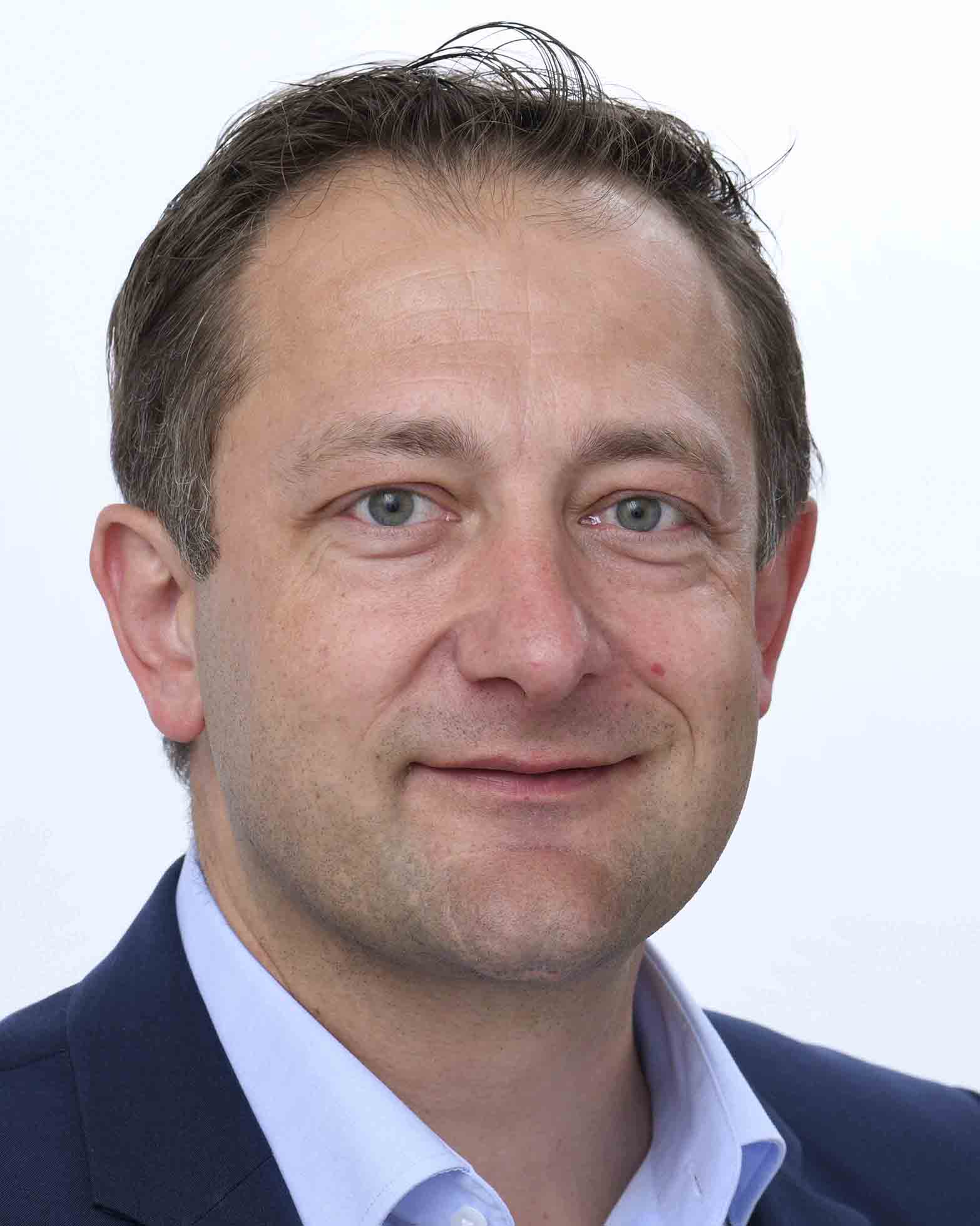
Lukas Sieper | Germany DE | Renew Europe (Renew) | 487 |
| 2 |

|
Juan Fernando López Aguilar | Spain ES | Progressive Alliance of Socialists and Democrats (S&D) | 454 |
| 3 |

|
Sebastian Tynkkynen | Finland FI | European Conservatives and Reformists (ECR) | 451 |
| 4 |

|
João Oliveira | Portugal PT | The Left in the European Parliament (GUE/NGL) | 284 |
| 5 |

|
Vytenis Povilas Andriukaitis | Lithuania LT | Progressive Alliance of Socialists and Democrats (S&D) | 273 |
All Speeches (58)
Adoption of the proposal for a Parenthood Regulation (debate)
Date:
12.03.2025 17:40
| Language: EN
Speeches
Madam President, honourable Members, let me start by thanking the European Parliament for its positive opinion on the Commission proposal on the recognition of parenthood between Member States. And let me also thank the European Parliament for its continued interest in the ongoing legislative discussions on the proposal in the Council, as shown by this oral question on the matter. Member States are already required by Union law on free movement to recognise parenthood established in another Member State for the purposes of children's rights under the European Union law, and this includes their right to travel or to take up residence in another Member State, their right to obtain a travel documentation or their right to be treated equally in a host Member State on all matters within the scope of the Treaty. The Court of Justice confirmed in 2021, in its judgment in the V.M.A. case, that this recognition obligation also applies to children with same-sex parents, even if the Member State where recognition is sought does not allow parenthood by same-sex couples. Indeed, the recognition in a Member State of parenthood established in another Member State is essential for the right to free movement. But families may still face difficulties in having the parenthood of their children recognised in another Member State for all purposes, that is, beyond the existence of children's rights under free movement law, notably for the purposes of children's rights under national law, such as their right to inherit from either parent in another Member State, to receive financial support from either parent in another Member State, or to be represented by either parent in another Member State on matters such as schooling and health. It is with this in mind that the Commission adopted the proposal under discussion and considered that, in line with international law, the Treaties and the EU Charter of Fundamental Rights, the proposal should require Member States to recognise parenthood established in another Member State for all children, irrespective of how the child was conceived or born and irrespective of the child's type of family. The proposal does not affect substantive family law, which is a competence of the Member States, and the proposal is an essential element to build a Union of equality and implements the EU strategy on the rights of the child. Moving now to the two questions you have asked. In the oral question first, the Commission has followed and supported thoroughly the ongoing discussions in the Council, which, however, need time, and mostly for two main reasons. First, the proposal is a measure of family law with cross-border implications. The Member States have different approaches towards certain matters of family law. They therefore want to ensure that the proposal does not affect their competences to adopt rules on substantive family law, such as their rules on the definition of family adoptions or their rules on surrogacy. In addition, as the proposal needs to be adopted by unanimity, every Member State needs to be on board for every sensitive matter under discussion. Second, the proposal is technically quite complex. The proposal aims to facilitate the recognition of parenthood by harmonising the Member States' rules of private international law, that is, the rules on international jurisdiction, applicable law on the recognition of judgements and authentic instruments, and by creating a European certificate of parenthood such as you have mentioned it. Currently, beyond existing rights under free movement law, each Member State addresses the recognition of parenthood according to different principles and procedures. Therefore, the Member States want to ensure that they find the provisions of the proposal acceptable from their policy viewpoint and that their authorities will find the provisions clear. In view of the various policy and legal facets of the proposals, since the adoption of the proposal, the Commission has at all times lent its assistance to the Member States, both in the Council and in bilateral discussions to clarify points, address their questions and listen to their concerns, to try to find common ground with other Member States. Likewise, the Commission has always been available to discuss with all the Council presidencies technical and policy solutions within the scope of the proposal, to help the discussions progress. The Commission also considers that all Member States have approached discussion in the Council on the proposal in a constructive manner, and that progress is gradually being made. Concerning your second question here. If unanimity cannot be reached in the Council, the Commission recalls in this matter that, as the proposal goes beyond recognition of parenthood for the purposes of rights under EU law, it has to be adopted pursuant to Article 81(3) of the Treaty on the Functioning of the EU, under the Union's competence to adopt measures on family law with cross-border implications. As the European Parliament noted in its oral question, this means that, after having consulted the European Parliament, the proposed regulation must be adopted by unanimity in the Council. Given that important provisions must still be discussed in detail, it is not possible at this stage to predict how negotiations will unfold. However, Member States will eventually need to take a stand on whether they can support the proposal resulting from the negotiations in the Council. And if unanimity cannot be reached in the Council, the Commission remains ready to consider possible avenues at that precise moment.
Challenges facing EU farmers and agricultural workers: improving working conditions, including their mental well-being (debate)
Date:
18.12.2024 18:34
| Language: EN
Speeches
Mr President, honourable Members, I believe that your interventions have confirmed the worries and the interests of this Parliament for working conditions and farmers mental health at work. I want to thank you for that, because this is, for me, a very valuable input to me and my services related as well to other services, because it is not only agricultural policy we are talking here about, we are speaking about health policy, employment policy and work policy. So I think it is very important that we take this on and work together for a better future, for our agriculture and for better conditions for our farmers and farm workers. I think that will be very important. I also think we have to pay special attention to young farmers and women in agriculture because they face the biggest challenges and biggest discriminations. So I think there is a lot of work to be done. I want to reiterate something that Jessika van Leeuwen has said. I think it is very important here to take a break, to take deep breaths and consider the situation. And I think we are all worried here in this Parliament about the situation of our farmers, of our farm workers, and that the situation is not good. I think we agree as well on many of the causes. It is very important that we see financial reasons are one of the worries that our farmers have for various reasons, because they don't get the right income from their work that they are doing. But we need to address this together and we have now proposed ‑ I am only 18 days in the mandate now ‑ but we have already proposed a review of the common market organisations to strengthen the farmers' position in the value chain. We have proposed as well a modification of the Unfair Trading Practices Directive as well, to avoid that farmers and primary producers are exploited. And I think it is very important to work, and you have all mentioned it, too much administrative burden for our farmers. Everybody agrees. So let's work on it. The Commission has delivered a first package in the beginning of the year. I think we can do even better. And I will be working very closely, and I hope I have your support as well, to look into further simplification that our farmers can be out on the farms, do their work there, and I think that will help them a lot as well to to go further. And I think you have as well mentioned other factors that are very important. The modernisation of this sector. We need more investment in the sector that our farmers and farm workers are using the most recent tools. That will be very important because with old working material, accidents are more frequent. We need to make sure they get the right education as well when they are working with dangerous instruments or with hazardous pesticides. So I think this will be very key as well. We have also to invest in youth, because it is almost impossible now to bring up a new farm and to make this happen. So I will be working with this already for the vision for the future of agriculture and food production that we will present to you in February as well, with a dedicated pillar on the social aspects and on the work-life balance, which is a very important point. We will also be very strong on the international side. It has been mentioned very prominently today as well, even if it was not the content of the discussion, but we need to be better prepared to take away the fears that certain of our farming sectors might have. And I think that, more generally, we need to give back the pride to our agriculture and farming sector, because that is something that they suffer the most about. And I think this is going well. Acknowledging the work that they are doing, the progress that they are doing that will be key for us, and I hope that we can bring aside the oppositions from one side to another, from that side to this side, because I am, as I said, less than three weeks ago, I was sitting on that side of the table. I hope for constructive work with you together, because what is at stake is the future of agriculture, is the future of farmers, and is the future of healthy farmers and a community. And there we need to work together and deliver together.
Challenges facing EU farmers and agricultural workers: improving working conditions, including their mental well-being (debate)
Date:
18.12.2024 16:30
| Language: EN
Speeches
Mr President, honourable Members, I am very glad that my first plenary debate as Commissioner for Agriculture and Food immediately gives me the opportunity to exchange with you on such a crucial topic: working conditions in agriculture. And I think it is closely linked to the discussion we just had before. Farming indeed is a very demanding job, both physically and mentally, and farming can be a very lonely job as well, and cause suffering and mental health issues. We cannot be immune to these stories that real farming life writes out there, and we need to act where we can – at EU, at national and also at local level. We also need to see these issues in the longer-term perspective of generational renewal. As a Commission, we need to think about the long-term security of our continent, including on food, and to do that, a lively and healthy farming community is indispensable. Honourable Members, farming is not a job that scores well on work-life balance. This is compounded by uncertain or fluctuating earnings. Excessive red tape is a major stress factor for farmers, who are busy filling out forms rather than working in their fields. Often, income support comes late and the market doesn't give the prices that our farmers will need. Increasingly unreliable weather conditions due to climate change pose additional challenges, and society does not always recognise farmers' vital role in providing healthy food and preserving our land. This can lead to high levels of stress and can lead to mental health problems and disorders, such as depression and in some cases, sadly, even suicide. Among farmers, suicide rates in certain Member States are 20 % higher than the national average in other sectors. Furthermore, fatal accidents at work are more than double in the agriculture sector when compared with all other sectors, and without even considering the many accidents of self-employed farmers that are assumed missing in this incidence rate. The Commission takes these problems very seriously and is taking actions. In 2023, the Commission adopted a Communication on a comprehensive approach to mental health. Special attention is paid to farmers' mental health and Member States are invited to take the necessary steps, particularly on prevention and awareness-raising. The European Agency for Safety and Health at Work has just published an important report on Mental health in agriculture: preventing and managing psychological and psychosocial risks for farmers and farm workers. The report explores psychosocial risks and how they affect farmers and farm workers, and it highlights some international good practices addressing farmers' mental health. Possible discrimination that surrounds mental health problems are also addressed by guidelines provided to the Member States. As regards accidents at work, the Commission pursues in its EU Strategic Framework on Health and Safety at Work for 2021-2027 an ambitious 'vision zero' approach to work-related deaths in the EU, including in agriculture. This involves investigating and addressing the root causes of accidents, improving data collection, increasing awareness and strengthening enforcement. The Strategic Framework also calls on Member States to provide training to farmers via farm advisory services, to increase their skills and awareness of health and safety rules on farms, including safe use of chemical substances, in particular, plant protection products. The common agricultural policy can support these policy initiatives. Specifically, financial support for improving workers' conditions can be given, and the farm advisory service that Member States must make available to farmers under the CAP can be instrumental in raising awareness on mental health and accidents at work through specific advice to farmers. This leads me to social conditionality, and for the first time in the CAP's history, the rights of workers to safe and healthy working conditions have been enshrined in the CAP legislation via a social conditionality mechanism. This mechanism ensures that farmers receiving direct payments and certain rural development support see these payments linked to respect for a set of rules under the social legislation. If they do not, their CAP payments may be reduced in proportion to the gravity of the infringement. Currently, six Member States are already applying it, while the rest will follow as of next year, 2025. We are happy to see that France, Austria, Luxembourg and Italy implemented social conditionality already from 2023, and Spain and Portugal did so from 2024. By establishing social conditionality, the co-legislators clearly signalled that addressing mistreatment of workers in the farm sector is an important issue, and that public money is not granted to employers who do not respect the EU's social legislation. The current mechanism has, however, its limitations. For example, in certain sectors – fruit and vegetables, wine, pigs, poultry and several others – farmers do not receive direct payments and, consequently, are not covered by this instrument. DG AGRI is currently carrying out a study on this mechanism, and we will assess the findings to enrich our reflections. Our objective will be to make our common agricultural policy targeted, and find the right balance between incentives, investments and regulations. I am now looking forward to get your very important input on this topic, and I'm looking forward to a good discussion.
Madam President, ladies and gentlemen, ladies and gentlemen, European green bonds are not just a financial instrument; close the gap between capital markets and the urgent need for climate and environmental action. These bonds facilitate the transition to a sustainable and clean economy, finance the European Green Deal and at the same time provide investors with the assurance that their portfolios are truly sustainable. Trust - Paul Tang said it - in a product is the most important guarantee that investors actually invest. The current taxonomy is therefore of central importance, even if the spirits of some sustainability criteria still differ. Blind ideology, which some colleagues brought to the table, would have consecrated this instrument to premature death. For example, they wanted to exclude investments in companies that are not yet 100% on a climate-neutral course, even if it had been a wind farm, for example. We cannot ensure successful, sustainable change by imposing an overly complex instrument on the market. The EU green bond standard would have remained a paper tiger. We would have negligently jeopardised our pioneering role in sustainable finance, which includes the Luxembourg Stock Exchange and is the global market leader in this area. Fortunately, in the end, reason has prevailed and we have achieved a result that continues to leave the necessary freedoms and flexibility to the market. European green bonds have the potential to be more than just a financial instrument. They can be the impetus for a global, sustainable and resilient future. I would like once again to thank the rapporteur, Mr Tang, and, of course, the Commissioner, for their very good cooperation. I think this instrument will be a success and will be used globally.
This is Europe - Debate with the Prime Minister of Luxembourg, Xavier Bettel (debate)
Date:
19.04.2023 12:10
| Language: FR
Speeches
Madam President. Prime Minister, it is a pleasure to see you here in this plenary for the third time in a year. I think this is a sign of your respect for our institution. Some have not necessarily shown the same respect for you by attacking the policy of Luxembourg, our country, and I regret that, because we are here to discuss also the future of the European Union, and I think that the European recovery plan was one of the greatest deepenings of our European Union in the 21st century. So my first question for you is this: What would be the next steps for even greater deepening, and what would be the next deepening you see? A second question, which is obviously very important in foreign and security policy, concerns the principle of unanimity, which, in my view, is counterproductive. What is your position and what action should be taken to get rid of this system of unanimity? A third question, finally, in view of what you said about being close to citizens. If we talk to citizens, of course, we sometimes have a problem of representativeness and democracy, because we had, for example, the Spitzenkandidaten system, which citizens tell us they support. What would be your position next year if we discussed the Spitzenkandidat again? Do you accept it, Mr Bettel?
The need for a coherent strategy for EU-China Relations (debate)
Date:
18.04.2023 10:57
| Language: DE
Speeches
Mr President, Vice-Presidents! A coherent EU strategy in our relations with China – yes, we need it, and therefore we need to speak with one voice. Madam President von der Leyen has outlined a tougher course towards a more aggressive China. I think that's the right way to go. And we must take this path together with those who share our values. The appearance of Emmanuel Macron, however, is counterproductive. If the intention was, good cop, bad cop To play with the Chinese, then this is with the honey-ums-mouth strategy à la Macronaise sauce He went completely into his pants. On the Taiwan question, I am also with Mrs. von der Leyen and Manfred Weber and not with Macron. Supporting a prosperous liberal democracy is not in the interests of the Americans, no, it is one of Europe's core interests. If we are honest about reducing risks in our supply chains, then we need to rely on partners we can trust. This includes the ratification of the Mercosur Agreement during this legislative period. Because the economic situation in Argentina does not allow us to wait if we do not want to let the Chinese take the lead again. And I am pleased to hear that Mr Lamberts also seems to have recognized this, because only in this way will we achieve the desired sustainable turnaround. And only in this way can we properly promote the necessary European sovereignty.
Mr President! I would like to thank all the Members who have taken the floor here today, because it is also a strong sign of the importance of this issue and that we at least fully share the objective between the different groups. I think that was also the consensus, because we kept the six groups that worked on board until the end. I think this is a very, very strong sign of how one we are here in Parliament. I have also noticed today that almost half of the speakers come from Finland and that there is perhaps a certain need for clarification that we should really use now to clarify things. So it is clear in any case: There is no retroactivity, because we are now setting a date, the 31. December 2020, that's it. That means we're not going back any further. And we have to ask very clearly: Is this instrument perfect now? Probably not. You have to admit that. Therefore, there are also three different revision clauses. One already after one year, where we will see if it is possible to include other wooded areas in the scope of application. We have a second after two years and another after five years in order to get this necessary fine-tuning and also to solve the problems that various of you have raised. I think that if a Finnish minister now advises farmers not to make any investment at all, then perhaps he would have to read the text a little more in detail, because a stable – and I am a son of a farmer and a brother of a farmer – is not ten hectares in size, that must be said quite clearly. You may also have to find one or the other location in Finland, at least if the cow is in a stable. You don't make an investment every other year or every third year. A stable usually stands for 20, 30 years. These are the realities, including in agriculture. Several have said that we did not include this. We want to achieve this protection of forests – worldwide. We want to be a model. That's why we all want it, and we have an interest in making it work, and together we will do it. I would ask you to really vote for this very good text, even if perfection does not come until the future.
Mr President, Commissioner! 10 million hectares – this corresponds to the area of Portugal, and this is the area around which our global forests shrink each year. More than 10 percent of these ash deserts are used to fill our shelves – regardless of the fauna and flora, regardless of the indigenous populations who have lived in perfect harmony with and in our forests for centuries. 1.2 million people in the EU – that is at least the number of fellow citizens who, together with the view that we must put an end to our complicity in the destruction of our forests. This law is an absolute necessity, ladies and gentlemen, even if it will make life difficult for many actors, from small farmers to processors and customs officials. Why am I saying this? Because the hope that political change in the countries of origin will bring about the turnaround in deforestation usually ends in disappointment. In Brazil, for example, despite a change in government, forest destruction in March 2023 was 14 percent higher than in the previous year. That is why I say necessity. This deforestation law now says: Stop it! Stop at soy, cocoa, coffee, wood, palm oil, beef and, thanks to the pressure of the European Parliament, also rubber, palm oil derivatives, charcoal and printed paper, products produced on the ashes of our forests. But the right work is only beginning now, and the Commission is called upon to do so. The traceability of the products and the geolocation of the parcels is a huge challenge. This is precisely where the Commission must, in the context of: Forest partnerships help micro-farmers to meet the requirements of this law. But European producers also need security – for example, that the meat can still be sold if some trees are felled to build a cowshed. Dear colleagues! With the vote on Wednesday, we will overcome a milestone in the fight against climate change and biodiversity loss. This law will also help deepen trade relations with countries that share our environmental values and ambitions. My hope is that many trading nations will follow in our footsteps. Today's decision will be a milestone for the future. The whole world is looking at us today and I personally would like to thank my shadow rapporteurs for the good cooperation and especially the team of Commissioner Sinkevičius. I think we have the opportunity today to take a big step forward. We want other countries, as I have said, such as the United States, to follow this path. Because only if we set a global trend will we really make the difference.
More Europe, more jobs: we are building the competitive economy of tomorrow for the benefit of all (topical debate)
Date:
15.03.2023 14:25
| Language: EN
Speeches
Mr President, I am glad that we are finally addressing the competitiveness elephant here in this room, even if Ms Jongerius doesn’t agree on that point. Europe’s cutting—edge green industry is our biggest ally in the green transition, but we cannot ask them to complete the mission with their hands tied to their backs by excessive regulatory burden. And here I think, Mr Commissioner, we clearly have to do something for our companies. And secondly, of course, for the lack of raw materials, because Europe is a raw—material—poor continent. We need to maintain a strong manufacturing base in Europe. On this, I think that everybody here in the room agrees. But this does not mean that we should chase the illusion of autarchy. If we deprive ourselves of the needed inputs to produce in Europe, we will make the green transition impossibly expensive for consumers and the uptake and the exception will not be there. Instead, we should play to our strengths and leverage our unrivalled network of trade agreements and expand urgently to others like Australia, Mercosur, Chile, to name just those that we could ratify before the end of the mandate to diversify our supply chains, to complement and sustain a strong green manufacturing base in Europe. I therefore welcome, for example, the launch of negotiations on a targeted critical raw minerals agreement with the US and I hope this won’t remain a one—off. Einstein is claimed to have said that the definition of insanity is doing the same thing over and over and expecting different results. Let’s show instead that our generation is in fact capable of learning from past protectionist errors.
Madam President, Commissioner! Yesterday in this House we voted for the end of the internal combustion engine. I was against it and could have lived much better with a target of 90%. Now, however, it is important to ensure that this green and digital transition succeeds. And for that, we need the critical raw materials such as lithium, cobalt, nickel, just to name a few. If Greens, who are absent today in this plenary, supported by liberals and socialists, continue to scurry about and waste precious time in accessing the necessary raw materials, then my collar is definitely bursting here. We now need trade agreements with Chile, Mexico, Australia, Mercosur. And we now need the necessary strategic partnerships with countries with which a comprehensive trade agreement is not possible in the short term. Those who now cross paths and find excuses to further impede access to critical raw materials are responsible for us missing the train to create the sustainability transition. And yes, it will also be their responsibility if we miss our common climate goals.
An EU strategy to boost industrial competitiveness, trade and quality jobs (debate)
Date:
18.01.2023 11:22
| Language: EN
Speeches
Madam President, Mr Vice-President, on Monday we celebrated the success of our 30th anniversary of the single market. Today, unchecked state largesse threatens its continued existence in the form of undue subsidies. Picking winners and losers fragments the internal market. It is divisive internally when smaller Member States like Belgium and my own, Luxembourg, see their spending power eclipsed by their larger neighbours. And it is divisive externally when it locks us into a doomed race to the bottom against our allies like the US. Dislocating the foundations of our single market and tightening US protectionism with similar foolishness is not how we restore our competitiveness. We should instead play to our strengths and build trade partnerships that benefit all Member States alike. In this framework, I welcome very much the commitment of Ursula von der Leyen to Mercosur as well. We have to secure access to the raw materials that will drive our green transition, create new opportunities and drive costs down for our companies. Red tape is also one of the big issues we need to fight.
EU response to the US Inflation Reduction Act (debate)
Date:
14.12.2022 11:16
| Language: EN
Speeches
Madam President, Executive Vice-President, Minister, the Inflation Reduction Act could have the unintended consequence of increasing our dependency on China as our companies might turn to less reliable alternatives if they are cut out of the American supply chains. This is a reality that President Biden and his administration also needs to acknowledge. But we have alternatives to a subsidy race to shore up the competitiveness of our industry and ensure access to critical raw materials needed for the green transition in Europe. We need to deliver – and we need to deliver now – on free trade agreements that are ready to go, and work on strategic partnerships quicker than ever. The most efficient way to react to the Inflation Reduction Act is to conclude and to ratify, during this legislative term, the agreements with Mexico, Chile, Australia, New Zealand, and not forgetting about Mercosur. A trade war or a harmful race to the bottom in subsidies, picking winners or losers, is a recipe that has never worked before and is not the way forward. It would weaken our alliances and make our enemies only rejoice.
Distortive foreign subsidies (A9-0135/2022 - Christophe Hansen) (vote)
Date:
10.11.2022 11:08
| Language: FR
Speeches
Madam President, ladies and gentlemen, for too long European companies, subject to strict State aid control, had to compete with foreign companies that had unhindered access to foreign subsidies. The instrument we are about to vote on gives the Commission the power to act against these inflated offers with money from foreign governments. It will protect European competitiveness and avoid the leakage of European know-how and innovation. These are not hollow speeches: a recent German example comes to mind in this regard. Once this instrument is in force, it will be hard to imagine that the sale of a strategic stake in such an essential European infrastructure as the Port of Hamburg to a Chinese state-owned company would take place without the Commission taking a closer look at the origin of the advanced liquidity. The timing of this accusation may not be a mere coincidence. Rather, it reflects the fear of the instrument we are about to put in place today. Thanks to Parliament’s insistence on dialogue with third countries, bilaterally and in its multilateral fora, this regulation will place an additional tool in the Commission’s hands to tackle the rising tide of a destructive global subsidy race. However, this instrument will be nothing without human resources dedicated to its implementation. That is why, in addition to thanking you, Commissioner Vestager, for the excellent cooperation we have had on this file, I would also ask you to ensure that sufficient resources are put in place so that this instrument is not just one on paper, because we really need human resources to make it liveable and effective. If we are serious about protecting equal opportunities in an open economy, it is time to make a difference.
Madam President, indeed, this whole modernisation process has been launched in 2018 on a mandate by the European Council. So a lot of Member States now putting that in question have indeed mandated the Commission. And now, as the Commission has delivered, I’m a little bit surprised that many want to drop out. I think it’s important that we state clearly the modernisation is going to help us to get the sunset clause down from 20 to 10 years. This would be very important. We could eventually support the request by Renew and S&D to have a debate only with one speaker per group and then have the resolution for December, because we know that the contracting parties are going to decide on 22 November, which would then just give us one day to discuss this very important matter. I think we should let quality prevail over speed, and that is why we could agree with part of the S&D and Renew proposal, but have the debate only in December. That would be the best way forward.
Deforestation Regulation (A9-0219/2022 - Christophe Hansen) (vote)
Date:
13.09.2022 12:34
| Language: EN
Speeches
Madam President, I would first of all like to thank all the colleagues that have voted in favour of this very important instrument. This will make us serious about our combat not only against global deforestation, but also against biodiversity loss and our fight against climate change. So therefore I would like to ask you, Madam President, to request the matter be referred back to committee for interinstitutional negotiations in accordance with Rule 59(4).
Mr President, while I regretted the absence of the Czech Presidency at the beginning of the sitting, I am reassured that you are here. I know that traffic here in Strasbourg is not much better than in Brussels. I was surprised to see Members from the ID Group taking the floor, because they simply did not appoint shadow rapporteurs on the file. So I'm surprised to say the least. I am also very pleased that the Commissioner has reassured us by making it clear that he, for his part, wants to close the file again this year. And I am really delighted to be able to work with the Czech Presidency and hopefully find a compromise by the end of the year in trilogue. It was also made clear that the right balance must be struck between ambition and applicability. I am completely on your side, Commissioner, and I also count on your role as an honest broker, as you have said. Some of my colleagues have said that this is a first step. Yes, indeed, this is the first step, because there will be other legislation that goes hand in hand with it – and I see Commissioner Reynders who is with us – including the due diligence proposal. I think it must be made clear that the two pieces of legislation need to be aligned, and that is what we have also indicated in the text. On certification, which our colleague Arena mentioned, it must be said that this is only a risk assessment, in the context of which this data can be used. We want to avoid that the efforts already made by some, the good students, were made in vain. They will obviously have to fulfil the rest of the obligations that will be imposed on them. I would also like to pick up on something Pascal Canfin said: We are certainly not the only consumers of these goods. So if we set the bar too high, these goods will be produced in the same way and exported to other markets. This must be avoided. We must be sure that our legislation is a model and not an anti-model that others will not copy. The United States is taking a very close look at what we are doing. Thank you very much, and vote in favour of this report tomorrow.
Mr President, Commissioner, since 1990, 500 000 hectares of forests have disappeared and they have disappeared forever. And although this disaster affects EU countries only to a lesser extent, we are responsible for more than 10% of global deforestation. In particular through our consumption and import of goods such as soybeans, palm oil or coffee, for the production of which, all too often, tropical forests are cut down. Are we serious in our fight against biodiversity loss and are we serious in our fight against climate change? I say it clearly: Yes, yes. And if that is the reason, then we have no choice but to fight deforestation globally. The European Commission has heard the call of this European Parliament, of my colleague Burkhardt's report, for a legal framework to combat this illegal deforestation. And I would personally like to thank you, Commissioner, for having had the courage to present this proposal, as it is not unanimous among stakeholders. But as you can see in our report, we still see room to make your proposal even more effective on the ground, especially as regards the scope. We demand the immediate inclusion of rubber, maize, palm oil derivatives, poultry, pig and sheep meat and charcoal. And after the revision clause, add products such as sugar or ethanol. The same goes for ecosystems: we have already extended the proposal to other wooded areas, which should include Cerrado in Brazil. We would also like you to assess the possibility of extending the scope to other ecosystems, such as marshes. On the traceability of products, which is clearly one of the most important elements in ensuring efficiency, the possibility of, and flexibility to, add, in particular, traceability to the area or mapping to the area of the polygons has been added. I think that would give even more flexibility. As far as small farmers are concerned, we are calling for financial and technical support for them, because in some sectors – cocoa, to name but a few – almost 80% of farmers are small farmers. We have also included the land rights of indigenous peoples. This seems very important to us because we know that in Brazil, for example, their rights are not respected and national laws are often below what international conventions demand. Ladies and gentlemen, it is important that this new instrument is applicable and we must strike the right balance between our ambition and its applicability. And on this point, we will certainly have difficult negotiations with the Council, which is also absent today, I regret it – I hope that this is not a testimony contrary to the desire to move forward quickly on this file. I think we will fight over the checks to be carried out in the Member States. We must also fight for WTO compatibility because we do not want systems to be deprived at international level. And at this stage, I think that the blacklist obviously still lends itself to this criticism of third countries. I also remain skeptical about the inclusion of financial institutions because, in my opinion, this is not the right legal basis to do so and I do not know how this could be verified on the ground. Not all of us agree, either, but we had a lot of good ideas to move forward. Not all ideas will be on board, but I thank all my colleagues who have contributed. We need to move fast and that is why I regret that the Council is not here. We would like to find an agreement with the Council during this presidency, which is why I invite everyone to vote for the protection of virgin forests, to advocate for biodiversity and to fight climate change. This law has the potential to do everything.
Objection pursuant to Rule 111(3): Amending the Taxonomy Climate Delegated Act and the Taxonomy Disclosures Delegated Act (debate)
Date:
05.07.2022 18:15
| Language: FR
Speeches
Mr President, Commissioner, the vote on the delegated act to be voted on tomorrow will not be a vote for or against nuclear power, it will not be a vote for or against gas. Both energy sources will certainly be part of our mix for the next ten years. However, I am of the opinion that it is wrong to say that this delegated act will reduce energy prices and consumption amounts, because it is in fact an investment instrument. And any investment expert knows exactly that for a product to be purchased, the investor must have the necessary confidence. EIB President Werner Hoyer says this will not be the case, investment funds also make it clear: It takes trust. In addition, Poland, Lithuania, Latvia, Estonia, Belgium, Austria or Portugal will not be eligible to finance their gas industry. For nuclear, even less so, only three Member States could benefit. I am of the opinion that this delegated act in no way reduces the problem of energy dependence and energy prices. It is obsolete even before it enters into force.
Madam President, dear Executive Vice-President, the openness of our EU economy is one of our biggest assets, but are our companies met with the same open arms in all of the third countries to which we grant access to our internal market? The answer is clearly no, and that is why the International Procurement Instrument is more important than ever if we want to deliver on our open strategic autonomy. The elephant in the room, without any doubt, is China. Until the sudden halt of the EU-China Comprehensive Agreement on Investment, the Council played the unfortunate game of the Chinese. Our Parliament rapporteur, Daniel Caspary, has proven that he is a real endurance athlete, because he maintained the necessary calm during more than ten years, three legislative terms and more than 20 presidencies of the Council, to finally close this evident legislative loophole. Our markets remain open to those who embrace us with reciprocity. The companies of those countries who do not, will inevitably face the same cold wind that our companies are used to. Jean-Claude Juncker stated in 2018, in this Chamber, that Europe is open but not for the taking. These words seemed, until now, somehow like idle words. But with a positive vote on the political agreement on the international procurement instrument tomorrow, we will finally put flesh on the bones of this statement. I just want to finish by congratulating Daniel Caspary, Bernd Lange and all the shadows involved in this on finally setting this milestone. We need this, our companies need this, and this was long overdue.
Revision of the EU Emissions Trading System - Social Climate Fund - Carbon border adjustment mechanism - Revision of the EU Emissions Trading System for aviation - Notification under the Carbon Offsetting and Reduction Scheme for International Aviation (CORSIA) (joint debate – Fit for 55 (part 1))
Date:
07.06.2022 13:05
| Language: DE
Speeches
Mr President, Madam Minister! My group is firmly committed to the common goal of making our continent climate-neutral by 2050. However, we must do this together with those who are responsible for the production of the goods that we need and that we will need. We must ensure that production and innovation continue to take place in the EU. The carbon offset mechanism at our borders is a set screw that can only work if we enable our industry to modernize through CBAM revenues. And yes, that's why we can't let free certificates expire prematurely. The Commission, Mr Timmermans, likes to talk about the Open strategic autonomy. I strongly support this concept. However, if we fail to achieve the necessary balance at the heart of our climate policy, we will at best buy ourselves a clear conscience, but we will slip into a new world. foolish NIMBY dependency. Let's prevent this together!
Distortive foreign subsidies (A9-0135/2022 - Christophe Hansen) (vote)
Date:
04.05.2022 13:49
| Language: EN
Speeches
Madam President thank you and thank you to all the colleagues for the great support for this report. Madam President, I would like to request referral back to committee for interinstitutional negotiations pursuant to Article 59(4).
Distortive foreign subsidies (A9-0135/2022 - Christophe Hansen) (vote)
Date:
04.05.2022 13:46
| Language: EN
Speeches
Madam President, dear colleagues, today we have the opportunity to finally put an end to the regulatory free fall that is pitting European companies that are subject to rigorous state aid control against competitors in the single market from third countries who are benefiting from distortive foreign subsidies. It is high time to close this regulatory gap once and for all. Europe remains open for business, but we will no longer be naive. Today we have just one amendment from the S&D, No 95, which would reduce the threshold for the notification-based instrument on public procurement even further. So this would go against the position adopted in the committee by unanimity and would go against the opinion-giving committee, IMCO, who had a shared competence on this article. And most of all, it would go against the interest of the regulation. It would instead be making the instrument more effective if we could reduce the red tape. This amendment would raise red tape and would make the instrument to become a regulatory paper tiger. This has to be avoided and we need the contrary I would say: a strong regulation that re—establishes fair competition, allows us to enforce the same rules for all players in our markets, and that will help us to give the impetus for the global fight against distortive foreign subsidies. The INTA Committee, as I said, endorsed it with unanimity, and I hope I can count on your support to start as well the negotiations with the Council with a very strong mandate.
EU-Russia relations, European security and Russia’s military threat against Ukraine (debate)
Date:
16.02.2022 12:17
| Language: EN
Speeches
Madam President, the situation on the EU’s eastern borders, especially at the Ukrainian border, is far from being resolved. Let’s not get fooled by the Potemkin retreat of his troops that Putin is or is not staging while we are speaking. Let’s not be fooled while the online networks of Ukraine’s defence ministry and two banks are knocked out by cyber-attacks. This is not a coincidence, and my colleague, Riho Terras, has highlighted this. Putin couldn’t care less about an economic crash in his country when the situation of instability allows him to maintain and extend his power grab elsewhere. On our side, we need to support Ukrainians wherever we can. Therefore I more than welcome the macro-financial assistance we granted this week to Ukraine. But the current crisis also cruelly highlights, once again, our weakness when it comes to speaking with one single voice in foreign policy. Did Macron, Scholz or Bettel convey the same message to Putin? I strongly doubt this. So when do we get, once and for all, rid of unanimity in foreign policy? Dear Executive Vice-President, how are you planning to speed up the development of PESCO (Permanent Structured Cooperation) to better be prepared for the next crisis that will inescapably come down the road? The success of these projects will be the precondition to be taken seriously on the international stage. Putin is trying to divide the West to better reign – no doubt about that. But this should be our chance and our encouragement to unite. Putin’s worst case scenario is a united West. Let’s not get fooled. Let’s stick together.
Common agricultural policy - support for strategic plans to be drawn up by Member States and financed by the EAGF and by the EAFRD - Common agricultural policy: financing, management and monitoring - Common agricultural policy – amendment of the CMO and other regulations (debate)
Date:
23.11.2021 09:20
| Language: DE
Speeches
– Madam President, Commissioner, ladies and gentlemen! The Common Agricultural Policy and our farmers are our best guarantee of affordable and healthy food. If 50 years ago food production was at the heart of the CAP, today environmental, biodiversity and climate protection are at the top of its goals. And that's right. Farmers are and want to be part of the solution. But in order for them to play this role and for us not to become dependent on imports that are not produced to the same standards, we must also ensure the survival of our farmers. The reform that we are passing here today is, in my view, creating this difficult balancing act. My respect goes to the farmers who are willing to help, to do more for the same EU money and at the same time to accept the loss of yield in order to achieve our common goals. I have no understanding of those who are still trying to torpedo this reform. Irresponsible, because a no also means no to more climate and environmental protection. So, vote for it! Take responsibility for our environment and our farmers!
The outcome of the EU-US Trade and Technology Council (TTC) (debate)
Date:
11.11.2021 10:00
| Language: EN
Speeches
Mr President, EU-US relations are back on track and that’s exactly where they belong. With the grounding of the Airbus-Boeing dispute and the suspension of the Section 232, the tariff conflict, we can once again focus on building rather than on repairing. It is the mark of good policy not to let the perfect be the enemy of the better. You have taken your responsibility in doing so and created the basis between punch-all effects from Trump’s divisive trade policies for good. We look forward to seeing tangible results coming out of the TTC, in particular in the fight against distortive trade practices and subsidies. And we hope this can give impetus as well to the multilateral process on this. I have said it before: when the EU and the US quarrel, Beijing and the Kremlin rejoice. But when the EU and the US work together on setting the standards for the 21st century, the world finally pays attention, and that is exactly the way forward.