





| Rank | Name | Country | Group | Speeches | |
|---|---|---|---|---|---|
| 1 |
|
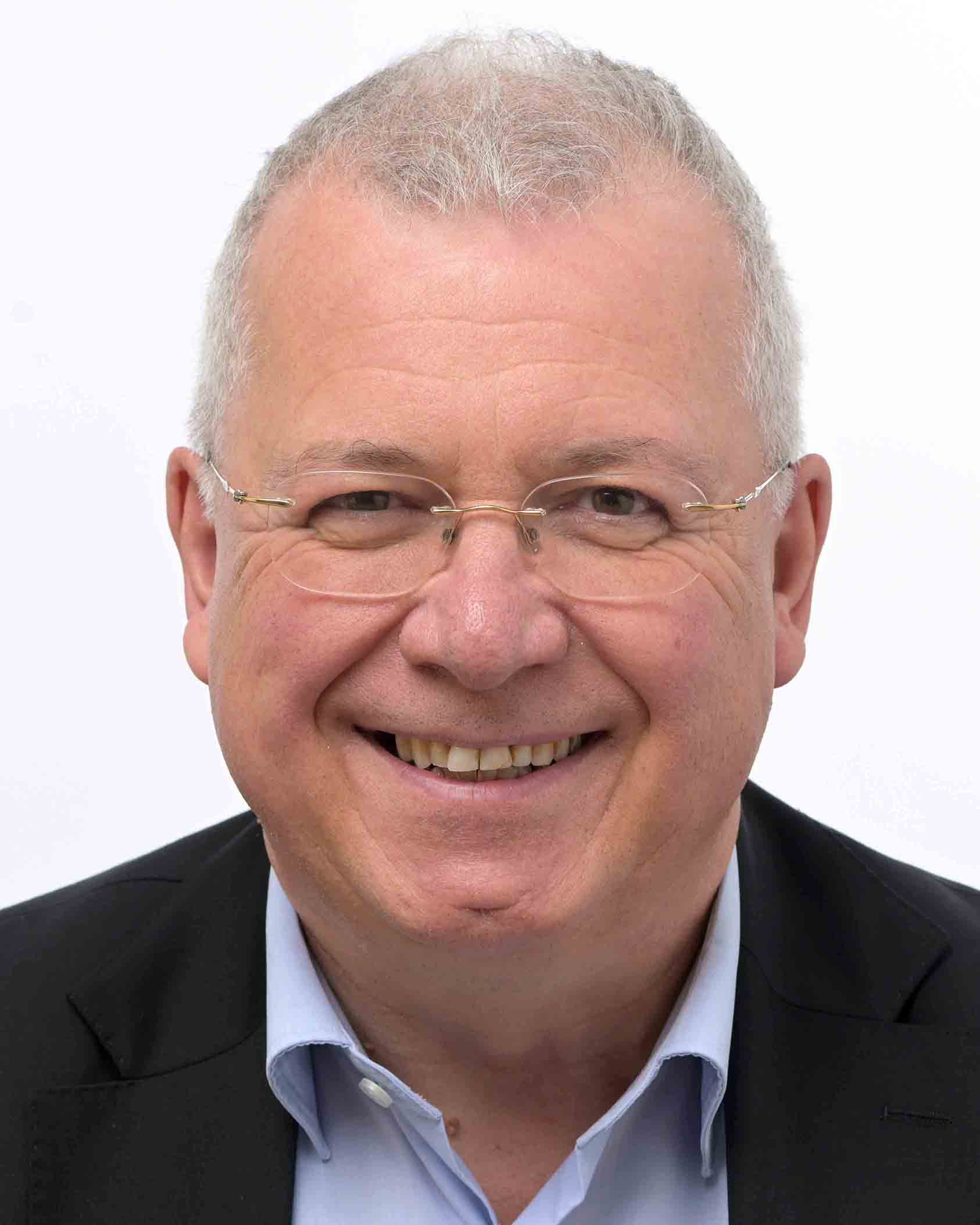
Lukas Sieper | Germany DEU | Non-attached Members (NI) | 390 |
| 2 |
|
Juan Fernando López Aguilar | Spain ESP | Progressive Alliance of Socialists and Democrats (S&D) | 354 |
| 3 |
|
Sebastian Tynkkynen | Finland FIN | European Conservatives and Reformists (ECR) | 331 |
| 4 |
|
João Oliveira | Portugal PRT | The Left in the European Parliament (GUE/NGL) | 232 |
| 5 |
|
Vytenis Povilas Andriukaitis | Lithuania LTU | Progressive Alliance of Socialists and Democrats (S&D) | 227 |
All Contributions (80)
European Semester (joint debate)
Mr President, ladies and gentlemen, The European Semester is the key instrument for economic policy coordination. This year, the challenges are particularly great. Not only do we still have very high growth rates in the European Union, but we also have to cope with rising defence spending – all this in the context of already very high public debt. This shows once again how important it is to have fiscal leeway in the event of a crisis. As the EPP Group, we pointed out years ago: You have to repair the roof when the sun is shining. And what happened? The sun shone, we had good economic years, and in many Member States the roof was not repaired. And now there is a lack of room for manoeuvre that is necessary to shoulder these challenges as well. In the meantime, we have reached a dangerous point: high public debt, high deficits, high interest rates, high future spending in the defence sector, low growth prospects due to a lack of competitiveness. This is the situation as it stands at the moment, so the situation is serious. For the Semester, this means that we need to focus much more on the core of the European Semester – a responsible fiscal policy and measures that sustainably strengthen the competitiveness of the European Union and the Member States. I believe that we have achieved this well in the report of the Economic and Monetary Committee; I would be happy if the Employment Committee could do that at some point.
Cutting red tape and simplifying business in the EU: the first Omnibus proposals (debate)
Madam President, ladies and gentlemen, ladies and gentlemen, We have to be honest, just by fulfilling reporting obligations, by filling in forms, nothing has yet been achieved in the fight against climate change or for occupational safety and health in developing countries. Directives such as those on sustainability reporting or the European Supply Chain Due Diligence Act are tools at best, but not a solution. We really have to ask ourselves whether these aids achieve what a majority here in the House once created them for against my vote. With regard to the Sustainability Reporting Directive and the Supply Chain Due Diligence Act, the answer is actually clear: In today's form, they are not a helpful tool to achieve the goals. They are unnecessarily complicated, they create high bureaucratic burdens, they only create jobs for consultants and lawyers, but they do not create competitiveness. It is therefore correct that the European Commission has now proposed targeted adjustments. The proposals are going in the right direction, but I would have liked a little more ambition, Commissioner. Especially in the area of taxonomy, you only want to solve everything at level two with delegated acts. I believe that the mother of all problems is the taxonomy, and here I expect further proposals from the Commission. At this point, too, we still have to clear up clearly.
Competitiveness Compass (debate)
Mr President! Mr Executive Vice-President! Mr President-in-Office of the Council! Ladies and gentlemen, ladies and gentlemen! With the compass for a competitive EU, the European Commission has given a signal for a U-turn and a new priority setting. This new focus is of course very welcome, but it is also bitterly necessary. The Commission has therefore recognised the signs of the times. But we already have to ask ourselves whether the compass also points the right way. A compass should provide orientation. It is also because the compass for a competitive EU lacks a clear line beyond the headline. The Communication lists dozens of individual measures. However, it remains unclear: Where does the Commission actually want to go? Here there is a real danger that, as so often, we get lost in the small and lose sight of the big paths. And whether it is the right strategy to pick out a few industrial sectors and leave out all the other areas where we can generate economic growth, especially in the area of services, I do not know if this is the right way forward. It is not just a matter of making a lot of industrial policy and little regulatory policy, but, I believe, we need to address a few fundamental questions. The high level of energy prices, to which we must give an answer as Europeans. The difficulties in completing the Capital Markets Union, the strengthening of the services sector, to give just a few examples, in addition to the completion of the internal market, dear Mr Executive Vice-President, where you are responsible. These are the issues that are at the top of the priority list. Then we are on the right track. To put it in a nutshell: Competitiveness is right, is necessary, is the reason to be able to operate successfully at all. We have to get these homebaseTo make the single market so strong that we can, of course, achieve competitiveness in other markets around the world. We should do this together. This is the right compass to use.
European Central Bank – annual report 2024 (debate)
Mr President! Commissioner. Madam President, dear Christine Lagarde! In the past, the annual report on the European Central Bank has often been a hard work. And sometimes, in difficult negotiations, the clear line has also been lost. This time it's different. I would also like to express my sincere thanks on behalf of our negotiator Marco Falcone, the rapporteur and the entire negotiating team. The report gives a clear commitment to the objective of price stability, which should always be the fixed star of action for the ECB. This is followed by core principles such as monetary dominance and market neutrality. The aspect of market neutrality is of particular importance to us as the EPP Group. For us, it is crucial that the European Central Bank does not distort competition and market mechanisms in its monetary policy decisions. This may not please everyone here in this House, because some people like to use the ECB for political goals. But that's not their job. In the interests of fair competition and an efficient allocation of capital, we should therefore resist the temptation. That is why the principle of market neutrality is so crucial. I am pleased that this time we have finally found a text that hopefully takes all sides into account accordingly. In addition to monetary policy, we also dealt with the digital euro. While proposals are on the table here, these proposals leave many questions unanswered. And we have to find answers to these questions in the legislative process. We should not make any preliminary determinations in this annual report either. But this also applies to the European Central Bank, which has to accept that the legislator is currently the master of the procedure and not the European Central Bank. This is not just a monetary policy decision, but a political decision of great importance. We should discuss this calmly here in this House. I really ask you to read this passage very intensively, to give it to your deputy, who is particularly involved here. Then we are on the right track.
Cryptocurrencies - need for global standards (debate)
Madam President, Commissioner, ladies and gentlemen, ladies and gentlemen! Various cryptocurrencies, especially Bitcoin, have climbed record prices in recent days. The reason is clear: The new administration in the United States took office this week, and it will be much more crypto-friendly than its predecessor. The new US president is even talking about building a strategic Bitcoin reserve and wanting to make the US the crypto mecca of the world. The fact that Donald Trump is serious can also be seen in the fact that he himself has his own Meme coin He is one who has only one goal: To increase his wealth a little. I don't think investors will get any of this. Regardless of how you stand on cryptocurrencies, this development underscores a fundamental problem: Although cryptocurrencies are a global phenomenon, we do not have an international regulatory framework. A change of government in the USA therefore leads very quickly to the fact that the market situation is changing rapidly and because consumer protection, also for European investors, is getting massively under the wheels. In other parts of the financial market, from the banking sector to clearing, we have agreed on international standards for good reasons. We don't have them in the crypto sector so far, and that's taking revenge now. In the European Union, we are at the forefront of the world with the Markets in Crypto Assets Regulation, MiCAR. We have created a credible set of rules in the EU that puts a stop to wild west growth, as in the US, while at the same time creating predictability and predictability for all market participants. So there is already a blueprint for international minimum standards. That is why, Commissioner, we should make use of this blueprint and work towards international solutions. That this is not easy is clear. But if we don't start, we'll never make it.
Geopolitical and economic implications for the transatlantic relations under the new Trump administration (debate)
Dear Mr. Colleague, we have to deal with one question very fundamentally: What connects us here at the European level? They are shared historical and cultural experiences, as I would define them, and that is what we should focus on. We will not be successful if we divide against each other, but we will only be successful if we work together. I look forward to your initiatives.
Geopolitical and economic implications for the transatlantic relations under the new Trump administration (debate)
Mr President, ladies and gentlemen. Yesterday, the new US administration came into office, and if Donald Trump makes only a fraction of his announcements true, then the wind for Europe will very quickly become much harsher. Trump has promised to cut taxes, cut bureaucracy, deregulate. This should not mean that we are now in a downward competition. But we must be clear that this measure will significantly increase the competitiveness of American companies. And that means: If we don't want to fall behind, we have to react. This must mean for us: take the issue of cutting red tape seriously, impose a burden moratorium, reduce reporting obligations, reduce energy costs, advance the single market, finally implement the Capital Markets Union. The motto must be to become strong and competitive ourselves, so that we can also survive in a sharper location competition. And that is in our hands, and we should commit ourselves to that.
Restoring the EU’s competitive edge – the need for an impact assessment on the Green Deal policies (topical debate)
Mr President! Commissioner! Ladies and gentlemen, ladies and gentlemen! The European Union has set itself a very ambitious goal to decarbonise the economy, summarised under the Green Deal. The promise, which has always been formulated by the Greens, that Europe will thus be the pioneer of the Clean techwould become an economy; also the German chancellor, who philosophised that we would get growth rates as we did at the time of the economic miracle, i.e. up to 8% – everything did not happen. Warnings that the decarbonisation of our economy will not be self-sufficient and that we must also pay attention to aspects such as competitiveness have been blown up. What happened? We are not at 8 or 9 % growth, we are in recession in the EU at 0.9 and in Germany in the second year – and the forecasts for next year are no better. This shows: Basically something went wrong. The Green Deal is not yet a deal for our companies, but above all a burden. That's why we have to ask ourselves: What was wrong in the last legislature? What impact do the Green Deal measures have on our companies, on SMEs, on jobs in Europe? And these questions must not go unanswered: Can our companies afford the rising costs of energy and production if they have to compete with competitors from China or the USA at the same time, if products come to us from countries that do nothing for climate protection? We have always been strong when we have focused on innovation and competitiveness – we should do that again. It does not mean, to be clear, to question the climate targets, but it is very clearly about: Which way can we go? Is there perhaps a smarter, less bureaucratic way to achieve these goals? That is what we should focus on, and that is where we are waiting for the Commission's proposals.
The Autumn 2024 Economic Forecast: a gradual rebound in an adverse environment (debate)
No text available
Fight against money laundering and terrorist financing: listing Russia as a high-risk third country in the EU (debate)
Mr President, Commissioner! The listing of a country as a high-risk country in the field of money laundering leads to a warning to financial market participants that there is a high risk of money laundering in transactions in that country and therefore additional due diligence requirements must be applied. With Russia, the situation is clear and as clear as it could possibly be. The country is waging an illegal war of aggression in Ukraine, funding terrorism in other countries, and there are massive attempts to circumvent the sanctions we have imposed. Even before the war of aggression, there were major problems with corruption, organised crime, the obfuscation of financial flows and poor cooperation. That's why Russia belongs on every blacklist we can find, and of course on money laundering. The fact that the Financial Action Task Force does not succeed at international level is not because the facts are not known, but because the BRICS countries have taken a blockade position here. But, as we have always pointed out in Parliament, there is also a European list, and our expectation is that we will not only copy what has been added to the list at the FATF, but that the Commission will carry out its own analyses and assessment. We do not have any BRICS countries in the European Union. We can really decide on the matter, and that is why there is only one measure that we welcome here as the EPP: The European Commission should present a proposal to classify Russia as a high-risk country as soon as possible.
U-turn on EU bureaucracy: the need to axe unnecessary burdens and reporting to unleash competitiveness and innovation (topical debate)
Mr President, Commissioner, ladies and gentlemen, ladies and gentlemen! When you talk to companies, big or small, and ask about the big problems they are facing, the answer is always the same: The biggest problem for competitiveness is excessive bureaucracy. This ranges from unnecessarily long approval processes and reporting obligations, which have been completely out of control, to regulations that are hostile to the single market; I would just like to mention the A1 certificate for the secondment of employees. Excessive bureaucracy is one of the decisive factors for the fact that we in Europe have lost so much competitiveness in recent years. I hope that the European Commission's new priorities for this legislative term, namely strengthening competitiveness, will be implemented and will not only be reflected in the mandate letters, as we have just heard. How can this be achieved? I would like to mention three processes. Firstly: We need a burden moratorium. It makes no sense to invent new rules again if we want to abolish old ones. We have to take a break, otherwise we'll have a fight against windmills. Secondly: We need a clear inventory, that is to say, not every dossier in its silo, but most of the time the problems arise that different Directorates-General demand similar things on similar topics and know nothing about each other. And in the third place, the actual dismantling, a streamlining and consolidation of the legal body, the targeted elimination of particularly problematic requirements. This is the path we as the EPP want, and I hope that there is broad support here, together with the new Commission.
Ensuring sustainable, decent and affordable housing in Europe - encouraging investment, private property and public housing programmes (debate)
Mr President, Commissioner, ladies and gentlemen, ladies and gentlemen! The Commission President has made the creation of affordable housing one of her political priorities. And that's absolutely right. The availability of affordable housing in many Member States is a huge problem. I think we all agree: Living should not be a luxury. However, we should also be aware that the issue of housing is not an original competence of the European Union. We will not be able to become the builder ourselves, nor will we be able to intervene in the development plans of the local municipalities. Therefore, the principle of subsidiarity must also be respected accordingly. However, there are some things we can do in Europe. The problem at issue is actually simply described: Too little is being built. However, solutions are a bit more complicated, because many factors have to be taken into account here. At European level, the first issue is the cost of funding. We still have capital requirements from the financial crisis that make construction more expensive in Europe than in other regions of the world. Here we should think about what we can do. And the Commission should also look at many places where we can adapt standards accordingly, which are making housing more expensive today. There are many ways in which Europe can start. Then we will make an important contribution to our citizens. As the Group of the European People's Party (Christian Democrats) and European Democrats, we are ready to go down this path.
The historic CJEU ruling on the Apple state aid case and its consequences (debate)
Mr President, Commissioner, ladies and gentlemen, ladies and gentlemen! The European Commission has tried a lot in recent years, also with our support, to deal with tax dumping in Europe by means of competition law. The European Commission has more than once brought a bloody nose to the European Court of Justice, which has also raised fundamental doubts about the thoroughness with which the Commission has worked on these proceedings. One could sometimes get the impression that the Commission chooses its cases not on the basis of what can be won, but on the basis of what generates the biggest headlines, and that was not a model for success. Last week's verdict, however, is a pleasing change. Since tax law remains, of course, a largely national matter, the European Commission has often been unable in the past to intervene in the case of questionable tax practices of individual Member States. The judgment now gives the Commission a tailwind and is therefore also a warning to the finance ministers of those Member States that do not take solidarity in the internal market so seriously. Because we now have a whole catalogue of judgments of the European Court of Justice, which shows which lines of argument are court-proof and which are not. In the fight against questionable tax practices, the Commission must now analyse these judgments closely and draw the right conclusions. Even if competition law proves its worth, however, tax dumping should not be tackled on a case-by-case basis, but on the basis of a clear common framework, which is also adopted by the finance ministers of the Member States, because the case-law of the European Court of Justice can define this framework. The Commission should take this task to heart, as Ireland is not the only Member State to grant special tax rules to the detriment of its neighbours. The judgment should therefore be a mandate for the Commission to act now at last.
The future of European competitiveness (debate)
Madam President, Commissioner, ladies and gentlemen, ladies and gentlemen! With the Draghi report, the issue of competitiveness has finally returned to where it really belongs – here in the European Parliament and, of course, on the agenda of the Heads of State or Government. Indeed, we must set ourselves ambitious goals if we want to be a competitive economic area, if we want to become one and if we want to give young people in particular a perspective here in Europe. Financing is also a pillar of the competitiveness strategy. Everyone knows: Our financing model has a flipside to bank financing. There is almost nothing going on on the capital market side. IPOs of European growth companies do not take place in Frankfurt, they do not take place in Paris, they do not take place in Milan – they take place in New York to name just one of the problems. That is why the Capital Markets Union must be part of the response to our challenges. Mario Draghi's report describes the seriousness of the situation very clearly and also shows clear options for action. I think many of the solutions that have been written down here have actually been known to us for a long time. But this shows: We do not have a problem of knowledge in Europe, we have a problem of implementation. There is a lack of political will – and it is not lacking here in the House, it is lacking in the Council, it is lacking in the Heads of State or Government. This applies from the topic of supervisory law to the topic of taxes to the topic of insolvency law. We've been discussing this here for many, many years; In fact, nothing moved. I believe it is clear to everyone that the single market must be the engine of growth, but in recent years we have seen disintegration in the single market rather than integration. That is why I appeal to the Commission, to the Member States: Let's seize the momentum, implement the proposals from the Draghi report, create productivity growth, advance the Single Market and Capital Markets Union! We don't need any new debt.
The sixth Anti-Money Laundering Directive - Anti-Money Laundering Regulation - Establishing the Authority for Anti-Money Laundering and Countering the Financing of Terrorism (joint debate - Anti-money laundering)
Mr President, ladies and gentlemen. The European Union has a long-standing problem of money laundering and, in particular, of combating it. There are estimates that the volume includes up to three-digit billions. And we shouldn't fool ourselves: Money laundering always has something to do with organized crime. So if we want to guarantee security in Europe, fight organised crime, we must also fight money laundering. The problems are well known. The implementation of the Directive has meant that things have been done slightly differently in each Member State. It makes sense that we act uniformly here. The best example is the German Financial Intelligence Unit, which was created by the former Federal Minister of Finance and today's Federal Chancellor, who is not in a position to sufficiently fulfil the tasks. So there are good reasons to better coordinate the fight at the European level. Doing it all in Frankfurt makes sense. International banks are also controlled by the Single Supervisory Mechanism. We are hoping for great synergy effects.
Amending Directive 2013/36/EU as regards supervisory powers, sanctions, third-country branches, and environmental, social and governance risks - Amending Regulation (EU) No 575/2013 as regards requirements for credit risk, credit valuation adjustment risk, operational risk, market risk and the output floor (joint debate - Banking Union)
Mr President, Commissioner, ladies and gentlemen, ladies and gentlemen, A banking union based on 120 banks in the first pillar, namely on the issue of centralised supervision, which is based on a few hundred banks in the second pillar, namely the Single Resolution Mechanism, and at the same time should be based on all 8 000 banks in the case of a deposit guarantee, which is not right. There is still a lot to think about and rethink, and I hope that we can do so in peace and serenity in the next parliamentary term. But let me also say a few sentences on what we are going to vote on today, namely on the finalisation of the Basel rules. I am somewhat surprised that something that was passed in 2017 essentially at the request of the Americans and fits more to the American banking and financial model than to the European one is now being transferred by us, while in the US there is discussion about not implementing these rules in a timely manner. That is why, ladies and gentlemen: It is right that we do it, it is right as we do it, and we should also use the time we have given ourselves in the transition so that we do not harm our economy. But, Commissioner, make sure that it is properly implemented in other parts of the world.
Effective coordination of economic policies and multilateral budgetary surveillance - Speeding up and clarifying the implementation of the excessive deficit procedure – amending Regulation - Requirements for budgetary frameworks of the Member States – amending Directive (joint debate – Economic governance)
Mr President, ladies and gentlemen. I have listened to the debate with great interest, but I am somewhat surprised that those who have been begging this morning for us to work together here as Democrats in Europe want to evade the approval of the fiscal rules. And dear Greens, I can only say quite clearly: Anyone who ultimately votes against a stable currency with the right-wing radicals here will make sure that we are not in a position for this Europe to be able to make the investments for the future. This ensures that we do not have a stable currency. And with permission: A stable currency with a low inflation rate is the most social thing you can ever do. Take a look around the world! Americans don't have fiscal rules, they have higher debt levels, they have higher new debt, and they pay higher interest rates and have higher inflation. What's social if we get it? That's why I can only appeal: Those who ask here – like the Greens’ lead candidate – to want to take more responsibility for Europe in order to exclude the radical forces, and now vote no to the fiscal rules, the core element of our common currency, with the radical forces – sorry, that cannot be responsible politics. That is why I can only appeal, ladies and gentlemen, today, in a few minutes, to vote in plenary for these rules, for a stable euro, for a stable Europe, for a Europe capable of carrying out its future tasks and for a Europe capable of safeguarding the welfare state. Low inflation is the best social policy you can make. High inflation is antisocial. Low inflation means low debt. High inflation means high debt. That is the question we are facing today.
Effective coordination of economic policies and multilateral budgetary surveillance - Speeding up and clarifying the implementation of the excessive deficit procedure – amending Regulation - Requirements for budgetary frameworks of the Member States – amending Directive (joint debate – Economic governance)
Madam President, Commissioners, ladies and gentlemen! Having a common currency inevitably means that all those who work together in this monetary union must take joint responsibility for the stability of this currency. This, of course, includes, first and foremost, responsible fiscal policy, and that is precisely the idea behind the Stability and Growth Pact. If we take stock of the previous rules, however, we must note that this set of rules did not work very well. Many Member States have failed to respect deficit limits, even in good economic times, and public debt has continued to rise, even before the pandemic, even before Russia’s terrible attack on Ukraine. We have had three problems with the Stability and Growth Pact: Fiscal consolidation has always been put on the back burner. The Commission has granted far too much flexibility, and the Commission has not ensured that the rules are enforced either, as sanctions have never been used. These problems have undermined the credibility of the Stability and Growth Pact. In addition, of course, there was also a technical problem that these rules were very mechanical and also had procyclical effects. With this new set of rules to be voted on today, we are trying to tackle these problems. Debt rules are no longer analyzed year after year. Instead, the relevant observation period is four to five years, depending on the electoral cycle in the Member States. This also leaves enough room for manoeuvre to be able to react to economic shocks and not have to save in a crisis. The fact that we are now concentrating on a key indicator, namely net expenditure growth, makes the rulebook more comprehensible and transparent. Above all, net expenditure growth is also a variable that can really be influenced by policy makers during a financial year. That's a big difference from the ex-post view we've had so far. However, I would also like to take the opportunity to clear up two myths that are always heard in the context of the Stability and Growth Pact. First, this is the accusation that the new set of rules would usher in a new era of austerity. My apologies, ladies and gentlemen, this accusation is nonsense. Because it's clear: Austerity comes into play when you don't have your budget under control. The rules should ensure that the budget is under control. This is why cause and effect are mixed up here. That's not the problem. Secondly, it is said time and again that it is now the wrong time for responsible fiscal policy, because the challenges of climate change and digitalisation are so great that states must be able to invest. Yes, ladies and gentlemen, anyone who wants sustainability in environmental policy cannot do without sustainability in fiscal policy! Expenses that have to be paid over many years, a generation, as well as other government tasks, must be included in the expenditure and cannot be the reason that one goes here for instability. Those who permanently fail to comply with the fiscal rules will also not have the resources to invest in climate protection and digitalisation. That is why, ladies and gentlemen, it is important that we can make a contribution with stable public finances, that we, as the European Union, regain competitiveness, that our companies can make the investments that are necessary to achieve our goals. I really want to thank everyone who has worked here. In particular, I would like to mention Esther de Lange, who played a decisive role in shaping this for us in the Group of the Shadow Rapporteurs. I really want to promote the fact that today, with a large majority, I agree with this set of rules – for a good, for a stable future in Europe.
Conclusions of the recent European Council meetings, in particular on a new European Competitiveness deal and the EU strategic agenda 2024-2029 (debate)
Madam President, Commissioner, ladies and gentlemen, ladies and gentlemen, The topic of competitiveness has finally arrived where it belongs, namely at the top of the agenda of the Heads of State and Government. The European Union had once set itself the goal in the Lisbon Strategy to – and I quote: “to become the most competitive and dynamic knowledge-based economy in the world”. We are far from that. Of course, a pillar of a strategy for greater competitiveness must also be the issue of financing. Everyone knows that our financing model has a knock-on effect on bank financing; There is almost nothing on the capital market side. And all IPOs, including those of companies from the European Union, take place today in New York and no longer in Paris, Amsterdam or Frankfurt. The European response to this problem was presented by the Commission ten years ago, namely the Capital Markets Union. Since then, however, we have made little progress. What we urgently need now are not summit declarations, but Member States that are also willing to act, that are willing to surrender competences in tax law, in insolvency law, to a common European solution so that we become competitive for the future.
Deterioration of living conditions in the EU (debate)
Madam President, Commissioner, ladies and gentlemen, ladies and gentlemen, First of all, a heartfelt thank you to the left of this House for allowing us to address the issue of worsening living conditions in the European Union today. This is a good opportunity to talk about the reasons why economic development in Europe is so bad. I say it quite frankly, this is the fault of those who have requested this debate today, and this should also be mentioned very clearly. We have seen in recent years that the European location has slipped further and further down in all international rankings in terms of competitiveness. This is no coincidence – there are clear reasons for this. And these cannot be attributed only to a difficult geopolitical environment or to too low minimum wages, as we have just heard. The tax burden is high, the bureaucratic obligations are excessive, energy prices are exorbitant, investments for the future take place outside Europe – this gnaws at the competitiveness of our economy and, of course, our prosperity. If the cake is no longer growing, i.e. the economy is not growing, and at the same time increasing expenditures on social expenditures are becoming necessary due to demographic developments, then this inevitably narrows the scope for manoeuvre. Both the Commission and we in Parliament and the Council must therefore ask ourselves the question: How can we contribute to greater competitiveness and growth? That's why only a few points: away from regulatory and micro-management, towards market-based solutions, away from ever-new reporting requirements, towards a burden freeze, genuine red tape reduction and consolidation of European law, away from a climate and environmental policy that is being made against companies, towards an approach where business and policy together shape this change, and away from ever-new consumer spending, towards strategic growth-enhancing investments and productivity-enhancing structural reforms. Then we are on the right track, and then we no longer need to have such debates.
European Semester for economic policy coordination 2024 – European Semester for economic policy coordination: employment and social priorities for 2024 (joint debate – European Semester)
Mr President, Commissioners, President-in-Office of the Council, ladies and gentlemen! The European Semester is the key instrument for economic policy coordination. The European economy is in a difficult waterway. Growth prospects are weak, public debt in the Member States is high and investment needs are high. Effective coordination of European economic policy is therefore more urgent than ever. The semester would actually be the right instrument if we also acknowledge that it has not been very efficient in the past. As the EPP Group, we have always pointed out: You have to repair the roof when the sun is shining. The zero-interest period has not been used to reduce structural deficits. On the contrary: Member States have taken on additional debt – because money has cost nothing – mostly pumped into consumer spending and are now wondering, as interest rates have risen, that they are no longer able to finance things. And then to say: "Yes, then let's take on the debt at European level now, because we can no longer do it nationally" – the debts of the European Union are the higher contributions from the Member States tomorrow. That won't work! And that it is precisely those of Social Democracy, of the Greens, who have ensured that the largest and actually economically strongest country in the European Union has the lowest growth today, who have a stagnation, who want to explain to us how economic policy works, that can no longer be outdone in ridicule.
Union-wide effect of certain driving disqualifications (debate)
Mr President, Commissioner, ladies and gentlemen, ladies and gentlemen, The dossier we are discussing today is part of the road safety package, and I think it is unfortunate that we are not discussing and voting the directive on the Union-wide effect of certain decisions on driving disqualifications together with the driving licence directive. Because it would have made sense to deal with the package together, and I find it regrettable that some groups in this House have prevented this. The basic idea of this proposal is simple and comprehensible: If a driver commits a serious traffic offence, such as extreme speeding, driving under the influence of alcohol or drugs, as well as traffic offences resulting in death or serious bodily injury, where the driver is to blame, the driver should also lose his driving licence throughout the European Union. It is about road safety. However, under the applicable rules, a serious road traffic offence leading to the withdrawal of the driving licence cannot be enforced across the EU if the offence was committed in a Member State other than that where the driving licence was issued. Nobody can really explain that this is still possible today. That is why this is an important proposal, which we, as the European People's Party, also support and which we would like to deal with quickly. But we have to be careful that we do not overlay the whole thing here with non-proprietary things. Firstly, we should not call for a European points system here. This makes no sense, and we as the European People's Party will not support it. This raises a number of legal questions, and those who are always committed to the rule of law here should also respect EU law and not demand such a thing. Secondly, we want the Member States to deal with this seriously. We could be done long ago if the Council moved. It is a pity that this will only be possible in the next legislature.
Instant payments in euro (debate)
Madam President, Commissioner, ladies and gentlemen, ladies and gentlemen! Everyone knows the situation: You make a transfer, the money is immediately debited from your own account, but it takes at least one, usually two days, until the money has also arrived at the recipient. And if the weekend is in between, if a holiday is in between, it will take even longer. In the 21st century, there is actually no good reason for value to last so long. That is why it is also right that the European legislator intervened here: In the future, we will no longer talk about days, but seconds. The transition from the classic transfer to the instant transfer is like switching from a stagecoach to an e-mail. The new regulation will make instant credit transfers the standard in the future, on exactly the same terms as normal credit transfers. Today, we still have the situation that some banks offer instant transfers as a premium service and can also pay for this service well. It will be different in the future. The European legislator has opted for an absolutely consumer-friendly option here, and we, as the EPP Group, naturally support that. With Sofortüberweisung, we are taking a big step towards the payment transactions of the future. However, this also means that we have to consider whether we really need initiatives such as the digital euro for the end customer. The European Central Bank has praised the immediate value of transactions as one of the great advantages, but also that no intermediaries, credit card systems or other providers are needed. We solve all this now with the instant transfer as well. That's why I think we should talk again about how we should shape a digital euro. In any case, with this regulation, we have a good argument that we do not need it for the end consumer.
European Economic Security Strategy (debate)
Mr President, Mr High Representative, Executive Vice-President, ladies and gentlemen! The COVID-19 pandemic and Russia’s war of aggression against Ukraine have shown us very impressively how vulnerable our supply chains are and where there are strategic dependencies with third countries. That is why it is fundamentally right to strengthen the resilience of our supply chains, secure access to critical raw materials and consider how we can locate key sectors such as the semiconductor industry in Europe. The Commission has already taken the first steps in this direction. In this context, however, I would also like to issue a warning: From strategic autonomy and the strengthening of European economic security, it is only a very narrow ridge towards protectionism. And we shouldn't go. We are an export-oriented economy that, perhaps like no other economic area, benefits from an open and rules-based international trade order. We should therefore not do anything that gives the impression that we are now also embarking on protectionism. The key way to protect our economy and prosperity is to keep Europe competitive and competitive where we are not. This is the main task we have to focus on, and unfortunately a lot has been lost in recent years. If we want to catch up, we need above all a strengthening on the supply side, a new competitiveness pact. We must also finally use the single market again as it was intended for: Not for isolation within the European Union, but as the powerhouse from which we can achieve success on world markets. Therefore: clear industrial policy measures and a clear strategy! And please do not only make a strategy, but also actions. It is only by this that we are measured.
Reducing regulatory burden to unleash entrepreneurship and competitiveness (topical debate)
Madam President, Commissioner, Minister, ladies and gentlemen, ladies and gentlemen! The European Commission has just published a new economic forecast last week, which has been quite bleak. The Commission has itself given a significant title to this autumn forecast: “A modest recovery after a difficult year”. I believe that this is a good summary of our economic situation in this European Union. But we shouldn't fool ourselves: These weak growth prospects can be attributed not only to a dip in economic activity or to high energy prices. If you take this as an explanatory pattern, you make it too easy. On the contrary, we have a structural problem that can be traced back to the fact that the competitiveness and productivity growth of the European economy has steadily deteriorated in recent years. If, in the medium term, the largest economy in the European Union - the economy from the country I come from - has only 0.4% potential growth, then I think that is a clear indication that there is something wrong here. The problems are largely homemade. The global economy is growing, Europe is stagnating, and Europe's largest economy is shrinking. Almost every legislative proposal presented by the Commission in this legislative period has placed new bureaucratic burdens on our companies. In addition to the material burdens, which can certainly always be discussed on a case-by-case basis, the big, unifying element in this legislature was the enormous increase in reporting obligations, which accompanied almost every legislative proposal, and with sustainability reporting and the supply chain due diligence law, two very big bureaucratic hammers are still coming to our companies. Reporting obligations create enormous bureaucratic burdens, but do not solve a problem on their own; They are the definition of superfluous bureaucracy. The Commission has now made initial tentative proposals to reduce reporting obligations. This is going in the right direction, but of course it is far from going far enough. This means that we must make the issue of cutting red tape, competitiveness, growth the leitmotif of the next legislative term and the next term of office of the European Commission, otherwise it will look relatively bleak in the long term with the future forecast for Europe. And when the Commission itself presents a cost index, where it describes the costs that companies are burdened with and concludes that, for example, sustainability reporting does not yet generate costs this year; And when I ask in the Commission, I am told: Yes, because it is not yet valid, the delegated act will not enter into force until 1 January. Do you understand what companies need to do? They have to prepare now. Of course, there are already costs, because if they have to provide data by 1 January, they cannot start work only on 1 January. So here is really also wrongly measured and set a wrong goal for the public. With the Lisbon Strategy, Europe had once set itself the goal of becoming the most competitive and dynamic knowledge-based economy in the world. We are miles away from this goal; We urgently need a reversal. The Commission is called upon to deliver this.