
| Rank | Name | Country | Group | Speeches | |
|---|---|---|---|---|---|
| 1 |
|
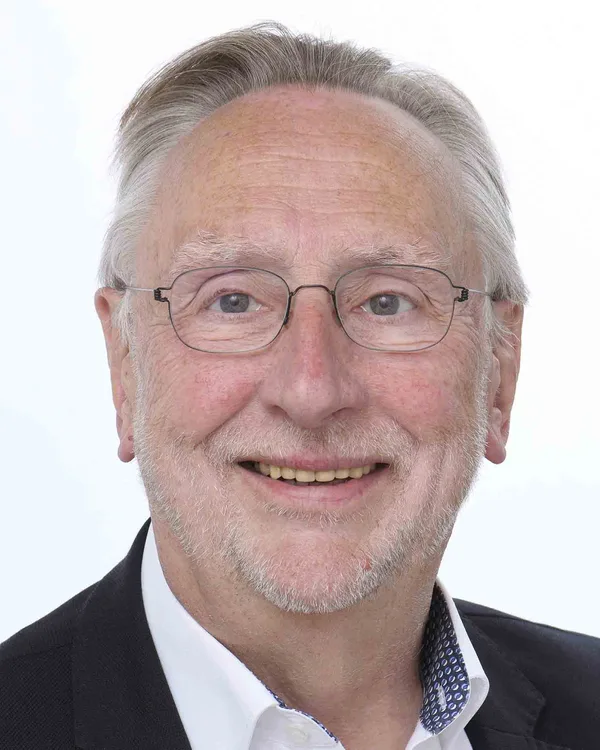
Lukas Sieper | Germany DE | Renew Europe (Renew) | 487 |
| 2 |
|
Juan Fernando López Aguilar | Spain ES | Progressive Alliance of Socialists and Democrats (S&D) | 454 |
| 3 |
|
Sebastian Tynkkynen | Finland FI | European Conservatives and Reformists (ECR) | 451 |
| 4 |
|
João Oliveira | Portugal PT | The Left in the European Parliament (GUE/NGL) | 284 |
| 5 |
|
Vytenis Povilas Andriukaitis | Lithuania LT | Progressive Alliance of Socialists and Democrats (S&D) | 273 |
All Speeches (54)
The crisis facing the EU’s automotive industry, potential plant closures and the need to enhance competitiveness and maintain jobs in Europe (debate)
Date:
08.10.2024 13:52
| Language: DE
Speeches
Madam President, Commissioner, ladies and gentlemen! I think it is good that we are talking about industrial policy today, because for a long time that was a word that was not so well-liked. Because: Together, we want to take measures to secure structural employment in the automotive industry. And that's where we need clarity. When you look at yourself: In Norway last year, 82 percent of new vehicles became electric vehicles, and this has been achieved through clarity in policy. Businesses are disinvesting zigzag prices and creating uncertainty for consumers, i.e. clarity. And then, Commissioner, of course we need action. We need clear rules on aid for batteries. We need lower industrial electricity prices. We need clear countervailing duties for unfair competition. And, dear colleagues, the providers of cars, of course, must also take part. It cannot be that we only offer electric cars for 50,000 euros and more. Here, too, we need vehicles that enable normal workers to enter electromobility. And this must also be supported by the states in the European Union. In this sense, we have an opportunity for the automotive industry in Europe.
Prohibiting products made with forced labour on the Union market (debate)
Date:
22.04.2024 19:43
| Language: DE
Speeches
Madam President, Mr Executive Vice-President of the Commission, ladies and gentlemen! We all know these blue disposable gloves: We all did that during the coronavirus pandemic. 70% of them come from Malaysia, and three companies have been proven to use forced labour to produce these disposable gloves. I believe, ladies and gentlemen, at a time when we are living, when we have had the ILO ban on forced labour since 1930, supplemented once again in ILO Convention 105 in 1957, it cannot be possible for companies to make additional profits because of the forced labour of people. Valdis Dombrovskis was at a conference I organized with the ILO to present how much. And there are 236 billion extra profits made on this earth through forced labour, not only in Asia, but also in Europe. This must always be remembered. And that is why it is right that we do not differentiate in our legislation – the bad ones outside and the good ones inside – but it is horizontal, also for the European Union. Import, marketing and export belong in the rubbish heap of history. We really need resources: We need the database, and we also need people in the Commission who can implement it and carry out the investigations. That's what we're going to argue about. This must not be a paper tiger, this must be a reasonable law that helps people in Europe and beyond.
Temporary trade-liberalisation measures supplementing trade concessions applicable to Ukrainian products under the EU/Euratom/Ukraine Association Agreement (A9-0077/2024 - Sandra Kalniete) (vote)
Date:
13.03.2024 17:11
| Language: EN
Speeches
Mr President, I would ask the House to refer it back to the committee to start negotiations with the Council.
EU/Chile Advanced Framework Agreement - EU/Chile Advanced Framework Agreement (Resolution) - Interim Agreement on Trade between the European Union and the Republic of Chile (joint debate - EU-Chile agreements)
Date:
29.02.2024 10:07
| Language: DE
Speeches
Mr President, Commissioner, Ambassador of the Republic of Chile, ladies and gentlemen! I find it astonishing in this debate that the extreme right and the extreme left are defending themselves against trade policy with the same arguments. When I'm abroad, I find French Camembert and French wine everywhere. It should be noted that we export more processed food to the countries with which we have trade agreements than we import. This is a benefit for agriculture within the European Union. Of course, we want to do it in a fair way. That is why we have modernised the trade agreements with Chile and included a sustainability dimension so that we can benefit from this agreement on both sides. I am proud that we have succeeded in incorporating a sustainability chapter, a gender and trade chapter and, in particular, in integrating the question of the Paris Agreement on climate change, because today, ladies and gentlemen, ladies and gentlemen, trade policy is no longer just the reduction of tariffs, but the safeguarding of stable and sustainable relations in a fair partnership. This has been achieved with the agreement with Chile. We are also proud, Commissioner, that we are continuing to negotiate together because, indeed, we still have a few demands on the issue of the implementation of sustainability. I think it is good and right, Commissioner, that you, as Parliament, explain to us that Parliament is involved here and that we are moving forward in this context of modern, stable and sustainable trade agreements. That is what we have achieved, ladies and gentlemen, in this legislature. We can actually be proud of it. This is where we will continue – a good agreement with Chile and good new approaches to European trade policy.
Multilateral negotiations in view of the 13th WTO Ministerial Conference in Abu Dhabi, 26-29 February 2024 (debate)
Date:
08.02.2024 09:11
| Language: DE
Speeches
Mr President! Glad to see you in this role now. Commissioner, ladies and gentlemen! When I talk to people about the WTO, they always say: There's hardly anything moving, that's kind of yesterday. Ladies and gentlemen, this is not true – 75% of global trade is still governed by WTO rules. The European Union is extremely intertwined in imports and exports. Without the stable rules of the WTO, we would be endangered in our prosperity development. That's why it's worth wrestling for the WTO to have a future. And I think it is great, Mr Warborn, that we have tabled a resolution together, in which we have described the central tasks of the future, both in the interest of the less developed countries and in the interest of the industrialised countries. And we have to bring that in and fight for the 13th. The WTO Ministerial Conference will be as successful as the 12th.
Madam President, Commissioner, dear colleagues, you see today a really proud Chair of the International Trade Committee because, in this global world of fragmentation, of a lot of troubled waters, we managed to agree on the most progressive and sustainable trade agreement of the European Union ever. This is a big success. Thanks a lot to the Commission, to the negotiator Peter Berz, and to all colleagues who worked together to reach this wonderful agreement. The vote in the committee was also quite clear; there is a big majority for the agreement. But we should not only rest on our laurels. We should also look at what is perhaps not so perfect. One year between closing the negotiation and the ratification is quite too long. We have to be much quicker on that. Secondly, what about Australia? We have to look forward to reach an agreement in a similar way with Australia as well. I will mention Mexico and Mercosur as well. So let’s put our power together to reach similar agreements with these countries in a reasonable time frame.
Mr President, Commissioner! The summit was not a success in the area of trade policy: We don't have an agreement on steel and aluminium, we don't have an agreement on raw materials. This is because the US sets its interests in absolute terms – this must be seen so soberly – as well as under the Inflation Reduction Act. But I believe that, given the geopolitical situation, we also have no interest in escalating, i.e. setting new tariffs or taking other measures. That is why I think there are three things that we need to achieve. Firstly, we must ensure that future agreements do not undermine WTO rules. We remain committed to the multilateral system. Secondly: Nor will we be able to give up fundamental EU positions in our negotiations with the United States. That too, I think, is clear. And thirdly: So it's about safeguarding the status quo and seeing how we work together over time – not developing absolutely new ambitions, but organising stability.
Need to complete new trade agreements for sustainable growth, competitiveness and the EU’s strategic autonomy (debate)
Date:
04.10.2023 18:52
| Language: DE
Speeches
Madam President, First of all, I would ask you to write to the Council. This is the second debate today, where the Council is not present, on a matter where the Council actually has a very decisive responsibility. I would also like to tell the Council that it is a scandal that there is usually a year between the conclusion of an agreement and the signature – and thus the start of our ratification. That's absolutely crazy! We need to be much, much faster so that we can really conclude the necessary trade agreements quickly. Indeed, we need trade agreements with reliable partners on a global scale because we live in a fragmented globalization. Mr Krah, the old narrative ‘We produce no matter where, no matter what the conditions’ belongs to the rubbish heap of history. Today, it is about security and sustainability, so that local people also have something to do with trade – here in Europe, but also in our partner countries. They also need added value so that they have independent development opportunities. Security and sustainability – that is the narrative for trade policy today.
Madam President, everybody knows the story; the Commissioner explained it quite rightly. The only question, of course, is how to convince the Council to stop the blockade. That’s the only question. And this was my question to the Commission: what is the strategy to unblock the situation in the Council? The position of the Parliament adopted in November last year is totally clear. The majority of Member States are not in favour of the agreement, and because of the fact that a lot of EU competences are in the Treaty, and you mentioned it quite rightly, it’s also clear that we will never authorise Member States to stay in the Energy Charter Treaty. Therefore, we have to really convince the Member States to stop the blockade because there’s a clear European wish to leave this Treaty as soon as possible.
Madam President, Commissioner! That was short and crisp, thank you very much! Ladies and gentlemen, we have now filled the toolbox with defensive instruments that we do not necessarily want to use. But if it's necessary, we can do it. This is also a big difference to instruments from other countries that trigger such instruments offensively on their own. We only do this defensively when it matters. That is why there is a lot of negotiation possibilities in the legislative text, so that we can negotiate a negotiated solution with the potential partner who is conducting coercive measures. I would like to thank all my colleagues for their kind words today, but also for their constructive cooperation. This was not an easy operation, because it is a new law. It is not a revision of something existing, but a whole new law that we have made common. In addition to the good cooperation with the colleagues, we have also been strongly supported by employees from my office: Tim Peter from my group, Jenny Dunsmore, who sits up there, but also from the INTA secretariat, Stefania Nardelli – without her this would certainly not have worked so well either. But the cooperation with the Commission was also very good in this case – Colin Brown, who is sitting there, thank you very much for the constructive cooperation – so that, overall, I think we really have very good legislation on the table, and I hope that we can all agree with that tomorrow. Thank you very much!
Madam President, Commissioner, ladies and gentlemen! If you look at the global world today, you have to realize that what we used to think of each other – there is a global trade context, we reduce tariffs and non-tariff barriers, and all countries play with the same rules – that this narrative is over. It is completely clear: The Washington Consensus of 1994 is gone. Today we have a fragmented globalization with very different interests and different countries that just don't play by fair rules. That is why, as early as 2020, we called on the Commission and the Council to: We need to expand our toolbox. We need defensive measures to ensure that we can defend our economic interests. Indeed, an important measure is to be able to defend itself when there are economic or investment measures against the European Union in order to enforce political changes, be it the resolution in the European Parliament or legislation in the Member States. The Commission then indeed put on the table the ‘Anti-Coercion Instrument’, the instrument against coercive measures. I would like to thank all my colleagues for their work in recent months to improve this legislation even further. The Commission's proposal contained many vague and unclear terms. And there was no clear timeline. I think if it's clear: This instrument is a tool to react quickly – against coercive measures, pressure from other states – and then you have to react quickly. We have set a clear timetable. We have also introduced clear definitions of what is an economic coercive measure and how to respond to it. I also think it is right and good that we have designed the basket with possible countermeasures quite large. There are, of course, tariffs included; but there are also possibilities to suspend patent protection; There are ways to keep products out of the market and much more. This is correct, because of course no state should be able to calculate what measures it can expect to take as countermeasures in order to then consider using an Excel spreadsheet: Is it worth it or is it not worth it? It's not supposed to be! That's why it's right to have this big basket of countermeasures because we see: Sometimes our American friends say: ‘If you do this and that, if you introduce a digital tax, then there are tariffs.’ So there is pressure. Or: Because Lithuania has upgraded the embassy in Taipei, China has stopped trading goods from Lithuania, thus exerting economic pressure here as well. We must be able to deal with all these measures, and that is why I am glad that we can put an end to this legislative procedure today.
Opening of negotiations of an agreement with the United States of America on strengthening international supply chains of critical minerals (debate)
Date:
13.09.2023 17:53
| Language: DE
Speeches
Mr President, Commissioner, ladies and gentlemen! Thank you very much for allowing me to introduce the question. And that, of course, comes after the discussion we just had. We want to strengthen the supply of critical raw materials in the European Union. And now we are negotiating with the United States a possible agreement on critical raw materials. Of course, there are some questions. But maybe back to the background: You all know that we live in a very fragmented globalization. We are seeing more and more measures of protectionism everywhere. And one of them is certainly the Inflation Reduction Act in the United States, where a lot of subsidies are used to strengthen local production and thus exclude European suppliers. We have been negotiating with the United States for a long time in various sectors in order to strike a balance here, because it cannot be possible that such a policy will also shift investments from Europe to the United States. And that's why we have tackled different things to get a balance now. Of course, the critical raw materials also come into view, because an element of the Inflation Reduction Act production via critical raw materials is because the United States also wants to become independent of critical raw materials. The United States has 50 commodities that it sees as particularly critical. In the offer that the United States has now made to us, however, they offer us only five in terms of access. And, of course, the question arises as to why this is the case and how does the Commission react to it? Especially since, of course, we are in particular distress with two raw materials, gallium and germanium, where China is now apparently setting up supply restrictions. Secondly, the United States does not seem to want us to supply recycled raw materials to the United States. In a situation like this, where we actually have a shortage With regard to raw materials, this is also a question. Can we ensure that recycled raw materials are also integrated there? And then, of course, I also ask myself a bit, and also the INTA Committee, who actually has a benefit from it, if we have just discussed here, we need more raw materials in Europe? Who actually sells raw materials to the United States and who benefits from them? Maybe there are some answers to that. I also believe that we must, of course, ensure that this door, which we have open, also leads to the other doors in the area of Inflation Reduction Act be opened as well. This can only be a first step towards finding a sensible way of dealing with each other. And that also means, of course, that we must once again know clearly, if we conclude such an agreement, what consequences does this actually have for access within the framework of the Inflation Reduction Act. Is this limited to raw materials or does it open up further doors? Of course, we support the negotiations. We also support an agreement, but that must of course be WTO-compatible. We do not want to go into the waterway of protectionism now – that, I believe, is an important requirement. To conclude with something very positive, I think that the US also proposes in this agreement that we pay more attention to working conditions in the production of raw materials. And that is what we should do in all our discussions about critical raw materials.
The need for a coherent strategy for EU-China Relations (debate)
Date:
18.04.2023 11:09
| Language: DE
Speeches
Mr President, Commissioner, Mr High Representative! If we look at the coherent strategy, I think we should let theatrical thunder but define our interests. Let me mention four points: First, we need to look at where trade with China is actually in a situation that is critical. 95% are uncritical and 5% are critical. We need to strengthen our possibilities to process raw materials ourselves, for example. Secondly: We created defenses last year to enforce our interests: the anti-coercion instrument, IPI, foreign subsidies. Thirdly: I believe it is clear that we also need cooperation in areas that are of particular interest to us, such as the reduction of CO2. We need a global carbon price and for that we need China. And fourthly: We need to continue to build the network with reliable partners because we are competing with China, i.e. more bilateral trade agreements. And then we can better defend our interests.
Implementation report on the Agreement on the withdrawal of the UK from the EU - The Windsor Framework (debate)
Date:
14.03.2023 21:13
| Language: EN
Speeches
Madam President, the famous movie Belfast and the music of Van Morrison is really giving a wonderful impression of feeling about the situation in Northern Ireland. You know from this movie, but also from the discussion we had so far, how important it is to de-escalate. Thanks a lot, Maroš, for de-escalating, for your patience, for engagement, because a trade war is really not in the interest of anybody. Van Morrison is singing, ‘Don’t look back to the days of yesterday. You cannot live in the past.’ I hope that this agreement is really a door open more for the future. We will have the revision of the TCA in 2025. We will discuss the Erasmus accession of the United Kingdom. We have to discuss the financial services, the fish agreement and so on. Perhaps it’s really now a better way for the future, for better cooperation between the EU and the United Kingdom. Van Morrison is singing at the beginning of the movie, ‘Coming down to joy.’ Perhaps we can sing along with him one day.
Madam President, Commissioner, Minister, indeed, we need a new quality in our raw material policy, sustainability instead of pure exploitation. We did in the past. Therefore, I guess you are quite right. First, we have to mobilise our own resources inside the European Union. Sweden did move in the right direction on lithium, but I guess there’s a lot of more potential. Secondly, we have to do more on recycling. It is really a scandal that we have a recycling quota for lithium under 10% inside the European Union. Thirdly, we have to create partnerships with third countries in real partnership so that we guarantee labour rights, environmental standards, and that our partners have also the possibility to add value in their production process so that they can profit in their development as well. So sustainability instead of pure exploitation.
EU response to the US Inflation Reduction Act (debate)
Date:
14.12.2022 11:05
| Language: EN
Speeches
Madam President, Madam Executive Vice—President Margrethe, I guess, there’s no doubt about it, we need a partnership with the United States in this time of trouble all round, on the green transition, on the war in Ukraine, as Margrethe said. But, of course, partnerships need also trust. And my feeling at the moment, and I’m really sad about that, that the behaviour of the United States in the last two months is really a push away from a real good partnership. ‘Might makes it right’ might be the principle of some people in the United States, and this is really undermining our cooperation. Margrethe mentioned the very good cooperation at the TTC, but we need also good cooperation on the green transition and it should not lead to a substitute race. We should really stick to the international trading rules and we should defend this. We have a lot of tools in our toolbox to defend the rules-based trading system, and we should use them if the United States is not able to cooperate in a proper way.
Outcome of the Commission’s review of the 15-point action plan on trade and sustainable development (debate)
Date:
05.10.2022 17:05
| Language: DE
Speeches
Mr President, Mr Vice-President of the Commission, ladies and gentlemen! I believe it is now clear to everyone that trade policy in itself is not an end in itself. Trade is not. Trade policy must contribute to strengthening sustainable development. Trade policy has to help ensure that local people have added value through trade policy. Clearly: Trade stimulates growth, but if the rules are not right, then this growth misses the goal, and sometimes people suffer. Sometimes nature suffers and the goals of the Paris Agreement on climate change are not achieved either. That is why it is so important that we put trade policy in the right place to make it clear: Trade is not an end in itself, trade has to promote sustainability. This recognition, ladies and gentlemen, has grown over the last decade. We concluded the first trade agreement with a designated sustainability chapter in 2011 – the agreement with South Korea. Since then, we have concluded 12 other agreements – with Canada and many other countries – which also include sustainability chapters, with strengths and weaknesses. We have agreed in these chapters that international standards – the UN environmental standards, the ILO core labour standards – must be accepted, that there must be no undermining of these standards for reasons of competitive advantage. We have determined that there is promotion of special trade such as fair trade. We have established that there is civil society involvement and also that there is a conciliation mechanism. But, ladies and gentlemen, we have seen that these objectives of these five have not always really been implemented. And again to South Korea: South Korea has massively violated workers' rights. Even during the effectiveness of the agreement, legislation has been adopted that contradicts the agreement. We used a dispute resolution mechanism that lasted six years, then in 2019 in a procedure in which this body, this Panel of Experts, has to decide, which then also decided in 2021, but so far nothing has happened. So there is such a weakness. There are a few other points. That is why we very much welcome the fact that on 22 June the Commission finally launched a new approach to improving and avoiding these weaknesses. Parliament, by the way, fought and fought for it for a long time. I have one myself in 2017 model chapter for a different approach in the sustainability chapter. So now we are on the right track with a reasonable approach to implementing sustainability goals via a roadmap with clear intermediate goals. We strengthen the monitoring of the SDGs and their implementation, especially by strengthening civil society through the Domestic Advisory Groups, which now also have the possibility to intervene in the proceedings and to start legal proceedings. And we have indeed implemented enforcement mechanisms so that ultimately wrongdoing can also be sanctioned. However, a few questions remain unanswered. We have no model chapter Get it, just the principles. At the moment, I think that model chapter the agreement with New Zealand, where we have indeed agreed on the principles for the first time. But what happens to the old agreements, to the twelve that I have named, and to the very old ones? It is clear that new agreements coming to this House's table have to meet these demands. It is not possible to implement some of the elements that Domestic Advisory Groups Strengthening? And what about the principles for all countries, because of case too case It may be possible to discuss in certain areas, but the basic principle must be the same. And we also need sustainability beyond the original area, especially when it comes to raw materials. Trade policy without sustainability is like a car without a steering wheel, and that can go quite dangerously in the wrong direction. That is why we need clear and strict sustainability goals.
A new trade instrument to ban products made by forced labour (debate)
Date:
09.06.2022 10:58
| Language: DE
Speeches
Mr President, Commissioner, ladies and gentlemen! In recent months we have worn masks and often gloves, these beautiful blue disposable gloves. Around the world, 65% of them come from Malaysia, where they are produced with forced labour by companies. People there have to pay a lot of money to get a job and are then held in forced labour – one can almost say. In other words, a situation that is basically no longer sustainable at all. There, products are made that protect us, on the backs of people who cannot decide freely about their work. The US, by the way, has also spoken out for these gloves, because of the forced labour. We have just heard new information about forced labour in Xinjiang, China, where products are also produced under forced labour. And that's why I ask myself: How can this be because the International Labour Organization has banned forced labour since 1930? Any kind of work and services performed by a person under threat of violence and punishment that is not done voluntarily is forced labour. In 1957, this was re-incorporated by the ILO with Convention 105, and it was also re-incorporated in the SDGs – in SDG 8. So almost 100 years of clear commitment against forced labour. But what about 100 years later? 25 million people have to do forced labour worldwide, in very different countries. And, of course, I ask the Commission: When will we, as the European Union that we stand up for freedom and democracy, take action to remedy this situation? When and how will the Commission act? Seven points are of particular interest: On the one hand, of course, the question of how to organize an import marketing ban, so that we put marketing at the centre, because of course we no longer want to see all products made with forced labour on our market and that must of course be done in accordance with WTO rules. Secondly: We need a clear definition of forced labour, based on the ILO criteria, the 11 indicators and, of course, enlargement, the modernisation of the 1930s Convention No. 29 from 2014. Thirdly: We need clear evidence criteria for identifying forced labour, but also dialogue with companies to make it clear that they have the opportunity to present their views and, where appropriate, to ensure that their products do not come from forced labour. We need clear monitoring, transparency, and that's why we also want to have a data system where we can present all the relevant information transparently and authorities can also make samples. Of course, we also need enforcement, that is, if forced labour is found to be confiscated and there is also a forcible dialogue with the manufacturer to ensure that there is also a remedy on the ground. We can't do it all alone. That is why we also need international cooperation, perhaps to look at and absorb the experiences from the USA, but also beyond. We do not want to create circumvention situations, that products are then shipped to other markets. And, seventhly, of course, we must also see that there is coherence with other legislations, so that we do not produce a huge bureaucratic waste, but are coherent with other legislations. William Hudson once said: ‘Life is the best thing we have.” Twenty-five million people do not have the freedom to live their own lives. That is why we must tackle this and work together to abolish forced labour.
Madam President, Commissioner, ladies and gentlemen! For a long time, perhaps too long, our toolbox to defend ourselves against unfair trading practices was empty. We have waited over ten years to finally have a tool in the field of public procurement to protect our political and economic interests against unfair trade practices. 12% of the European Union’s gross domestic product is generated by public procurement – 12%, financed by taxpayers’ money. And there it cannot be that dumping offers from states that deny us access to public procurement get surcharges here. That's why it's right that we draw a line here. By the way, this tool is not the only thing we need. We will also take active action against unfair subsidies and coercive measures that use trade and investment to force us to make policy decisions. No, we defend our political and economic interests fairly and equitably in a global world.
The situation of the rule of law and human rights in the Republic of Guatemala
Date:
06.04.2022 20:20
| Language: DE
Speeches
Mr President, Commissioner, ladies and gentlemen! We have discussed a lot today about the application of the law within the European Union. But, of course, we must also take care of the application of the law outside the European Union. There is a country with which we are very closely connected – Guatemala – with an association agreement and an agreement on political dialogue and cooperation. In this country, the validity of the law is constantly being violated, including institutionally. In this respect, it is time for us, as the European Parliament, to take a clear position here and demand the application of the law in Guatemala, precisely because we are so closely connected. In May of this year, a new Advocate General will be elected, and we want to make sure that this takes place under fair conditions and that no candidate who stands for breaking the law will be elected. We advocate the application of the law in the European Union, but also in other countries such as Guatemala.
Outcome of the EU-China Summit (1 April 2022) (debate)
Date:
05.04.2022 20:19
| Language: DE
Speeches
Madam President, Mr High Representative, ladies and gentlemen! Three comments: It was right to have the EU-China summit and to show a clear edge there, as one very clearly described it. That's right. So just diplomacy and nice words, that doesn't help. The question of human rights, the question of Taiwan, the question of the trade embargo against Lithuania are evident. That was really clear edge. Secondly: China's response was not enough. But we can't accept that we have a world where China goes to bed with Russia, and that's it. That is why – thirdly – we need to develop a strategy on how to proceed. This includes, on the one hand, sharpening our defensive capabilities with the question of combating coercive measures, with the question of public procurement, with the question of foreign subsidies. But we also need to see that we stabilise structures wherever possible through human rights dialogue, economic dialogue and the WTO. After all, it is about creating the enforcement of the law and not giving in to strength.
Update from the Commission and Council on the state of play of the Energy Charter Treaty modernisation exercise (debate)
Date:
24.03.2022 10:09
| Language: DE
Speeches
. – Mr President, Mr Vice-President, Mr Commissioner, Mr Minister! The question of the Energy Charter Treaty is, of course, directly linked to the debate we have just had. In 1994, we tried to create a stable framework for energy supply within the European Union with other countries, by the way, with an attempt to integrate Russia as an important supplier of fossil energy sources. And the importance of this experiment has become clear again in recent weeks: With the Russian aggression against Ukraine, the question of energy security in the European Union has come to the table. And of course you have to ask the question now: Is this 1994 contract – incidentally: which Russia has already left in 2009 – still fit for the future, or is it a block on the leg, a Millstone on our neck? I believe that there are three very central questions that bring us a little closer to answering this question – in a way that is fit for the future or a block on the leg: On the one hand, the 1994 Treaty enshrines a focus on fossil fuels – on energy sources, on investments and on technology in fossil fuels. Perhaps you can understand a little more: In 1994, there was no Green Deal, no obligation for us to get out of Russian gas in 2027 – all this did not yet exist. This is why the focus is perhaps understandable, although not necessarily comprehensible, because of course renewable energies already existed in 1994. So, the clear focus on fossil energy sources can no longer be future-oriented today. We must also see the commitment of the Paris Agreement on climate change more guaranteed in such a treaty. The second point is: Is this treaty actually undermining what we want – more investment in renewables? And there you can clearly say: Yes, there is no commitment to SDGs in investments. And even worse: There are complaints from investors, for example, against the closure of a coal-fired power plant. And we want to get out of the power generation of coal. How can we approve a treaty criminalising measures to reduce coal-fired power generation? I don't think it's time anymore. It's also a bit of a question of whether this Right to regulate This is called into question for more sustainability, for more environmental protection. And the third thing related to this is the question of whether this form of investment protection, this old ISDS system where investors can sue states for lost profit expectations, is still acceptable at all. We in Parliament have said: No, we want a new system of investment protection with obligations for investors and a much more restrictive application – a public court that Investment Court systemWe have introduced. That can't be found there. We now have 88 cases where investors from EU countries are suing EU countries, so bilateral lawsuits are on the rise. Here, too, the European Court of Justice says: It doesn't fit in time anymore, it's illegal. If you look at these three systems and see that there has been a bit of reform discussion since 2017, but there are no final results on the table yet, from my personal point of view, there can only be one consequence: that we leave the Energy Charter Treaty and say that we want to make energy supply sustainable and not be under the sword of Damocles of a unanimous decision of the contracting parties to the Energy Charter Treaty Community. This will not happen if all 54 members say: We now only want to promote green energy, and we want to throw investment protection overboard. Therefore: Where are we today? What about reform efforts? Do we have access to all documents? Is it possible to plan the exit without it having long after-effects? Is it possible to modernise the contract in such a way that there is no 20-year grace period? I don't think we need a block on the leg for our energy policy these days.
Preparation of the European Council meeting of 16-17 December 2021 - The EU's response to the global resurgence of Covid-19 and the new emerging Covid variants (debate)
Date:
15.12.2021 11:25
| Language: DE
Speeches
Mr President, Commissioner! This morning Ursula von der Leyen gave a very Europe-centric speech. I think we should really take off our European glasses and look at the global situation. 7% vaccination rate in Africa is not acceptable, nor is the division between rich and poor ever increasing. The President of Ghana – here yesterday – has now spoken clearly. That is why, on the one hand, Commissioner, we need to put greater pressure on vaccine manufacturers to ensure that more vaccines are produced in developing countries, including, if necessary, by means of pressure to temporarily suspend patents. But I also appeal to the Council that finally the project Global Gateway money is made available so that economic development in developing countries can take precedence, that there is debt relief for developing countries, that trade opportunities vis-à-vis the European Union are intensified. We need to create global justice, because we are the world – together and not alone in Europe.
Implementation of the Kimberley Process Certification scheme (debate)
Date:
14.12.2021 19:53
| Language: DE
Speeches
Mr President, Commissioner, ladies and gentlemen! Diamonds have something special, sometimes something mystical. And diamonds have already made it to film fame. I remember James Bond, or the famous movie starring Leonardo DiCaprio, and I think that reflects exactly what this discussion is about: the two sides of these gems, the diamonds. On the one hand coveted and on the other hand associated with exploitation, coercion and environmental destruction. And I think it is worth reflecting once again that these diamonds have something to do with the colonial history of Europe. Until 1880, there were a few diamonds, but that wasn't a big story. And then with the industrial exploitation in the 1880s just by the company De Beers, exactly this run on the diamonds emerged, the unrestrained exploitation especially in African countries. Two thirds of all diamonds come from the African countries Angola, Ivory Coast, Zimbabwe and of course from South Africa. And this company De Beers managed to manage demand and supply well, so that the price remained quite high. In this respect, as Europeans, we have a special responsibility in considering this process of extracting diamonds. In 2003, the Kimberley process was launched with a definition of blood diamonds, i.e. diamonds that support violent conflicts, rebellion, coup attempts, and these diamonds are then also to be removed from the market. This was once done with the Central African Republic, but with a very bleak procedure. During the embargo, diamonds were also exported from the Central African Republic. This means, however, that in this Kimberley process the issues of exploitation, of environmental destruction are not taken into account. And if you buy and give away diamonds for Christmas, you don't know if there is child labour, if there is environmental destruction. And that's why, I think, what we started with the Kimberley trial isn't enough. And that is why, Commissioner, we are asking you, we are essentially asking you five things: Firstly, how do you see the certification process – documents issued by the partners themselves? Is this sufficient to ensure that a reasonable process is monitored here? There are hardly any inspections, and certainly not by independent institutions. Secondly, what about working with partner countries when we know that the Kimberley process is a unanimous decision and that many unacceptable behaviours are not sanctioned at all? Looking at Zimbabwe or Venezuela? Are you actually satisfied with the behavior of the partners in this Kimberley process? Thirdly, isn't it also time to adjust the definition now that not only rebellion plays a role, but also human rights as a whole and environmental protection? Fourth, how does the Kimberley process relate to our legislation? It would be nice if this were included in the conflict minerals – it was also in the discussion. But above all, this must go into the due diligence legislation, so that we also have a duty of care in the entire supply chain. And fifth, we should also use new technologies like blockchain to have a truly digital imprint for the diamonds and not just a paper that is easy to fake. We need a digital transaction document so that we can really say at the end of the day: Diamonds should be human rights’ best friend.
The EU's role in combating the COVID-19 pandemic: how to vaccinate the world (topical debate)
Date:
24.11.2021 16:26
| Language: DE
Speeches
Madam President, Commissioner, ladies and gentlemen! The recent coronavirus figures have made it clear that we can really only be safe if everyone is safe. And a 4% vaccination rate in Africa is unacceptable, so we need to do more here. There is a whole bouquet of measures that we must take. I call on the Council and the Member States to release the promised doses for other countries. We have not yet reached the level that has been promised. Second, of course, we need more money for Covax to buy more. Above all, however, we need to strengthen the possibilities of production. And that means - and I think that's good, Commissioner - that we are dealing with the Team Europe also the hub support in some countries in Africa so that production capacity can be created. But what I can't understand at all is that there is no technology transfer and no production support from the companies that now earn quite well at the cans. I looked at all the contracts. There is no obligation to transfer technology, there is no obligation to set up production facilities in developing countries. That needs to be changed. Anyone who earns a lot of money with medicine must also take responsibility and invest in other countries so that vaccines can also be produced there.