





| Rank | Name | Country | Group | Speeches | |
|---|---|---|---|---|---|
| 1 |
|
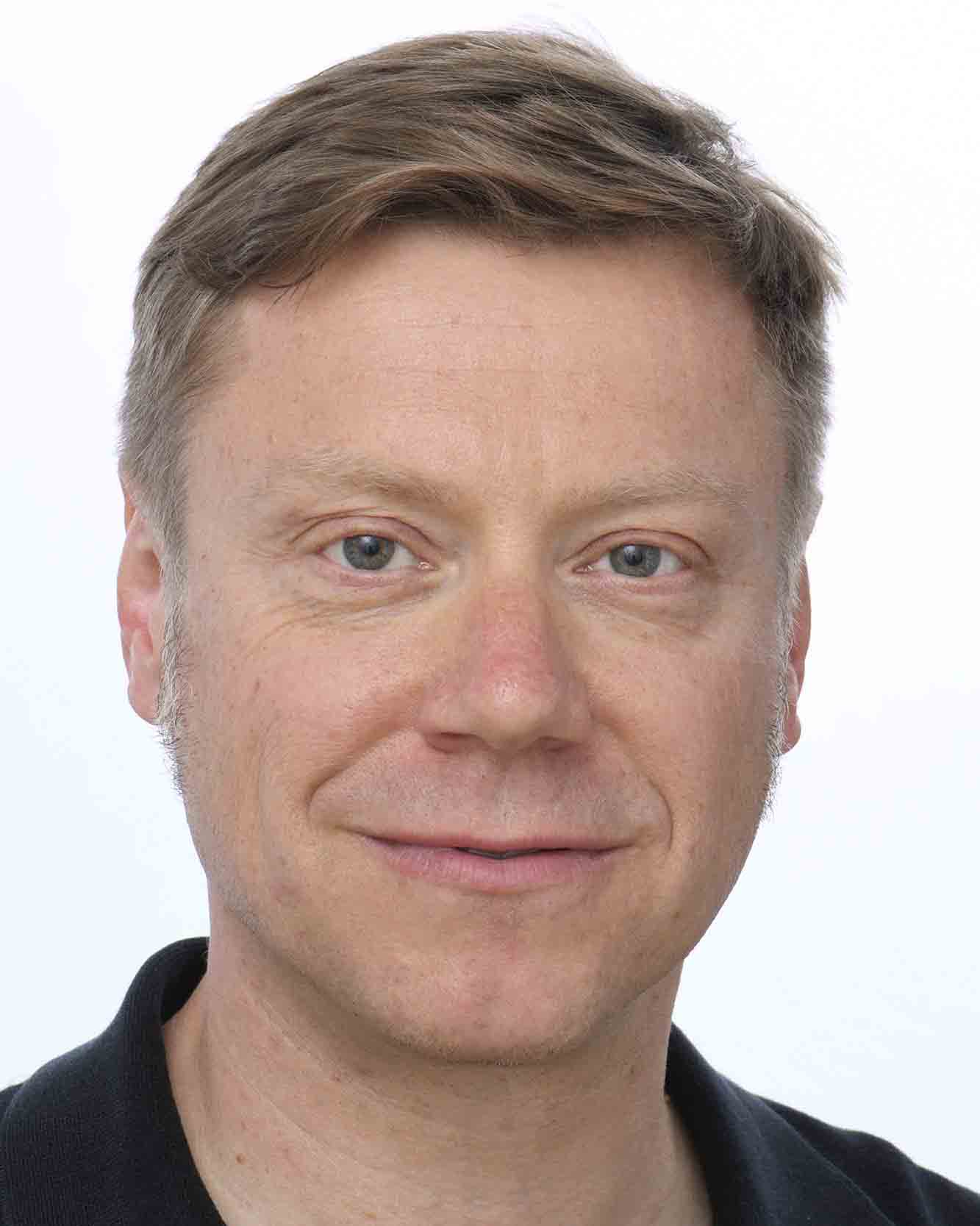
Lukas Sieper | Germany DEU | Non-attached Members (NI) | 390 |
| 2 |
|
Juan Fernando López Aguilar | Spain ESP | Progressive Alliance of Socialists and Democrats (S&D) | 354 |
| 3 |
|
Sebastian Tynkkynen | Finland FIN | European Conservatives and Reformists (ECR) | 331 |
| 4 |
|
João Oliveira | Portugal PRT | The Left in the European Parliament (GUE/NGL) | 232 |
| 5 |
|
Vytenis Povilas Andriukaitis | Lithuania LTU | Progressive Alliance of Socialists and Democrats (S&D) | 227 |
All Contributions (83)
Conclusions of the European Council meeting of 21-22 October 2021 (debate)
Mr President, I'm glad you're back. Dear colleagues! About a month ago, the Commission President ruled out EU funds being invested in barbed wire and fences. And then you, Mr Michel, travel to Warsaw and announce, together with the Polish Prime Minister, that you can imagine, on the basis of a legal opinion drawn up in your house – i.e. the European Council – building barbed wire and fences precisely on behalf of the European Union, which are intended to prevent people from seeking protection in the EU. They thus adopt the language of the political right, which speaks of illegal migration when it comes to people in need, of an alleged threat to the stability of the European Union, which is to be triggered by 5,000 refugees, and want to use the so-called EU border protection agency Frontex, which is itself responsible for serious human rights violations such as illegal immigration. pushbacks is involved. But it is not these 5,000 people who are now fighting for their survival and against freezing in the Polish and Belarusian forests that threaten the EU. Mr Michel, it is politicians who voluntarily allow themselves to be drawn into the cart of authoritarian rights, thereby seriously harming democracy, existing international law and, indeed - and you must now bear this - also the anti-fascist founding consensus of the predecessor organisation of the European Union. Of course Lukashenka is a bad autocrat, and of course he uses refugees as a means of pressure. But that he can do it at all is due to the EU's permanent failure to implement a humane and solidarity-based migration policy based on international law. Anyone who fails to understand that this EU border management policy is a disgrace in the face of thousands of deaths at the EU’s external borders, of Libyan slave camps or of children who are now freezing to death in Polish forests cannot be helped. Instead of dreaming of barbed wire and walls, Mr Michel, you should work to ensure that the Member States finally get people out of there!
The Rule of law crisis in Poland and the primacy of EU law (continuation of debate)
Mr President! The debate has clearly shown how deep the crisis of the rule of law and democracy is now spreading in the Member States and also here in the House and how much the unculture of anti-democratic thinking and corresponding political action has already spread in the Member States and here in the House. The method is always the same: It is distracted from the topic, fog candles are thrown, the topic is passed over in order to obscure the political goals. The objectives are to undermine the rules of the game for democracy and the rule of law, to undermine the independence of the judiciary, to restrict freedom of the press and to restrict the exercise of fundamental rights for minorities, refugees and women. All of this bears the hallmarks of an authoritarian transformation that is taking place not only in Poland but also in other Member States. And we can argue about anything – social policy, economic policy, climate justice, digitalisation and foreign policy – but we need to agree on democracy and the rule of law.
The Rule of law crisis in Poland and the primacy of EU law (debate)
Mr President! Mrs von der Leyen, you spoke at the beginning of your presidency about trying to resolve the existing conflicts with Poland in dialogue. At that time, a rule of law case was already under way against Poland for attacks on the independence of the judiciary. Unfortunately, little has happened since then, and the debate today shows that the conflicts have only escalated further. This passivity on the part of the Commission and of you, Mrs von der Leyen, has also brought us into this situation. Finally take your responsibility. The time for beautiful words is over. Act and apply the rule of law mechanism without delay! Stop appeasement of the authoritarian right. Their policies must not be financed with European funds. Mr Prime Minister, you have applied today as a class spokesman for the right here in the House. Their provocations were clear, the applause from that corner too. You can still try to put sand in people's eyes, but what you call judicial reform is nothing more than an attempt to undermine the independence of the judiciary and establish a political judiciary. This calls into question the rule of law and democracy. That is what is at stake here today, and not less so, in this debate, namely that an authoritarian transformation is taking place in Poland, a transformation that aims not only at the independence of the judiciary but also at the exercise of fundamental rights. It's outrageous that you haven't found a critical word here about the so-called LGBT-free zones in your country. Human rights are trampled underfoot there, and this policy is tolerated and promoted by your government. (Applause) I find it outrageous how your government denies women in your country the right to physical self-determination. We no longer live in the Catholic Middle Ages, where women were given a chastity belt. Now your government wants to erect a fence against refugees on the border with Belarus. Fences do not solve political problems. With every fence, however, human rights can be broken and the international legal order buried. No wonder, then, that the Polish Constitutional Court recently also questioned the European legal order. This bomb has been presented to us here today with many glorifying words. But don't be fooled by their explosive power. Should a Member State begin to choose which EU legal framework it claims for itself and which it does not, others will soon follow, and that would be the political end of the European Union.
Banking Union - annual report 2020 (debate)
Madam President, In the EU, the cost of bailing out banks as a result of the great financial crisis was a whopping €1.7 trillion, and at that time it was highly and sacredly sworn that taxpayers would never again be asked to pay to save the monstrous gambler bonuses and megabanks. That was the birth of the banking union, and since then a lot of water has flowed down the European rivers. But not much has happened, because even a decade later we still have megabanks that are too huge and too complex to fail. The problem is that banks Too Big to Fail They have not been approached. On the contrary, the alignment of banking regulation across the EU actually facilitates the concentration and interconnectedness of the banking sector. However, what we need to stabilise the banking sector and put it at the service of society is the consistent separation of investment banking and investment banking. The still lax equity ratios are completely inadequate. The EU resolution fund is more a symbolic measure than an effective means of effectively intervening in a systemic banking crisis. Dear rapporteur, I welcome the initiative for better regulation of the shadow banking sector. I also support the call to accelerate the fight against money laundering. However, I cannot support the report as a whole, because it unfortunately neglects the massive shortcomings in the architecture of the banking union, so that in the end taxpayers have to tinker again.
State of the Union (continuation of debate)
Mr President! Thank you for the discussion, Madam President of the Commission. What remains of this debate on the state of the European Union? Lots of buzzwords, lots of wishful thinking, but not a convincing idea. And I'd like to help you with that. My idea or proposal for an idea would be that we develop the European Union together into a safe haven, a social safe haven. Three examples: You mentioned the staff who were at the forefront of the pandemic. This staff needs more than applause. Better working conditions, better wages and a dense working life, better public services and stronger social security are needed. This is not only what this staff wants, but also what the population wants. Second point: The digital transformation. You have to have the courage to get involved with the monopoly company, to open up the market for small and medium-sized companies, to protect data, to protect consumers and above all to secure the participation of those who are economically weaker, i.e. to shape a social-digital transformation. And when it comes to climate change and climate protection, there is no question that this project must also be socially secure, i.e. social-ecological climate protection. That is my idea, my proposal for a European Union of Social Protection Areas.
State of the Union (debate)
Madam President, Mrs von der Leyen, you have presented us with a lot of self-praise today, but unfortunately we owe a lot of answers and, above all, a convincing idea for the further development of the European Union. This parliament, 140 former heads of state and Nobel laureates, over 100 countries worldwide are now jointly calling for the suspension of patent protection for the corona vaccines. This is because there is an insight that the pandemic can only really be overcome if the vaccine is available to everyone, including in the Global South. When does the Commission abandon its blockade of the suspension of patent protection in order to protect the health of all, not to jeopardise the onset of economic recovery and, above all, to avoid the further social division of society? The ten richest billionaires in Europe – ladies and gentlemen, please let this figure go through your head – the ten richest billionaires in Europe increased their net worth by over €180 billion during the pandemic. At the same time, one fifth of children in the European Union live in poverty. The crisis has particularly affected low-skilled female workers, while the self-employed and precarious female service providers have lost their jobs. I don't want this or the southern European youth or pensioners to have to pay for the crisis again. It finally needs a minimum level of taxation for multinational companies that also have teeth. A comprehensive financial transaction tax is finally needed, which would flush a good 40 billion euros into the European coffers. Tax justice and poverty reduction go hand in hand. When will you finally make both a priority of your work in the Commission, Mrs von der Leyen? The West is in a deep crisis due to NATO's defeat in Afghanistan. The policy of military intervention and nation-building has failed disastrously, and yet some colleagues here, Mr Borrell, come up with nothing more than a call for rearmament and a military union. Mr Weber, do you really not think that the money you want to invest in the military would be better spent on poverty reduction? The lessons learned from the Afghanistan disaster can only mean that the EU is working on a sovereign foreign policy based on smart development policy, fair trade, effective climate protection and a humanitarian migration policy. This will make the EU a credible and strong player in international relations. Ladies and gentlemen, in order to put an end to the stalemate in European policy that has been presented to us here today, a fresh start is needed, also here in this House. And addressed to you, Social Democrats and Greens, you know that you will not be able to implement your ideas of better social security and effective climate protection with the majority relations existing here in the house. And to you liberals, you know that your ideas in defense of democracy and fundamental rights cannot be implemented if you continue to form majorities with those who do not clearly delineate themselves to the right. So let's work together here. Let's work on common new majorities for social and climate justice, for a digital transformation that leaves no one behind, and for strengthening democracy. Europeans deserve it. Thank you for your attention.
Review of the macroeconomic legislative framework (debate)
Madam President, The European debt brake prevents the necessary government investment to make EU Member States crisis-proof and future-proof. And in fact, esteemed rapporteur, we also agree that the EU must finally leave the existing debt rules behind. A more active fiscal policy is needed to deal with the pandemic and its consequences and not to shift the costs of the crisis back to the broad mass of the population, as happened with the unconditional enforcement of austerity policies after the financial crisis. Germany alone currently has an estimated investment need of 450 billion euros. And the pandemic has shown us the shortcomings in public infrastructure and public services of general interest with all their severity. We received the receipt for this false policy when our nurses in understaffed, inadequately equipped intensive care units had to fight for every single life. However, the pandemic has also revealed the digital divide in society. Where adequate internet and technology are lacking, people will be left behind. The digital age began ten years ago. But we must now invest in digital participation, education and jobs, because no one can be left behind in the digital transformation of the economy and society. Unfortunately, the report's initially very progressive positions were severely eroded in the course of the negotiations. Despite positive elements such as a possible exception rule for some growth-enhancing investments, the report maintains the rusty debt rules of the Maastricht Treaty and also the conservative economic policy of the European Semester. I call for the Maastricht rules to finally be part of history and for the EU rules to be made fit for the future. Let's dare a solidarity and future pact for the EU to promote state investment. Thank you for your attention.
Presentation of the programme of activities of the Slovenian Presidency (debate)
Mr President, Mr Prime Minister! Now that the political right has spared you very much in the debate, but you yourself are known for fighting with the sword rather than with the foil, I will not withhold from you the joy of a political debate. Your government is taking over the Presidency of the Council at a difficult time for the EU. The EU is still struggling with the pandemic and its consequences. And unfortunately, the Council Presidency begins with a scandal, the higher reverberations of insulting statements: One of the Vice-Presidents of the Commission refuses to take a group picture. The next day, another vice president will walk with you comfortably. Mrs. von der Leyen, sometimes I wonder: What's going on at Berlaymont? But, Mr Janša, you have touched on many topics. Above all, let me talk to you about democracy. I think that the Slovenian public has a right to be informed from an independent journalistic source. And denying funding to the independent news agency is a political scandal. And even if you don't always like what is reported, you have to endure criticism as a politician. And even if you personally prefer Twitter as a proclamation body, media independence and freedom of the press, Mr Prime Minister, are essential in a democracy. I also think that the Slovenian people have a right to the functioning of an independent judiciary. The fact that your government presents some of the judges in the country as politically biased, says above all something about your own relationship to the independence of the judiciary. And the fact that the European Public Prosecutor's Office still has to wait for the appointment of European prosecutors from Slovenia and therefore cannot start its work is completely unacceptable. The work of an independent public prosecutor’s office, for example against corruption, strengthens trust in the rule of law and democratic policies. Their refusal undermines that trust. I believe that democracy thrives on cultural controversy. The contempt of the democratic opposition leads to a brutalization of political debate and culture. The US under Donald Trump was not a model of democratic culture – quite the contrary: They are a reminder to us. And the EU Member States, and in particular an incumbent Presidency of the Council, should not follow this path. I continue to think that refugees are entitled to protection in the EU and to compliance with international law. This applies to Slovenia as well as to any other Member State. Refugees are not greeted with barbed wire fences and footsteps, but with compassion. In short, Mr Prime Minister, I am pleased that Slovenia is a member of the EU and that you now hold the Presidency of the Council and that you face great challenges. I doubt, however, that it could have become a member under today's domestic political conditions. You can still use your Presidency to help address current policy challenges. You can strengthen European democracy, or you can continue your political course. Then you will find in us critics who also know how to fight with the sword.