

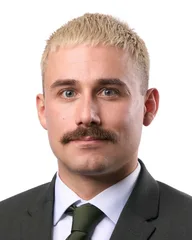
| Rank | Name | Country | Group | Speeches | |
|---|---|---|---|---|---|
| 1 |
|
Lukas Sieper | Germany DEU | Non-attached Members (NI) | 390 |
| 2 |
|
Juan Fernando López Aguilar | Spain ESP | Progressive Alliance of Socialists and Democrats (S&D) | 354 |
| 3 |
|
Sebastian Tynkkynen | Finland FIN | European Conservatives and Reformists (ECR) | 331 |
| 4 |
|
João Oliveira | Portugal PRT | The Left in the European Parliament (GUE/NGL) | 232 |
| 5 |
|
Vytenis Povilas Andriukaitis | Lithuania LTU | Progressive Alliance of Socialists and Democrats (S&D) | 227 |
All Contributions (65)
Commission implementing Regulation (EU) 2022/1614 of 15 September 2022 determining the existing deep-sea fishing areas and establishing a list of areas where vulnerable marine ecosystems are known to occur or are likely to occur (debate)
Mrs Roose, there is no question? There is no question. Well, here we go, let's all proceed by affirmation.
Commission implementing Regulation (EU) 2022/1614 of 15 September 2022 determining the existing deep-sea fishing areas and establishing a list of areas where vulnerable marine ecosystems are known to occur or are likely to occur (debate)
Madam President, ladies and gentlemen, Commissioner, at the worst time and in the worst possible way, the European Commission decided to ban bottom fishing in 87 areas across the Atlantic coast. No, Madam – tell Mr Sinkevičius – this surface is not anecdotal and is not visible, as was said in the last Fisheries Committee by his representative. It represents 16,000 square kilometres, i.e. half the area of Belgium. While the shocks of the health crisis are still being felt throughout the sector, while our French fishermen are no longer receiving fuel aid, while our Breton fishermen have been sacrificed under the Brexit agreements and those in the Bay of Biscay are suffering a sudden and sudden drop of 36% on sole quotas, quotas imposed by the Commission at the beginning of the year, you decide to put a layer on them. Especially since the Commission bases this arbitrary decision on dated and contested scientific advice, without worrying about the socio-economic consequences for our fishermen. Clearly, I can tell you, for having met and heard them, our fishermen have not been listened to, their opinions have not been taken into account. And I am not just speaking here as an ID Member, but as a French representative of our fishermen, ladies, and like our Spanish or Portuguese colleagues who know how to overcome political divisions, we all have to defend our fisheries and our fishermen against the European Commission, which does not distinguish small-scale fishing from that of multinationals, nor sustainable fishing methods from those that are not. Total: this fish that Brussels refuses to see fish, we are going to import it, we are already importing it, from countries that do not respect our standards or their resources. The European Commission has assumed exclusive competence in fisheries and is acting as the guardian of the world's oceans, forgetting that the real holders of this role are our fishermen. They are guarantors, I remind you, of our food independence, the quality of the products and, obviously, concerned about the sustainability of the resource. And what are they fighting today? Climate variations? of the resource? The bad weather? No, no, no! They are fighting against the European technocracy, which has decided to put an end to them. So, one: We are not here to endorse the Commission's desiderata. Two: this exclusive competence, which is not in good hands, will have to be called into question at some point. Three: this regulation must be abolished. (The speaker agreed to respond to a "blue card" intervention)
General budget of the European Union for the financial year 2023 - all sections (debate)
Madam President, ladies and gentlemen, the years pass, the budgets pass and, invariably, they are all alike. Always quick to ask for more from the states, more from their citizens, the European Union wants money, money and more money. All this for what? Less sovereignty, fewer businesses, fewer farmers, fishermen, jobs, public service, less growth, less energy and less purchasing power. On the other hand, more bureaucracy, more interference and a collapsing middle class. Not to mention, this has not escaped anyone, a major energy crisis, an energy crisis that some would like us to believe is the sole result of the Ukrainian conflict. But the reality, especially in France, is that it is due to the dismantling of our nuclear industry organised by Brussels and to political decisions that will plunge millions of families and people into poverty and cold tomorrow. So is the EU less effective because it lacks resources? No, no. On the contrary, it achieves its ultimate goal: globalization, delocalization, deregulation, uberization of our society; and mass immigration, without which there would have been no Samuel Paty, without which there would have been no Lola. In addition to the laxity and docility of Mr Macron’s government, the downgrading and savagery of our societies, it is you. We will not vote another penny for that Europe.
Impact of new technologies on taxation: crypto and blockchain (debate)
Madam President, ladies and gentlemen, the technological transformations brought about by blockchain herald the disappearance of the authority of the State, the guarantor of individual contracts and deeds of ownership. We must be well aware of what is happening right now before our eyes: powers formerly vested in the State are transferred to networks of companies and financiers acting outside any democratic, and I would even say legal, framework. The European Central Bank’s decision to use the services of Amazon, a private non-European company, for the creation of the digital euro is a perfect illustration of this fatal drift. We will lose our ability to protect our data and decide where to take this sensitive industry in the years to come. We have a duty to guarantee citizens that no public data will be processed outside the framework of the nation. We have a duty to raise our own voice against the omnipotence of private monopolies.
Momentum for the Ocean: strengthening Ocean Governance and Biodiversity (debate)
Madam President, it has been said, illegal fishing, piracy, protection of marine systems, the blue economy is both one of the great challenges of the 21st century, but also a hotbed of innovation towards a new economy of the sea. Faced with rising tensions on the oceans, France, the second largest maritime area in the world – is it worth recalling here? – will be at the forefront of tackling these major crises, particularly in the Indian and Pacific Ocean, the new economic centre of the world of tomorrow. Some States, such as India, are only asking for more cooperation with us. These closer international cooperations in the Indo-Pacific are necessary because the challenges are common. With France, thanks to France, Europe will play its full part in this new economy.
Conservation and enforcement measures applicable in the Regulatory Area of the Northwest Atlantic Fisheries Organisation (NAFO) - Western and Central Pacific Fisheries Convention Area: conservation and management measures (debate)
Mr President, ladies and gentlemen, Commissioner, there is a need for measures to conserve fisheries resources, as the sustainability of stocks has been tested: in Saint Pierre and Miquelon, after overfishing by foreign trawlers in the 1970s, the collapse of cod stocks came close to the irreversible. Our small-scale fisheries are best able to adapt and react quickly to changes in the local resource. However, it is the first victim of the economic model of intensive fishing that the European Union has encouraged before being, alas, unable to stop it. It is a virtuous and sustainable fishing model that ideologues have chosen to sacrifice for the benefit of multinationals. If the defence of our food sovereignty and a model of sustainable exploitation of the resource were really important to our managers, they would stop weakening our sectors and making regrettable decisions for which they then hold the seafarers responsible.
Adoption by Croatia of the euro on 1 January 2023 (debate)
Mr President, ladies and gentlemen, the euro is not doing well. Its violent decline since February demonstrates its fragility. Our economy is going bad. For Christine Lagarde, President of the ECB, the worrying inflation that is taking hold will be long-lasting and excessively high. Why, then, does the European Union decide today to allow Croatia to adopt the single currency, given the difficulty of our countries in the aftermath of COVID-19 and in the midst of the Ukrainian crisis, even though Croatia has not implemented any of the 17 recommendations of the Council of Europe’s Group of States against Corruption? While this will reinforce the economic divergences within the euro area, which are growing every day a little more? The first victims will be the most modest: our small businesses, our savers, which you will downgrade without the slightest hesitation. So I'm telling you: We must put an end to this Europe which is against and against everything, and above all against the peoples. Moreover, with regard to peoples, I would be very curious to know whether the Croatian people have been consulted on this subject.
Future of fisheries in the Channel, North Sea, Irish Sea and Atlantic Ocean (debate)
Madam President, Commissioner, ladies and gentlemen, I am very sorry to say: With the Brexit agreement, the European Commission and its chief negotiator, Michel Barnier, have finally revealed their inability to defend the interests of our fishermen. Today, we are forced to do with an ill-fated agreement, some of whose vague clauses have simply allowed the British authorities to block many French ships at their maritime border. While we had the legal weapons, including customs, to defend them, the Commission preferred to let our fishermen fend for themselves against the Royal Navy. That's the reality. To date, obtaining the still missing licenses remains possible, it has been said. But negotiating after 2026 – the real blind spot of the agreement – is imperative to save our fishermen and our food sovereignty. We cannot, we can no longer, we must not rely again fully and exclusively on the Commission. It is up to the Member States concerned to organise together to obtain fair, reasonable quotas from the British on a multiannual basis and to refuse any marketing of licences. Because yes, the UK is defending its interests – and it is right. But our fishermen expected their politicians to do the same. That wasn't the case. At a time when our food security is in danger, guaranteeing our fishermen the sustainability of their profession, their sectors, their activity is a major subject for our strategic autonomy. Of this, we all have to take the measure.
Pilot regime for market infrastructures based on distributed ledger technology (debate)
Madam President, ladies and gentlemen, missing the challenge of innovation in blockchain would obviously be a serious mistake. A pseudo-ecologist obscurantism would like to ban them on the pretext that they are too consuming. It is strange, moreover, that the same people are not thinking of banning YouTube and other popular and equally energy-intensive social networks. The only proven consequences of the absurd limitation of distributed electronic ledgers – in other words blockchains – will be to allow China, the United States or others to dominate us technologically and economically, as we have seen for the data cloud – I mean the cloud. We must not enter into a millenarianism of degrowth, but trust in the ability of man to innovate, adapt and surpass himself. This is the genius of our civilisation since Aristotle.
European Semester for economic policy coordination: annual sustainable growth survey 2022 – European Semester for economic policy coordination: employment and social aspects in the annual sustainable growth strategy survey 2022 (debate)
Madam President, ladies and gentlemen, rapporteurs, yes, with the return of inflation and soaring prices for energy and raw materials, more and more of our compatriots are struggling to heat themselves, to care for themselves, to feed themselves, and finally, to live in dignity. Meanwhile, here, under the pretext of ecology, we are talking only about green taxes and punitive ecology. How can we meet the challenge of the end of the world without worrying about the men and women who can't finish the month? In France, 10 million people live below the poverty line. The European Union bears the responsibility, with a policy increasingly favourable to multinationals, speculators and the financialisation of our globalised societies, which have destroyed our factories, our agriculture, our fisheries and our businesses. There must be no sustainable growth and social progress without them, because it is not men who must be at the service of the economy, it is the economy that must be at the service of men.
European Central Bank – annual report 2021 (continuation of debate)
Ladies and gentlemen, Madam President, with the new taxonomy that aims to direct European funding towards activities that the Commission considers environmentally sustainable, the European Central Bank is becoming the arm of punitive ecology. As always, risks, unsustainable red tape and bankruptcies will only hit people-sized businesses – VSEs, SMEs – who are the real creators of wealth. As always, large groups, backed by high finance and globalised, will have nothing to fear. They will collectivize their losses and privatize profits. The truth, Ms Lagarde, is that the European Central Bank is detaching itself from the real economy every year – the economy that produces, invests and sustains families, not the high-finance traders. It is urgent that the ECB ceases to be the backbone of Goldman Sachs and finally participates in the financing of the real economy, which, after the COVID-19 and energy crises, would provide new opportunities and boost the purchasing power of the peoples of Europe.
Introduction of a European social security pass for improving the digital enforcement of social security rights and fair mobility (debate)
Mr President, Commissioner, ladies and gentlemen, after the reign of widespread dumping and the destruction of borders in Europe, the European Union is now concerned about the protection of mobile workers with the introduction of a European social security pass. It is a curious paradox that this proliferation of digital traceability tools grouped under the name of ‘pass’ – carbon pass, health pass, social security pass, etc. While our borders are open to the four winds and it would be hard to know how many illegal immigrants enter and cross our territories, the EU is trying to control, supervise and, I would even say, crack our citizens. We would do better to think about viable solutions that would allow people to find work with their own people and move, not towards the nomadization of workers, but towards relocations. But the EU prefers to detach workers from their homeland, their families, their roots. Living and working in Canada: This is the real challenge of tomorrow.
Protecting workers from asbestos (debate)
Mr President, rapporteur, Commissioner, ladies and gentlemen, responsible for between 100 000 and 150 000 deaths worldwide per year, asbestos, it is true, is the leading cause of occupational cancers. Even though my country, France, has banned its use for more than 25 years and the European Union for 15 years, this tragedy is far from behind us. On the one hand, because the interior structure has not been properly identified. On the other hand, because medical research on mesothelioma and other asbestos-related cancers has stalled in most EU states. So yes, our states must put prevention at the heart of their health challenges and we could already start by not underestimating, as was said earlier, the risk of asbestos being reintroduced into the European Union by imports from emerging countries that still use this material. To avoid this, we should already give States the means to control and protect our borders by stopping the rampage of personnel and customs resources. This would add coherence to the legitimate ambitions of this House to combat this deadly scourge. Last but not least, the Commission’s interference with the functioning of this House, which seems to have attempted to encroach on Parliament’s prerogative as co-legislator under the Treaties. Because, finally, Commissioner, our Chamber is not just a chamber for registering the Commission’s wishes.
Banking Union - annual report 2020 (debate)
Madam President, Commissioner, Rapporteur, ladies and gentlemen, the banking union is the constant sea serpent of European policy. Today, you claim to be supervising the hyperconcentration of a risk, even though it is already out of control. The compartmentalisation of markets, the separation of risks and the diversity of pricing and control models are conditions of security. Interdependence and concentration increase systemic risk, especially when they link heterogeneous markets, as European national markets still do. But the principle is based on a system that, once the taxpayer is rinsed, commits savers, depositors and companies to pay the bill to save the speculative activities of banks. We already know that these same banks are exposed to multiple bubbles that are likely to burst tomorrow, due to the pandemic and the fact that banks did not want to learn the necessary lessons from previous bankruptcies. To be convinced of this, it is enough to see the demands for deregulation demanded by the banking lobby at the height of the COVID-19 period, where there are still very risky securitisation activities, the very ones that led to the collapse of Lehman Brothers and the global explosion of 2008. We take the same ones and start over. The addition of weaknesses has never been a force. The key is not the pooling of risk, but its redistribution and devolution. This is the role of the nation state that we call for. You have built a banking union by leaving the protection of savers at the bottom of your list of concerns. We believe that it is by taking strong regulatory measures at national level that we will be able to protect savers and depositors, who are at the forefront of our concerns.
Fair working conditions, rights and social protection for platform workers - New forms of employment linked to digital development (debate)
Mr President, rapporteur, ladies and gentlemen, when I hear you, when I hear this catalogue of wishful thinking: clarifying workers’ rights on platforms, finding balance points, guaranteeing social protection, managing algorithms, you remind me of Jean Cocteau’s famous quote: “These mysteries are beyond us, let’s pretend to be the organisers”. But the scandal of the condition of platform workers is not just a matter of labour law. It is first and foremost a choice of civilisation. In the era of technological progress, the platforms that the digital age has brought about are destructuring institutions, deconstructing conventions and disintegrating social advances. Under the guise of freedom and self-entrepreneurship, their promoters dare to boast of a new form of slavery that does not say its name. The nation state alone can put these great feudals to the test. The nation state alone will allow a people to decide how the economy and technological progress should serve our living forces and not the other way around. The nation state alone will allow the real exercise of democracy and popular sovereignty in the face of multinationals who intend to impose their deadly choices on us. The nation state alone will make it possible to look to the future and not to return to the exploitation models of another time. The nation state is freedom and it is this freedom that we fight for and we have to fight for. This is a fight that the European Union is likely to have abandoned. This may even be a fight that the European Union has simply refused to fight.