





| Rank | Name | Country | Group | Speeches | |
|---|---|---|---|---|---|
| 1 |
|
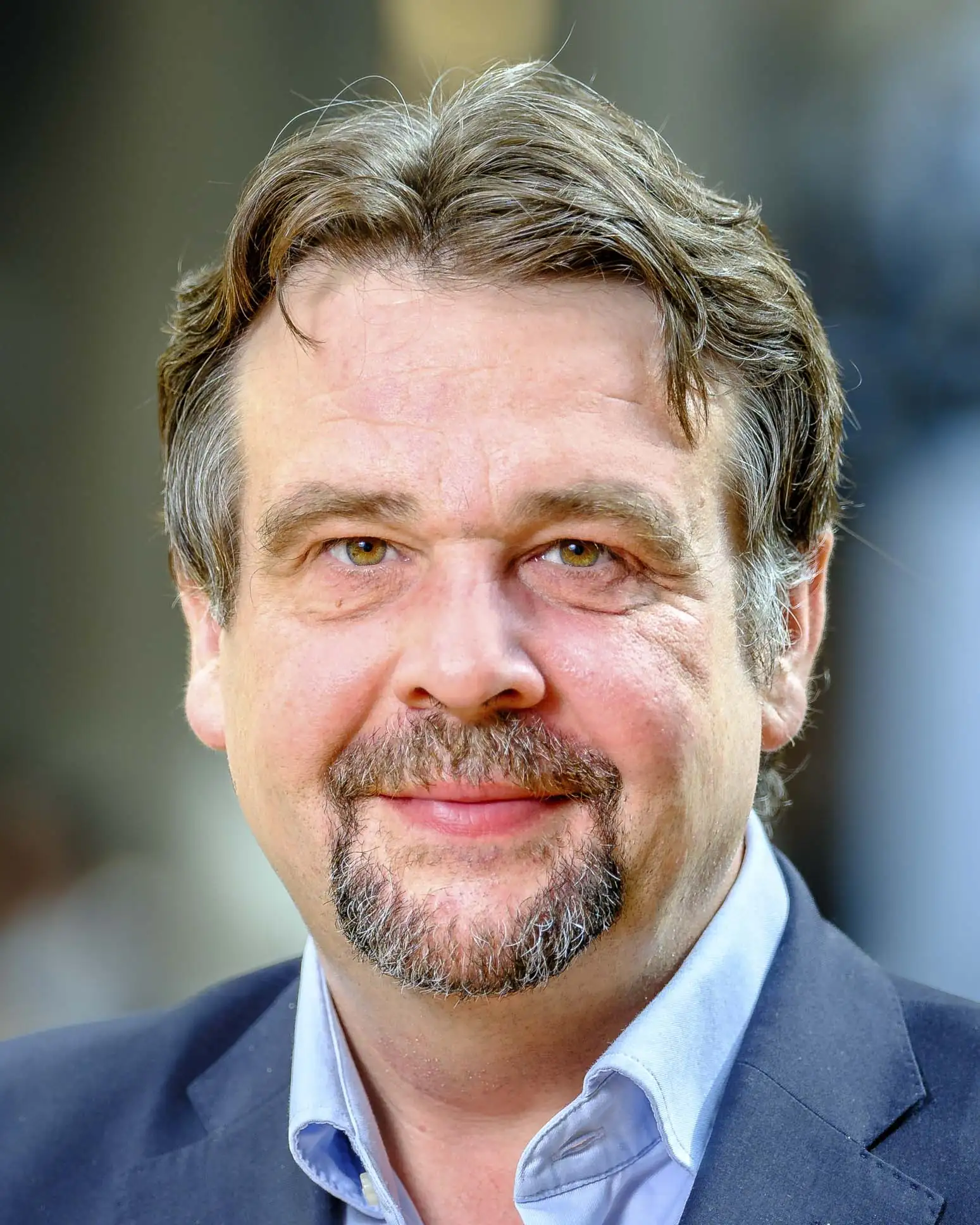
Lukas Sieper | Germany DE | Renew Europe (Renew) | 487 |
| 2 |
|
Juan Fernando López Aguilar | Spain ES | Progressive Alliance of Socialists and Democrats (S&D) | 454 |
| 3 |
|
Sebastian Tynkkynen | Finland FI | European Conservatives and Reformists (ECR) | 451 |
| 4 |
|
João Oliveira | Portugal PT | The Left in the European Parliament (GUE/NGL) | 284 |
| 5 |
|
Vytenis Povilas Andriukaitis | Lithuania LT | Progressive Alliance of Socialists and Democrats (S&D) | 273 |
All Speeches (50)
The role of social award criteria in public procurement in strengthening social rights, good working conditions and inclusive labour markets (debate)
Date:
15.01.2024 20:55
| Language: DE
Speeches
Madam Vice-President, Commissioner, ladies and gentlemen! If you look at the European Parliament's toolbox, how we can deal with the European Commission in this way and get things rolling, the oral question is certainly not the big hammer, but perhaps more of a small nail or a tearing purpose. But anyone who has ever set himself up for such a tearing purpose knows that it can also have its effect. And that is why I think it is right that today, on this important question of public procurement, we are putting these tearing purposes here on the chair of the Commissioner. Not because I think he deserves it personally, but because I think it is a failure for the European Commission not to tackle public procurement in this legislature for two reasons: One is, of course, the social aspect, no doubt about it. We have decided to advance the European minimum wage here. And, of course, the question of linkage, collective bargaining and public procurement is an essential element in ensuring more collective bargaining. We are talking about public money. And, of course, it is justified to say – especially in a social market economy: We want to give public money primarily to those who also follow the rules of the social market economy. But the second point why I consider it a major failure is the issue of sustainability. I come from a steel location in the Ruhr area, and we often have the discussion: Why do we have Chinese steel in German motorway bridges and no steel from Duisburg? And the answer is quite simple: Because sustainability issues do not play a role there today. And I think that an institution like the European Commission, which has hung the Green Deal so high, must also ensure that it plays a role in public procurement in the future.
Revision of the European Labour Authority mandate (debate)
Date:
15.01.2024 20:08
| Language: DE
Speeches
Madam Vice-President, Commissioner, dear Agnes, dear colleagues! With this opinion, we as the European Parliament are expressing our expectations towards the European Commission with regard to the new ELA mandate. And it must be said - as the Commissioner has also pointed out - that the launch of ELA was a good one, despite all the birth difficulties that a new authority always entails. But now it's about giving the tiger teeth as well. And I think the example of the truck drivers in Gräfenhausen who went on strike twice last year makes it clear why this is more than overdue. Because the question of unpaid wages and also the question of how we deal with employees from third countries must be included in ELA's portfolio. Gräfenhausen has shown this more than clearly. And in my view, the new mandate is about two things that are very important: On the one hand, of course, we as the European Union play an active role in protecting workers from exploitation and strengthening their backs when it comes to enforcing their rights. That's the one. But the other is – and this is almost as important: When we speak of the single market as the heart of the European Union, we must also ensure that the rules that apply to the single market are respected. This is because we can put legislation in place without end, such as the Mobility Package, to stick to the example. But if enforcement does not take place, if – as in the case of Gräfenhausen – authorities shift responsibility to each other and the ELA does not even have a right to take initiative, then this shows the problems. We have addressed them in our report, in our opinion, in the hope that the Commission will also take up the ball.
Type-approval of motor vehicles and engines with respect to their emissions and battery durability (Euro 7) (debate)
Date:
08.11.2023 20:57
| Language: DE
Speeches
Mr President, Commissioner, ladies and gentlemen! For us as the EPP Group, it is clear: We need to prove that "wages and growth up" and "emissions and environmental impact down" go together. Otherwise, no one will follow us internationally in our ambitious goals. And for me it is also clear: We will only achieve environmental protection and climate protection with industry as a partner and not with industry as an adversary. I mean, after four years of social-democratic industrial policy here in this House, nothing surprises you anymore. But it is astonishing when, three weeks ago, the SPD chairman in Germany declared that the SPD stood without ifs and buts as an industrial location in Germany. I told him plainly: It would be great if you would not only say it, but if your comrades in parliaments would also take it into account in their decisions. The SPD, the Social Democracy in this House, does not stand for the preservation of high-quality industrial jobs, but is at the forefront of the counter-movement! This is the sad reality. This was announced here and today. The EPP stands for a different course: Industry as a partner for climate protection and environmental protection. And that's what tomorrow is all about. And that's what I'm promoting.
International Day for the Eradication of Poverty (debate)
Date:
17.10.2023 10:54
| Language: DE
Speeches
Madam President, Commissioner, ladies and gentlemen! Actually, it is sad that for some it is necessary that we need international days for this, this and that to sharpen the senses for what is happening right in front of our eyes. If we take the example of homelessness, we do not really need an International Day for Combating Poverty, but homelessness, we almost stumble upon it when we leave the European Parliament in Brussels because the homeless people around Parliament are living their barren lives. If we want to see children in poverty, children who do not have access to clean drinking water, good education and reasonable food, we do not need to go to South American slums or to Africa, then a visit to a Roma community in Romania, Bulgaria or Slovakia is enough. All of this is happening on our doorstep. That is why it is good and right that the European Union has set itself committed goals in reducing poverty. The Commissioner has just remarked on the figures: At least 15 million people should be brought out of poverty or at risk of poverty. These targets are very ambitious, because, of course, the inflation crisis, the pressure and the development of the general cost of living increase the risk of poverty once again. But it is important that we have set ourselves these goals. I think that in all the debates on subsidiarity and on who is responsible for what: Of course, the European Union is not primarily responsible for these issues in many places. But we are the engine of development, and we must also ensure and drive the Member States to ensure that the goals we have set ourselves together, which all Heads of State and Government have committed themselves to in the European Union, are also implemented piece by piece.
Classification, labelling and packaging of substances and mixtures (debate)
Date:
03.10.2023 21:12
| Language: DE
Speeches
Mr President, Commissioner, ladies and gentlemen! First of all, I would like to congratulate and thank Mrs Spyraki for her outstanding work. Especially with this technical dossier, tying the different ends together to get a realistic draft is a difficult task. I believe that EPP Amendments 101, 102, 103 offer an opportunity to make the good compromises achieved even better. It is also important to me to point out again that the question of font size and also the question of the implementation deadlines for companies - this will be an issue again tomorrow, hopefully also in the trilogue negotiations. All in all, we must not forget one thing: Chemistry must be safe. That's why we have the strictest chemicals legislation in the world. That's why our chemicals law is the gold standard internationally. But we must also ensure, especially in the current situation, in the current crisis, that it remains affordable for the chemical industry in the end. I have a life before politics. I worked in the chemical trade union in Germany, and that's why I know from my own experience: Chemistry stands for high wages, for high collective bargaining, for co-determined jobs, for highly innovative jobs. And I also expect the European Commission - Commissioner Schinas has pointed out: Chemical strategy - that we also do everything we can to ensure that this industry, as an important backbone for economic growth in Europe, continues to have a home and a good future.
Madam President, Commissioner, ladies and gentlemen! I think the debate could hardly take place at a better time. However, I would like to add at this point: In any case, the debate would have deserved much more attention. Because when we talk about the men and women who are fighting fires and floods in the front row, both during the devastating fires we saw this summer and during the equally devastating floods, when we talk about them and their working conditions, it is actually sad that we have more listeners in the visitors’ stands than here in the Chamber. But despite all this, for us as the EPP Group: We have been putting our finger on the wound for a long time and we will not stop calling on both the Commission and the Member States to invest in the fire brigades, because the importance of the task carried out there by men and women is unfortunately in many places disproportionate to the equipment and the working conditions under which and with which this work must be carried out. And something urgently needs to happen here. When we look at health and safety: Occupational health and safety is organised in such a way that, for a group of workers or the mass of workers, it is basically oriented towards burdens that occur on average, i.e. substances to which one is exposed on average for a certain period of time. However, it works quite differently for firefighters because they are exposed to much higher concentrations for shorter periods of time. Dragoş pointed out: The risk of cancer is 300% higher than that of other workers. As a policy, we must give an answer to this and adapt occupational safety and health. And one final remark: The special feature, the separation between professional fire brigade and volunteer fire brigade: There is an urgent need for the Commission to finally ensure legal certainty in the Working Time Directive so as not to jeopardise the structure of voluntary fire brigades.
Madam President, Commissioner, ladies and gentlemen! I can really say at this point that I am very pleased with the result that has been presented here by the shadow rapporteurs. Let me remind you at this point: When we talked about how we want to continue with the Youth Guarantee, I have always pointed out that for me it is much more important than the debate on how much money we want to put further into the EU Youth Guarantee, that we have a debate on the quality of traineeships, because it makes little sense to redirect billions of euros into areas where, in the end, not even the lowest quality standards of traineeships are met. And we have this discussion now. We continue a second part, which we started with in the Minimum Wage Directive, namely on the question: How should traineeships be remunerated fairly and appropriately? It is also clear to me that there must be differences: A one-week school internship is different from a three-month, five-month, seven-month internship, but what's available here provides the right framework for that. Congratulations on that. I ask for your consent.
One-minute speeches on matters of political importance
Date:
12.06.2023 21:25
| Language: DE
Speeches
Madam President, ladies and gentlemen, I am happy to take part in the agreement between a number of colleagues here to finally get the issue of parental leave for MEPs rolling here. I myself am the father of two children, and like everyone else who became a father here during the parliamentary elections, I have not had the opportunity to take parental leave. In order to be able to attend the birth of my children, I had to blurt out my duties as a Member of Parliament here, because of course it was also just important to me to be present at the birth of my children. And the COVID time, I think, has shown us what is possible through the online tool. And I think it is high time that we talk about how we can now use the opportunities we have successfully tried out in the COVID pandemic in such a way that parenting and being a Member of Parliament is not a contradiction, but that men and women here in Parliament also have the chance to fulfil their responsibilities as parents over parental leave.
Mr President, Commissioner, ladies and gentlemen! I can only agree with Dragoș Pîslaru: It is a pity that a debate that is so important for the question ‘How is social Europe moving forward?’ is taking place at such a marginal time. But the most important thing for me is that this debate takes place. The Commissioner has just pointed out that: We, as a Parliament, are really doing everything we can to relaunch social dialogue at European level, because the decision, as we have done with the question of Right to disconnect By the way, she was on the table here. And I know that there have been quite a few, including the social partners, who have said that the best thing would be for the Commission and Parliament themselves to do something about it. But I was always one of those people who said: Especially with such a question, those who are closer to what is happening in the companies must bring the solution. And that's why I'm still convinced that was right. And now both social partners see it that way, but we must continue this process. That is why I want to say quite frankly and honestly that I am annoyed by some of the things that have now ended up in the resolution. We bring debates on telework, for example, with our directive on the European minimum wage – these are active contributions to strengthening social partnership, this is what we need. And that we are now having a discussion in the debate about the ratio of board salaries to employee salaries: Folks, this has nothing to do with social partnership. Let's fight for more collective bargaining, for more social partnership, for people to have decent pay. Then the boards should earn what they want, these are side-war scenes. Let's continue to focus on what's important in the future.
Roadmap on a Social Europe: two years after Porto (debate)
Date:
10.05.2023 17:24
| Language: DE
Speeches
Mr President, Commissioner, ladies and gentlemen! In my view, the Social Forum in Porto is an important location on the way to a more social Europe. I very much hope that we will be able to consolidate this institution of a social forum so that we also ensure that the issue of social Europe remains at the top of the agenda of the top political decision-makers in the European Union. But let's not fool ourselves. It is sometimes felt that this path towards a more social Europe is getting longer and longer as we walk. We've had the pandemic, we've had war, we've had inflation, we've had the energy crisis, and that's especially true for those who have already been hit hard in our society, but now those in the middle of our society are also affected by all of this. The crisis has arrived in the middle, and it is therefore right that we should make clear reference to it in our resolution which we shall adopt tomorrow. It is also right that we call for a fully integrated strategy to combat poverty, one that also understands poverty in its multidimensionality. I do not mean this as an objective of launching as many new directives as possible; That alone doesn't do it. But I am concerned that we finally come to holistic approaches to poverty reduction, dear friends. Much has already been achieved in this period for social Europe – whether minimum wage, child guarantee, regulation of platform work, where we have come very, very far, but there is still a lot to do, and I look forward to fighting together with you for the common good cause.
Safeguarding labour mobility and social rights of striking lorry drivers from third countries (debate)
Date:
18.04.2023 13:55
| Language: DE
Speeches
Madam President, Commissioner, ladies and gentlemen! I remember very well the heated debates, the heated debates we had here when it came to the introduction of the mobility package. We must not forget: This package even failed in the first vote in this plenary. There was no majority for that. It was really a fight on the edge of a knife that we led. Why did we run it? Why was I a passionate supporter of this mobility package at the time? Because I have always believed that this ruinous downward price competition, which is held solely on the backs of the drivers, must be stopped. I am still firmly convinced that what we have launched here is also the right way to do so. The unbearable pictures, which we now see from Gräfenhausen, make one thing quite clear: We no longer have a regulatory deficit at European level, but we obviously have a enforcement deficit. I also expect the EU Commission to enter into dialogue with the German Federal Government and, at this point, to ask the question clearly: Where are the German authorities when we have such cases as here in Gräfenhausen? This is legally very complex. We are probably talking here not only about employees from third countries, but probably even partly about bogus self-employed people from third countries. It is legally highly complex, but the complexity must not be an excuse for the fact that German authorities simply look away at these places. For me, it's about two things now. One is the level: How can we help the brave men in Gräfenhausen now? Nicolas Schmit pointed this out. It is great what solidarity there is, what the colleagues of Fair mobility Let's do what churches do, let's do what the people do. That's great. Now we have to look: What is needed to further support these brave men and help them assert their interests? I think that's elementary. You also have to ask the question: How can this Polish entrepreneur be in possession of an EU Community licence, although it is quite obvious that he does not meet the personal requirements at all, since personal integrity and apparently suitability are not given? The second is – we also need to talk about it: How can we tighten controls in the future? How can we reshape the Ehler mandate in the future so that what I say is, in many places, just the tip of the iceberg, really belongs once and for all to the past?
More Europe, more jobs: we are building the competitive economy of tomorrow for the benefit of all (topical debate)
Date:
15.03.2023 13:50
| Language: DE
Speeches
Mr President, Commissioner, ladies and gentlemen! More Europe, more jobs. This is a headline that I find quite appealing. But frankly, I think it would be even more appealing if we were to orient the policy we are also making here in this House much, much more strongly towards this objective. Particularly with regard to industrial value creation, it is unfortunately necessary to note: We are falling back more and more. What we are currently experiencing in the USA is a vacuum cleaner for industrial investments: out of Europe, into the United States. This is not only about the 1 300 billion that Mr Biden has mobilised, but above all about the issue of permitting procedures and planning security. The European Commission itself has recognised in its industrial strategy that we need to get faster. But the problem is: In the concrete implementation, the European Commission is doing exactly the opposite. We have an industrial emissions directive on the table that will complicate and prolong planning procedures – with an environmental management system for each individual plant, with the prevention of further use of old plants. This will drive industry further out of Europe. What really bothers me is: We had the debate here four weeks ago on the ban on combustion engines, and that was where Mr Timmermans sat, and he only laughed when I talked about the well-paid jobs we are losing in the automotive and supply industries. He laughed at the question of affordability, of individual mobility. My point is: If we want to take this seriously, we must also take these points seriously in the debate and not laugh at such arguments. Otherwise, we will blame our European project on the populists from the far right and from the far left. No one can want that.
Adequate minimum income ensuring active inclusion (debate)
Date:
14.03.2023 14:34
| Language: DE
Speeches
Mr President, Commissioner, ladies and gentlemen! The latest figures from the last Eurobarometer show once again the drama and the need for this debate. 92% of Europeans are afraid of social decline. 42% say they currently have great difficulty paying their current bills at all, and 45% say they have experienced a significant loss of living standards in the inflation crisis so far. This is, so to speak, in addition to the situation we had before, which we also had before COVID, where we have already focused on the issue of poverty reduction here and said that the situation is dramatic, but the situation has basically become even more dramatic due to COVID and the inflation crisis, and I am seeking to continue to cover the issue holistically. I believe that we cannot make it so easy and say that if we make a directive, we have taken a successful step towards combating poverty. It is simply important to me that, overall, we continue on the path we have taken together with a large majority in this House. We have really delivered as the EU; We have launched the European minimum wage. We are now on the topic of platform regulation. What we have put on the track with regard to ESF+ can be seen. This is also an important aspect for the fight against poverty and for the organisation of participation. After all, this must also be our driving force. We don't want to feed people, we want to organize participation for people. That's why I don't make it so easy and say: Directive simply yes or no, then all problems are solved, but I continue to promote a holistic approach.
Mr President, Commissioner, ladies and gentlemen! I am already a bit irritated when it is pathetically said that today is a day to celebrate. I am already asking myself whether the 3,800 people who will lose their jobs at Ford in Cologne today are also ready to celebrate in view of what we want to decide here today. This is only the beginning with regard to European industry, because we also have to see at the same time what is still in the pipeline on the issue of EURO 7. In my view, the course is being set in a completely wrong direction. And I find the debate and the decision sometimes even quite arrogant, because we heard here from the ranks of the Socialists earlier that those who are committed to the affordability of mobility, those who are concerned about the preservation of jobs and who want to take care of this issue, will be here. frosted As a neoliberal or as a fool. So if it is neoliberal and stupid to stand up for jobs and affordability of individuality, of individual transport, yes, then I am neoliberal and then I am also stupid. And it has also been shown here today in this debate, as in many other places, that the Social Democrats have become a total failure not only in this House, but also in many other places as lawyers, as representatives of the interests of industrial workers, as well as with regard to people with small and medium incomes. We are not the benchmark with our incomes in terms of mobility and affordability, ladies and gentlemen, and therefore the last exit today for the Social Democrats to show that they still begin to understand the reality of life of the people in Europe.
Revision of the European Works Councils Directive (debate)
Date:
19.01.2023 10:16
| Language: DE
Speeches
. – Mr President, Commissioner, ladies and gentlemen! I am very grateful for the debate. Firstly, because I have received a lot of support for my work and for the report. But I am also very grateful for the criticism expressed here today, because it also gives me the opportunity to comment again on some things here, which I have heard over and over again for weeks. But the frequency in which the whole thing is repeated does not make the criticism more justifiable. I just want to start – even if she hasn't been around for a long time – with what Frau Bilde said. So here is a speech on gender quotas and mass migration, and on the agenda is the amendment of the Directive on the establishment of a European Works Council. I really wonder if Mrs Bilde has read a single page of this report. She acts here as a representative of French workers and hasn't even read a page of this report. It is not a question of weakening national law, French law, but of strengthening European law, of elevating European works councils to a different level. This is also what I say to Guido Reil, who himself was also a works council member: Which passage in German company constitution law is weakened by the fact that we are strengthening European law here? This passage should be clearly named! And then I would say, Mrs. de la Pisa Carrión, what you have put down here for a performance, that is inconceivable! So you say companies need oxygen? I have to be honest: When I hear your speech, I rather feel the need to open the window a long way, then I urgently need oxygen. Because you are talking about fighting ideologies that disregard the human spirit – but co-determination, democracy in the workplace, social partnership, that is not an ideology, it is something that ensures social peace in the workplace and in society. This is not an ideology! I think it's totally crazy. And then it is explained here that the legal costs must not be borne by the company. But the costs of works council work must of course be borne by the company, by whom else, dear colleagues? We are not talking about a neighborhood dispute, about a divorce of a marriage relationship, but we are talking about legal problems in a company! A works council is an organ of a company, so who should bear these costs if not the company? I really have to say: Some of the arguments listed here in the debate are adventurous. But I think we still have time until 2 February 2023 to put these things right. What I'm taking with me today is: There is broad support and one or the other critic, we still pick him up. And with others who perform here with the attitude of a 19th century Spanish land nobility, it may just be hopeless anyway.
Revision of the European Works Councils Directive (debate)
Date:
19.01.2023 09:02
| Language: DE
Speeches
. – Mr President, Commissioner, ladies and gentlemen! In recent years, discussions on a possible amendment to the Directive on the establishment of a European Works Council and, more generally, on the work of European Works Councils have often focused on the question of: How do we get to more bodies, to more European works councils? I think this debate is wrong because it is narrow. Therefore, this report, which is now being presented here and which unfortunately will not be voted on until 2 February 2023, focuses on another aspect: The question of the quality of co-determination is at the centre, not the question of quantity. This report provides answers to the question: What needs to be done to take co-determination at European level to another level? What needs to be done to enable European works councils to compete with management decisions that are becoming more and more international, more and more European? In my understanding, this does not require revolutions, but we have to make some adjustments, make some changes, and then we can make sure of that. A key issue is certainly the issue of sanctions. I believe it is important that when we talk about the rights of European works councils, we also talk about the means and possibilities we give them to enforce their rights. My proposal is to be absolutely ridiculous on the issue of sanctions – which, as things stand today, are absolutely ridiculous, because we are talking here about listed multibillion-euro companies and not about SMEs – to base the fine framework on what we have already established here as a sanctions framework in the General Data Protection Regulation, because I cannot and do not want to understand why a breach of data protection should be punished more harshly in Europe than a breach of elementary participation rights of European works councils. My proposal is also to introduce an instrument that has become well-established in Germany, that when rights are violated, when management is unwilling to release certain information, we introduce an instrument of injunction. This has become very well established in Germany over the last 70 years. I also believe that there is a need for some clarification, especially on the question: What is Confidential Information? Here we have the opportunity to draw on the legal definition in Europe – which is, for example, a trade secret – to provide more clarity. We also need more clarity on the question: What is a transnational measure? An important point for me is also the question of access to justice. We cannot point the finger here at Poland and Hungary and always shout ‘rule of law, rule of law!’, but on the other hand we look the other way when Europe works councils have been looking for legal hearing and access to justice here for more than two years. This is unacceptable, and these are things, and my expectations are very clear: That has to change. My expectations of the European Commission are also very clear. We've done our homework here. We are presenting a report that really gives answers that open up the opportunity to take co-determination in the EU to a different level. I therefore ask the Commission to work with a proposal to that effect this year. But I do not want to close without thanking the shadow rapporteurs for their trusting work, and the great majority of us in committee certainly speaks in favour of the good climate we had in the negotiations.
Revelations of Uber lobbying practices in the EU (debate)
Date:
18.01.2023 18:40
| Language: DE
Speeches
Mr President, Commissioner, Minister, ladies and gentlemen! Lobbying – advocacy – is not a bad thing in itself. Companies and associations as well as churches and trade unions do this. This is part of the political work. But, ladies and gentlemen, we must say: At some point, the point is reached where lobbying loses any healthy measure as part of political work, where borders are simply crossed. I can only say: The About files have made it clear where these limits have been transgressed, but also the work of recent weeks on the Platform Directive. What I have witnessed here in the last weeks and months of lobbying – and it is synonymous with what is happening in this sector – has really lost all healthy proportions, ladies and gentlemen! It has nothing to do with lobbying anymore if we spread fake news here. What I've heard here in recent weeks about lies about working on the Platform Policy – that supposedly everyone who uses an email address is all at once a platform, that we are also pressing highly skilled self-employed workers into employment relationships, that self-employed commercial agents are covered by this policy and, and, and. One lie at a time, just to sabotage and destroy the work on this directive, to lobbyists standing in front of parliamentary meetings here in the corridors, cheering on MEPs to go in and bring down this directive. This is no longer my idea of parliamentarism. Therefore, it is right that we do not let ourselves be misled here, but that we show teeth at this point and that we make it clear: Business models that only work because employees are defrauded of their basic minimum protection rights such as access to minimum wage and social security – such business models must come to an end! As Parliament, we have done our homework. Please, Madam Minister, the Council is called upon to do yours, too!
A need for a dedicated budget to turn the Child Guarantee into reality - an urgency in times of energy and food crisis (debate)
Date:
13.12.2022 13:49
| Language: DE
Speeches
Mr President, Commissioner, Minister, ladies and gentlemen! I think that this debate deserves more involvement, because the EU Child Guarantee, as we have it today, has its origins essentially here in this House. We were the driver of this important project. And in view of what you have said, I would also like to make it very clear that I expect the Member States to be more serious in implementing this important project. We discussed in committee the national action plans, national implementations and the state of play. Shockingly, not all Member States have yet submitted their plans, in a situation where we have to say: Actually, as of today, we would need an update. This is where the debate comes into play: It is also about the energy crisis, the food crisis, inflation and, of course, the challenges that the refugee flows bring. Nicolas Schmit pointed out the situation of Ukrainian children. The ones from the Balkan route are on top of it. Therefore: While some Member States are not making progress in national implementation, we really need an update. I simply urge the Council to build up the necessary pressure at this point. Because I can well remember how a few weeks ago our friend Elżbieta Rafalska described the situation of the many Ukrainian children in Poland. I also took a picture of the situation myself. One can only take a hat off what is being done in some places to support the Ukrainian children. But it is also clear: As a European Union, we must make a stronger contribution here than we have done so far. I would like to expressly call for this. Thank you very much!
Adequate minimum wages in the European Union (debate)
Date:
13.09.2022 12:42
| Language: DE
Speeches
Madam President, Commissioner, ladies and gentlemen! Tomorrow is a very special day, because tomorrow we will open a new chapter in the history of European social policy. I know not everyone likes it, so you have to live with it. This is always the case when we legislate. This is not a particular problem of this House. I believe the same applies to every national parliament. Everyone can never be satisfied. But for me, as a co-rapporteur, I can say that I am proud of the outcome of what we are putting to the vote here tomorrow, and I also want to say very clearly that we have found broad support, not only in the vote in committee, but also on the part of the Council. Who would have thought this possible a year ago with a dossier that had already been discussed emotionally before Nicolas Schmit even put the proposal on the table. There was a lot of talk and a lot of wild ideas and debates about what could be in there. It would not have been possible for us to get so much support. All the more beautiful that it has succeeded. I would simply like to thank those involved once again, first and foremost, of course, my co-rapporteur, Agnes Jongerius. I don't think the two of us ever let ourselves be divided. Even at the points where we once disagreed, at least no one else noticed that we both disagreed. This has, of course, made a significant contribution, but also the constructive willingness of the other shadow rapporteurs to participate. The interaction with the Commission, with the Permanent Representative of France, was also wonderful and in the end contributed to or contributed to what will be voted on tomorrow. What will be voted on tomorrow is, in my view, a concrete contribution to finally bringing the social market economy, as the European Union's principle of order, to life. In my view, a target of 80% collective bargaining in every EU Member State is a real one, at least in many countries. gamechanger in the political debate, also with a view to the political debate in my own home country, where, unfortunately, the collective bargaining agreement of God is only 50%. That is why I believe that we will now launch an instrument, which will be helpful in this debate, which will also strengthen the spirit of social partnership in the European Union, because when you read the report, it runs like a thread through this dossier. We want to strengthen social partnership, we want greater involvement also of social partners in the debate on the level of minimum wages, on the adequacy of minimum wages, and I think that in some aspects, which may not be so much of a focus, we have succeeded in doing things, we have put in place stakes that are more than considerable. For the first time, we have actually succeeded in enshrining in a European set of rules a kind of, yes, protection of collective bargaining, of the right to conduct collective bargaining. This is the first time we have taken such a peg, where we also make it clear that the rights of trade unions to move forward on this important point are protected by trade union members and officials. I think it's about a topic like Union busting This is a very important aspect, which has not yet played a role in the public debate, but which I consider to be elementary. So I would like to take the opportunity to promote consent once again at this point. I believe that, also in view of the current crisis, this is the right signal coming from this House: Strengthening social partnership, including strengthening workers' rights towards fair and equitable pay. For that, once again: Please give your consent tomorrow.
EU initiatives to address the rising cost of living, including the implementation of the European Pillar of Social Rights (debate)
Date:
05.07.2022 13:21
| Language: DE
Speeches
Mr President, Commissioner, ladies and gentlemen! We do not best address the current crisis by distributing dashing and old-fashioned advice to the ECB. We wanted a politically independent ECB, and now we should let it do its work, and we should focus on what we can. At this point, I would like to refer to the Social Climate Fund, which we have recently launched here in this House. I wonder why the German Chancellor - who is doing nothing in his own country to combat this crisis, who has launched a relief package that does not deserve the name that does not include pensioners and students - is campaigning for the Social Climate Fund, which has already been reduced in size compared to the Commission proposal, to be reduced again? We should see that we launch this fund as soon as possible. We must see that, as the European Union, we are making a contribution to increasing food production in order to remove the pressure of prices from the market. And thirdly, in order to ensure employment, we must see that we free the industry from additional burdens, such as the Chemicals Directive, and that what can be postponed is now postponed at this point. We should discuss this together at a major social summit, including with social partners. That's what I'm advocating for here.
Mr President, Commissioner, ladies and gentlemen! It is, as always, when we discuss reports from the Committee: There is always great lamentation, Europe is exceeding its competences, an attack on national competences. Yes, of course, when it comes to health, when it comes to care, it is primarily a national responsibility. But we, as the European Union, cannot simply say on an issue that is deeply European and where we face the same challenges everywhere, or almost everywhere: Yeah, then take care, and we'll put our legs up in time. If you look at the European labour market, if you look at what is going on in the care market – there is hardly a second sector that is so highly mobile. Which German nursing home could actually exist if we only had German nurses there? That is why I think it is essential that we contribute to improving standards, to getting care out of the shadows, partly from illegality, from undeclared work and to making our contribution to improving standards and, above all, that we can effectively combat the shortage of skilled workers. We are making a contribution to this. I would like to thank the rapporteurs very much for this.
Revision of the EU Emissions Trading System - Social Climate Fund - Carbon border adjustment mechanism - Revision of the EU Emissions Trading System for aviation - Notification under the Carbon Offsetting and Reduction Scheme for International Aviation (CORSIA) (joint debate – Fit for 55 (part 1))
Date:
07.06.2022 13:02
| Language: DE
Speeches
Mr President, ladies and gentlemen. First of all, thank you very much to my friend David Casa and to Esther de Lange for what they have submitted to the Social Climate Fund. I believe it is an extremely important contribution to support those who are most affected by change, by transformation, in this difficult phase. I believe that the fight against climate change is perhaps the greatest socio-economic challenge of our century; This is not disputed by anyone except a few Claqueurs who have not even taken part in the debate here. But it is precisely the current situation, the war in Ukraine, inflation that shows us in which direction the development is heading. And we must always keep in mind: We are still before the Green Deal, before transposition, before ‘Fit for 55“. We are witnessing an increase in prices, especially energy prices, which is simply threatening for many people. In Germany, model calculation: up to EUR 5000 extra burden for a family of four – these are dramatic developments. And that's why it's important: We cannot solve every problem here at European level, but we are making an important contribution to it.
Mr President, Mr Vice-President, Mr Secretary of State, dear Margaritis, dear colleagues! As an EPP Group, we were very happy to support Dragoş Pîslaru's initiative to place this issue prominently in Parliament. And I expressly agree with the Commissioner: This debate, including the European Year of Youth, is of course a good opportunity to take stock and say: What have we achieved? A programme such as Erasmus+ is closely intertwined, an important part of the success story of this European Union, but of course the knock-on-the-shoulder must not be at the forefront of this debate and also this year, but must be at the forefront of addressing the concrete problems of youth in Europe. For example, the issue of unpaid traineeships is a very important issue. For us as the EPP Group, however, it has always been clear: If internships are necessary for school education, university education, then we do not insist on payment. But what we don't want is internships to supplant regular employment. And that is why it is important that we have clearly addressed this point here again. And I would like to mention one last point with regard to youth unemployment. It has already been pointed out: It remains threatening and existentially threatening in some Member States. And for us, the task must actually be: How can we, in dialogue with the Member States, ensure that in countries where we have extremely high levels of youth unemployment, we bring young people to countries such as Germany, where we have a shortage of skilled workers, where we have unfilled apprenticeships? This could be a win-win situation for both sides, at least for a period of several years. And I am sure that we as the EU, as Parliament, can once again make an important contribution to this.
Introduction of a European social security pass for improving the digital enforcement of social security rights and fair mobility (debate)
Date:
22.11.2021 17:42
| Language: DE
Speeches
Mr President, Commissioner, ladies and gentlemen! The subject we are discussing tonight is not entirely new. Jean-Claude Juncker already spoke about this project in his State of the Union speech in 2017. It is the highest railway that we take a step forward. Because where employment biographies are becoming more and more European, we must also make contributions to how social insurance can keep pace. This project offers a lot of opportunities – on the one hand more transparency for employees and companies, on the other hand also effective fight against abuse. But what is particularly important to me: We see from the concrete implementation of projects such as RINA, dear Nicolas, that the devil is in many places in the detail and it is not enough to just push things. But my expectation then is that the Commission will also accompany them to the end, so that they will also be a corresponding success.
Fair working conditions, rights and social protection for platform workers - New forms of employment linked to digital development (debate)
Date:
13.09.2021 19:46
| Language: DE
Speeches
Madam Vice-President, Commissioner, ladies and gentlemen! In recent years, there has been a lot of talk about the fundamental changes in the world of work that have taken place simply and poignantly through digitization and platform economy. This week, however, we have the opportunity not only to talk about these important changes, but also to set a real exclamation point and to make our expectations clear to the Commission. In the last few weeks and months, in the work on your report, dear Sylvie, we have found some good compromises in the middle of this House which, in my view, although the Commission is prepared to take them up in its proposal, are a real compromise. game changer They could be because, on the one hand, they lead to the fact that we do not stifle the dynamics in the platform economy, that especially the highly qualified, who are on the road as self-employed and also want to remain self-employed, are left out, so to speak, while, on the other hand, we finally, finally provide legal means for all those who have been literally squeezed into bogus self-employment, in order to give them the status and protection they deserve. Because what we can see in many areas has nothing to do with entrepreneurship. So where an algorithm, so to speak, determines the everyday work of people, one cannot speak of genuine independence and genuine entrepreneurship, but here it is simply a matter of passing on entrepreneurial risk to others. We cannot and will not tolerate such models. And also with regard to the algorithm, we want to have more transparency towards the employees. What we have presented here is a real slope for you, dear Nicolas, and that is why I am not only asking for approval, but also really asking for a clear signal. The Commission does not understand narrow majorities, but only clear majorities.