


| Rank | Name | Country | Group | Speeches | |
|---|---|---|---|---|---|
| 1 |
|
Lukas Sieper | Germany DEU | Non-attached Members (NI) | 390 |
| 2 |
|
Juan Fernando López Aguilar | Spain ESP | Progressive Alliance of Socialists and Democrats (S&D) | 354 |
| 3 |
|
Sebastian Tynkkynen | Finland FIN | European Conservatives and Reformists (ECR) | 331 |
| 4 |
|
João Oliveira | Portugal PRT | The Left in the European Parliament (GUE/NGL) | 232 |
| 5 |
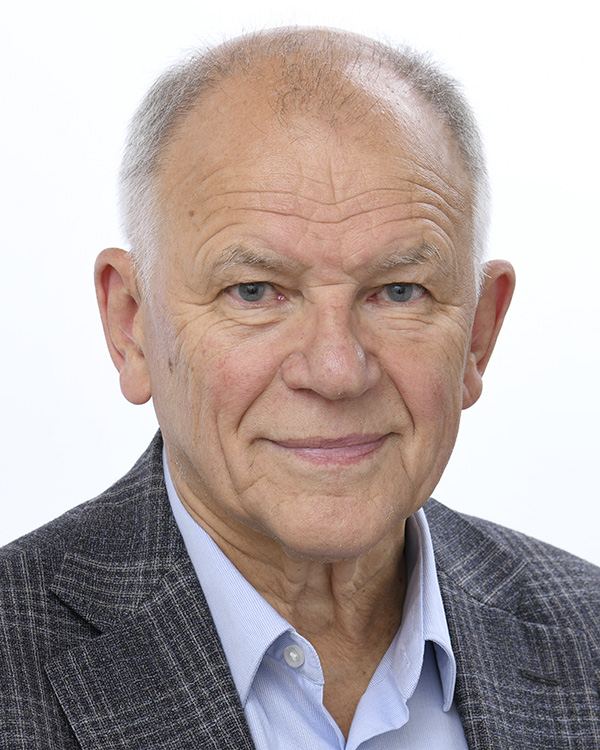
|
Vytenis Povilas Andriukaitis | Lithuania LTU | Progressive Alliance of Socialists and Democrats (S&D) | 227 |
All Contributions (186)
Preparation of the European Council meeting of 16-17 December 2021 - The EU's response to the global resurgence of Covid-19 and the new emerging Covid variants (debate)
Mr President, personal histories have been rewritten by the consequences of this disease. We still don’t know how and when this terrible episode will be over. I had my speech prepared, but listening to this intervention, I just wanted to say one thing on Bosnia and Herzegovina. In 2002, on Christmas night, a Croatian family in Herzegovina – because it’s not just Bosnia – was slaughtered by a Muslim radical who said he had been inspired by the killing by Serbs of a Muslim family. A few days ago, in Sarajevo, another Catholic Croat family was attacked. A note was left on the door to stop putting up Christmas decorations or they would be slaughtered. There was no condemnation by the mayor of Sarajevo, just a remark: it’s because somebody from the other side is fighting for your rights. So, I don’t know how this personal history will end, but I just call on you, on Christmas night, to think about Croat Catholics who are fearing for their lives because somebody here, 50 years after the fall of Yugoslavia and the bloody war that we had, still hasn’t learned the lesson that you cannot kill Christmas. You cannot kill the people. We just have to start listening. As with this pandemic. You have to listen to all sides of the story.
Cooperation on the fight against organised crime in the Western Balkans (debate)
Mr President, organised crime remains a major obstacle for the countries in the Western Balkans to create economic growth and to provide a safe environment for its citizens. Criminal organisations abuse the region’s vulnerabilities, political instability and the lack of employment opportunities. Even the pandemic has been exploited through misuse of public procurement for medical equipment. As these criminal activities affect the security of the European Union, it’s in our own interests, and for the safety of our partners in the Western Balkans, that the EU should continue its financial and technical support to fight these crimes. I strongly support the call to open the former Yugoslav archives – so—called UDBA archives – as this can shed light on deeply rooted criminal organisations that have been operating under the radar for decades. With the EU integration process, we try to overcome the structural problems that give criminals the space to cooperate. The countries in the region should further harmonise their legislation with the Union’s acquis on anti—corruption and the rule of law. Fighting criminal organisations requires political strength. It is only by concrete actions that one can obtain results. And these actions have to be taken now because, as has rightly been said, drug trafficking, arms smuggling and above all, the smuggling of people that we are seeing now with this migration is a very lucrative business. I think the Western Balkans is a breeding ground for crime.
The outcome of the Western Balkans summit (continuation of debate)
With the Declaration of the EU-Western Balkans Summit in Brdo pri Kranju, the Honourable Chair, the Honourable Commissioners, the Member States of the European Union underlined their commitment to further increase their joint engagement with the Western Balkan countries, as well as to advance their political, economic and social transformation. I congratulate the Government of Mr. Janša and you here for holding the fire started by the Republic of Croatia in order to bring these countries closer to the European Union. We also congratulate Commissioner Várhelyi, who presented his vision and enlargement package a few days ago. I am also proud of the IPA III package that we have adopted, as co-rapporteur, of the EUR 14 billion foreseen for this space. Here I would like to point out as someone coming from Bosnia and Herzegovina, from Mostar, the only city that has made a transformation in this enlargement report and for the first time has a mayor and a City Council – Bosnia and Herzegovina has a problem, and this problem is electoral law. This problem is equal access to all three sides in Bosnia and Herzegovina of the international community, the European Commission and all those involved up to 26 years after Dayton. We don't see calls here for new funding from the international administration. While I am here in this Parliament, no cent will be spent anymore from IPA funds for someone who is not from Bosnia and Herzegovina, Serbia, Montenegro, North Macedonia because that people lose what is basic. He loses his seed, he loses the young people who are building Europe instead of building the Western Balkans. Thank you, congratulations and I want you all to focus on the people of Bosnia and Herzegovina, not the Serbs.
UN Climate Change Conference in Glasgow, the UK (COP26) (continuation of debate)
Mr President, the ambitious Paris climate accord has committed almost the entire world to reduce the increase of global temperatures in the next decades. With the recent earthquakes, fires and floods, we have experienced how unpredictable our planet can be. These are warning signals that we must change something. We are not the masters of nature. These catastrophes will only increase if we don’t stop global warming. In the recent Committee on Foreign Affairs (AFET) mission to Greenland, I have personally witnessed the urgency to act now. The EU has taken a leading role with its Green Deal and the Fit for 55 programme, and even the new European Power House, through which we try to create a healthier, safer, more aesthetic and sustainable environment for future generations. We should work on energy diversification and independence. I welcome the dedication of the G7 to accelerate their efforts, ensuring that the largest global economies are engaging in a race towards climate neutrality. At the COP26 in Glasgow, participants should take stock of the efforts undertaken and renew the consensus needed to preserve the planet.
Situation in Tunisia (debate)
Madam President, Tunisia is a close partner of the European Union. We have close and long-standing relations in a matter of trade and security. The EU has reaffirmed its commitment to the country and the wider region with the recent renewed agenda for cooperation with our Southern Neighbourhood. However, I am deeply concerned about the latest political developments in Tunisia. The situation endangers the respect for citizens’ human rights and does not deserve the attempts to tackle the current economic challenges and to lead the country through the impacts of the COVID-19 crisis. In order to comply with the rule of law, it is crucial to ensure well-functioning and legitimate public institutions. I call on the political leaders in Tunisia to act in respect of the constitutional principles and resume the parliamentary activity as soon as possible with adherence to all democratic standards. Tunisian people deserve that.
The Arctic: opportunities, concerns and security challenges (debate)
Madam President, the recent Committee on Foreign Affairs (AFET) mission to the Arctic in which I took part showed us how important and sensitive this region is. Our Chair already underlined the importance of our mission and the great success that we had in meeting local people and having a clear knowledge of what the Arctic really means, also for the European Union. The Arctic is also a region where major global players meet and compete for influence and territorial claims. As with the other areas in our European neighbourhood, it is in the EU’s interest to modernise its Arctic policy, to invest in its presence in the region, and to prepare for the security challenges that are developing. Therefore I welcome the report on which we’ll vote this week – and I highly commend our rapporteur Ms Anna Fotyga – that expressed high hopes for the new EU Arctic policy. A small reminder that the EU has invested in its presence so far in this region was the conversation that we had with local officials in Greenland. EU support for their education system has helped the local population to overcome their disadvantaged position due to the lack of education in their mother tongue, and we should work more on this. I support stronger participation of the EU in the Arctic, and we should keep a close eye on the area, which will be a playground for future geopolitical and economic interest.
Humanitarian situation in Tigray (debate)
Madam President, the civil war in Ethiopia is ongoing for almost a year. While the Ethiopian Government’s forces and the Tigray People’s Liberation Front continue to fight each other, the people of Ethiopia are suffering. The United Nations have recently rung the alarm bell by stating that more than 400 000 people are living in famine at the moment. Humanitarian aid workers are unable to reach these people and some reports even state that they have been prevented from operating. Even the EU has tried to reach those in need, but only with partial success. I deeply regret the decision of the Ethiopian Government to expel the seven United Nations officials, and call on all sides to immediately resume cooperation with international organisations. I also strongly condemn the deliberate targeting of civilians by all the belligerent parties. History knows many examples of ethnic conflicts around the world, including in our immediate proximity, and history teaches us that the best way to solve these conflicts is by dialogue and tolerance. I strongly urge all parties involved to cease the violence and to find the way to a diplomatic solution to this senseless loss of lives.
The future of EU-US relations (debate)
Mr President, the European Union and the United States share a unique bond based on common values, principles and interests. At the EU—US summit in June this year, the leadership of the two blocks called for a strong transatlantic partnership – a message that we welcome and support in our report that we will vote on this week. However, over the last weeks, we have seen some reality checks that have tested our relations in matters of foreign affairs, security and trade. The European People’s Party has proposed to create the Transatlantic Political Council as a platform to improve our communications channels and to avoid unnecessary tensions. I strongly call on Members to support this. With the EU—US joint COVID response, we commit ourselves as technological leaders and pursue the facilitation of global vaccination platforms. I personally see this approach as the only way to fight vaccine nationalism and inequality. But one thing is clear: the transatlantic partnership would not be complete if there is no clear cooperation on foreign and security affairs. The transatlantic alliance remains fundamental for the security and the stability of the European continent, and NATO is the foundation of our collective defence. In the search of a middle way between European strategic autonomy and total reliance on our transatlantic partners, we need to grow together into new relations that we will be more beneficial for our mutual peace and security missions based on our experiences in the Western Balkans and the Sahel. On a personal note: invest in the Balkans! They have played a really great role, they still are, and will in the future. To conclude, I would like to highlight the crucial role that parliamentary diplomacy can play in building bridges with our close and important transatlantic ally. Let this relationship grow based on our good communication and coordination as the anchors of stability in this volatile world. Finally, I would like to say thank you for the granting of the visa waiver for Croatia. All those families that helped build America are going to appreciate it as well!
Instrument for pre-accession assistance (IPA III) 2021–2027 (debate)
Mr President, dear Commissioner, this week is an important moment for the European enlargement policy. The adoption and signing of the new Regulation on the Instrument for Pre-Accession Assistance (IPA III), is a clear confirmation of the EU’s support to the European integration of our partners in south-east Europe. Over the last three years we have been preparing this new generation of funds and I would like to thank you, Commissioner, the Presidency of the Council, all colleagues in Parliament that were involved, and the staff of all three institutions for their great work and determination. IPA III offers a historic budget of more than EUR 14 billion for the next seven years. The biggest part is foreseen for the economic and investment plan that will create jobs, improve infrastructure, foster connectivity and boost the economy. With the financing of the Western Balkans Guarantee Facility, an additional EUR 20 billion in investment can be expected. Based on the experience from IPA and IPA II, the design of modernised instruments provides the best assistance possible to the candidate and potential candidate countries. It features a performance-based approach that optimises the efficiency of the funded projects. The switch from country envelopes to the allocation of finances via thematic windows stimulates the beneficiaries to present achievable projects that will have a real impact on the reform track. I would also like to emphasise that the role of the European Parliament in the programming, the governance and scrutiny of the instrument has significantly increased. For the first time, we will adopt a delegated act that sets our specific key objectives on which the programming of the instrument should be based. I am thinking about the rule of law, education, good neighbourly relations. We will have the chance to discuss the implementation of the instrument with the Commission during the upcoming geostrategic dialogue. These achievements are a big step forward regarding democratic accountability. The European Union is not safe if peace and security in our immediate neighbourhood is not guaranteed. The European Union will continue to face organised criminal activities, disinformation campaigns and irregular migration flows as long as these issues remains unresolved in south-east Europe. The European Union is not complete without the accession of the Western Balkan countries. With the adoption of IPA III, the EU has done its homework. We are ready to engage with the Western Balkans and Turkey. The ball is now in the court of the authorities of the beneficiaries. They need to show the willingness and the courage to work on the necessary reforms and to comply with Copenhagen criteria and European standards and values. We have to acknowledge it. This is a demanding challenge. Political leaders stand for tough decisions and need to make political sacrifices. As a representative of the people of the youngest European Member State, I can assure you that these efforts are wanted by the people, for the countries, for the region and for the European Union. What the leaders in the partner states should understand is that making progress on their reform agenda starts with stabilising the internal situation in their country and finding a solution for pending problems. For example, Bosnia and Herzegovina urgently needs a breakthrough on the election law. Montenegro faces rising tensions that have resulted in violent protests related to the freedom of belief two weeks ago. Other countries see a strong decline in respect of human rights on the implementation of the rule of law. These are serious problems that can hijack the integration procedures. We should not allow financial support to countries that claim to be European-minded, but use the funding for other purposes. Therefore, IPA III contains a clear conditionality, including the possibility to suspend assistance in the case of severe political and democratic backsliding. Today’s discussion on Afghanistan dealt with the need for a lessons learned exercise to understand what happened in the last 20 years. Fortunately, due to their transformative processes that started in 1999, the Western Balkans are still holding high hopes for the European integration. But, as I once said, the region is a rollercoaster and everything can change if we do not start the lessons learned exercise here as well. What went wrong? What can we improve? How can we help the people to resolve the unresolved issues? The priority is to prevent turbulence that might have a spill-over effect on EU citizens or on our peace and security. IPA III is the tool, but more important is a high-level engagement to get the Western Balkans on the track to European accession. I would like to conclude by calling on the authorities of the beneficiaries to use this new positive momentum to prepare ambitious national strategies and to enhance their engagement with the European Union by improving their ownership of the accession reforms.
The death penalty in Saudi Arabia, notably the cases of Mustafa Hashem al-Darwish and Abdullah al-Howaiti
Mr President, the death penalty is an inhuman punishment, disregarding the crime committed or the fairness of the trial, the deliberate execution of human beings should not ever be allowed. It is ineffective, has no deterrent effect, and it is often used as a political tool. I strongly oppose capital punishment and support the European Union’s call for its worldwide abolition, especially in the case of convicted minors. This morning, we already heard the debate on a case in Iran. Now we focus on the situation in Saudi Arabia, but also in many other countries and around the world the death penalty is still frequently used. Although the Saudi authorities announced an end to the death penalty for minors for certain crimes in 2018, Mustafa Hashem al-Darwish and Abdullah al-Howaiti were still sentenced with capital punishment. Severe questions have been raised about their trials and I deplore the verdict of the court. Unfortunately, the sentence of Mustafa Hashem al-Darwish has already been executed. But I urge the Government of Saudi Arabia to halt all pending executions and to commute all death sentences.
Situation in Tigray, Ethiopia (continuation of debate)
Mr President, finally, after eight months of hostilities, the Tigray People’s Liberation Front is willing to accept a ceasefire proposed by the Ethiopian authorities. I encourage this move towards a peaceful future and call on both sides to find an agreement on the conditions of the ceasefire via diplomatic means. The violent actions need to stop as soon as possible for the good of the Ethiopian people. The atrocities have deteriorated the humanitarian situation in Tigray. More than 400 000 people are estimated to live in famine and another 1.8 million are on the brink of it. That’s a shame. A shame for civilisation. A shame for us today, because we all remember Ethiopia in the eighties and the Great Famine, and history is repeating itself with us helpless and watching it. Coordinating actions of humanitarian support is of crucial importance at this moment. I welcome the clear commitment of the European Commission to support Ethiopian citizens and to prevent further humanitarian catastrophes. However, aid workers still face difficulties in reaching out to the people in need. The parties in the conflict should facilitate the access of aid to all parts of Tigray and provide assistance according to the principles of international law. And we have instruments: we just voted NDICI. We voted this huge amount of money, that’s the only weapon that we can use nowadays. Stop cooperating with people who don’t want to cooperate with us and save further loss of life.