
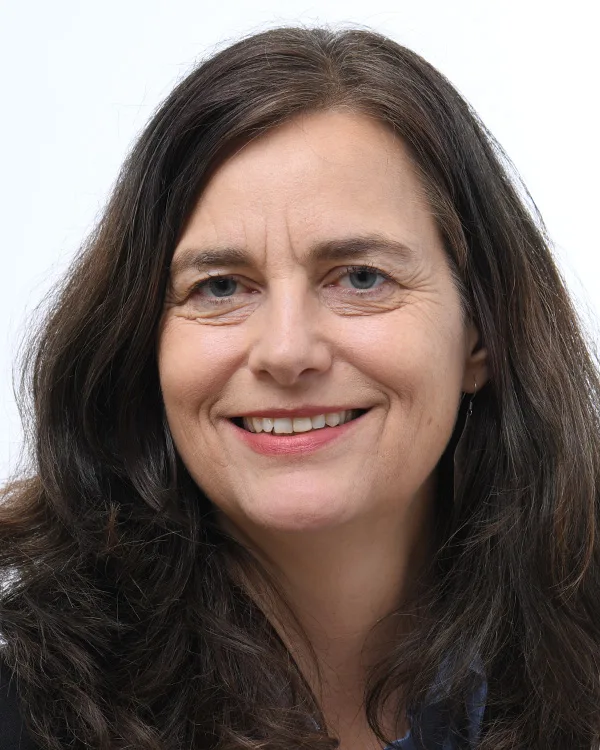

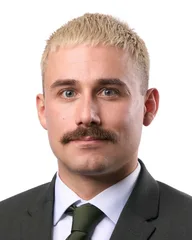
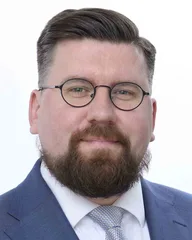
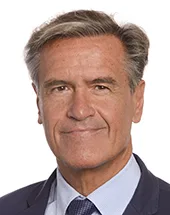


| Rank | Name | Country | Group | Speeches | |
|---|---|---|---|---|---|
| 1 |
|
Lukas Sieper | Germany DEU | Non-attached Members (NI) | 390 |
| 2 |
|
Juan Fernando López Aguilar | Spain ESP | Progressive Alliance of Socialists and Democrats (S&D) | 354 |
| 3 |
|
Sebastian Tynkkynen | Finland FIN | European Conservatives and Reformists (ECR) | 331 |
| 4 |
|
João Oliveira | Portugal PRT | The Left in the European Parliament (GUE/NGL) | 232 |
| 5 |
|
Vytenis Povilas Andriukaitis | Lithuania LTU | Progressive Alliance of Socialists and Democrats (S&D) | 227 |
All Contributions (66)
Digital Services Act - Digital Markets Act (debate)
Mr President, the digital services act (DSA) is a landmark legislation with the potential to become a global standard. While it is not perfect, it is still revolutionary. Why is that so? First of all, it breaks with the paradigm of inevitability, and it puts democracy over private, monopolistic interests, because until now there was a feeling that big tech was too powerful to regulate, and now we make it clear that democracies set the rules. Secondly, it makes the Internet a better place without interfering with freedom of expression. The DSA holds platforms accountable for what they do and not for what their users think or write in their posts. And finally, it tackles the information asymmetry. Today, platforms know everything about us because they collect our data. But the little we know, we learned from whistle-blowers, like Frances Haugen. And this is why the risk assessment and the access to the data of the platforms for independent researchers, also from civil society organisations, is so important because they will provide us with the evidence we need to regulate well. And they will be able to tell the stories about how social networks influence our public opinion, our politics, or the health of our children. Europe and the world deserve a free Internet where democracy counts more than private profits. The DSA is a first, but giant, step in that direction.
Artificial intelligence in a digital age (debate)
Mr President, Commissioner, ladies and gentlemen! Artificial intelligence is seen by many, including myself, in many areas as a promise for a better future. But without clear rules, we risk a "back-in-the-future" effect, like Marty, the film hero who starts ambitiously into the future with his future machine in 1985 and then ends up in 1955. And this is what we are experiencing today: For example, if Apple Pay the credit line of the man with the same creditworthiness and income is 20 times larger than that of his wife. This has nothing to do with intelligence, innovation or progress, because this is artificial intelligence without smart rules, a technology that is based on data from the past and therefore does not carry us into the future by itself. And in order for it to really develop its potential, we need clear rules, clear ex-ante rules against discrimination. This means high-quality data sets, mixed teams and, above all, verifiability. And that's why he has to AI-ActThe current regulation on the table is making a quantum leap for artificial intelligence. It is not enough to have a product certification or product safety regulation. What we need is a true law to implement fundamental rights in the age of artificial intelligence. And this can also be a competitive advantage for European companies, because the companies, the tech giants that currently dominate the market, cannot. And what is also remarkable about this report is the recognition that the business of online advertising based on data profiles is the basis for the market dominance of the big big tech companies – the same companies we are currently working with in the market. DSA and DMA regulation – also in the field of artificial intelligence. And I hope that the European Union will not sell out the soil – because the data is also the soil on which the digital economy thrives and grows – but will finally order it itself.
Data Governance Act (debate)
Madam President, fortunately data is not the new oil, because the planet really couldn’t support that. The IPPC has just reminded us that we only have three years to drastically reduce our CO2 emissions. Data is a lot better. It is the new soil from which wonderful trees can grow. And that means data is the source for climate-friendly urban transport planning or breakthroughs in medical research, but also for very profitable business models. And this is why it is so important that we now establish rules to ensure that our non-personal data can be used for the common good and does not fall prey to a handful of dominant players, as is the case for personal data today. With the Data Governance Act, we prevent data monopolies, making sure that service providers shall remain neutral and may not use the data for any other purpose, that intermediation services cannot be tied to other services, such as cloud storage or business analytics, and that public data can only be used exclusively for one year. Let’s make sure that many beautiful trees can grow from this wonderful soil.
Guidelines for the 2023 budget – Section III (debate)
Honourable Member! It is not a question of individual examples that I have to list here. The point is that if there is no system of separation of powers in a state, if the government itself controls who the judges are who watch over corruption, who watch over wrong spending of funds, then there is no independent scrutiny. Then it is also very difficult to teach these examples at all, because it is no longer possible to identify them at all without independent prosecutors and without an independent judiciary. This is the foundation of democracy that we stand for here. I think that will also benefit the Polish people.
Guidelines for the 2023 budget – Section III (debate)
Madam President, Commissioner, ladies and gentlemen! Europe is staggering from crisis to crisis, from the pandemic to a terrible war of aggression. But yesterday the report of the Intergovernmental Panel on Climate Change reminded us once again that the worst crisis of all is taking place in the background. We must act now! Without immediate and drastic emission reductions, the 1.5°C target can no longer be achieved. But the good news is that many Member States and many cities are already working on it. There are many climate actions and the costs of the energy transition are falling. That means we have to act now! We are sending a signal for this in the 2023 budget. We call for adequate funding for climate, biodiversity and environmental protection programmes such as the LIFE Fund. We are strengthening the Just Transition Fund for the coal regions, because coal-fired power plants are not compatible with a future for humanity on this planet. We are strengthening the tracking method for climate change mitigation and biodiversity across the budget, but we are also strengthening the rule of law conditionality. Because we need this, because even if Poland is now taking in refugees in an exemplary way: There's enough for that. But this must not be an excuse to turn a European democracy into an autocratic system. (The speaker agreed to ask a question about the blue card procedure.)
EU Gender Action Plan III (debate)
Mr President, on International Women’s Day, many people seem to know what women really need, but the answer is very easy. They need equal access to power, but also to money. And the good news is that the EU Gender Action Plan for external action is a very good step in the right direction. Eighty-five per cent of all new actions need to incorporate gender as a significant or principal objective. Twenty per cent of ODA must be allocated to gender equality. We have gender-disaggregated data collection, gender budgeting, a system for tracking, monitoring and evaluating EU expenditure, gender impact assessment, gender parity in management positions. This is what we do in external action because we know that it works, because there’s ample evidence to prove that the economic, social and ecological outcome is better when women take the decisions. But what works for countries outside the EU would also work in Europe. So why can’t we have the same high standards also in the EU? It is high time.
Foreign interference in all democratic processes in the EU (debate)
Madam President, ladies and gentlemen, In the course of the sanctions, the Russian broadcasters RT and Sputnik were also banned because they spread disinformation of the Russian government. Actually, it is surprising that in democratic states you have to restrict freedom of expression in order to defend yourself against Russian war propaganda. Who's looking at that? Almost no one in the analog world. But on the Internet, RT in particular is the superstar. In 2020, RT was the most watched channel on YouTube. And why is that? Simply because social media algorithms, especially Google's YouTube, always push RT's posts to the top. And why? Because these posts unsettle and upset people with false information. And then they stay on the Internet longer, and then you can show them more advertising. Because with disinformation, with Russian war propaganda, money is made. That's why we need clear rules for transparency, algorithmic systems and a ban on data collections that allow platforms to play this content specifically to groups that are receptive to it. This data collection also enables foreign states to manipulate population groups with us in a targeted manner. All this is called for by Parliament in the trilogue on the Digital Services Act. I call on the Member States to finally comply with these demands and to decide on this in the coming weeks. In the free world, we no longer need to ban the media.
The Rule of Law and the consequences of the ECJ ruling (debate)
Madam President, Commissioner, ladies and gentlemen. Today's ruling of the European Court of Justice is a victory for democracy with a clear message: The values of Europe, the rule of law and solidarity underpin the identity of the European Union itself. And the Court thus reaffirms something we all know, except perhaps on the right side of the House, namely that fundamental rights apply throughout Europe, including to citizens from Poland and Hungary. They are not second class people. After all, this reference to a different identity does not mean anything else, to other traditions. Polish and Hungarian citizens are just as entitled to protection from arbitrariness and corruption as people in other European countries. And it is up to the Commission, Commissioner, to finally enforce it. One year after the adoption of the Rule of Law Regulation, the President of the Commission announced today that she must now carefully examine the grounds of the judgment. Commissioner, this is a slap in the face of democratic Europe. And you have heard today what lies are being spread here, what disinformation is being spread by the representatives of the Hungarian ruling party. Hungary is campaigning, in an election campaign where the government is spreading such lies, where there is no free press, where there are no more free universities – and the whole thing is financed with European money. It is up to the Commission to enforce existing law so that people in Poland and Hungary can finally exercise their rights again.
Digital Services Act (debate)
Mr President, the internet used to be a wonderful place: a place for sharing knowledge, discovering the world, meeting new people; a marketplace and a public square where everybody with a connection could take part in the conversation. What a marvellous invention. Today, we’re looking at the shambles of that marvellous world: the Rohingya genocide promoted on Facebook, teenage girls driven to anorexia by Instagram. The storm on Capitol Hill was the wake-up call. How will our democracy survive with social media spreading hate and lies? Tomorrow we will be taking a very important step toward saving our democracy and free internet, because censorship can never be the solution in a free country. Neither governments nor platforms have the right to censor legal speech. And I would like to say to my colleague from the free right: this is exactly what the Digital Services Act is not doing. What the European Union is achieving with the DSA is to hold platforms accountable for what they do and not for what their users think. So what do the platforms do? They collect data – their users’ data or the citizens’ data, because you don’t even need to have a Google or Facebook account to be spied on. And then platforms use that data to build very comprehensive profiles of every one of us, which they use for two things: sell us ads and keep us on the platforms as long as possible, recommending us content that will make us interact as long as possible, to which we are vulnerable. Unfortunately, psychological research shows that what makes us interact and stay on platforms are two emotions: anger and fear. And this is why content that arouses anger and fear goes viral in the internet: it increases platforms’ profits. That’s why the recommender systems disseminate hateful speech and disinformation at far higher speed than anything else. And it is not true that the internet is a perfect mirror of the real world. It’s a completely distorted mirror, and the content is being distorted to increase platforms’ profits. So how does the DSA increase these challenges? It starts with very basic things. Orders by national authorities need to be respected. Users have clear rights. Complaint mechanisms, independent dispute settlement will be in place. What do we do to protect citizens? We take a few steps, but we don’t go far enough. We will ban surveillance advertising for our children, for minors, but not for adults. We should have and could have done more. This week, Silicon Valley representative Anna Eshoo and others introduced a bill in the US House of Representatives to ban surveillance advertising. This is what we should have done. What we did do, and I’m very proud of this: we opened the black box that very large online platforms today represent, with risk assessments where platforms have to look into the risk their business model and their algorithms themselves present for human dignity, for example, with independent audits and with, above all, access to the data for independent research, for independent and NGOs to study and assess compliance. This way we will finally be able to shed light on the platforms’ practices, collect evidence and tell the stories of how targeting and engagement-based ranking tampers with democracies, and we will be able to build a better and freer internet. The DSA is a first step, but it is the fundamental law for the digital world, and I am extremely proud that Europe is the first democratic continent to take this important step. It will shine. Its light will shine.
State of play of the RRF (Recovery and Resilience Facility) (debate)
Madam President, Commissioners, ladies and gentlemen. Europe is based on values and rights, and therefore no euro from the reconstruction programme can continue to flow to countries that are abandoning the rule of law. How should the financial interests of the Union be protected if independent courts on the ground cannot monitor the lawful use of these funds? But the EU's values and rights also include gender equality, everywhere. Article 23 of the Charter of Fundamental Rights states: Equality between men and women must be ensured in all areas, including employment. What about the Reconstruction Fund? The Italian Ministry of Economic Affairs, Commissioner, has calculated that 80% of RRF funds will go to men's sectors. 80 %, this is not a stimulus programme, this is men's support at the expense of growth. Economic and budgetary policy is not an area free of fundamental rights. I therefore call on the Commission to ensure that fundamental rights and gender equality will also guide budgetary, economic and fiscal policies in the future.
Digital Markets Act (debate)
Madam President, a popular German comedy TV show is calling for the expropriation of Facebook, and let’s face it, the Digital Markets Act (DMA) is not fulfilling that expectation. It does, however, contain important first steps in the right direction: data silos, enforceable do’s and don’ts for gatekeepers and interoperability. But it falls short of breaking up the cartel in the advertising business, largely controlled by two gatekeepers – Google and Facebook – who in the US are facing very serious allegations of teaming up together to shut out competitors, hamper innovation and increase prices for advertisers. Advertising is so crucial because it is at the financial basis for our free press, for our democracy. If we don’t want our publishers to turn into mere content creators in 10 years’ time, then we need to provide a level playing field. That means two things: a ban on tracking advertising, because the gatekeepers will always have more data than our publishers, and breaking up the monopolistic structures in the industry. The DMA is a very good start, but there’s more work to be done.
Combating gender-based violence: cyberviolence (debate)
Mr President, Commissioner, ladies and gentlemen, Violence against women on the Internet not only causes a lot of suffering, but it is part of a political strategy to try to silence women. It is an attack on our democracy. And that is precisely why I support the rapporteur in her call for the Commission to urgently put forward proposals to combat it. But we can put an end to a particularly perfidious form of sexual violence on the Internet this evening, namely the uploading of nude images on pornographic platforms against the will of the victim, often together with his name and address. In fact, we are voting this evening in the IMCO Committee on a compromise to reconcile this unspeakable form of online violence with the Digital Services Act can oppose. And if you are not in the IMCO committee, please let your colleagues know. We still lack the support of the EPP. If it is not enough tonight, then help us to organize, mobilize a majority in plenary in January. Because we have it with the Digital Services Act already in hand. And the women of Europe expect us to act now.
The state of play on the submitted RRF recovery plans awaiting approval (debate)
Mr President, Commissioner, ladies and gentlemen. The RRF, at the heart of the European recovery package, will make Europe greener, more digital and hopefully more social. And it can become a blueprint for Europe's strength: common financial and investment power, a common vision for the future. And in the digital and climate sector in particular, there are still major joint projects to be undertaken. What must not happen, however, is that this flagship project of the European Union becomes a blueprint for the dismantling of democracy in Europe, for corrupt dictators indirectly financing election campaigns with the money of our taxpayers, or even for persecuting and excluding people from the LGBTIQ community. The Commission now has a difficult task. It must effectively combine the different instruments to uphold the rule of law in order to uphold European values. At the same time, we want to make one thing clear to the people in the countries concerned: We are on your side. Because we are committed to ensuring that the money really gets to where it is needed.
Disinformation and the role of social platforms (debate)
Madam President, two weeks ago I met a very special woman. Her name is Frances Haugen and she is the Facebook whistle-blower who spoke out Sunday night on CBS. She did this because in the past she lost a friend to online conspiracy theories and did not want anyone to feel the pain that she had felt. Tonight, I want to honour her courage and her moral high ground by lending my voice to her words in this high House, hoping she will soon be able to speak to us herself. I quote, ‘The thing I saw at Facebook over and over again was that there were conflicts of interest between what was good for the public and what was good for Facebook. And Facebook, over and over again, chose to optimise for its own interests, like making more money. One of the consequences of how Facebook is picking out that content today is that it is optimising for content that gets engagement, or reaction. But its own research is showing that this is content that is hateful, that is divisive, that is polarising – it’s easier to inspire people to anger than it is to other emotions. When we live in an information environment that is full of angry, hateful, polarising content, it erodes our civic trust, it erodes our faith in each other, it erodes our ability to want to care for each other. The version of Facebook that exists today is tearing our societies apart and causing ethnic violence around the world. Facebook has realised that if they change the algorithm to be safer, people will spend less time on the site, they’ll click on less ads, they’ll make less money. Facebook, over and over again, has shown it chooses profit over safety. I’m hoping that this will have had a big enough impact on the world that they get the fortitude and the motivation to actually go put those regulations into place. That’s my hope.’ Those are Frances’ words. I feel gratitude and I share her hope. Colleagues, she has done her bit. Now let’s do ours. Let’s approve a Digital Services Act with real teeth.
Natural disasters during the summer 2021 - Impacts of natural disasters in Europe due to climate change (debate)
Mr President, ladies and gentlemen, Hundreds of people lost their lives in the flood disaster in July 2021, and many more are facing the ruins of their existence. In the German Ahrtal, shops and businesses are still closed, the economy is lame, water and gas pipes are destroyed, motorways and train routes are interrupted, schools and daycare centers are unusable. This is climate change! And that is why it is so urgent that we put civil protection and adaptation to climate change at the top of the agenda, especially in the EU budget. In doing so, environmental aspects must be given priority: more space for rivers, less sealed or dense soils due to intensive agriculture, sponge towns with water reservoirs and green areas. And most importantly, we need to do one thing: Finally, take climate action forward. The question is no longer whether we can pay for climate protection. The real question is who bears the immense human and financial costs of a lack of climate protection. And these are the people in the Ahrtal today and tomorrow our children.
The creation of guidelines for the application of the general regime of conditionality for the protection of the Union budget (continuation of debate)
Mr President, Commissioner! In October 2020, 77 percent of European Union citizens said loudly and clearly in a survey: No European money for Member States where the rule of law is not respected! And that's exactly why we've had a law for seven months. This law must now be implemented by the EU Commission, without hesitation and above all without hesitation. If countries bring the free press to its knees financially and put the independent judiciary on a leash, then reliable control over the use of European funds is structurally no longer possible. And this is particularly serious right now, because the funds from the European Union's recovery plan must be used to rebuild the economy there. But the danger is great that they will be used to continue trampling on people's rights. And we can prevent that. When I say: we, then I mean the European Commission – and the European Commission must prevent that. The credibility of the European Union as a whole depends on this.