

| Rank | Name | Country | Group | Speeches | |
|---|---|---|---|---|---|
| 1 |

|
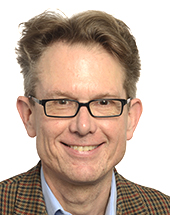
Lukas Sieper | Germany DE | Renew Europe (Renew) | 494 |
| 2 |

|
Juan Fernando López Aguilar | Spain ES | Progressive Alliance of Socialists and Democrats (S&D) | 463 |
| 3 |

|
Sebastian Tynkkynen | Finland FI | European Conservatives and Reformists (ECR) | 460 |
| 4 |

|
João Oliveira | Portugal PT | The Left in the European Parliament (GUE/NGL) | 288 |
| 5 |

|
Vytenis Povilas Andriukaitis | Lithuania LT | Progressive Alliance of Socialists and Democrats (S&D) | 276 |
All Speeches (143)
Revision of the EU Emissions Trading System - Monitoring, reporting and verification of greenhouse gas emissions from maritime transport - Carbon border adjustment mechanism - Social Climate Fund - Revision of the EU Emissions Trading System for aviation (debate)
Date:
17.04.2023 20:06
| Language: DE
Speeches
Mr President! Since we have been human beings, we have been trying to make ourselves independent of nature. Independence from nature is the foundation of our civilization. But the Greens want us to develop back in civilization and have electricity only when the wind blows and the sun shines. Greens oppose the production and consumption of energy, the basis of our civilization. Greens are turning against mobility, without which our economy cannot exist. And greens are turning against education and economic growth, which have made us richer, healthier and safer. In a January interview, German Green Economy Minister Robert Habeck was asked whether his green utopias did not destroy prosperity and lead to mass unemployment. He defended himself with the following words: Sure, you can fail, but he, Habeck, has – quote – ‘no buck to be a minister in a government that no longer makes big plans. That is why we prefer to be fully at risk, and maybe we will succeed, and then we can all be a little proud of ourselves together” – quote Ende. This is the policy of hasardeurs, i.e. people who take incalculable risks and rely on a well-meaning fate instead of their own skills or scientific experience. No one, no one outside Europe, will take these risks.
One-minute speeches on matters of political importance
Date:
29.03.2023 21:08
| Language: DE
Speeches
Mr President! Germany pays more than 40% of the EU budget net. But there are many poor people living in Germany, especially poor pensioners. Germany has one of the highest legal and actual retirement ages in the EU. But for Germans to work longer and more than many others, they pay the highest wage-related taxes in the world. In old age, they receive less pensions than pensioners elsewhere in terms of the percentage of their previous work income. Germany also has the lowest home ownership rate in the EU as a whole. Therefore, our pensioners also have a higher risk of poverty, because they also pay rent from little pension. Germany has had the worst governments in the world since Merkel. They may please the EU, but they are destroying Germany and Europe.
Conclusions of the European Council meeting of 23-24 March 2023 (debate)
Date:
29.03.2023 17:25
| Language: DE
Speeches
Madam President, In Brussels, Chancellor Scholz has devised a lazy compromise for e-fuels in the EU ban on internal combustion engines. This is no longer helping the German auto industry. It is losing its export hit combustion engine and is now competing with electric cars from China and the USA. Both are massively subsidized, while the Commission blocks EU subsidies. It also doesn't help most drivers who can't afford an e-fuels car. The German and European economies have so far benefited, firstly, from cheap Russian energy and, secondly, from export successes, especially overseas. The EU under German-green deception makes energy priceless and endangers our export economy and thus our livelihood. Finally, end your green bullshit and stagflationary policies for our economy and give free rein to free citizens.
Mr President! First of all, quick recovery, because I just saw you go to the desk on crutches. I refer to Rule 32(2) of the Rules of Procedure on the Bureau's obligation to provide information. Is there a Bureau decision to abolish German as a working language in Parliament’s internal and external communication? My concern relates specifically to the work of the Directorate-General for Communication, which seems to have discontinued German in the communication of plenary activities. This would significantly affect the largest communication market within the EU. German, as you know, is an official language in six Member States. 130 million people speak German as their mother tongue or first foreign language. It is also an official language in Luxembourg. Therefore, my request to you: Make sure that German is maintained as a working language in this House, especially in external communication.
Madam President, In some countries, mainly in Southern and Eastern Europe, EU subsidies, including coronavirus funds, account for up to 20% of gross domestic product. The €800 billion coronavirus recovery fund has invited organised fraud in the supply and settlement of defective protective masks, self-tests, vaccine doses and medical equipment, green investments, illegal waste disposal and migrant traffickers. The European Anti-Fraud Office (OLAF), the EU Court of Auditors and Europol have long warned against such fraud risks. Nevertheless, the allocation of funds remains in the hands of the beneficiary national governments and excluded from the EU control mechanisms. We as MEPs are deprived of a lot of information – even who the final beneficiaries of the funds are. With lack of transparency and lack of control, the EU buys political willfulness. Not so different from Qatar.
Failure of the Silicon Valley Bank and the implications for financial stability in Europe (debate)
Date:
15.03.2023 14:57
| Language: EN
Speeches
Madam President, Madam Commissioner, the failure of Silicon Valley Bank is the largest bank failure since the financial crisis. The contagion risk remains non-trivial. Two points. First, SVB was a leading tech start-ups financier. If its failure were to crush the tech bubble, we should also have to worry about dozens of billions of NGU money which was funnelled into digitalization. NGU money was created out of thin air and may well vanish into it. Second, SVB’s chief administrative officer, Joseph Gentile, was the CFO of Lehman Brothers until its collapse in 2008. He also worked for Arthur Andersen, an accounting firm that went bankrupt in 2002. Now, will this House ever address the problem, the impunity of these banksters? Or, in view of Mr Gentile’s dismal record of achievement, is he now being considered as the next ex-pat President of the European Commission?
Implementation report on the Agreement on the withdrawal of the UK from the EU - The Windsor Framework (debate)
Date:
14.03.2023 20:52
| Language: EN
Speeches
Mr President, Brexit proved that Article 50 is more than a dead letter and that, whatever the difficulties, it is possible to leave the EU. The Windsor Agreement too is good news to Eurosceptics. It shows that playing hardball with the EU may yield dividends. The Windsor Framework limits the jurisdiction of the European Court of Justice, it creates the unique situation where Northern Ireland is partially in and partially outside the single market, certain EU rules on VAT and excise duties will still apply, but subject to exceptions governed by UK fiscal rules, while EU state aid rules are scaled back and won’t apply to UK subsidies to Northern Irish farmers. If Belfast can have tailor—made exceptions to EU rules, why not EU Member States? More importantly, the Northern Irish Assembly will be able to veto new EU rules on customs, goods and agriculture from applying in Northern Ireland. If Belfast acquires the right to veto new EU regulation, why not full EU Member States? The Windsor Agreement proves that à la carte association with the EU is possible. Countries may suit themselves but also reap the benefits of free trade and wider cooperation. All such sensible arrangements require is for the EU and the French and German Governments to abandon their inflexible obsession with the uniform application of EU law and their misguided vision of an EU empire, and instead to accept that the EU should return to what it should have always been: a confederation of independent states which acknowledge their common, as well as divergent, interests. In 2015, when I was still an academic in Britain, I chose to support Brexit. I thought Britain broadly had a good deal within the EU, but I was also convinced that the EU, led by Merkel, would press ahead with ever closer union and further down the road to economic perdition. Exactly that has happened. The EU has become the stagflation zone of the developed world. Sadly, in Britain, the situation seems just as dismal. EU enthusiasts blame Brexit. I disagree. In fact, after Brexit, the UK Government continued to follow EU policies. It deliberately exaggerated the health risks of the corona crisis. It fell prey to climate hysteria. It failed to curb both mass migration and the woke culture, which stifles rational thinking. The UK Government has made mistakes, but outside the EU these can be corrected. The Windsor Agreement and recent attempts to reform UK asylum law are a good start.
European Semester for economic policy coordination 2023 - European Semester for economic policy coordination: Employment and social priorities for 2023 (debate)
Date:
14.03.2023 13:24
| Language: DE
Speeches
Madam President, The European Commission's latest economic forecast should shake us all up. Four Member States are now officially in recession. The four are the largest per capita net contributors to the EU budget: Germany, Austria, Sweden and Denmark. Unlike the US, the EU has not recovered from the coronavirus crisis, partly because it is more affected by rising energy and food prices than anyone else because of its nonsensical climate policy. Particularly affected is Germany, where growth is collapsing and wages and pensions are not compensating for galloping inflation. However, the ECB ignores its mandate and accepts inflation. Germany now pays more than 40% of the total EU budget net. What do the Germans get for it? The highest inflation in over 70 years, economic stagnation and the escalation of the Ukraine conflict, which did not create, but spurred, stagflation. Fifty years ago, Lebanon was the pearl of the Middle East. Then the country took in millions of unqualified refugees. Inflation has risen, and GDP per capita is now lower than it was in 1970. Germany is well on its way to becoming Lebanon in Central Europe. Von der Leyen likes to talk about the moon landing of the EU. Maybe you'll find your new tax colony.
Madam President, Commissioner, Madam President! The ECB blames the Ukraine war and global causes such as rising energy, fertilizer and transport costs for record food price inflation. In 2022, food price inflation was 15.5% in the euro area and 19.2% in Germany. By comparison, it was 12.4% in the US, 6.4% in Japan and only 4% in Switzerland and Israel respectively. Strangely, if higher energy, fertilizer and transport costs drive prices worldwide, why have food prices risen almost four times as fast in the euro area and almost five times as fast in Germany as in the high alpine country of Switzerland, which has hardly any agricultural area, or in the semi-desert state of Israel? So fairy tales are told here, because the main reasons for the record inflation are the ECB’s monetary policy – because those who expand the money supply by 70% within a few years cannot avoid inflation in the long run – and secondly the useless EU climate policy – useless, because the EU’s influence on the global climate is asymptotically zero with a share of less than 8% or 9% of global emissions – and thirdly the Russia sanctions, which do us more harm than Russia. Year after year, the eurozone is falling economically – globally and even vis-à-vis the non-Euro-EU. And the EU itself is falling behind worldwide; We're going to be second-rate. And that's why we should invest our money in future sectors and not waste it on green dream dances.
The erosion of the rule of law in Greece: the wiretapping scandal and media freedom (topical debate)
Date:
15.02.2023 16:34
| Language: EN
Speeches
Madam President, Madam Commissioner, the Greek Prime Minister enacted a law which grants him direct supervision over the Greek Secret Service, which has since spied on its own ministers, a former prime minister who is now an opposition leader, a Member of the European Parliament, journalists and the head of the Greek military. The Greek Government refuses to give any reasons for the surveillance. Under a new law, public officials will even be liable to criminal prosecution if they carry out audits about who’s under surveillance and why. Greece’s Watergate scandal makes a mockery of the rule of law. The European Commission, however, is turning a blind eye. It prefers instead to bully EU-critical governments for practices allegedly politicising the judiciary but which in reality are commonplace in Germany. The Commission should open Article 7 proceedings against Greece, as a matter of urgency.
REPowerEU chapters in recovery and resilience plans (A9-0260/2022 - Eider Gardiazabal Rubial, Siegfried Mureşan, Dragoş Pîslaru)
Date:
14.02.2023 20:47
| Language: DE
Speeches
Mr President! REPowerEU is providing 20 billion EU funds to help EU countries become more independent from Russian energy imports. However, the European Court of Auditors criticises the misuse of funds to green the economy. Emergency aid for citizens and energy-intensive companies was envisaged. Instead, countries with high fossil fuel consumption will be favoured. The biggest victim of misuse is Germany, which is particularly dependent on Russian gas. In addition, funds intended for German farmers, the East German economy or schools in North Rhine-Westphalia can now flow into the pockets of wind barons and solar giants. This is not a step towards energy self-sufficiency. We are becoming more dependent on Helios and Aiolos – on the sun and wind gods. This is not in the interests of the citizens. I therefore vote against this proposal.
Amendments to the European Long-Term Investment Funds (ELTIFs) Regulation (debate)
Date:
14.02.2023 20:31
| Language: DE
Speeches
Mr President, Commissioner! Are we witnessing the beginning of the end of green terror? The new EU rules for long-term investment funds could be interpreted in this way. The position of the European Parliament was clear and was adopted by a large majority against the votes of my group, the ID Group. Parliament wanted to channel long-term investment into the green economy as much as possible. This lays the foundation for green asset bubbles and threatens the stability of financial markets in the EU. We have always rejected this and continue to fight against misallocation of resources to green fantasy projects that threaten our competitiveness in Europe. Although we were isolated from our position in the European Parliament, the Member States, including the then French Presidency of the Council, and the European Commission surprisingly joined the position of the Alternative for Germany and the ID Group: Long-term investment funds are not a suitable vehicle to covertly and to the detriment of investors von der Leyens Green Deal to finance. The political agreement that the Council and the Commission have now reached has de-greened the position of the European Parliament. This is a small but hopefully groundbreaking victory for political reason and for all those political forces who reject green totalitarianism and do not want to condemn our citizens to a life in a kind of green GDR. The agreement is also a bitter defeat for the Greens and their friends on the political left and in the midst of this Parliament. It seems that the political balance is shifting. In times of record inflation, unrestrained public and rising private debt at zero growth, support for green adventures is waning. And it's adventure! What did German Green Party leader Habeck say a year ago? He has no – literally – gossip about a government that does not want to take great risks. And maybe it's going well. Then – according to Habeck – we could all be a little proud of ourselves. This is the policy of Hasardeuren and 21 hysterical German Greens in this Parliament – unfortunately no one is present here. Let us hope that the others - I said Germans - will soon awaken from this mass psychosis. Then we will see more green defeats.
One-minute speeches on matters of political importance
Date:
13.02.2023 23:10
| Language: DE
Speeches
Madam President, There is a specter in Europe, the specter of political reason. 13 EU governments are resisting mass immigration and calling for a fortified EU external border – so far dismissed as an ideé fixe so-called right-wing extremist. 13 Member States – this is half the EU that now agrees to a core demand of our ID Group. Firstly, this means: The debate is shifting – not only European citizens, but half of EU governments reject disastrous immigration. Secondly: Every vote for parties such as the AfD, the Rassemblement National, Vlaams Belang, FPÖ and Lega counts, because we already influence politics in and outside governments. It is high time for the Council to finally bury Leyen's migration pact, protect our external borders and create a clear legal framework that pushes pushbacks and remigration.
Need for urgent update of the EU list of high-risk third countries for anti-money laundering and terrorist financing purposes (debate)
Date:
01.02.2023 18:17
| Language: DE
Speeches
Madam President, The Qatar affair proves that the EU must step up its fight against money laundering. An important step in this direction would be the ambitious expansion of the EU list of high-risk third countries that do little to combat money laundering or terrorist financing. The list currently includes 25 countries, including common suspects such as Afghanistan, North Korea, Iran, Panama and Morocco. According to the NGO Tax justice network countries such as the United Arab Emirates and even the USA are among the ten most money laundering-friendly countries in the world. The Emirates are even on the Financial Action Task Force.blacklist jurisdictions that are subject to increased surveillance. We support your fight against money laundering, but please not only against Pyongyang, but also against your friends in Dubai and Delaware.
Protection of the EU’s financial interests - combating fraud - annual report 2021 (debate)
Date:
18.01.2023 15:44
| Language: DE
Speeches
. – Madam President! The EU must finally tackle corruption and fraud. At the heart of the Qatargate scandal are two well-funded Brussels NGOs: and . In 2018, the European Court of Auditors published a shocking report on the lack of financial transparency of NGOs. Although NGOs receive tens of billions of EU funds, they remain exempt from EU money laundering rules as so-called non-mandatory entities. Therefore, the Commission claims that it does not have sufficiently detailed information on how EU funds are spent by NGOs. It is precisely for this reason that the Court calls for the immediate introduction of an EU-wide definition of NGOs in order to improve transparency and control. But the Commission and Parliament remain idle. In the Committee on Economic and Monetary Affairs, my proposal to extend the definition of politically exposed persons to managers of EU-subsidised NGOs is rejected by the self-declared champions against corruption in other political groups. Whether von der Leyen's text to the CEO of Pfizer, a socialist MP who receives bribes from Qatar and Morocco, or the ECB's ties to BlackRock and Goldman Sachs, one thing remains clear: Representatives of the prevailing opinion are not persecuted, only from time to time there is a peasant sacrifice.
One-minute speeches on matters of political importance
Date:
16.01.2023 21:52
| Language: DE
Speeches
Mr President! Commissioner Ylva Johansson promises to deport more rejected asylum seekers. Currently, it is only 23 percent. In fact, it is less than half and in Germany a few thousand or at most 1 or 2 percent annually. At the same time, the Commission and the sham democratic Conference on the Future of Europe want to abolish the notion of illegal migration. According to studies by Jan van de Beek and the Danish Social Democratic government, every African or Muslim migrant costs a modern welfare state almost 700,000 euros for life. If every rejected asylum seeker were also deported, 1.5 times as many migrants remained because they receive asylum despite illegal entry and are just as expensive. We cannot take in tens of millions of migrants without the welfare state collapsing. Immanuel Kant said: What we should, we must be able to do. Only Merkel said: We can do it because we should.
Rules to prevent the misuse of shell entities for tax purposes (debate)
Date:
16.01.2023 19:54
| Language: DE
Speeches
Mr President! The Commission estimates that €35-70 billion per year is lost in the EU due to corporate tax avoidance, in part due to abuse of shell companies. Letterbox companies are often used by multinational corporations and individuals to shift profits and assets to low-tax zones, thereby bypassing or evading taxes. The EU-wide introduction of minimum substance requirements creates a filter of indicators to identify and prosecute potential tax evaders and money laundering companies. However, I kindly remind you that Ukrainian President Zelenskyy is leading an international network of 14 offshore and shell companies based in the Caribbean and Cyprus. The Pandora papers revealed that Zelenskyy received $41 million from the oligarch Ihor Kolomoyskyy via this spider web from offshore companies. To date, Maltex Multicapital Corporation, registered in the Virgin Islands, pays untaxed dividends to CEO Olena Selenska, Zelensky's wife. We support all appropriate measures in the fight against money laundering and tax crime. But the measures must actually be implemented, and the EU must not exempt people who are well-pleasing, even those who are victims of the war in Ukraine. The EU must avoid the impression that there are good and bad money launderers.
Madam President, More than two months after the sabotage attack against the Nord Stream pipelines, the authors are still being veiled. German media say it's Russia. But why would Russia damage the assets of its most important energy company and deprive itself of the profits from the remaining European energy business? Was it Poland that was always against Nord Stream, or the Ukrainians because they see the pipeline as Russian military infrastructure? Or was it the US, as the US-related Polish EU politician Sikorski announced shortly after the attacks, because they want to sell their liquefied natural gas? Answers are not yet available. Such suspicions are detrimental to good neighbourly relations. That is why we need enlightenment, the most brutal possible enlightenment, as it was once said in the corruption scandal in the CDU. Only here should deeds follow words. The Commission in particular should be informed. It has seized the power of government over Nord Stream, and now it has lost the valuable piece. It is as if you have to give up your coat in the theatre and are told after a bad performance that the expensive piece is now unfortunately untraceable, and no one is to blame. Germany has probably investigated, but laymanly and without divers. Sweden and Denmark have evidence, but they do not want to share it. Here we have a typical case for European cooperation. The EU should pool and disclose the findings. Let's talk plainly: Russia most likely has nothing to do with sabotage, because there is no evidence or motive. Alongside Russia, Germany is the main victim, but the federal government is afraid of the real authors, and the commission is shrouded in opacity. But perhaps you will surprise us and have some concrete answers for us here in plenary.
The humanitarian situation in Ukraine due to Russia’s attacks against critical infrastructure and civilian areas (debate)
Date:
15.12.2022 11:12
| Language: DE
Speeches
Mr President! The Russian army has destroyed critical civilian infrastructure in Ukraine, i.e. power plants, energy and transport infrastructure. The result: Substantial damage to over 40% of energy installations in Ukraine and power outages, partly planned to facilitate repairs and avoid overloading of the remaining electricity grid. Well, targeted attacks on energy supply and critical infrastructure also exist in the EU. The Federal Government has legally decided to shut down all nuclear power plants, thus endangering and exorbitantly increasing the energy supply of its citizens and industry. Now it is warned of winter outages in the power grid. In France, there are already planned power outages. The events in Ukraine are terrible, but it is superfluous that even with us people can freeze or no longer pay their bills.
Tackle the cost of living crisis: increase pay, tax profits, stop speculation (topical debate)
Date:
14.12.2022 13:46
| Language: DE
Speeches
Madam President, Commissioner! The EU is in stagflation: zero growth with around 10% inflation across the EU and over 20% inflation in some regions. That is why wages should be increased, profits taxed more heavily and speculation – you say – put an end to. However: You can't stop speculation! We certainly need higher wages, but they are also known to spur inflation, and profits should at most be taxed more when prices rise more than costs. The EU claims that the war in Ukraine is to blame for everything. In fact, it is your climate policy and the so-called monetary policy of the ECB. Prices rose sharply even before the outbreak of war. The fact that hardly any Russian gas is now flowing is not Russia's fault, but the fault of your sanctions and the acts of sabotage against the Nord Stream pipelines, which you do not want to investigate, but obscure. Germany had the highest electricity prices in the world a year ago. In addition, under Draghi and Lagarde, the ECB increased the money supply by at least 70%. Every preschooler knows that prices rise when the central bank creates too much money. Therefore: End their senseless climate policies, whose impact on the global climate is zero with an EU share of 8% of global emissions. Tame the ECB, which can only save the eurozone through inflation, and end the economic sanctions against Russia, which harm us more than Vladimir Putin. In other words: Do everything differently than you've been doing for ten years, and don't do anything the way you've done so far!
EU response to the US Inflation Reduction Act (debate)
Date:
14.12.2022 11:10
| Language: EN
Speeches
Madam President, the US Inflation Reduction Act is a misnomer. The Federal Reserve is taking care of inflation and, unlike the ECB, appears to be succeeding. The act itself is promoting new energies, including nuclear energy. But, above all, it is a protectionist measure to promote US industry and to attract foreign and especially EU investment because soaring inflation and energy costs weaken EU-based producers. The EU’s response has been predictably weak. EU leaders are appealing to the US not to put America first, while they are putting Europe last. The EU is using COVID-19 and the Ukraine war to accelerate its own self-destructive climate change and pro-migration policies, which make us a laughing stock of the whole world. The Chinese even have a word for it, baizuo, Europe’s ‘woke’ ideology, which compulsively draws us to self-destruction in the way a moth is drawn to and consumed by the flame. Europe has recovered from two World Wars, but we will not recover from baizuo unless we face the reality of our decline and put our economic interest and our own people first. For, as Immanuel Kant said, ‘ought implies can’ and, as Machiavelli noted before, we often have to make tragic choices between saving ourselves or others: it is called the truth.
One-minute speeches on matters of political importance
Date:
12.12.2022 22:43
| Language: DE
Speeches
Madam President, Last week, the German Constitutional Court declared the NextGenerationEU package and the incurrence of fabulous more than €800 billion of debt in line with the EU Treaty, despite the fact that three Treaty articles prohibit the EU from taking on joint debt: Articles 310, 311 and 125. After all, the judges complained that almost 300 billion euros had been misused by the Commission and not for the post-Covid reconstruction, but the financing of the nonsensical climate rescue. But as long as rescue programmes are adopted unanimously in the European Council and are limited in scope and time, abuse is not a problem. Thus, the court immediately provides a blueprint for further debt programs. If the judges had ruled that only the continuation of politics by other means is right, they would at least be honest.
Madam President, Earlier this year, Ursula von der Leyen asked: What does the EU really mean for our youth? She would have asked better: What has the EU done for our youth? Because there are clear answers to that. In Germany, more than a quarter of all children are at risk of poverty or social exclusion, more than the EU average. In Germany, almost 6% of 25-29-year-olds suffer severe deprivation today, twice as many as in 2019. This puts Germany in the poorest quarter of the 27 EU Member States. Only 73% of all Germans have completed secondary education, well below the OECD average of 80%. In 2019, Germany’s education budget was the highest in the EU, at almost EUR 230 billion, or 6.6% of gross national product. However, the money is plentiful only for German lessons for migrants and the indoctrination of youth. For example, the linguistic and mathematical skills of primary school pupils and 15-year-olds are constantly falling compared to the previous year's international level; This applies to Germans vis-à-vis Europeans and to all Europeans vis-à-vis Asians. European universities are also falling behind. And despite massive public borrowing, youth unemployment is still between 35% and 50% in many regions of southern Europe. European women today have less than 1.5 live births, while women in West Africa have an average of five – of course you want to bring them all here. Conclusion: The European Union is also failing our youth. The fact that young people are now allowed to vote from the age of 16 and that more members of parliament are elected before graduation does not change this at all.
Question Time (Commission) - Future legislative reform of the Economic Governance Framework in times of social and economic crisis
Date:
22.11.2022 15:38
| Language: EN
Speeches
So, if I understand you correctly, you’re saying that more debt hasn’t exactly given rise to higher growth levels, but it’s kind of helped us to avoid the very worst. So could I infer from this that there’s something fundamentally wrong with the European Union now, that we can’t grow any longer and we’ve got to incur more debt just in order to defer, shall I say, the worst of all possible worlds?
Question Time (Commission) - Future legislative reform of the Economic Governance Framework in times of social and economic crisis
Date:
22.11.2022 15:35
| Language: DE
Speeches
Dear Commissioners, With Britain, the eurozone has the highest inflation rate and the worst growth data and forecasts in the developed world. According to the Commission and the ECB, this is not due to EU economic and monetary policy, but to unfortunate circumstances: Covid, the war in Ukraine, the climate, etc. etc. Therefore, the debt reduction guidelines for Member States should now be made more flexible, i.e. debt should be reduced more slowly and, for the time being, more debt should be incurred. Since 2008, Member States' debts have escalated, with no effect on growth. Nevertheless, the Commission is confident of creating more growth with more debt. But where – my question – do you take this certainty from? In other words: What have your predecessors and national governments done wrong since 2008, the great financial crisis? And what exactly are you going to do right now, what your predecessors did wrong? After all, your predecessors were just as sure as you were to make more growth with more debt.