
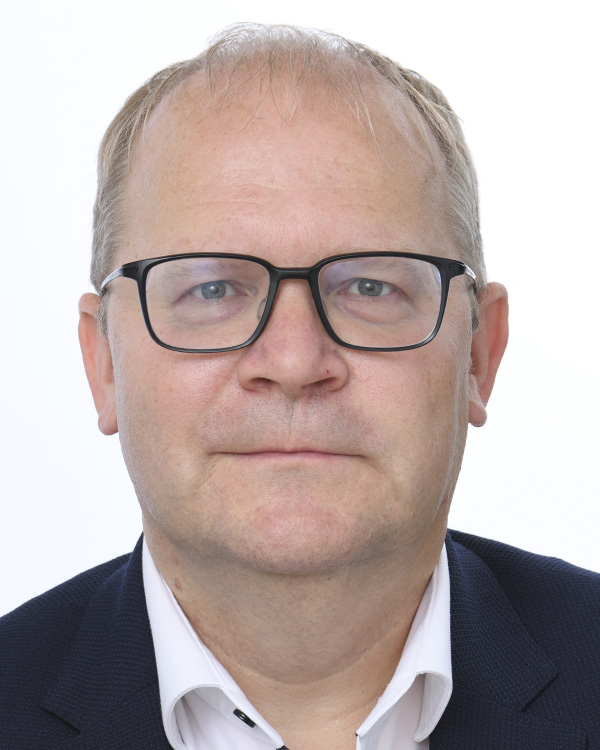

| Rank | Name | Country | Group | Speeches | |
|---|---|---|---|---|---|
| 1 |

|
Lukas Sieper | Germany DEU | Non-attached Members (NI) | 390 |
| 2 |

|
Juan Fernando López Aguilar | Spain ESP | Progressive Alliance of Socialists and Democrats (S&D) | 354 |
| 3 |

|
Sebastian Tynkkynen | Finland FIN | European Conservatives and Reformists (ECR) | 331 |
| 4 |

|
João Oliveira | Portugal PRT | The Left in the European Parliament (GUE/NGL) | 232 |
| 5 |

|
Vytenis Povilas Andriukaitis | Lithuania LTU | Progressive Alliance of Socialists and Democrats (S&D) | 227 |
All Contributions (93)
The democratic backsliding and threats to political pluralism in Georgia (debate)
Mr President, dear colleagues, when I visited Georgia – which was under Russian invasion – in August 2008 and walked in the empty city of Gori, I hoped for a quick withdrawal of Russian troops from Georgia and for a clear future of Georgia in Europe. Unfortunately, it did not happen that way. Russia still occupies part of Georgia, and Georgia is currently moving away from Europe. But the majority of people in Georgia still want to see their country's future in Europe. This is one of the reasons why the EU named Georgia as its candidate country. Unfortunately, Georgia's current government is working against this. In the recent years, Georgia has moved further away from the EU and increased Russia's direct influence on Georgia's choices. Georgia's adoption of the Law on Transparency of Foreign Influence and others are tools used by the government to violate freedom of expression, censor media, impose restrictions on critical voices in civil society. It is clear that until such legislation is removed, there will be no progress in the relations with the European Union. Georgia's attitude towards Russia in today's world and circumvention of European sanctions is also an example that Georgia is not ready to align itself with the EU's foreign policy. But it is not yet too late for Georgia to change its course and above all, for the sake of its own people, show that Georgia is serious about its return to Europe.
Attempts to reintroduce a foreign agent law in Georgia and its restrictions on civil society (debate)
Madam President, dear colleagues, by adopting the foreign agent law despite huge protests from its citizens, the Georgian Government uses Russian tactics to oppress civil society, opposition and anyone critical of the government’s doings. This law is only the latest in a series of recent actions that include the persecution of journalists, political opponents like Saakashvili, spreading disinformation about the EU and reversing efforts of anti-discrimination. The actions of the Georgian Government show that it is not taking seriously its ambition to join the European Union. The Georgian Government should focus on the immediate implementation of all the measures that are necessary in order for Georgia to continue moving towards EU membership, which the Georgian people overwhelmingly support. Unfortunately, this law will derail Georgia’s bid to join the European Union. The Georgian people need to be supported in their European aspirations and to be able to live in a country free of corruption and respecting fundamental freedoms.
The use of Russian frozen assets to support Ukraine’s victory and reconstruction (debate)
–Dear President, Dear colleagues, In addition to killing and maiming Ukrainian people, Russia has massively destroyed Ukrainian cities, settlements and infrastructure, as well as Ukrainian property. And this destruction continues. Ukraine needs to be rebuilt. Both justice and justice say that this must be done first with the money of the aggressor and the destroyer, that is, Russia must pay for its destruction. Russia's assets are also under the control of European Union countries and other legal states, and as much of it as possible must be used for the reconstruction of Ukraine. Using the interest earned on this asset is a first step, but far from sufficient. It is neither right nor fair that the material damage caused by Russia should be borne by Ukrainians or European countries. But in order for there to be no new damage every day and for people not to die, it is necessary for Russia to end its war against Ukraine and leave Ukraine. This is a joint effort of all normal people and normal countries.
The murder of Alexei Navalny and the need for EU action in support of political prisoners and oppressed civil society in Russia (debate)
Dear President, ladies and gentlemen, With the killing of Alexei Navalny, Putin's regime once again sent a threat to Russian society that anyone who opposes or even hesitates in the regime would be destroyed, and that trials and prison would only be a play before the opponent was finally destroyed. In doing so, Putin continues to consolidate a fear-based social order in Russia, as has repeatedly been the case in Russia's history. With fear, he hopes to secure obedience and loyalty and support for the aggression against Ukraine. The killing of Navalny is also in the context of the upcoming pseudo-elections of the Russian president, so that even in the so-called elections with a predetermined result, no one really dares to compete with Putin. The killing of Navalny is a political murder for which the Russian regime and its leaders are responsible. The EU human rights sanctions regime must be applied to all those who participated in the agony of Navalny’s imprisonment. The European Union must also seriously review how the representatives of the Russian opposition and human rights defenders, both in exile and in Russia, can be better protected than before. And as Julia Navalnaya said here today, a few moments ago: “Putin must bear responsibility for the evil he has done to Russia, Russia’s neighbours and Alexei.”
Role of preventive diplomacy in tackling frozen conflicts around the world – missed opportunity or change for the future? (debate)
Ladies and gentlemen, it is now of primary importance for the European Union that Russia does not get what it wants in Ukraine and that Ukraine does not become another country under direct Russian influence. We continue to see what the Russian-made conflict zones in Transnistria, Georgian regions of Abkhazia and South Ossetia mean for the fate and future of these countries, as well as the constant brutal pressure on Belarus and other countries that Russia considers to be within its sphere of influence. Russia tried to do the same with Ukraine 10 years ago when it occupied Crimea and parts of eastern Ukraine, hoping that this would affect the central government of Ukraine to renounce its aspirations for a free Europe and return to Russia's direct sphere of influence. However, this did not happen and therefore Russia started a full-scale war of conquest against Ukraine. It is Europe's duty today to do everything in its power to prevent Russia from breaking Ukraine and destroying the future of another European nation. The European Union and other European countries must work together to ensure that Russia finally realises that the time for the achievement of force-based criminal goals is over in Europe. Ukrainians, Moldovans, Belarusians, Armenians, Georgians and Azeris have the right to determine their own future. Thank you.
A true geopolitical Europe now (topical debate)
Madam President, dear colleagues, if the European Union is serious about being an influential geopolitical figure, it needs to step up its efforts on several issues. The liberation of Ukraine and its future are of particular importance. The European Union must finally make the sanctions against Russia work, and this will only happen when the back doors are closed for Russia. And it is not acceptable that goods and services subject to sanctions still reach Russia through third countries. If in a few months exports to some country, for example Kyrgyzstan, increases by 2 000%, then it is clear that the goods are actually going to Russia. The European Union must be clear and tough on these Russian helpers. It must also become fully clear how to use all the frozen Russian assets for the reconstruction of Ukraine. Also, how to launch an international trial on Russian genocide and war criminals. It is very important for the European Union to finally create a functioning link between the EU’s foreign policy, development policy, trade policy and defence policy. The European Union’s policy towards Africa, unfortunately, also has largely failed. Successive coup d’états and the growing resentment towards the EU show that simply sowing EU money does not bring results. Development cooperation must also clearly follow EU foreign policy goals, otherwise it is just a waste of money. So I mentioned just a few examples, but there is a lot to do to increase the EU’s international influence and this is largely a homework yet to be done by the EU itself. If not, it will be very difficult to balance China, Russia and other large authoritarian regimes.
The establishment of a tribunal on the crime of aggression against Ukraine (debate)
Dear colleagues, An international tribunal for the legal condemnation of war crimes committed by Russia and for the prosecution of criminals must be established. The European Union and other countries that continue to attach great importance to international law must join forces so that no crime goes unnoticed and the perpetrator goes unpunished. I have no illusions that such a tribunal could be set up through the UN while Russia sits on the Security Council with a veto. It is therefore necessary to find the broadest possible international coalition and to establish a Russian war crimes tribunal, in which the European Union must play an active role. More than 60,000 war crimes have been identified so far. Mass graves of civilians with traces of torture have been found in Ukraine. Thousands of civilians have been killed in the bombings. As of early January, the UN Human Rights Monitoring Mission had identified nearly 7,000 civilians killed and more than 11,000 injured. These numbers are probably higher. 14 million people have been forced to leave their homes. All these murders and other crimes have specific commanders and perpetrators. They must all be punished for the atrocities they have committed, and the international tribunal is the least that the European Union and the world can do for the victims of the crimes committed in Ukraine and their loved ones.
Implementation of the common foreign and security policy - annual report 2022 - Implementation of the common security and defence policy - annual report 2022 (debate)
Madam President, dear colleagues, since the Russian aggression against Ukraine is the most important foreign and security policy issue for the European Union, all other foreign policy issues must also be viewed through the prism of the Russian aggression in Ukraine. In other words, how the EU’s relations with third countries can contribute to the end of Russian aggression. Regarding trade and development cooperation, it is necessary to look closely at how the partner countries of the EU behave in relation to Russian aggression. How do they vote at the UN General Assembly? What kind of relations do they develop with Russia? And even more, what kind of military equipment do they supply to Russia? They say you can’t be everybody’s darling, so, more support must be given to those countries for whom Russian crimes and violations of international law are unacceptable. And adjustments have to be made in relations with countries that continue to deal with the Russian regime as if nothing had happened. This is necessary in order to help Ukraine and continue to put pressure on the Russian regime, as well as to strengthen the international credibility of the European Union.
EU Association Agreement with the Republic of Moldova (debate)
Mr President, Moldova is in a very difficult situation due to Russia’s aggression against Ukraine, which is why the European Union must give Moldova its full support. Moldova is a very important recipient of Ukrainian refugees. There are more than 100 000 refugees in the country, mostly in Moldovan homes. That is why Moldova needs EU financial support to help these people. At the same time, Moldova is completely dependent on Russia for energy. The EU also must help Moldova increase its energy security by creating new connections. Otherwise, Russia will have a significant leverage to influence Moldova. Moldova’s only power plant is in Russian—controlled Transnistria. In addition, the EU should increase its import quotas for Moldovan agricultural and other products in order to give Moldova better access to the EU market. This would also help reduce economic dependence on Russia. It is also important that the EU soon respond positively to Moldova’s application for EU membership. This would give Moldova and its pro—European government a clearer perspective.
Debate with the Prime Minister of Estonia, Kaja Kallas - The EU's role in a changing world and the security situation of Europe following the Russian aggression and invasion of Ukraine (debate)
Dear colleagues, dear Prime Minister! I am very pleased that today the European Parliament is facing the Prime Minister of Estonia, who has been clear and principled in expressing Estonia's and Europe's principles and shaping the positions of the European Union and NATO. But in Ukraine, dozens of children have already been killed and hundreds injured. Residents of Mariupol and other cities are trapped under Russian bombs. More than two million refugees, most of whom are women with children. All of this has an impact on the whole of Europe. And all this will last as long as Putin's regime continues to kill in Ukraine. Humanitarian corridors are urgently needed for refugees. A self-defending Ukraine must be given everything it needs. From planes and other weapons to food and medicine. European money paid for gas and oil must no longer be used to finance the Russian war machine. All of this can be guaranteed by a free world to help Ukraine fend off the aggressor. Putin's regime has bombed Russia out of modern Europe. But the European Union must also reconsider its attitude towards those countries that are applauding Russia's war in Ukraine. I see a liberation here, for example, of the candidate country of the European Union for Ukraine. For Estonia, the natural operating environment in the current world is our membership of the European Union and NATO. Other European nations must have the same opportunity. Ahead of Ukraine. So that it never happens again that a woman who has fled her homeland with children says through tears: ‘I had no other choice’.
The deterioration of the situation of refugees as a consequence of the Russian aggression against Ukraine (debate)
Mr President, dear colleagues, dear Ukrainians, Europe’s greatest humanitarian catastrophe of this century is unfolding before our eyes. Because of the Russian massacres, around two million people – mainly mothers with children, have left Ukraine. I was on the Polish-Ukrainian border a few days ago and saw a never-ending flow of refugees from Ukraine to Poland. On a freezing night, yet another train carrying 1500 women and children arrived at the Przemyśl station. This is the reality in Europe in the year 2022. I am grateful to the Polish people and to others on the border of Ukraine who are helping the incoming refugees as best they can. The whole of Europe must give its full support to Poland and the countries that receive the refugees first. But the massacres of Putin’s regime in Ukraine continue, meaning that the flow of refugees will continue. Hundreds of thousands of people are trapped in Mariupol and other cities. These people need safe humanitarian corridors, and they need them now. The only possibility for the flow of refugees from Ukraine to stop and for the people of Ukraine to be able to return to their homeland is when Putin’s regime will be defeated and pushed back and Ukraine is free and safe again. For this the strength and determination of the whole free world is desperately needed.
EU-Russia relations, European security and Russia’s military threat against Ukraine (debate)
Madam President, for years, Russia has been keeping their military in Ukraine, Georgia and Moldova against the will of the governments of those countries, thereby impeding the normal development of these countries. Also, in the current situation where Russia has surrounded Ukraine with its military, carries a purpose that Ukraine itself should not be able to decide on its future. Russia’s goal is to get Ukraine into its sphere of influence. It wants Ukraine to give up its path towards the EU and NATO. So far, Ukraine has managed to endure, despite the huge pressure. Democratic western countries should not make things more difficult for Ukraine. This means that we must remain with the Ukrainians by supporting them every way we can. It means also a physical presence in Ukraine. Above all, we must maintain a strong and visible diplomatic presence in Ukraine. The continuous and high-level presence of democracies in Kyiv and in other parts of Ukraine is of essence, especially these days.
Implementation of the common foreign and security policy – annual report 2021 - Implementation of the common security and defence policy – annual report 2021 (debate)
Dear Mr President, Russia's behaviour towards Ukraine has once again confirmed the need for comprehensive security cooperation between democracies. This concerns the structure and functioning of the European Union's common security and defence policy, the smooth and unrivalled cooperation of the European Union with NATO, including the United States, as well as with other democratic countries that are not members of the European Union and NATO. Only then can the international ambitions of major authoritarian regimes to determine the present and future of other countries be held back. Russia's goal is to get Ukraine into its sphere of influence. So that Ukraine would stop moving towards the European Union and NATO. Ukraine has so far withstood great pressure, and now the Western democracies themselves must not make it even more difficult for Ukraine. This means, among other things, that it is necessary to be with the Ukrainians in difficult times. And this is about the real presence of democracies in Ukraine today. Diplomatic missions should not be closed there, but rather new ones should be opened. Thank you!
Situation in Belarus and at its border with the EU and the security and humanitarian consequences (debate)
Madam President, Lukashenko thinks nothing of human lives, as he has recently demonstrated by his actions, where thousands of people were manipulated into leaving their homes and travelling to Belarus with hopes of finding a shortcut to Europe. Such manipulation of human lives sounds and seems like an act of international crime, and, as such, the actions of Lukashenko must be judged by international judicial bodies and the United Nations. After all, using migrants at the cost of their lives in order to achieve Lukashenko’s cynical political interests is not only an aggression against the European Union but against the world as a whole, considering that migration is a global issue and problem. On the issue of new sanctions, these are inevitable and must, among others, be aimed at the Belarusian national airline Belavia, that directly participated and participates in human trafficking. This means taking back airplanes of EU origin from Belavia, and a total ban on the sale of aircraft parts to Belarus. Only by combining different measures will it be possible to prevent the next madness and crimes of the Belarusian dictator.
Human rights situation in Myanmar, including the situation of religious and ethnic groups
Mr President, it has been over half a year since the military forces in Myanmar violently took power, arrested its political leaders and issued a state of emergency. In response to the coup, protests broke out and the security forces have targeted protesters, resulting in the killing of over a 1 000 people, more than 8 000 detained and over 230 000 people displaced, adding to the number of displaced people in Myanmar, now at over half a million. Torture is widely used, and the United Nations special rapporteur has indicated that the junta’s widespread systematic attacks against the people of Myanmar, likely amount to crimes against humanity and war crimes under international law. This crisis has been worsened due to a severe economic crisis and the COVID—19 health care crisis. Health care workers are attacked, health facilities destroyed or medical equipment confiscated. Plus, the Rohingya issue – the Rohingya ethnic minority are continuously targeted and denied their existence by the same Tatmadaw that oversaw the mass atrocities committed against Rohingya since 2017. The human rights violations must stop immediately. Prisoners must be released. The European Council must continue to impose targeted sanctions against those responsible for the coup and those responsible for the atrocities against Rohingya and other citizens of Myanmar.
The Arctic: opportunities, concerns and security challenges (debate)
Madam President, rapid climate change in the Arctic causes environmental, social, economic and also security challenges. The melting of the ice cap creates new passageways, allows access to natural resources and therefore increases strategic competition opportunities and also potential risks in the region. It is in the interests of all active in the region to maintain a stable environment in the Arctic by cooperation and coordination. The EU needs to be constantly aware of these rapid changes in the Arctic and needs to have a new Arctic policy. I am looking forward to the joint communication from the Commission on the New Arctic Strategy that will be released on 13 October. The EU has a clear role in fighting climate change and in advancing sustainable development, but it is necessary to be engaged also in matters of security, taking into account Russia’s active militarisation in the region. It means a clear vision on the role of the EU in security matters and an acknowledgement that cooperation in Arctic matters is the key with Arctic countries, within the EU and also with NATO. The European Union must also continue to strive for official observer status in the Arctic Council. And, of course, we cannot forget indigenous people. Finally, I think that the EU should also open a permanent representation both in Greenland and in the Faroe Islands.
State of EU cyber defence capabilities (debate)
Madam President, yesterday Facebook and its products like WhatsApp and Instagram went down. This was supposedly just a technical problem and not a cyberattack. But all over the world, communications were hampered. The usual information flow stopped. But we might have bigger scares, see bigger damage and even human losses if a state or non-state actor decides to attack our critical infrastructure, like hospitals, energy or transport, or to meddle in elections. The recent Pegasus spyware scandal has shown the vulnerability of journalists, human rights activists, elected representatives and other citizens that were massively spied on. More connectivity means more vulnerabilities. In recent years, the EU has seen a continuous growth in cyber operations conducted by state and non-state actors against the EU and its Member States, revealing vulnerabilities in networks essential to European security. These days, every conflict has a cyber-element to it. It is important for the EU and its Member States to strengthen cyber-resilience and develop common cybersecurity and defence capabilities, in order to respond to such security challenges. President von der Leyen said in her State of the Union address that, given that resources were scarce, we had to bundle our forces. We should not just settle for addressing the cyberthreat, but should also strive to become a leader in cybersecurity. If the EU wants to be seen at the forefront of digital ambitions, it must increase its technological sovereignty and innovation, and be ready to raise the level of its cybersecurity. A common cyber-defence policy and increased cooperation at EU level to develop common and improved cyber-defence capabilities are essential elements in building a stronger European Defence Union. The borderless nature of cyberspace – as well as the substantial number and increasing complexity of cyberattacks – requires a coordinated Union-level response, including common Member State support capabilities and Member State support for measures in the EU cyber-diplomacy toolbox, as well as intensified EU—NATO cooperation, based on information-sharing between cyber-crisis response teams, the exchange of best practices, enhanced training, research and exercises. The European External Action Service and the Commission, in cooperation with the Member States, need to develop a comprehensive set of measures and a coherent policy on cybersecurity, in order to enhance resilience and coordination on cyber-defence. It is essential for the Member States to significantly increase classified information-sharing capacities in order to facilitate information-sharing where needed and useful, and to develop a rapid and secure European network to detect, assess and counter cyberattacks. The EU has taken many measures to raise the level of its cybersecurity and cyber-defence capabilities. It has adopted and applied a legal framework for targeted restrictive measures against cyberattacks, and EU-NATO cooperation has increased in the cyber-defence field too. But even more coordinated Union level action is needed. The review of the Cyber Defence Policy Framework should strive to enhance coordination between EU actors and also between and with Member States. PESCO offers excellent ways to speed up cybersecurity initiatives and should be used to that end. The strategic compass should be used to deepen the strategic culture in the cyber domain and help to overcome the current fragmentation and complexity of the overall cyber architecture within the EU and remove any duplication of capabilities and mandates. Fragmentation carries serious issues with resources that need to be addressed. The establishment of a joint cyber unit is needed to increase cooperation and information—sharing between EU institutions and enable the full use of existing structures, resources and capabilities. Increased funding is needed for the CERT-EU and the EU Intelligence and Situation Centre, and to support Member States in establishing and strengthening security operation centres in order to build a network of these centres across the EU. It is also important to improve citizens’ skills and raise public awareness on cyberattacks and how individuals can defend themselves against these attacks. More operational assistance is needed between Member States. Trust also needs to be built, as this is still one of the big obstacles. Common exercises and scenario-based policy discussions on crisis management are important in this regard. We are witnessing increasingly aggressive behaviour from Russia, China and North Korea in cyberspace, and it is clear that in order to be successful in overcoming threats to Euro-Atlantic security interests, increased coordination with NATO is needed. For this, coordinated exercises and joint training are indispensable. We need to look for possible complementarities with NATO to avoid duplication and acknowledge that respective responsibilities and coordinated exercises and joint trainings are indispensable. Functioning deterrence can be achieved when the adversaries have a better awareness of the possible countermeasures. Increased cooperation with NATO allies, like-minded countries, United Nations and the OSCE is also needed. Member States and the EU should also be at the forefront of discussions under the United Nations to help promote responsible state behaviour in cyberspace. Finally, I would like to thank all my colleagues and staff that have helped to draft this report. I wish you all a good debate and hope that you can support this report.
Direction of EU-Russia political relations (debate)
Mr President, when we speak about EU-Russia relations we cannot forget the conflicts and the Russian military presence in Ukraine, Georgia and Moldova. For example it has been now 13 years since the Russian invasion of Georgia, where the Russian occupation forces have engaged in an illegal military build-up and so-called borderisation; undertaken kidnappings and illegal detentions; continued closure of the occupation line. The Russian Federation needs to cease its illegal actions directed against the sovereignty and territorial integrity of Georgia, but also Ukraine and Moldova, and implement international obligations and withdraw its military forces from the territory of these countries. It is up to the European Union to give a clear signal that our policy will not change until Russia starts to respect international law, and the territorial integrity of Georgia, Moldova and Ukraine is restored within their internationally recognised borders.