
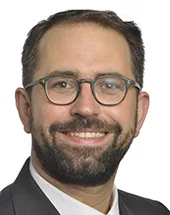






| Rank | Name | Country | Group | Speeches | |
|---|---|---|---|---|---|
| 1 |
|
Lukas Sieper | Germany DEU | Non-attached Members (NI) | 390 |
| 2 |
|
Juan Fernando López Aguilar | Spain ESP | Progressive Alliance of Socialists and Democrats (S&D) | 354 |
| 3 |
|
Sebastian Tynkkynen | Finland FIN | European Conservatives and Reformists (ECR) | 331 |
| 4 |
|
João Oliveira | Portugal PRT | The Left in the European Parliament (GUE/NGL) | 232 |
| 5 |
|
Vytenis Povilas Andriukaitis | Lithuania LTU | Progressive Alliance of Socialists and Democrats (S&D) | 227 |
All Contributions (57)
EU-Africa relations (debate)
Madam President, ladies and gentlemen, ladies and gentlemen, ladies and gentlemen, I believe that we should also acknowledge – and it is a very multifaceted debate today – that we should also look at the fact that we are in global displacement competition, that our decisions here in the House, as well as in the Commission, are too often alien to the world and stand out. The fact that we are in a global competition is rarely as clear as the example of Africa. If the approaches of other states are more pragmatic, appear more attractive, then we do not get involved, but our competitors. Because the discussion about changing values all too often obscures our view, some do not understand here that the problems in many African countries – and this has already emerged – lie precisely in the area of simple services of general interest, in the area of infrastructure, and that other powers therefore make development, the expansion of trade and raw materials their top priorities. For us, on the other hand, the green transition is at the forefront. That's bizarre. Take hydrogen as a good example. By including Africa in this new dreaming, you are ready to misuse space for the production of locally needed electricity for the production of hydrogen, and risk exactly what lies around our necks like a millstone here, namely the cost explosion of electricity. We should therefore acknowledge that a bumbling into unworldly value dreams only leads us to the sidelines. We must move towards a policy that is also guided by our interests, in our favour and that of Africa.
A European strategy for offshore renewable energy (debate)
Madam President, ladies and gentlemen, Contrary to my many previous speakers here, I have serious concerns about the further expansion of offshore wind energy, not only with regard to fisheries and environmental protection, as has already been mentioned, but also with regard to the development of energy prices. The costs are also not competitive in offshore wind energy and must be supported by expensively paid subsidies, which only further distorts the market. Let's look at the concrete figures: In the package Fit for 55 There is talk of 60 gigawatts by 2030 alone. Currently, we have a production of 12 gigawatts. The investments for a single gigawatt are, favorably calculated, 2.5 billion euros, in the practical, realistic case about 4 billion euros. Enlargement by 2030 would thus require 120 to 192 billion euros of additional investment - 120 to 192 billion euros, which we want to hum up for our citizens, who are already groaning under electricity prices, because you are basically not interested in affordable energy, but in megaprojects of a small lobby, which is getting smaller every day.
Implementation of the Kimberley Process Certification scheme (debate)
Mr President, ladies and gentlemen, ladies and gentlemen. The Kimberley process is certainly a process of success, as you can already see. We now have 85 states that are committed here and that want to help ensure that diamonds are free of blood in the future and that they are also mined under decent conditions. In this respect, of course, it is a process that we must monitor carefully, which the Commission must also keep a careful eye on in order to help it become effective and efficient and to ensure that the relevant requirements are complied with. Now we already had other points, how the corresponding process can also be extended. And I just want to argue that we should also look at other products, other raw materials. If the Forbes magazine 2018 about Blood Batteries - Cobalt And The Congo We have a similar problem there. Of course, we have cobalt funding, on the one hand also from local warlords, we have a child labour problem, and we also have forced labour. This means that we have a regionally delimitable raw material, which also comes to a large extent from the Congo. The Kimberley trial actually started in the Congo, so it originally started. We have a similar problem, and we have a limitable raw material. In this respect, I would like to argue that if we now take care of the Kimberley process and make sure that the Kimberley process will really work, we will also see where we can implement this recipe for success on other raw materials.
New orientations for the EU’s humanitarian action (debate)
Mr President, ladies and gentlemen, ladies and gentlemen. You may be surprised, but both my party and my group are in principle in favour of humanitarian aid as well as development aid as aid for self-help. We therefore differ more in the ‘how’ than in the ‘if’ in this specific question. Development aid can never be a vehicle for clientele policy. However, this report is also a drumbeat of the Zeitgeist vocabulary and a creative ‘more’ in the ‘continue as before’. Actually, it would be appropriate to question whether money in Afghan gender projects really makes sense, instead of only bluntly demanding an increase in funding for development aid. Instead of questioning whether development aid is also based on mutual trust between donor and recipient states and whether it would therefore not actually be appropriate to rely on cooperation in the area of the return of, for example, illegal or criminal migrants, there is now a blanket call for the implementation of the above-mentioned initiative. In the long term, this means the introduction of disasters and climate causes as an additional spongy ground for asylum. Ladies and gentlemen, this report is a well-being zeitgeist wash. In any case, he does not address the real problems of humanitarian aid, namely aid money that the disaster victims do not reach at all, excessive bureaucracy and money seeped into the swamp of aid organisations.
Health technology assessment (debate)
Madam President, ladies and gentlemen, ladies and gentlemen, ladies and gentlemen, In the opinion of the German Medical Association, the present proposal is particularly welcomed by one, namely industry. She says the proposal would increase the risk of external interference in the future. It is, of course, about lobbying, and this lobby, which is of course very, very active here in Brussels, is pleased with what is happening here. He is pleased with centralization. It needs to spend significantly less money to operate in Brussels. And I believe that health policy, whether at national level or here in Brussels, depends primarily on one thing: trust. Can we trust one thing? Can we trust the Commission in this matter, whose president has exchanged mass chats with the Pfizer CEO, all of which have now disappeared? Can we really trust Ursula von der Leyen here, whose husband is medical director of the company Orgenesis in the USA? I think it's about trust. And whether trust can really be given here, that is questionable for me.
European solutions to the rise of energy prices for businesses and consumers: the role of energy efficiency and renewable energy and the need to tackle energy poverty (debate)
Madam President, Well, ladies and gentlemen, ladies and gentlemen, one could almost be surprised to find this item on the agenda here today. After all, the perpetrators of precisely these high electricity prices are also sitting here, among other things. So we're trying to cure a disease we've caused ourselves. Look, one or the other colleague has now speculated about it, we have found reasons abroad. We suspect the evil Putin, of course again in Russia and many other stories. We even suspect the economic recovery right now, especially after Corona, of being responsible here. However, in the last ten years between 2010 and 2020, taxes, levies and levies on electricity in Germany alone have risen by a good 70 percent. They now account for almost 50 percent of the electricity price. Against this background, it is downright ridiculous to want to blame all sorts of exogenous causes for this. When the scenario of rising energy costs and blackout danger actually became tangible when we could see it, all those who drew attention to it were called black painters. Well, if it goes on like this, we'll all be allowed to paint in black soon. This will be the result of various dreams here in the room. In this respect, the heart is now being weighed, ladies and gentlemen. It is now a matter of lowering taxes, as has already been mentioned today. Yes, of course, but also to follow the good example of one country or another and introduce an electricity price cap and finally implement the tax cuts that have already been promised by many colleagues here today.
Natural disasters during the summer 2021 - Impacts of natural disasters in Europe due to climate change (debate)
Mr President, ladies and gentlemen, The Commission said earlier: Active and practical solidarity is characteristic of Europe. This sentence becomes an empty promise when one hears that the financial means for mutual help have already been used up. What kind of demands would come, that was already clear when reading the corresponding articles: In turn, the entire EU budget is now inflating due to climate change. Ladies and gentlemen, this demand is wrong. Firstly, it is not only anonymous climate change that is responsible for many of the damage that has occurred, but also very concrete personal ignorance on the part of individual decision-makers. Secondly, we should further strengthen the existing Solidarity Fund under the existing budget, for example by redirecting funds from environmentally harmful programmes such as the promotion of e-mobility to where they actually have an active and practical benefit. If we fail to do so, if we do not have sufficient resources at our disposal to help local citizens, the EU risks completely dismantling it. Then it's no longer just Too little too late, but Too little and never.