
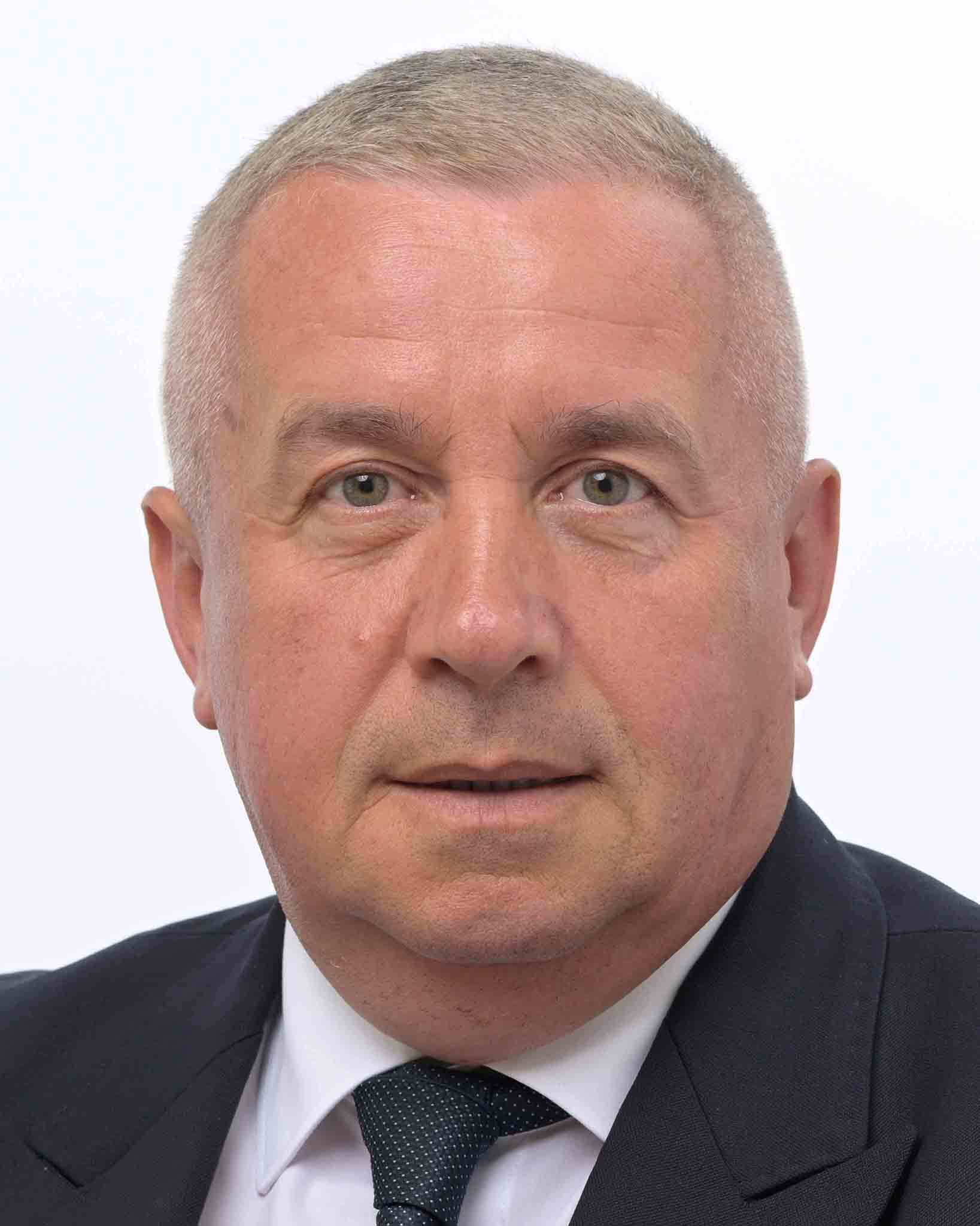


| Rank | Name | Country | Group | Speeches | |
|---|---|---|---|---|---|
| 1 |

|
Lukas Sieper | Germany DE | Renew Europe (Renew) | 494 |
| 2 |

|
Juan Fernando López Aguilar | Spain ES | Progressive Alliance of Socialists and Democrats (S&D) | 463 |
| 3 |

|
Sebastian Tynkkynen | Finland FI | European Conservatives and Reformists (ECR) | 460 |
| 4 |

|
João Oliveira | Portugal PT | The Left in the European Parliament (GUE/NGL) | 288 |
| 5 |

|
Vytenis Povilas Andriukaitis | Lithuania LT | Progressive Alliance of Socialists and Democrats (S&D) | 276 |
All Speeches (101)
Calling on the Council to take all necessary steps to reach an agreement on the European cross-border mechanism file and open negotiations with Parliament (debate)
Date:
06.02.2024 14:54
| Language: RO
Speeches
Madam President, Minister, ladies and gentlemen, the border regions of the European Union cover 40% of its territory, 30% of its population and two million cross-border workers. The proposal for a regulation on the European cross-border mechanism was intended to remove administrative and legal obstacles to the implementation of joint projects. The Covid pandemic, but also everyday life, has shown us that the lack of clear regulations in the field of cross-border cooperation creates immeasurable difficulties for European citizens, while at the same time abducting local authorities from effective tools to face these challenges. Unfortunately, despite the vote in the European Parliament, the Council has not been able to move forward on this file. Madam Minister, we are living in complicated times at European level and we cannot afford the immobilism between institutions to generate further losses at European Union level of billions of euros each year and to lose some four million jobs. I therefore call for negotiations to be opened immediately between the Council, the European Commission and Parliament so that the will of European citizens is properly reflected in this regulation.
Plants obtained by certain new genomic techniques and their food and feed (debate)
Date:
06.02.2024 14:26
| Language: RO
Speeches
Madam President, new genomic techniques are an indispensable tool for the work of farmers whom we see on the street shouting their helplessness in the face of the current challenges. Beyond what still divides Member States in the Council, these new genomic techniques open doors to drought-resistant plants that use fewer pesticides and chemical fertilisers, while guaranteeing higher yields. To those who challenge these techniques, I would like to remind you that 37 Nobel laureates and 1 500 scientists from all over the world have asked the European Parliament to legislate on this subject without turning its back on scientific progress. It is deeply immoral and hypocritical to reject this dossier for ideological reasons, but at the same time, dear colleagues, to weep for the pity of farmers. Now is the time to stand by them, to put this tool on the table so that they no longer have to face a profoundly unfair competition generated by products imported from third countries that use such technologies. Moreover, colleagues, today we import into the European Union 98% of the need for protein feed that is genetically modified organisms, because we have no alternatives, and now that we have them, we reject them. Therefore, let's be serious, let's vote for this regulation.
Improving the socio-economic situation of farmers and rural areas, ensuring fair incomes, food security as well as a just transition (debate)
Date:
17.01.2024 15:11
| Language: RO
Speeches
Madam President, Commissioner, ladies and gentlemen, today the agricultural sector in the European Union is affected by inflation, drought, floods, labour shortages and the war in Ukraine, which makes it deeply unpredictable for tomorrow. From Romania to Germany and France, the farmers, whose only weapon remained the protest, left their home, their table and their family, taking to the streets at -10°, to shout their helplessness in the face of the impossibility of being able to continue their activity. I wish, Commissioner, that you had a clearer message in your intervention for those on the streets today. Of course, we must support those who fight for freedom, but let us not forget about European farmers who are struggling for survival and to guarantee our food security. The crisis reserve has proved insufficient, Commissioner. That is why I call on the European Commission to immediately come up with new financial resources to be made available to farmers, to speed up the process of equalising subsidies between farmers in eastern and western Europe, but also to derogate from GAEC 7 and GAEC 8. Commissioner, if you need to amend the basic act, amend it, but you cannot leave this request from farmers in the European Union unresolved. At the same time, I call on extremist parties not to climb on the pain and needs of farmers to make political capital for their own benefit.
Foodstuffs for human consumption: amending certain 'breakfast' directives (short presentation)
Date:
11.12.2023 20:23
| Language: RO
Speeches
Madam President, we have been informed, Members, that we can intervene in the catch-the-eye procedure. First of all, I would like to welcome the European Commission's proposal and to thank colleague Alexander Bernhuber for the way he handled this file. Through the work done in the European Parliament, we managed to set some lines of action, starting from the undeniable reality highlighted by the European control structures. Thus, almost half of the honey imported into Europe is adulterated and 74% of Chinese honey is non-compliant with European standards. European consumers need a guarantee of product quality. At the same time, the beekeeping sector in the European Union is subject to profoundly unfair competition and non-compliant honey generates unbearable profit losses. That is why we need mandatory labelling with the country of origin and the corresponding percentage (and here I emphasise, Commissioner, the corresponding percentage), but also the identification of mechanisms and procedures for honey adulteration so that they can be effectively combated. Colleagues, it is our responsibility, as representatives of citizens' interests, to ensure that legislation and regulations respect consumers and protect farmers.
Foodstuffs for human consumption: amending certain 'breakfast' directives (short presentation)
Date:
11.12.2023 20:22
| Language: RO
Speeches
Madam President, I asked for the floor on catch-the-eye in this debate.
Sustainable use of plant protection products (debate)
Date:
21.11.2023 10:20
| Language: RO
Speeches
Madam President, ladies and gentlemen, war is a reality that cannot be challenged. Famine is causing migration and food prices are already hard to reach for consumers. Today's discussions cannot be detached from these realities. Responsible use of pesticides must become a target for all Member States, but especially for those that consume well above the EU average. We have states with a consumption of over 8 000 grams per hectare, but we have states that have understood the need for their responsible use, such as, for example, Romania, which has a consumption of only 640 grams per hectare. If I look in the room, the most vocal MEPs are coming from the states with the highest pesticide consumption per hectare. Wouldn't it be useful for you to talk in your own countries, to reduce your pesticide consumption? For requiring a percentage reduction would not only be deeply immoral, but would punish those states that have already been responsible and would seriously and irretrievably bring the European agricultural sector to its knees. The consequence would be its bankruptcy, the closure of farms, and the European Union would be dependent on food imports from third countries. Do not forget that today 33 million European citizens do not ... (The Chair withdrew the floor of the speaker)
Generational renewal in the EU farms of the future (debate)
Date:
19.10.2023 11:34
| Language: RO
Speeches
Domnule președinte, doar 26 % din populație trăiește în spațiul rural, iar tinerii fermieri reprezintă doar șase la sută. Between 2005 and 2020, more than 37% of farms disappeared and the decline will continue unless we come up with viable solutions. Agricultura este percepută adesea ca o activitate dificilă, nesigură și puțin profitabilă, ceea ce face ca tinerii să se îndrepte către alte activități. Policies in this area must ensure primarily an increase in income, which today is far below the average in other sectors, while facilitating access to land without which you can not do agriculture. At the same time, rural areas must be able to provide adequate living conditions. Investment in broadband internet, water services, road connectivity and healthcare and education is indispensable. Colleagues, we must be aware that only when the urban-rural divide, in all its aspects, is closed, will we really be able to talk about generational exchange, and this means having adequate funding, first and foremost for young farmers.
Mr President, ladies and gentlemen, proteins, like water, are indispensable for all of us, but the European Union cannot meet its domestic protein needs, as it has to import from third countries, and we are talking here above all about genetically modified soybean meal. This creates deeply unfair competition for our farmers, who are subject to much stricter rules compared to those in third countries. Protein production needs to start with European farmers, but they need to be better supported financially. The use of set-aside agricultural land and new genomic techniques, as well as cutting red tape, can guarantee consistent protein production across the European Union. At the same time, I would like to send a clear message of rejection of the use of insects, but above all I strongly reject the use of artificial meat in human food. Cellular food or lab meat has no place in Europe. I firmly believe that European farmers can guarantee food security at European Union level by practising conventional farming.
Schengen area: digitalisation of the visa procedure - Schengen area: amending the Visa Sticker Regulation (Joint debate – Schengen area)
Date:
17.10.2023 15:13
| Language: RO
Speeches
Madam President, it has become a tradition for almost every plenary to discuss something about the Schengen area, which can be understandable in the current context of migration. It is incomprehensible, however, to keep Romania and Bulgaria out of it, given that Romania has managed more than 5 million migrants and more than 60% of grain transit from Ukraine alone, preventing global hunger. It is also boundless hypocrisy to speak of the unity of the European Union, just as it is impossible to speak of strong European institutions that apply the double measure for Romania and Bulgaria. Dear colleagues, it is cynical for the Romanian and Bulgarian people to accept Austria's explanations that they cannot enter the Schengen area due to illegal migration. But at the same time, there were more than 54,000 illegal migrants in Croatia, which was admitted at the time. Dear Roberta, dear Ursula and Mr Charles Michel, we thank you for your declarative support on various occasions, but today we need facts, not words, and this means Romania in the Schengen area. Otherwise, we will have to deal with an increase in extremism at the level of the European Union.
The proposed extension of glyphosate in the EU (debate)
Date:
04.10.2023 16:26
| Language: RO
Speeches
Mr President, Commissioner, ladies and gentlemen colleagues, I welcome the European Commission's proposal to extend the authorisation for the use of glyphosate. The challengers of this decision must understand that today there is no study showing a direct causal link between the use of this substance and risks to human, animal health or the environment. Or should I understand that we no longer trust the judgment of the European institutions? However, we ask the Commission to allocate funds to further research alternative methods to the use not only of glyphosate, but also of other chemicals in agriculture. Globally, farmers are already losing 30-40% of their crops to weeds, pests and diseases. Without glyphosate, farmers in the European Union would, for example, lose 24 million tonnes of wheat alone, or €10.5 billion annually. At the same time, it would mean a decrease in agricultural production, a reduced income for farmers, but, remember, dear colleagues, a very important thing: This means, in particular, rising food prices for consumers. Do we want this? I don't think so. According to the latest data provided by the Commission, unfortunately, 36 million Europeans, or 8.3% of the population of the European Union, cannot afford a hot meal every two days. At the same time, we must be aware that the world's population will grow from 7.6 billion people to 9.8 billion in 2050. This means that farmers will have to produce 70% more to meet food demand. Given the current geopolitical context generated by the war in Ukraine, inflation, climate change, the European Union must continue to be a guarantor of food security.
Reviewing the protection status of wolves and other large carnivores in the EU (topical debate)
Date:
13.09.2023 15:02
| Language: RO
Speeches
Mr President, Commissioner, ladies and gentlemen, the Habitats Directive, adopted 30 years ago, has achieved its objectives. Populations of bears, wolves or other large predators have reached a significant number. At this point, not only is their existence no longer threatened, but their numbers, in relation to the size of the habitats they have at their disposal, create problems with immeasurable consequences for all of us. The time has come, dear colleagues, now to protect people, as 30 years ago we began to defend the great predators. Romania today has more than half of the bear population of the European Union, over 10 000 individuals, and in the last four years 264 people have been mutilated for life, 25 people have been killed and millions of euros have been spent on compensation to farmers. Thousands of bears have invaded not only cities and villages in hilly or mountainous areas, but today we also have bears on the Black Sea. Unfortunately, in the vicinity of the schools, instead of the happy voice of the children, the cries of the bears are heard, much to the desperation of the parents who run to save their children. The pastures, which until yesterday were full of entire herds of animals, today are left fallow for fear of wolves or bears, and in many tourist areas you get to drink your morning coffee with the bear on the terrace. That is why I welcome the Commission's action in assessing the populations of large predators and I urge the relevant actors to be actively involved in this endeavour, and I urge the European Commission to take the necessary measures to achieve an indispensable balance, a quality of life, regardless of the regions in which we live.
Ukrainian grain exports after Russia’s exit from the Black Sea Grain Initiative (debate)
Date:
12.09.2023 20:01
| Language: RO
Speeches
Mr President, Romania has been and will be in solidarity with Ukraine, but Russia's withdrawal from the Black Sea grain transit agreement still creates a problem for European farmers. In this context, the European Commission must take responsibility for guaranteeing a transit of grain from Ukraine to areas where it is really needed, either in African states, where today people are starving, or in European countries where, due to drought, there is a shortage of grain. Remaining these cereals in countries close to the border with Ukraine creates serious market disturbances with immeasurable consequences for farmers. Today, in Romania, farmers cannot capitalize on their cereal productions at prices that cover their production costs. At the same time, transport and storage logistics are oversaturated and compensation from the crisis reserve does not even cover two percent of income losses. In this context, I strongly request the extension of the export ban from Ukraine to Romania and the rest of the states near the border with Ukraine after September 15, at least until the end of the year.
Mr President, the accession of Romania and Bulgaria to the Schengen area is an act of minimal moral hygiene that must be assumed by all European chancelleries. Romania has played a crucial role in strengthening the eastern border, constantly providing stability and security for the European Union. And yet I ask you what is the reward, Commissioner? Violation of rights earned in complicated and difficult times. Austria must apologise to the citizens of Romania, who today are still in the queues of humiliation at the border crossing points, but also pay compensation. The Romanian economic and business environment for the immeasurable losses caused by the unjustified refusal of access to the Schengen area. That is why I believe that any postponement is not only deeply unfair, but also an unacceptable violation of the European Treaties. The consequences of these violations must be fully felt by opposing states, and the European Court of Justice must fulfil its role as guarantor of compliance with European law.
Madam President, thank you. European farmers are looking at us with concern. Today, 32 European regulations have to be respected by them. Through the CAP, you have imposed a number of restrictions. Reduce pesticide consumption, and inflation and the war in Ukraine have managed to bring farmers to their knees. However, the European Commission is again coming up with a reduction in the area of land for agriculture. You are also deeply inconsistent, Commissioner, with the money of European citizens. Ask for the reinundation of areas that have just been drained with billions of euros of investment from European funds. At the same time, you cynically urge farmers to raise water buffaloes. I wonder if anyone in the European Commission is still judging things before launching them in the public space. Dressing in a beautiful title the restoration of nature, you have thrown into the public space only fragments of truth, generating protests. Sacrifice the future of agriculture and food security on the altar of your helplessness. Commissioner, the road to hell is paved with good intentions and, unfortunately, that is where you are taking us with this proposal. I therefore urge you, Commissioner, to come up with a proposal that is anchored in reality. And we in the EPP, I guarantee you that we will be your honest partners.
Thank you very much for your question, dear colleague. Obviously, I came here with solutions and I referred to what investments in agriculture mean, namely in irrigation systems, because over 65% of the water used today is in the field of agriculture. And I believe that the most serious investments must be channelled in this direction, because farmers need to have access to financial resources that allow them to develop irrigation systems in such a way that we can use water as rationally as possible. And obviously, you have seen, farmers cannot do this alone and they need financial resources that must come from the European Commission. Let's be very clear!
Madam President, Leonardo da Vinci said that water is the driving force of all nature, and today we see that Europe's water resources are increasingly limited. We are extracting eight times more water than we did a century ago, and more than a third of the world's population is experiencing acute water shortages. Last year we had the driest summer in 500 years. We see countries like Spain, which, due to drought and lack of water, has almost the entire olive harvest compromised. At the same time, extreme droughts are occurring all over Europe, along with uncontrollable flooding, such as in Italy. If we do not reverse this trend, water-related problems will affect 17% of the European population and 13% of Europe’s GDP by 2050. A significant percentage of water is used in agriculture, and in this context I strongly call on the European Commission to allocate considerable financial resources to the agricultural sector so that farmers have access to smart water use systems. We need to be realistic and understand that agricultural irrigation systems are difficult to access financially for farmers, which can also put food security at risk. So let us, dear colleagues, urgently address this problem through measures that can be implemented by all the states of the European Union and beyond, because this water crisis we are facing will have disastrous effects in the future. (The speaker agreed to respond to a blue card intervention)
Geographical Indications for wine, spirit drinks and agricultural products (debate)
Date:
31.05.2023 21:03
| Language: RO
Speeches
Madam President, first of all, let me congratulate Paolo De Castro and the shadow rapporteurs on their work. Geographical indications are a guarantee of the quality of food products, regardless of the sectors we are talking about. Farmers or producer groups will be able to strengthen their position in supply chains by having at their disposal the necessary tools to offer consumers products with high added value and especially from well-defined regions. The mechanisms designed in this report will make it possible to combat unfair competition effectively, which will help preserve the cultural and gastronomic heritage of the regions of the European Union. We would like to draw your attention, Commissioner, to the need to simplify the procedures for obtaining geographical indications. The European Commission must step up promotion measures to raise consumer awareness of the quality of these products, and labelling must be done in a way that is not confusing. Whether we are talking about Telemeaua de Ibănești or Telemeaua de Sibiu or Prosciutto di Parma, the consumer must have the guarantee of the quality of the products for which he offers an extra penny.
Madam President, Commissioner, ladies and gentlemen colleagues, from the outset I would like to stress that we do not question the need for Ukraine's farmers to be further supported. In this context, I underline that Romania has ensured the transport of more than 60% of Ukrainian grain to third areas. At the same time, however, Commissioner, large quantities of cereals remained in Romania and put immeasurable pressure on farmers who simply had nowhere else to sell their products at prices that would cover their production costs. Transport lanes were inaccessible to them, the transport infrastructure being both insufficient and very expensive. The European Commission and Member States need to understand that there is an additional need for ships, trucks and train cars to ensure efficient transport. Romania and the states close to the war cannot be left alone in this situation. Otherwise, the question arises, Commissioner, what do we do with farmers in these countries? We gave them European subsidies to produce grain. They spent their own money to set up the crops, and now we see that they are left with grain in their stocks. I believe that at the moment the only solution is for these cereals to be managed directly by the European Commission and then shipped under international programmes to combat hunger to African areas, where more than 42 million citizens are suffering from hunger, and the suspension of duty-free grain exports to the five states must be extended beyond 5 June.
The role of farmers as enablers of the green transition and a resilient agricultural sector (continuation of debate)
Date:
10.05.2023 11:18
| Language: RO
Speeches
Mr President, it is sad that we are discussing today the role of farmers in the ecological transition and of a resilient agricultural sector, as if it were possible to have all this without farmers. I do not think that we can talk about food security today without a strong agricultural sector, and this means adequate funding, but above all we need predictable legislation that can be easily implemented by farmers. At the same time, we need serious impact studies, anchored in the realities of the field and not studies done in sumptuous offices by people who have not been in their lives on a farm, tributary only to Timmermans' thinking. Commissioner, does the Commission have any impact studies on the Regulation on reducing pesticides by 50% or on the Nature Restoration Regulation? Because we don't know about these impact studies. Can farmers meet these challenges? Because they tell us they can't meet these challenges.
Cohesion dimension of EU state aid and de minimis rules (debate)
Date:
20.04.2023 11:26
| Language: RO
Speeches
, – I would start from a non-negotiable issue: Support for Ukraine must continue. At the same time, however, I fully agree with you that today there are problems in Poland, Romania, Bulgaria and Slovakia, and the European Commission, Commissioner, must react at this time, including for what it means to buy these cereals, which today create major difficulties for farmers in these areas. I made it very clear: solidarity cannot be called into question, but at the same time we have asked you to bear in mind that farmers in these areas have problems and need a firm response to these problems, and we cannot be left alone in the face of these challenges.
Cohesion dimension of EU state aid and de minimis rules (debate)
Date:
20.04.2023 11:23
| Language: RO
Speeches
Madam President, Commissioner, ladies and gentlemen colleagues, we are all aware that cohesion policy is the main tool at the disposal of regions across the European Union to bridge the gap between them. Unfortunately, over the last two years, we have been witnessing major challenges, which are simply taking a toll on the economic and social cohesion of the regions, as a result of challenges that we all experience; Whether we are talking about the energy crisis, the COVID-19 pandemic, inflation or the war in Ukraine, the effects are more than visible. In this context, regions are affected differently. Some were more prepared to face the challenges mentioned above, while others were not. Member States have struggled to manage these situations, including through the granting of aid de minimis in various sectors. As we well know, this aid is, however, limited to values that, in my opinion, need to be revised. We need to increase these thresholds so that Member States can intervene effectively and, of course, in a differentiated manner. The cohesion policy and the common agricultural policy are indestructibly linked. I would therefore like to highlight here the challenges faced by SMEs, especially in rural areas and especially in countries close to Ukraine. Today's reality, generated by duty-free trade flows from Ukraine, creates major difficulties for many economic sectors in border regions. Aid de minimis what they need must be properly sized, tailored to their needs and obviously much more than at present. Otherwise, the depopulation of these areas will be even more accelerated and this must be avoided. (The speaker agreed to respond to a blue card intervention)
Mr President, Commissioner, ladies and gentlemen, the European Union today has the highest standards for animal welfare, from the very first days of life until slaughter, because we are convinced that there is an inextricable link between the welfare and the quality of the products obtained. In the European Parliament, we had a committee of inquiry on animal welfare during transport, where for 18 months we heard various actors involved in this area. One of the conclusions of this committee was that Regulation No 1/ 2005 does not apply properly in very many Member States. I would like to point out, Commissioner, that whatever legislation exists at European level, if it is not properly implemented, we will never have the desired effects. Member States today have the possibility to allocate money through the new CAP to farmers who ensure increased welfare standards, and Romania has done so thanks to its commitment to respect the long-term welfare of animals. At the same time, we must be careful not to impose additional burdens on farmers, who still face a series of restrictions in a difficult period, which would further accelerate the phenomenon of rural abandonment.
European Citizens’ Initiative "Save bees and farmers! Towards a bee-friendly agriculture for a healthy environment" (debate)
Date:
16.03.2023 09:42
| Language: RO
Speeches
Madam President, Commissioner, ladies and gentlemen colleagues, we welcome citizens' concerns about the fate of the beekeeping sector. According to FAO, of the 100 crop species that provide 90% of the world's food, 71 species are pollinated by bees. The importance of protecting bees is therefore more than essential for the future of the agricultural sector, for farmers, but also for food security. However, data provided by the European Commission show that in 2019 and 2020 there was an increase in the number of hives by 5.1% and 7.6% respectively at European level. The highest increase was achieved in Spain, 10%, and in Romania, 8.5%. So, colleagues, there may be an increase in the number of bees or bee families, even if we use pesticides, provided that they are used rationally. Today's proposal on the table of the European Parliament aims at a phased reduction of pesticide consumption. Regardless of the percentages circulated, either 30% or 80%, they will not be able to be implemented uniformly, for the simple reason that we have major differences between Member States in terms of consumption. Thus, Romania consumes 650 grams per hectare, and the Netherlands consumes 7 900 grams per hectare. There is no way to reduce this percentage uniformly across Member States. At the same time, a reduction in the amount of pesticides, without serious impact studies or viable alternatives for farmers, will be likely to seriously affect the agricultural sector as well as bees.
Mr President, firstly, I thank Mr Norbert Lins and Markey Colm for their work. Dear colleagues, access to fertilisers has been a pre-war problem for European farmers, but especially for those in the East who have lower subsidies. Dependence on Russian gas, but also on chemical fertilisers from Russia and Belarus, is currently causing difficulties in terms of food security. And I am not just talking about the European Union, I am talking about global food security, both in terms of quantity and the need for food to be affordable. It is estimated that at least 30-50% of global crop harvests are attributed to fertiliser application, and according to expert studies, we cannot currently feed the world's population without fertilisers. Today, in countries close to the war with Ukraine, Romania, Bulgaria, Poland or the Republic of Moldova, agricultural production is sold at prices well below cost, and the lack of fertilizers puts them on the verge of bankruptcy. Even in the short term, this shortage puts at risk the timely establishment of crops, a negative impact on farmers and food security. We therefore need urgent solutions. Farmers must have access to affordable electricity, natural gas, fertilisers and the swift adoption of legislation on new plant breeding techniques to increase crop yields. It is also important to accelerate the process of external convergence so that farmers can face the current challenges. Commissioner, we appreciate the Commission's plan on fertilisers, but can the European Commission understand that farmers now need financial resources to be made available to them to deal with this crisis situation? Can the European Commission understand that farmers need money not only from the CAP crisis reserve, but also from alternative financial sources outside the common agricultural policy? Without such resources, we risk the bankruptcy of European farmers, which we certainly do not want.
REPowerEU chapters in recovery and resilience plans (debate)
Date:
13.02.2023 18:58
| Language: RO
Speeches
Madam President, ladies and gentlemen, we are all aware that, in the long term, the European Union must strengthen its energy independence. REPowerEU is thus the means by which Member States can make additional investments in the field of energy. They have already understood their own responsibility, so the energy sector occupies a predominant place in the national recovery and resilience plans. Last but not least, REPowerEU supports investment schemes aimed at tackling energy poverty for vulnerable households, small and medium-sized enterprises. I welcome the outcome of the negotiations and appreciate the fact that the money from agriculture is still available to farmers. They will do whatever is necessary to ensure food security in these difficult times for the sector. Agriculture has been and is an important pillar in a complex of mechanisms including ensuring energy independence and combating climate change. However, it is important that the agricultural sector is further allocated substantial financial resources to meet current challenges, including those related to energy. REPowerEU is proof that any crisis can become an opportunity to be stronger.