
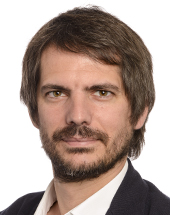


| Rank | Name | Country | Group | Speeches | |
|---|---|---|---|---|---|
| 1 |

|
Lukas Sieper | Germany DE | Renew Europe (Renew) | 487 |
| 2 |

|
Juan Fernando López Aguilar | Spain ES | Progressive Alliance of Socialists and Democrats (S&D) | 454 |
| 3 |

|
Sebastian Tynkkynen | Finland FI | European Conservatives and Reformists (ECR) | 451 |
| 4 |

|
João Oliveira | Portugal PT | The Left in the European Parliament (GUE/NGL) | 284 |
| 5 |

|
Vytenis Povilas Andriukaitis | Lithuania LT | Progressive Alliance of Socialists and Democrats (S&D) | 273 |
All Speeches (59)
The despicable terrorist attacks by Hamas against Israel, Israel’s right to defend itself in line with humanitarian and international law and the humanitarian situation in Gaza (debate)
Date:
18.10.2023 10:28
| Language: ES
Speeches
Mr. President, my first words are to unequivocally condemn Hamas' acts of terror and to call immediately for the release of the victims, those still abducted by the organization. Secondly, and it must be said unequivocally, the punishments that Israel is inflicting on the Gaza Strip are collective punishments constituting war crimes. Cutting off water, electricity and electricity to two million people is prohibited by international law and must be denounced by the European Union. Just as we have to call for a thorough investigation into what was committed yesterday – a terrible thing – in the hospital in Gaza. I would like to thank the High Representative, in a very clear way, for demanding compliance with international law and humanitarian law. I did not understand the trip of the President of the European Commission and the President of this Parliament. In whose name were they talking? Who gave them a mandate to go there? On behalf of millions of Europeans who are calling for a just peace for Israelis and Palestinians, they certainly did not speak out. And, of course, what I also have to say is that now is the time to take advantage of the window of opportunity to be able to move forward on a ceasefire that is urgent; and to resume peace talks leading to the constitution of two states, which we know is the only viable solution to this conflict.
Violence and discrimination in the world of sports after the FIFA Women’s World Cup (debate)
Date:
14.09.2023 10:33
| Language: ES
Speeches
Madam President, the world embarrassedly witnessed what was a despicable act of sexual violence. An aggression on the part of Mr Rubiales which must be condemned by this Parliament. But the world also witnessed the rise of the feminist movement in Spain, in Europe. An increasingly necessary feminist movement to denounce. Because we no longer tolerate these attitudes. And that ultimately led to Mr. Rubiales' resignation. But also, this whole case has shown that there are many discriminations that still persist in sport. I want to congratulate the players on the agreement reached on pay after a strike that has been an example for the whole of Europe. Because wage discrimination continues in a very important way. But, as they have also pointed out, issues such as maternity protection or anti-harassment protocols are still missing. There is still a long way to go to defend women athletes from discrimination. Just like the masculinization of the governing bodies of the sports federations, as we saw with the embarrassing spectacle of a federation all full of men who applauded Mr. Rubiales in a embarrassing way. Much remains to be done, but Jenni Hermoso and the players have taught us all a lesson across Europe. Thanks to them.
Iran: one year after the murder of Jina Mahsa Amini (debate)
Date:
12.09.2023 16:41
| Language: EN
Speeches
Mr President, dear colleagues, one year has passed since the tragic death of Jina Mahsa Amini in Iranian custody. Her death sparked months of rallies during which more than 500 people lost their lives and seven were executed. As the anniversary approaches, the Iranian authorities are stepping up their efforts to control unrest and protests. Women’s rights advocates, students, journalists and the families of demonstrators who died have all been the focus of a wave of arrests in Iran in recent weeks. Worryingly, violence against women in prison is on the rise and a new draft law is currently being debated which threatens women who do not follow tight clothing regulations. The EU must respond to these grave human rights violations by strengthening sanctions and help those facing prosecution by giving assistance such as bail or medical care as well as asylum. As we remember Jina Mahsa Amini, let us stand in solidarity with the countless women in Iran who courageously battle each day for their rights and freedom. Women, Life, Freedom!
Impact of the interest rate increase decided by the ECB on households and workers (debate)
Date:
10.05.2023 21:52
| Language: ES
Speeches
Madam President, the ECB once again raised interest rates, a strategy which, as we have already said, is profoundly wrong. Inflation comes mainly from energy and very high corporate profits, as the Commissioner has pointed out. But the ECB remains committed to telling us that there is a demand component to current inflation. If there was a significant demand component to inflation, we should have recovered the growth lost in the pandemic, and that is not the case. And I have to say that consumption is still 0.8% below what it was in 2019. If with these data the ECB claims that the economy is overheating, then this can only mean that the eurozone's potential output declined. But it is very difficult to say that potential output in the eurozone declined when employment has increased by 2.3% since 2019 and productivity has progressed by 1.3% in 2022. It is obvious, therefore, that demand is not a significant component of inflation and that, therefore, what the ECB is doing is impoverishing families without being able to stop the price increase. Correct course.
Mr President, the digital euro is a potentially transformative project that can have positive consequences for society and the economy as a whole. First and foremost, digital gold has to enable us to defend monetary sovereignty in an increasingly digitised world, i.e. to keep money as a public good; This is the most important thing right now. In addition, depending on how it is designed, it can be an effective way to have a more effective and also more inclusive payment system. However, it must be said that its added value, economic and social will depend to a large extent on how it is designed. At this point I have to say that my group is concerned that some vested interests, who very much fear the disruptive innovation potential of the digital euro, are pushing to specifically design digital gold so that it doesn't work, so that it doesn't challenge traditional commercial banking business models. So, here what is crucial is how this project is going to develop. We cannot leave it to the ECB alone with the technical advice of private banks because this project is for everyone and, if it is for everyone, the objectives, the design options, the distribution, must be defined through an inclusive and democratic legislative procedure that fully involves this Parliament and civil society.
Markets in Crypto-assets (MiCa) - Information accompanying transfers of funds and certain crypto-assets (recast) (debate)
Date:
19.04.2023 15:02
| Language: EN
Speeches
Mr President, I would like to thank everyone for all the comments. I want to briefly touch on some of the issues that have been raised. Lídia Pereira mentioned – and I can only agree – that we don’t have to block innovation, that our rules need to be technologically neutral. I fully agree on that. I think that here the issue is more that we need to apply the same rules for the same risks. I think this is something that Aurore Lalucq mentioned and I think this is the principle that we should follow. But this, and let’s be clear, what we are doing is not applying the full set of financial regulation rules to the crypto world, we are creating a specific regime and by doing so this is why, I think, during the debate many people raised the issue that we probably need to adapt to MiCA 2 again, because this is the consequence of having chosen this kind of approach, which has good reasons for it, but then it will need further adaptation in order to be sure that same rules are applied to same risks, which is what we need. Jonás Fernández from the S&D said that we need to strengthen the prudential treatment of crypto exposures. I can only agree to that. I hope that the trialogue negotiations on CRD/CRR will get there. I also can fully agree with Chris MacManus on the need to put in place these rules, but to consider those only a first step. So I fully agree also with that. I have mentioned it in my intervention And also to Ondřej Kovařík, who said that we need to completely be coherent what we are voting on Thursday together with the AML legislation. I think this is very important that we have a coherent framework, also maybe it’s a good opportunity to insist that with CFR we have also made crypto companies obliged entities on the on the current AML regime and therefore we are going to apply the highest AML standards that we apply to banks also to the cryptocurrency actors and service providers. So I think this is this is important and we have done that also by doing some targeted changes to the already existing AML framework in in the waiting until the next one is put fully in place. And then finally, just a brief word to Commissioner McGuinness, thank you so much for your cooperation again, Commissioner. I think that the most important thing is that in this in this progressive entry into force of the legislation, we have to very carefully look at potential fragile investors that can be affected by the turmoil while we wait until the rules to be in place. So I think here in the in this transitional period, we still have some some work to do. And also, as you said, I think we need to continue international cooperation because most of these phenomena require international regulation. We need to continue cooperating at the level of FATF and also things like, for instance, the regulation of the impact of an of environment of cryptocurrencies will need at the end to have a solution at the international level. Voilà, this is what I wanted to say. Thank you again to all colleagues, Commissioner, for all your work on that.
Markets in Crypto-assets (MiCa) - Information accompanying transfers of funds and certain crypto-assets (recast) (debate)
Date:
19.04.2023 14:01
| Language: EN
Speeches
Madam President, Commissioner, the MiCA and TFR recast mark the end of the Wild West era for the unregulated world of crypto-assets. For over a decade, the lack of regulation has resulted in massive losses to many first time investors and provided a safe haven for fraudsters and international criminal networks. MiCA represents an important and necessary first step to bring the crypto sector under the regulatory oversight. There will be safeguards for investor protection rules against market abuse, anti-money laundering checks on companies and crypto companies will be held liable to the clients. One key concern was that this whole new framework is undermined by foreign companies serving EU customers from outside the EU, in breach of MiCA standards. We successfully pushed for an EU-wide blacklist of non-compliant entities supported by far reaching supervisory powers. This will add regulatory teeth to MiCA. One contentious point was related to the climate impact of crypto mining. MiCA will require now issuers and crypto companies to disclose information on the climate footprint of the crypto they issue and trade, based on a standardised methodology. This is positive but I have to say it is only a first step until we finally manage to better control at international level certain consensus mechanisms that are extremely energy intensive and have become a threat for our climate goals. Overall, there is more to be done. From lending and staking, decentralised finance, NFTs to the environmental impact of crypto mining, as well as on antitrust and with respect to supervision of crypto groups. The recent collapses in crypto space – FTX, SVB, Silvergate – showed the urgency of taking additional steps. MiCA today is a first step, but is not enough. Finally, MiCA will fully apply only in the last quarter of 2024 and I would like to ask the Commission, and also the Member States, until then to analyse possible transitional measures to protect consumers and prevent abuses. Let me now quickly move to the recast of the TFR. Today, illicit flows are moved swiftly across the world with a high chance of never being detected. Criminals thrive where there is financial secrecy and anonymity. The recast of the TFR will finally oblige crypto-asset service providers to trace every crypto-asset transfer to a verified identity in order to detect and block suspicious transactions and facilitate investigations. Parliament has significantly strengthened the original Commission proposal. Firstly, by ensuring traceability on all crypto transfers from the first euro by eliminating the de minimis threshold of EUR 1 000. Secondly, transfers between a CASP and a self-hosted wallet are captured by the traceability rules. And thirdly, CASPs are required to apply enhanced due diligence on a risk basis to all transfers with self-hosted wallets, including verification where possible, and mandatory verification in certain cases. I believe that with these measures, the EU will implement the most ambitious travel rule legislation in the world so far, in full compliance with international standards. Let me end by thanking my co-rapporteurs and all shadows for the excellent cooperation to ensure a swift conclusion of political negotiations. Thanks to Commissioner McGuinness as well, and her teams, for the support; to the French Presidency, also, for the openness and constructive negotiations. And let me end by thanking my team, Valeria Cusseddu and Jesús Hernández, who are the Green advisors who I work with, without whom this would not have been possible.
2022 Rule of Law Report - The rule of law situation in the European Union - Rule of law in Greece - Rule of law in Spain - Rule of law in Malta (debate)
Date:
30.03.2023 11:05
| Language: ES
Speeches
Mr President, the truth is that one has lost all hope that the Spanish right will behave with institutional height in the face of the Presidency. Once again, a debate. This time they bring us a debate, also proposed by the PP, with the support of VOX and Ciudadanos and the vote in favor of some independence party. Then they tell us about "Frankenstein coalitions". The one you have set up to have this debate today is not bad at all, huh? But, having said that, the Commissioner recalled two major problems in Spain. I mentioned corruption. It would be a good occasion for the Popular Party to clarify whether it will keep Mr. Albiol, who is under investigation for corruption, as a candidate in Badalona. It's a great occasion for them to tell us. And then, when it comes to the renewal of the General Council of the Judiciary, you don't listen... Because the Commissioner said: first, renewal, and then, change of choice. Do your job, assume your responsibilities, because the main problem that Spain currently has with the rule of law is that the leader of the opposition is a leader protected by the extreme right and by the conservative media in Madrid.
Iran: in particular the poisoning of hundreds of school girls
Date:
15.03.2023 22:06
| Language: EN
Speeches
Mr President, day by day, the situation worsens in Iran and the feeling of outrage grows among Iranians. The deliberate poisoning of hundreds of schoolgirls is the latest cruel attempt at intimidating girls and women for their bravery and courage in a country that represses them. Teenage girls and university students have been at the forefront of the countrywide protests that have been held since the death of Jina Mahsa Amini in September last year. After the beating of protesters, poisoning seems now to be a new attempt to silence and punish them for their brave acts as part of a wider systemic discrimination against women and girls in the country. We cannot and we will not remain silent in the face of such atrocity. And we call on Iran to launch a credible and transparent investigation, but also together with independent international organisations, and to hold those responsible to account. But we also call – and we will call with a resolution tomorrow – on the Commission and the Member States to increase technical and capacity support to Iranian civil society and to facilitate the issuance of visas and asylum, as well as emergency grants for those that need to leave the country, particularly women and girls.
Failure of the Silicon Valley Bank and the implications for financial stability in Europe (debate)
Date:
15.03.2023 14:54
| Language: ES
Speeches
Madam President, Commissioner, the failure of Silicon Valley Bank and two other smaller US banks is a cause for concern, as this is the biggest failure since the great financial crisis of 2008. Unfortunately, I have to say that the lessons of the 2008 crisis seem already forgotten. We have long been warning from my group about the risk of the ongoing reversal of financial regulation. And the Silicon Valley Bank case proves us right. Since Trump's deregulatory measures in 2018, Silicon Valley Bank has been subject to less stringent scrutiny and regulatory requirements on the grounds of proportionality. Unfortunately, however, I have to say that the same trend is being observed in the Union, where we are making dangerous progress towards a Basel Agreement that will not respect international standards. This crisis should also be a wake-up call to complete the banking union, as we have known for a long time that we need to do. A full European Deposit Insurance Scheme would increase confidence and limit the risk of bank failures. It is also striking, in these last hours, how the promise of not rescuing the financial sector with public money is being completely breached again. The Federal Deposit Insurance Corporation in the United States has extended deposit guarantees to all depositors and, in addition, the Federal Reserve Board has announced that it will accept collateral at face value. In other words, private profits, losses for everyone. If we want to reduce banking risk in Europe: common deposit insurance, strengthening our recovery and resolution framework and strict compliance with the Basel International Framework.
European Semester for economic policy coordination 2023 - European Semester for economic policy coordination: Employment and social priorities for 2023 (debate)
Date:
14.03.2023 13:21
| Language: ES
Speeches
Madam President, the European Semester process remains largely a financial year. The European Parliament should support putting economic and social convergence on an equal footing in the next review of economic governance. In a paper published before the Porto Social Summit in May 2021, the governments of Belgium and Spain proposed an instrument to address social imbalances: the social imbalance procedure or, as the Commission now prefers to call it, the social convergence framework. Such a procedure would address social imbalances that could adversely affect a country’s working or living conditions and, in turn, have an indirect effect for the euro area as a whole. The risk of social imbalances for each country would be determined on the basis of the number of indicators identified as deteriorating, such as an excessive level of early school leaving or an increasing gender pay gap. Where a Member State is found to have social imbalances, the Commission would act in dialogue with that Member State. We know that the Council is working on this. I believe that the best way to give a real social soul to the European Semester would be to make this proposal a reality.
The functioning of the EEAS and a stronger EU in the world (debate)
Date:
13.03.2023 21:50
| Language: EN
Speeches
Mr President, the new geopolitical context and the war in Ukraine underscore once again the need for a genuine EU foreign policy that is consistent and effective to adapt and respond to today’s challenges. EU external action continues to be embedded by a number of barriers that go from an insufficient common diplomatic culture, a lack of trust between Member States and duplication and interinstitutional rivalries within our different institutions. More than 10 years after its creation, the EEAS should now be strengthened in order to reinforce the EU’s role as a more proactive, resilient and autonomous actor on the global stage. The EEAS should be given a proper political mandate, and we need to introduce qualified majority voting for decision—making in certain EU foreign policy areas, such as sanctions, human rights and the protection of international law, because that would increase our ability to act consistently with our principles. The capacity of the EEAS should also be enhanced and in order to ensure good interinstitutional, coordination and integration of all EU policies, in particular those with an external dimension like, for instance, migration, trade and energy. Furthermore, my group supports more efforts to improve gender balance within the EEAS, particularly in senior management and political positions, both at headquarters and at EU delegations. All combined, those reforms that this report proposes aim at making the EU a more resilient and capable international actor, able to speak and act as one.
Madam President, President Lagarde, Commissioner, the assessment of inflation is a matter of concern for our citizens. However, I have to say that the ECB's decision to tackle the problem by aggressively raising interest rates is not the right recipe. We are facing the most pronounced increase in a year of interest rates that many countries in Europe have known. However, we know that inflation is driven mainly by fossil fuel prices, by corporate windfall profits, as the ECB itself has pointed out, and is the consequence of decades of delay in the green transition. The ECB itself has acknowledged that rising rates cannot drive down energy prices, but instead will negatively affect the borrowing costs of businesses and households, including mortgages, energy efficiency investments and the boost also, why not say it, of renewables. And we just narrowly escaped recession in the eurozone. Current inflation can only be addressed by accelerating the energy transition once and for all. And the ECB should implement a greener monetary policy, applying, for example, differentiated interest rates for green activities, as, incidentally, the central banks of China and Japan have already begun to do. This means offering cheaper refinancing rates for banks that increase loans for green projects. The ECB has extensive experience with such conditional lending operations following the three rounds of TLTROs. The best way to combat inflation is not by punishing households more, but by accelerating the green transition.
REPowerEU chapters in recovery and resilience plans (debate)
Date:
13.02.2023 19:22
| Language: ES
Speeches
Madam President, REPowerEU was a much needed programme to ensure energy independence. However, it is well known that we in the Green Group could not share the fact that this need was used to repeal the principle of not significantly harming the environment or to jeopardise our climate objectives. That is why I am pleased that in the negotiation we have managed to limit this derogation to a small part of the fund and, above all, also to projects that are exclusively emergency. I also have to say that it has been a huge mistake to try to make nuclear energy eligible for this fund. I have to show my satisfaction that this is not finally going to be possible in the framework of REPowerEU. I say this, more than anything, because it would have been a huge mistake to have tried to use the energy emergency and the needs we have to completely repeal our climate emergency targets. This is not the end of the road, we still have a lot to do. But, of course, further progress towards energy independence, while respecting our commitments under the Paris Agreement, remains essential.
Need for urgent update of the EU list of high-risk third countries for anti-money laundering and terrorist financing purposes (debate)
Date:
01.02.2023 18:16
| Language: EN
Speeches
Madam President, identifying jurisdictions that pose a threat in terms of money laundering is extremely relevant for our policy in that field. Unfortunately, we know in the last years this exercise of listing has been highly politicised. That is the reason why my group suggested to have this debate in this plenary today, because when the Council decided to postpone the deadline to adopt the delegated act, immediately alarms started to ring because we do not want to repeat what happened in 2019 when a delegated act was objected to because a certain Member State was in it and, due to political pressure, the delegated act was then rejected. We do not want that to happen again. I think that the exercise that the Commission did when they defined the jurisdictions is perfectly technical and clean. Also, it mirrors what the FATF has already done at the international level, and thus we believe that this delegated act should be adopted as soon as possible. I am happy to hear that nobody in the Council so far has been signalling the intention to objecting to it, and then we expect the Council to adopt it as soon as possible. Now I think that for the future we need to reflect how to better strengthen this exercise and for that – and we have a good opportunity now that we are in the middle of reforming our anti—money laundering legislation – we need to strengthen the process to make it more technical, less political. Also, I think with the creation of the new agency for anti—money laundering we can give it a role in order to have this exercise done in a better way.
Protecting the Rule of Law against impunity in Spain (topical debate)
Date:
18.01.2023 13:25
| Language: ES
Speeches
Madam President, the People's Party today brings us a debate on the rule of law in Spain. I believe that the problems of the rule of law in Spain in recent years have been twofold: corruption, with hundreds of elected officials of the Popular Party, with very serious damage to the institutional functioning of our country; and, secondly, the boycott of the People's Party, because when they do not win the elections they decide that the normal institutional functioning and the application of the Constitution is no longer valid, because they either govern them or the Constitution is no longer applied. And that is why there are six members of the General Council of the Judiciary whose term of office is expired, which causes serious damage to the institutional functioning of our judiciary. Now there is another thing that worries me, which I want to tell you in a very clear way. Six months from now, the semester of the Spanish Presidency begins, something unique that has not happened for many years. I had the pleasure of participating as a young diplomat, in 2010, in a presidency that was fantastic. Hundreds, thousands of officials of the General State Administration are currently leaving their skins to make this Presidency a success. Do you know what your biggest problem is going to be? Your biggest problem is going to be you, who are going to start a campaign to boycott the presidency that you have already started today. That's gonna be your biggest problem. In an exercise of disloyalty, I know no political party in this House more disloyal to the interests, not of its government, but of its country, than the Spanish People's Party. But I tell you one thing: They can make all the noise they want, but they will not succeed in tarnishing the good work that the coalition government of Spain is doing in Europe with the Iberian exception, with the recovery funds, in terms of labor policy... You can make as much noise as you want, because this government is going to continue to do a good job in Europe and you are not going to tarnish this work, and I am sure that the presidency is going to be a success despite you. They bark, they bark, then we ride...
EU response to the protests and executions in Iran (debate)
Date:
17.01.2023 22:03
| Language: EN
Speeches
Madam President, Commissioner, four young men have been executed for their involvement in the peaceful protest in Iran following the death of Jina ‘Mahsa’ Amini. All of them were subject to expedited trials that did not meet the minimum guarantees of a fair trial and due process, and in some cases their families were only informed of their execution after it happened. Those are the first of another 26 protesters whom the Iranian authorities are currently seeking to impose the death penalty. The disproportionate crackdown on protesters in Iran has reached unprecedented levels of violence and disregard for human life. Hundreds of peaceful protesters have been killed by Iranian security forces and thousands more have been arrested. The Iranian regime should be held accountable for the killing of its own people. The systemic impunity of the Iranian Government, the IRGC and its security apparatus cannot continue to be the rule. This is why we should continue to impose targeted sanctions and to significantly enlarge those and to have a better implementation of those to all those people involved in the violent crackdown on those peaceful protesters, but also to insist on the need for an independent investigation with international organisations on these violations and to prosecute the perpetrators. Tomorrow, I am very happy that Parliament will speak with one strong voice by approving a very strong text of solidarity with the people of Iran. The people of Iran deserve not only our solidarity and support, but also justice, respect and dignity.
The creation of a European Capital of Local Trade (short presentation)
Date:
16.01.2023 21:21
| Language: ES
Speeches
Mr President, I would also like to give my full support to this proposal for the creation of a European Capital of Proximity Trade. It has already been said, I believe that it is part of European culture, which is something that must be preserved. It is essential for the economic activity it generates, for the jobs it generates, for the social cohesion generated by having local commerce in cities and, above all, to maintain the living character of our cities. The worst thing that could happen to Europe is that all the centers of the city look alike or were all the same, with department stores, and that we lose that character that gives proximity trade. So tomorrow I think Parliament is going to give a clear message. We want proximity commerce to be recognized through a specific year. I also support the request that Barcelona be able to host the first capital. In addition, the Barcelona City Council strongly supports this proposal and I believe that we would do a very great service to European economic activity. I also want to thank Barcelona Comerç for their presence here today and for the excellent work they have done so far.
Rules to prevent the misuse of shell entities for tax purposes (debate)
Date:
16.01.2023 19:51
| Language: ES
Speeches
Mr President, Commissioner, the European Union must ban shell companies. I hope that this directive will start to lead the way in that direction. The shell companies are at the center of all the tax scandals of avoidance and evasion that we have known in recent years: Pandora's papers, LuxLeaks... Even the International Monetary Fund points to them as a fundamental structure of circumvention. The mechanism is well known: a company creates a company without any apparent activity, simply with the aim of moving funds there to be taxed in a jurisdiction where, although it is not yet active, it can pay far less tax than it should. Or, for a billionaire, creating a shell company also means placing his assets, placing his real estate, in a company in which he does not have to pay tax either at the place of his residence or at the place where the real estate is. This is the modus operandi that we have known in recent years and we must stop allowing it, because this has only one name and is tax piracy. Screen companies allow real tax piracy to exist in our jurisdictions. This must be pointed out at this time, when the Davos Summit is taking place and when Oxfam, for example, has just published its report on inequality, pointing out to us that, at this time, in 2020, the richest 1% in the world has captured two thirds of all the wealth created. We are at a time of great inequality and our legislation continues to allow the wealth of activity to be hidden from the Treasury. I therefore welcome Parliament's adoption of an ambitious position for that directive, reinforcing sanctions, strengthening the definition of what kind of vehicles should be considered front companies and also greatly limiting the exceptions. What we need now is to call on the Council to stop reducing ambition, to stop making a directive with less impact on shell companies, so that we can actually have regulation that has a significant effect.
EU response to the US Inflation Reduction Act (debate)
Date:
14.12.2022 11:08
| Language: EN
Speeches
Madam President, the US Inflation Reduction Act has caught the EU unprepared and has also exposed the limitations of our economic policy. Times are changing and we know that the building—up of a new green and social contract will require greater involvement of public authorities in investment and market intervention. But, on the other hand, we need to size well the risks that the US measures pose for the EU in terms of competitiveness. The US wants to accelerate the Green Transition and this is most welcome, but we should also urge the US to respect fair economic cooperation. Unless we react, this package can make the US out—compete European players in the new economy. The EU should reflect, then, firstly on how to build its own industrial push through a genuine European package. That should include, as has been mentioned this morning: a reform of state—aid rules – we are very much looking for that; the establishment of new investment instruments – and that is why we want to reiterate our call for a new EU Sovereignty Fund to accelerate the Green Transition; and also a swift adoption of the reform of our fiscal rules with a view to establishing a permanent fiscal capacity. The EU, however, should also have the ambition of pushing this package in cooperation, not competition, with our global partners. That is why we believe that the EU should engage in the framework of the G20 in a coordinated investment push that would avoid – because this is also important – an endless round of WTO disputes.
Suspicions of corruption from Qatar and the broader need for transparency and accountability in the European institutions (debate) (debate)
Date:
13.12.2022 17:24
| Language: ES
Speeches
Mr President, my first words are to thank and support the Belgian justice system and the Belgian police for uncovering this very serious case of corruption. Of course, the main perpetrators are those who have allowed themselves to be corrupted and also those who have corrupted themselves. Both equally. And I must also say that we cannot think that this is simply an isolated case that does not affect the institution; is affecting the image of the institution, at a very difficult time, in which many people are having a hard time. All it does is increase disaffection between citizens and European institutions. So, what I want here today is to issue a warning to all of us. Beware of closing this crisis in false. Closing this false crisis would simply mean replacing Mrs Kaili in the vice-presidency, and doing nothing else. That would be a huge mistake. We need to respond to this crisis with a profound reform of transparency rules. Because Parliament cannot continue to be the weak point of the European Union's integrity system. We need to fundamentally reform the way we work.
Situation of human rights in the context of the FIFA world cup in Qatar (debate)
Date:
21.11.2022 19:38
| Language: ES
Speeches
Madam President, FIFA and Mr Infantino have robbed millions of football fans of their World Cup dream. First of all, the seat chosen has been in a process full of irregularities that is being investigated by the French justice system. Secondly, a headquarters with infrastructure whose construction has cost, according to some estimates, up to 6,500 dead, a figure that had not been seen in any sporting event in the second half of the 20th century. Thirdly, a very high climate cost, needless to say: 3.6 million tons of CO2 and footballers playing football in stadiums that have to be continuously air-conditioned. And fourthly, today we just saw FIFA banning footballers from European national teams from showing demonstrations in solidarity with the LGBTI community or other human rights causes. We call on the European institutions to denounce these abuses; require FIFA to allow European footballers to demonstrate freely at football matches; and, thirdly, that they also require a compensation and reparation fund for the families of those killed in the construction of the World Cup facilities.
REPowerEU chapters in recovery and resilience plans (debate)
Date:
09.11.2022 18:41
| Language: ES
Speeches
Mr. President, Mr. Vice President, the world is meeting in Egypt these days in the face of accelerating climate change. The United Nations tells us that the current trajectory is 2.6 degrees. The World Meteorological Organization says Europe is where temperatures have risen the most in recent years. And one question flies over the negotiations in Egypt: Will the European economy turn back to fossil fuels? Are we going to bury our credibility in the negotiations on the fight against climate change? Are we going to stop being that engine that we have been in international negotiations? That is why the debate on REPowerEU that we are having now is very important. Because we, as Greens, could in no way share a horizontal derogation from the ‘do no significant harm’ principle to allow recovery funds, cohesion funds, to go to infrastructure that will tie us to fossil fuels very long term. It would have been a huge mistake and we therefore welcome the fact that Parliament has put limits on that. Because we, as Greens, fully understand that energy security in the coming winters is very important and that we will have to make painful decisions, but they must be time-bound decisions, with a limit on the money we are going to spend, as we are going to propose in Parliament's proposal, because that pretext cannot be used to invest European public money in investments that condemn us in the long term to be more dependent on fossil fuels, because that would be a huge mistake. So I would like to thank the rapporteurs, too, for taking our proposals into account in that regard. I hope that the Council will listen to us, because it is no longer just a matter of public policy; We are playing on Europe's credibility in the fight against climate change.
Keep the bills down: social and economic consequences of the war in Ukraine and the introduction of a windfall tax (debate)
Date:
18.10.2022 09:21
| Language: ES
Speeches
Mr President, Commissioner, Mr Vice-President, today from Strasbourg I would like to convey, first of all, all my support for the French workers who are today mobilising for fair wage compensation because of inflation. In Europe, Putin's war has only intensified a social bomb that has been forging after decades of neoliberalism and a financial crisis that put our social contract in check. The current situation requires to bury once and for all the policies of the past and to face without complex policies of protection, redistribution and ecological transition. It is only necessary to contemplate what is happening these days in the United Kingdom. This new economic agenda is also an inescapable condition for saving our democratic legal architecture from the clutches of a reborn fascism that threatens the entire continent today. So, there are six issues that I think are urgent: reform the functioning of our electricity market, yes, reform it and decree a ban on supply cuts; taxing the windfall profits of companies and not just electricity companies; establish a moratorium on evictions – no one should be left on the street this winter; contain the effects of higher rates, in particular on the explosion in the price of variable mortgages; ensure an affordable shopping basket for the entire population; and finally launching – yes – a new fund for the green transition and social protection, as proposed by Commissioner Gentiloni, among others. To the Council, we say: Now is not the time to drag your feet. Brave decisions must be made now.
The death of Mahsa Amini and the repression of women's rights protesters in Iran (debate)
Date:
04.10.2022 18:26
| Language: ES
Speeches
Mr President, Mr High Representative, the shocking events unfolding in Iran have reached an unprecedented magnitude in the last week. From here, I want to send all my support to the women and protesters who have taken to the streets in recent days in defense of their rights. At least seventy-six people have died, as protests continue in Iran against the death of Mahsa Amini, who was beaten and tortured while in police custody. More than two weeks have passed since his death and the Iranian authorities have not taken any responsibility for these events. We therefore call on the Iranian authorities to allow a thorough, independent and swift investigation into his death and to stop the violence against peaceful protesters and human rights defenders. Amini is yet another victim of sustained repression and systematic discrimination against women and the imposition of discriminatory dress codes. Over the past four decades, Iranian women have continued to peacefully protest against mandatory hijab rules and violations of their fundamental rights; Today we want to express our solidarity with all of them and with the peaceful protests. These protests, which have now become a movement, express deep discontent. Yes, a deep discontent of Iranian women and men against a government that systematically oppresses all dissidents. We call on the European Union, therefore, and its Member States to use all channels at their disposal with the Iranian authorities to end the violent repression of protests and call for the abolition of all laws and practices that deprive women of their autonomy and rights. Respect for human rights must be a central component in the development of relations between the European Union and Iran. We will not stop until the rights of Iranian women are respected. From here we want to send you a very clear message: We're not leaving them alone.