
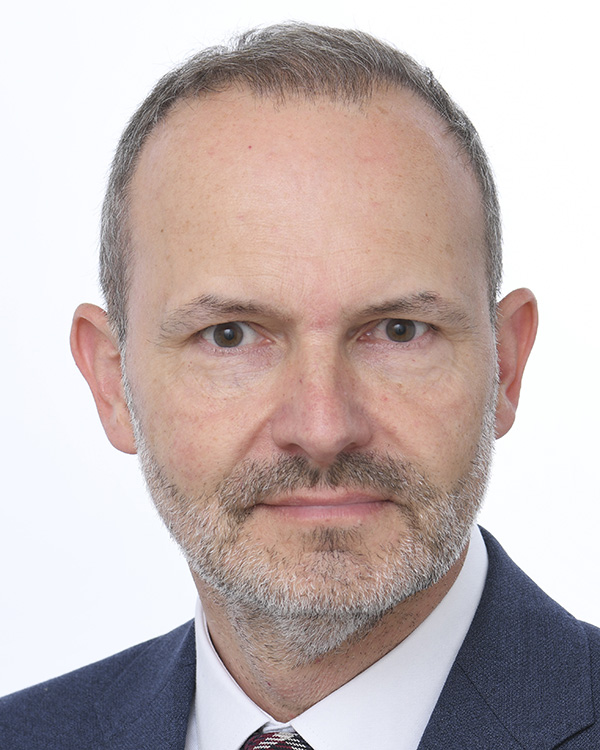






| Rank | Name | Country | Group | Speeches | |
|---|---|---|---|---|---|
| 1 |
|
Lukas Sieper | Germany DE | Renew Europe (Renew) | 487 |
| 2 |
|
Juan Fernando López Aguilar | Spain ES | Progressive Alliance of Socialists and Democrats (S&D) | 454 |
| 3 |
|
Sebastian Tynkkynen | Finland FI | European Conservatives and Reformists (ECR) | 451 |
| 4 |
|
João Oliveira | Portugal PT | The Left in the European Parliament (GUE/NGL) | 284 |
| 5 |
|
Vytenis Povilas Andriukaitis | Lithuania LT | Progressive Alliance of Socialists and Democrats (S&D) | 273 |
All Speeches (89)
The EU's role in combating the COVID-19 pandemic: how to vaccinate the world (continuation of debate)
Date:
24.11.2021 16:54
| Language: PL
Speeches
Madam President, I'm sorry. Commissioner, thank you very much. Globally, agile vaccination is one of our priorities in the fight against the pandemic. Only in this way can we effectively defeat COVID-19, which unfortunately mutates very quickly, and only in this way can we secure global supply chains by preventing uncontrolled closures of ports and factories. Increasing the level of vaccination in the world is therefore important both from the point of view of health and the economy. It is fair to say that the European Union has already done a great deal to deliver vaccines to low- and middle-income countries. At the beginning of this year, our contribution to COVAX was doubled to EUR 1 billion. At the same time, however, vaccination rates in low-income countries are still shockingly low, at only around 2%. It is crucial to improve the flow of raw materials necessary for the production of vaccines, as well as to support the expansion of local production capacities. Information campaigns for vaccination and protective measures should also be kept in mind. Finally, there is the question of the effective use of vaccines already produced. It is understandable that every country wants to secure the supply of vaccines to its citizens. However, while so many people are still waiting their turn, we cannot allow vaccines to simply remain in storage or be wasted. COVID-19 is of course our global priority, but we must also not forget about other diseases. AIDS, tuberculosis, malaria have not disappeared and fighting them during COVID-19 has become even more difficult. All programmes to combat these diseases should continue to be supported.
Common agricultural policy - support for strategic plans to be drawn up by Member States and financed by the EAGF and by the EAFRD - Common agricultural policy: financing, management and monitoring - Common agricultural policy – amendment of the CMO and other regulations (debate)
Date:
23.11.2021 09:37
| Language: PL
Speeches
Madam President, I'm sorry. Commissioner, thank you very much. The fact that today we are finalising the negotiations on the common agricultural policy, which are probably taking too long, is undoubtedly very good news for European farmers. They expected clear guidelines from us on how European agriculture will develop in the coming years. Undoubtedly, in many respects, the new Common Agricultural Policy can give European farmers positive signals about the sustainability of their incomes and production, as well as respond to the challenges of European climate policy. Nevertheless, I would also like to express, Commissioner, my concern about the future of agricultural production, which, according to independent studies, may fall by up to 25% as a result of too far-reaching restrictions, which poses a threat to our food security and will contribute to a significant increase in production costs. I also regret that it has still not been possible to fully equalise direct payments. The fact that the amount of aid does not take into account real production costs or current farming conditions is, in my view, a violation of competition rules and I therefore count, Commissioner, on further action by the Commission on this issue.
A European strategy for critical raw materials (debate)
Date:
22.11.2021 19:11
| Language: PL
Speeches
Mr President, thank you very much. Commissioner, thank you very much. I think everyone in this room is aware that the green transition and the achievement of Europe's climate targets are not possible without critical raw materials. Electric cars will not go without lithium in the batteries that drive them, windmills will not produce energy without generators that drive them, in which there is neodymium or dysprosium. I therefore believe that it is essential to ensure the security and security of supply of these raw materials and thus to allow their sustainable extraction in Europe, based on high environmental standards and proper working conditions. In this context, it is also important to involve local and regional authorities more closely in increasing the extraction and recycling of these raw materials in the European Union. We also need a strategic, comprehensive approach to critical raw materials, i.e. proper assessment of exports and imports, full use of the potential of existing mines or recycling. We also need to ensure adequate research funding to improve the efficiency of the use of critical raw materials and subsequent production processes.
The escalating humanitarian crisis on the EU-Belarusian border, in particular in Poland (debate)
Date:
10.11.2021 17:41
| Language: PL
Speeches
Mr President, thank you very much. Oh, High Commissioner! Ladies and Gentlemen, I am very pleased that this debate is taking place today in the European Parliament. I believe that the European Parliament reacted extremely quickly to the crisis at the external borders of the European Union, in the case of the borders of Poland, Lithuania and Latvia. But I would also like other European institutions to show the same reflexes. That is why I believe that a meeting of the European Council should be held very quickly, as a matter of urgency, at which the Heads of Government and the Member States of the European Union should decide on actions to try to end this crisis situation, because press briefings and Twitter activity are no longer enough here, and unfortunately the number of tweets written will not translate into an end to this conflict and this crisis. Moreover, I believe that all the members of the European Union would show great solidarity if they decided to co-finance the construction of dams at the external borders of the European Union. Over a month ago, more than a dozen Member States of the European Union called for this. And above all, the channels for the transfer of migrants must be blocked. And here we need a huge offensive by states, above all the High Representative/Vice-President of the European Commission and the President and President of the European Council.
Human rights situation in Myanmar, including the situation of religious and ethnic groups
Date:
07.10.2021 10:51
| Language: PL
Speeches
Mr President, thank you very much. Commissioner, I'm sorry. Ladies and Gentlemen, On February 1, the military carried out a coup d'état in Myanmar. Since then, there have been mass protests in the country, the participants of which demand the restoration of civilian power. Peaceful protests, however, are aggressively suppressed by the military. The forces that should defend their citizens from aggression have themselves become the aggressor. According to reports by human rights defenders, more than 900 people have already lost their lives there, including about 75 children, and several thousand protesters have been detained. The European Union is firmly on the side of democracy. The outcome of the election must be respected. Therefore, we demand the restoration of power to the government, which has received a mandate from the citizens to exercise it, and the release of the detained representatives of the authorities. The EU should also strongly demand an end to violence and repression against peacefully protesting citizens and the release of those arrested. Military leaders in Myanmar must be aware that human rights violations cannot be committed with impunity and that they are directly responsible for the current situation. Our response to repression, discrimination and violence against religious minorities, including Christians, is also extremely important. Freedom of religion must be guaranteed. The Union should take a firm position on this issue. We need a strong commitment from the Special Envoy of the European Union for the promotion of freedom of religion. Continuous monitoring of the situation is also necessary. I would like Parliament to be kept informed of developments in Myanmar and the situation of religious minorities.
The Council's lack of will to move the European cross-border mechanism forward (debate)
Date:
06.10.2021 20:33
| Language: PL
Speeches
– Mr President, I would like to thank you very much. Ladies and Gentlemen, In May 2018, as part of a package of four legislative proposals establishing a post-2020 cohesion policy framework, the European Commission published a draft regulation on a mechanism to resolve legal and administrative obstacles in a cross-border context. This Regulation provides for the establishment of a voluntary mechanism to remove legal obstacles in border regions, focusing on the land borders of the European Union at NUTS 3 level and covering joint infrastructure projects or services in a cross-border region. That mechanism would make it possible, inter alia, for the law of a neighbouring Member State to be applied in a Member State in a cross-border region where the law of the former would constitute a legal obstacle to the implementation of a joint project. The Committee on Regional Development adopted this document in November 2018, strengthening its voluntary nature and not excluding the use of similar alternative instruments. I would also like to stress that, in its position, Parliament has proposed that the decision to apply the European Cross-Border Mechanism should be taken on a case-by-case basis for each joint project and not, as proposed by the Commission, for the entire cross-border region. In addition, we have also extended the scope of the mechanism to all border regions of the European Union and proposed the creation of national cross-border coordination points. In February 2019, the European Parliament adopted its position at first reading, and in October of the same year, the REGI Committee decided to open interinstitutional negotiations. On the basis of the decision of the Conference of Presidents of 16 October 2019, the European Parliament decided to continue work on this document during the current legislature. That position shall remain in force. On 2 March 2020, the Council Legal Service issued a legal opinion on the proposal, including the choice of the legal basis for the proposal’s compatibility with the Treaties and the choice of the legal instrument and its voluntary nature, which was presented at the Working Party on Structural Actions. Despite preliminary discussions on this legal opinion and the way forward, the Working Party on Structural Actions decided on 10 May that the Council would not pursue work on this proposal. I must admit that this Council decision to actually conclude work on the establishment of a European cross-border mechanism is both sad and incomprehensible for me and for the REGI committee as a whole. The draft Regulation in question was presented as a result of the efforts of the Luxembourg Presidency of the Council. In this House, we have often gone through very difficult negotiations, in which finding a compromise was sometimes a small challenge, but also all these negotiations so far had a common denominator, which was mutual readiness for dialogue. I am deeply saddened that, in this case, the Council does not even want to sit down at the negotiating table. The essence of the functioning of the European Union is to discuss and find common solutions acceptable to all parties. In this case, the situation was different and the Council decided to block these negotiations instead of presenting its reasons during the joint negotiations and trying to find a compromise solution. I would therefore like to ask when will the Council unblock the legislative process concerning this mechanism and what was the exact reason for its decision to actually block it? Has the Council taken note of studies and studies clearly indicating the negative consequences of not adopting the proposed Regulation and what is the Council proposing as an alternative to this instrument to address cross-border problems? I believe that the European cross-border mechanism is a solution that will remove unjustified administrative barriers and facilitate the implementation of projects from which people living in cross-border regions will benefit on a real daily basis. The mechanism could be a tangible example of how the European Union works close to the citizen. I would also like to recall that it is estimated that the implementation of the Regulation could help overcome at least 30%, and probably even 50%, of the obstacles to cross-border cooperation identified. The European Parliament remains ready for negotiations and open to various possible solutions. I therefore appeal to the Council: Let's sit down at the negotiating table and talk. I am sure that even if it is not easy, we will finally find together an effective solution that our regions are waiting for.
The state of play on the submitted RRF recovery plans awaiting approval (debate)
Date:
06.10.2021 18:42
| Language: PL
Speeches
Madam President, I'm sorry. Mr. Commissioner, I'm sorry. Ladies and Gentlemen, During this debate, we talk a lot about the rule of law, about respect for the law, about principles. And this is very important, because this is the foundation of the activities of every Member State and every EU institution. But have we wondered what this case looks like from the point of view of the beneficiaries of this fund, those who are to benefit from the national recovery plans, also in my homeland, Poland. Because they all, without exception: entrepreneurs, farmers, local government officials, employees of the health care system, they are all concerned about the dispute between the government of Prime Minister Morawiecki and the European Commission. They are concerned about the consequences of Prime Minister Morawiecki’s application to the Constitutional Court, which, in my opinion, is completely unfounded. They also ask questions. They ask the question, not only when they will finally get the promised money, but exactly what for. Because, apart from vague statements in the National Recovery Plan, they see absolutely nothing. They don't know what they're doing, they don't know who they're doing. They don't know how much, at what level. They just don't know anything. And now the question arises, which they also ask: Who will decide on the distribution of this money? What will the process of socializing these decisions look like, so that this money actually goes where it is actually needed? Will this money also go to those most affected by the COVID-19 pandemic? Because, as the name suggests, we are to rebuild what is destroyed and ruined. I am glad that we will be investing in priorities and areas that are to bring us added value in a dozen or several decades. But we must not forget about those whose lockdowns deprived not only the opportunity for development, but also the current activity. And that's what people are interested in.
EU Road Safety Policy Framework 2021-2030 – Recommendations on next steps towards "Vision Zero" (debate)
Date:
04.10.2021 21:33
| Language: PL
Speeches
Mr President, thank you very much. Commissioner, I'm sorry. Ladies and Gentlemen, Every year in the European Union there are nearly one million road accidents, in which about 23,000 people lose their lives. Only in my country, Poland, nearly two and a half thousand people lost their lives on the roads last year. Despite significant improvements in recent years, the scale of this phenomenon is still huge and frightening. Therefore, further intensive efforts are needed to improve road safety. Being realistic, I know that we will probably never be able to completely eliminate road accidents. However, we must strive to ensure that accidents, if they happen, do not cause death or serious damage to health. To this end, action is needed, on the one hand, to improve the quality of road infrastructure, which should ensure the safety of road users as much as possible. On the other hand, we need to ensure that vehicles on the road are equipped with technologies that support the driver in safe driving. I am pleased that from May next year additional safety systems – such as intelligent speed assistance or advanced emergency braking – will have to be installed in new vehicles, which I hope will contribute to reducing the number of accidents.
The case of human rights defender Ahmed Mansoor in UAE
Date:
16.09.2021 11:22
| Language: PL
Speeches
Madam President, I'm sorry. Commissioner, I'm sorry. Ladies and Gentlemen, This is not the first time that the European Parliament has considered the case of Ahmed Mansur, a human rights defender and activist who received the Martin Ennals Prize for Human Rights Defenders in 2015 for his many years of work. In 2017, Ahmed Mansur was arrested and sentenced to 10 years in prison. This judgment was later upheld by the Supreme Court. The allegations against Ahmed Mansur are defamation, public disorder, and incitement and propagation of hatred. However, the Office of the United Nations High Commissioner for Human Rights (UNHCR) said the arrest of Ahmed Mansur and his sentencing to 10 years in prison may have been in retaliation for his involvement in UN human rights efforts, as well as his criticism of the UAE authorities. We cannot remain indifferent to this fact. The United Arab Emirates is a very important partner of the European Union in the Persian Gulf, which continues its cooperation within the framework of the UN, and has inscribed in its constitution a guarantee of freedom of opinion and freedom of assembly. The UAE authorities have also repeatedly reiterated their readiness to make further progress in the protection of human rights. It is a partner with whom we can and should talk. It is therefore of the utmost importance to conduct a human rights dialogue between the European Union and the United Arab Emirates. We should continue this dialogue and focus in particular on issues such as freedom of expression, the free functioning of independent media and the right to information. In addition, I believe that we should involve the UAE authorities in the debate on this particular case, the case of Ahmed Mansur, and also call on the UAE authorities to reconsider his case and guarantee him a fair trial with the possibility of external observers. We also ask the United Arab Emirates to ensure that Ahmed Mansur is treated in accordance with the fundamental principles of the United Nations on the treatment of prisoners, the so-called Nelson Mandela principles, and in particular that he has access to medical care of the same standard as free persons, access to medicines and the possibility of contacting his family or his defender. It should be stressed that it is very important that the United Arab Emirates respects its international human rights obligations and guarantees freedom of expression, which is also enshrined in the Arab Charter on Human Rights. We should therefore strongly support all reforms carried out by the United Arab Emirates to better protect human rights and citizens' freedoms. At the same time, care should be taken to maintain good relations between the European Union and the United Arab Emirates, as such relations allow for more intensive political dialogue, more effective Union interventions on important issues, as well as cooperation and dialogue on key mutual interests in important areas such as security, stability in the Middle East or the fight against terrorism. The European Union should continue to closely monitor and raise the case of Ahmed Mansur in its dialogue with the United Arab Emirates, calling for a reconsideration of his case.
Fair working conditions, rights and social protection for platform workers - New forms of employment linked to digital development (debate)
Date:
13.09.2021 20:08
| Language: PL
Speeches
Madam President, I'm sorry. Mr. Commissioner, I'm sorry. I have the impression that we are still discussing platform work as a kind of novelty, when in fact it has been with us for a long time and every tenth citizen of the European Union has already had such experience. It should also be expected that its popularity will only grow, as platforms offer many opportunities for business development and are valued by consumers. The COVID-19 pandemic has also shown that this rather flexible form of employment has worked well in difficult times and has allowed many workers to retain or find new employment. However, there is still a lack of legal clarity on the status of platform workers, which may pose a threat to their social protection, job security and predictability. I am therefore pleased that the Commission has announced a communication on this issue and that our report and today's debate are coming at the right time. First of all, I believe that platform work is not a uniform concept and currently covers both de facto contractual service providers and the self-employed who wish to remain so. Any new rules must therefore take into account these specificities and ensure adequate flexibility. I therefore support the provisions negotiated in the report. In the event of a dispute between an employee and an employer, the latter will bear the burden of providing evidence as to the employment status. In the second option, retain the status of an employed person for a person who prefers this form of work.
Mr President, thank you very much. Commissioner, I'm sorry. Ladies and Gentlemen, On June 30, a year passed since the adoption of the controversial National Security Law of the People's Republic of China in Hong Kong. Even then, in a resolution, the European Parliament pointed out that the new law violated the ‘one country, two systems’ principle, but also entailed the risk of restricting civil rights and freedoms. Unfortunately, our fears have come true. A year after the controversial law was passed, Hong Kong has changed beyond recognition. National security issues have become a pretext to justify the censorship, persecution and arrest of representatives of the democratic opposition and activists. The last bastion of free journalism has just collapsed. The last pro-democracy and independent Apple Daily newspaper was forced to close, and its founder and employees face much greater consequences than just losing their livelihood. The European Union should take a firm stand for the protection of human rights and democracy in its relations with China. We must call on China to release all those arrested on charges under the National Security Law, withdraw controversial legislation, respect the ‘one country, two systems’ principle, as well as freedom of expression, including independent journalism and the right to protest. We should also introduce targeted sanctions against those responsible for human rights violations. It is also very important to involve European diplomatic staff in Hong Kong itself, e.g. by observing trials and supporting activists.
Sustained price increase of raw and construction materials in Europe (debate)
Date:
08.07.2021 10:32
| Language: PL
Speeches
Madam President, I'm sorry. Commissioner, I'm sorry. Ladies and Gentlemen, The prices of building materials have been showing continuous upward trends for a long time. In the case of Poland, the prices of wood, especially OSB, polystyrene, aluminium or drywall, have increased particularly drastically. With regard to wood prices, we are talking about 40% increases, and the prices of some materials have even doubled. This situation is the result of a number of factors, such as the imbalance of demand and supply on the market and the resulting shortages of building materials, as well as higher energy transport and labour costs. This situation has very negative consequences for both manufacturers of construction companies and developers, as well as consumers. With regard to entrepreneurs, this causes huge difficulties in planned production, delays and loss of predictability of production and costs, as well as the need for increases and a threat to the competitiveness of companies. Consumers, on the other hand, have to deal with significantly longer delivery times or lack of availability of selected materials and much higher costs of renovations, buying a house or flat. We must remember that the prices of building materials are over 50% of the cost of each residential property. Moreover, the increase in prices and significant delays will have a very negative impact on investments under cohesion policy or the Recovery Fund. I therefore consider it necessary to take action to counteract this situation, including an in-depth analysis by the European Commission of the reasons for such price increases and possible recommendations on the matter.
A new ERA for Research and Innovation (continuation of debate)
Date:
07.07.2021 19:31
| Language: PL
Speeches
Mr President, thank you very much. The proposal for a new European Research Area promises to continue and strengthen many of the activities undertaken so far, e.g. in the field of mobility of researchers, scientific cooperation and access to infrastructure. Despite the progress already made, European science still faces some challenges. One of the most important is the need to eliminate disparities and gradually increase public funding for science. However, in order for Europe to compete in terms of research, it is also important to stimulate private sector investment. One of the incentives may be the announcement of a unitary patent, which is to be more transparent and affordable for entrepreneurs and thus may translate into an increase in their readiness to engage in research activities. I am also pleased that the Commission is planning to lead the development of joint technology action plans with industry. This will allow the strategy to be better tailored to its needs and faster implementation of research results in the economy.
Situation in Tigray, Ethiopia (continuation of debate)
Date:
06.07.2021 19:48
| Language: PL
Speeches
Mr President, thank you very much. Mr. Commissioner, I'm sorry. The conflict in the Tigray region has had a brutal impact on the civilian population. According to reports by international human rights organisations, there have been mass murders of civilians, human rights violations, acts of violence against civilians, including rape. In addition, the conflict has led to the mass displacement of up to one million seven hundred thousand citizens of the Tigray region, a region completely cut off from communications, the internet and a huge humanitarian crisis. According to the UN, as many as 5.5 million people need food and as many as 10% of children are extremely malnourished. At the same time, the delivery of aid to the region is hampered not only by a lack of electricity, telecommunications and access to fuel, but also by road closures and the impossibility of transport. We must strongly call on the Ethiopian authorities to enable and facilitate the delivery of humanitarian aid to the Tigray region and other areas in need of support. In addition, it is also very important to investigate all killings and human rights violations, including cases of excessive use of force against civilians.