
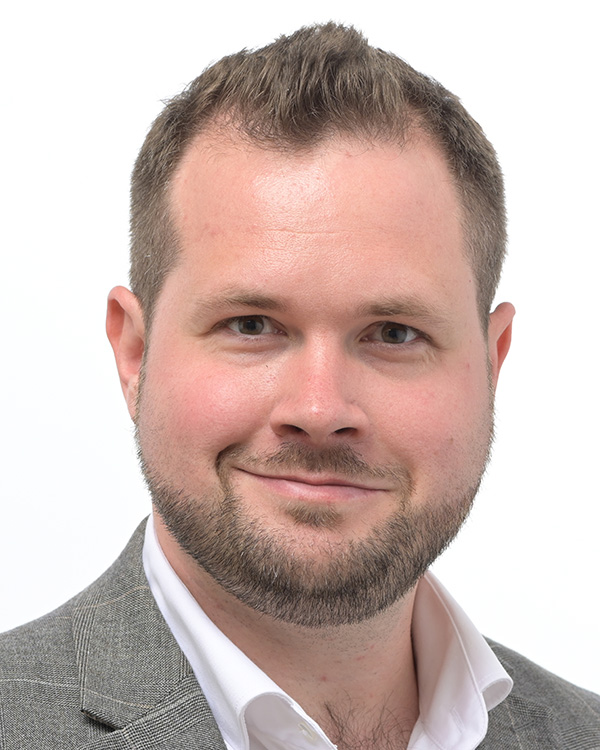





| Rank | Name | Country | Group | Speeches | |
|---|---|---|---|---|---|
| 1 |
|
Lukas Sieper | Germany DEU | Non-attached Members (NI) | 390 |
| 2 |
|
Juan Fernando López Aguilar | Spain ESP | Progressive Alliance of Socialists and Democrats (S&D) | 354 |
| 3 |
|
Sebastian Tynkkynen | Finland FIN | European Conservatives and Reformists (ECR) | 331 |
| 4 |
|
João Oliveira | Portugal PRT | The Left in the European Parliament (GUE/NGL) | 232 |
| 5 |
|
Vytenis Povilas Andriukaitis | Lithuania LTU | Progressive Alliance of Socialists and Democrats (S&D) | 227 |
All Contributions (118)
Iran: one year after the murder of Jina Mahsa Amini (debate)
Mr President! The Islamic regime of terror does not only have power where it is at home. It also has power right here on European soil, where they have been behind murder and terror and, most recently through the Organisation of Islamic Countries, have demanded that countries like Denmark and Sweden restrict our freedom of expression in order to respect the religion of Islam. A ban that the Swedes have courageously resisted, but the Danish government has chosen to give in to. A ban, which means that the Danish-Iranian refugee artist Bazrafkan can no longer exhibit the works in which she fights against the apartheid against women that takes place on a daily basis in Iran. What has been the European Commission's response? Has it been to support Denmark and Sweden in the fight for freedom of expression? Has it been that Iranians living on European soil can protest against the regime? No, the response from the Commission has been support for the Islamic forces, support for Iran in limiting the freedom of expression of artists here in the European Union, in exchange for a little peace for Islam. The truth is that Bazrafkan now feels not only incapacitated when she was Iranian, but also incapacitated as a European living in a European country. With the support of the Commission, it supports the Islamists. I'm saying no, thank you. It's unworthy.
Ambient air quality and cleaner air for Europe (debate)
Mr President! It is incredible that one cannot find a single problem that does not require the EU to have more power. But what has happened when the EU has been waiting for the EU in the environmental context? It has been the case that bureaucracy, opaque decision-making procedures, have always meant that too little has been done late. The best thing that could be done for the environment at European level was that we all went home, took a long holiday and let the nation states do the job. In Denmark, we currently have a PFAS scandal. Instead of acting on the part of the government. Prohibit PFAS substances. They say, "Let's wait for Europe." Should we wait three, five or ten years, as we should with phthalates, as we should with other environmentally damaging and disease-causing substances. We don't know. But it is obviously always better to wait for the dormant and inefficient bureaucracy here in Brussels than it is to take national action. I'm against that. I believe that if we are to do something good for the environment, it will be done most efficiently, most flexibly and most controlled by action in the nation states. Let's put the effort there.
Public access to documents – annual report for the years 2019-2021 (debate)
Mr President! The EU prides itself on its so-called democratic legitimacy. That we should be a beacon of democracy must be said to be punctured by the debate here today. Because can we speak of a genuine democracy if there is no access, public access to review our decisions, to review how we spend taxpayers' money? After all, it is completely insane to find that someone wants to reduce the issue of access to documents to a question of percentages in a spreadsheet. If the documents that are handed over are filled with black boxes so that you cannot read them, and if the most central documents, the ones that could most critically uncover scandals and crises in the EU, they are completely kept from being handed over, then it does not matter that you hand over all the harmless, all the things that make the Union stand in a better light. It is not a watermark for a truly democratic institution, and it gets even worse when we look at the SMS gate. In Denmark we have had a similar situation, but the Prime Minister and the Prime Minister's Head of Department had to delete the text messages, because in a genuine democracy, you know that text messages are part of the access you can get. This is not the case here in the EU. So we ended up with a bill after corona. Month after month, year after year, we pay hundreds of millions in billions for vaccines we don't need. But we cannot know from what background these contracts have been concluded and how close is a relationship that has been between the President of the Commission and the private companies. It is a scandal, and it is a scandal, that this House has not taken any action and has distrusted the Commission on this basis.
Nature restoration (debate)
Mr President! When you take the words of the left and the green NGO world at face value in this debate, we are in a huge biodiversity crisis. The first natural question is: How did we get there in Europe? Agriculture policy, Fisheries policy, has always been the exclusive competence of the European Union. So if you think that it is fisheries, if you think that it is agriculture that has the main responsibility, then the responsible regulators are responsible for the situation we are in, in this Chamber, in the Commission, in the Council. What is your response to this crisis? Give us more power! Give the EU the power to decide even more! Let us give a blank cheque to the Commission, let us give a blank cheque to the European Court of Justice to assume more competences on behalf of the Member States! I believe that nature is best saved where it is lived, in the local environment, out there where you have a relationship with it. Not among the big cities of Europe, as has been pointed out here, but among those of us who actually live in rural areas. This is where nature is saved, not from a glass palace in Brussels and Strasbourg, which has itself created the problems of their exclusive competence in these areas.
Industrial Emissions Directive - Industrial Emissions Portal - Deployment of alternative fuels infrastructure - Sustainable maritime fuels (FuelEU Maritime Initiative) - Energy efficiency (recast) (joint debate - Fit for 55 and Industrial Emissions)
Madam President! It's as if in this house you think that when you want to save the planet, save the green transition, save the climate, it's about politicians sitting in a room and finding the wise stones. It is a question here, with the special interests that exist, of 'picking the winner', of releasing industries that are close to oneself or that have a national interest, and of coming up with a huge bureaucratic monster of a legislative complex that, in the real world, will only delay and cost the green transition. It is not that we have to go back to the Stone Age in terms of our consumption, or that we believe that we in Europe can solve the climate challenges alone that will save the planet. What will save the planet is if we manage to create the innovation power, manage to create a technology-neutral desire for innovation in the free market. That is how humanity has risen over and over again – not through bureaucracy, not through parliamentary regulation and gold-plating, but through the free initiative of rational, technology-neutral regulation. This is what Europe and the world need, and this is what we do not deliver in this house.
Artificial Intelligence Act (debate)
Mr President! The debate we have here today on artificial intelligence is one that is filled with ethical dilemmas and difficult questions. On the one hand, there is no doubt that technology has an incredible ability to potentially improve people's living conditions, could streamline large parts of the activity that takes place both in the private sphere, but also in the business world. But on the other hand, there are also some potential drop groups that can be deeply problematic. Especially the protection of minors. The concern about the so-called 'deepfakes' seems to me to be quite real and something that requires rational regulation, and that is why we are also willing to look positively at the regulation that is being put forward to see if a sensible direction can not be found at European level in relation to the regulation of artificial intelligence. One of the concerns we have, however, is that when we look historically at our regulation of tech giants, there has been too little protection for freedom of expression. There has been a tendency to go very hard to the tech giants, and this has often led to censorship and self-censorship on the part of the tech giants, which has been a distortion of democracy and fundamental rights for the users of the platforms in question. Therefore, we have a great and real concern, when we enter into the regulation of tech giants around the technological area, that we also ensure the protection of fundamental rights, including freedom of expression in our regulation, so that it is above the business regulation, which of course must be of this new area.
This is Europe - Debate with the President of Cyprus, Nikos Christodoulides (debate)
Mr President! Year after year, the farce continues with Turkey's candidate status as a potential EU country. That is, the very same Turkey that has just re-elected the despot and Islamist Erdogan to the presidency. The very same Turkey that, year after year, bribes and blackmailes and threatens Europe to give him billions and billions and billions of Europeans' tax dollars. Turkey occupies one-third of the country's territory by the end of the decade. How long will the farce last? How long should we continue to pretend that Turkey belongs to the European Union? How long should we continue to print a completely coverless check for Islamist Erdogan and his regime in Ankara? It must have an end. It has to have an ending. It has to stop. Turkey's candidate status must end.
Foreign interference in all democratic processes in the European Union, including disinformation - Election integrity and resilience build-up towards European elections 2024 (debate)
Madam President! Any attempt to go against democracy and go against the democratic rules of the game is of course problematic, and therefore one should not accept misinformation or disinformation either, but I have the feeling, when I hear the debate in this Chamber today, that it is mostly about the disinformation that goes against the majority. Granting huge sums of taxpayers' kroner to propagandize for the EU just before an EU election, you have all been for that. The fact that speaking time in this parliament may well be exceeded if you say something nice about the union, but is interrupted if you say something less nice, you have no problem with that. Imposing fines on political opponents for using their freedom of expression in the European Parliament seems to be a good way to bring up those Members who have been elected by the electorate but with whom you disagree. So if you really want to fight misinformation and disinformation, then you have to pay tribute to freedom of expression. During the Cold War, Russia had far more misinformation than we see today. Yet we did not throw communists at the universities in prison in Denmark. We did not stop the Communist Party from running, we used our freedom of expression to fight the idiot. And it is freedom of speech that is the best sunlight, not your control over those with whom you disagree.
Council of Europe Convention on preventing and combating violence against women and domestic violence – EU accession: institutions and public administration of the Union - Council of Europe Convention on preventing and combating violence against women and domestic violence - EU accession: judicial cooperation in criminal matters, asylum and non-refoulement (debate)
Mr President! First of all, it is strange that the questioner gets so much extra speaking time, but I have to be brief. These are not things that are not factually based. The Danish statistical agency, the official “Statistics of Denmark”, clearly documents that there is a much higher crime rate from migrants from the Middle East and from North Africa. And I would very much like to send that to the questioner, but also to Parliament, if you want to go deeper into the question of how much over-representation in crime statistics comes from certain Muslim-dominated countries.
Council of Europe Convention on preventing and combating violence against women and domestic violence – EU accession: institutions and public administration of the Union - Council of Europe Convention on preventing and combating violence against women and domestic violence - EU accession: judicial cooperation in criminal matters, asylum and non-refoulement (debate)
Madam President! Murder of women. Rape of women. Violence against women. Circumcision of women. Treating women as second-class citizens is all fundamentally unacceptable. All of which should be banned and are banned in the vast majority of civilized countries and all of which should be punished much more severely than is being done today in European countries. However, this is not something we can do anything about here in the European Parliament. It is a national competence to make sure that criminal laws are "up to date" and are as harsh as the punishments for the crimes you commit justify, and that is why it is a frontal fallacy that we are spending our energy on this. If we do so anyway, it is disgraceful that so little energy is being spent on the harmful influence Islam has had on the position of women and the rule of law in European countries with the mass immigration that a large part of this house has welcomed, indeed still promotes, as part of Europe's solutions. When I look at my own homeland, Denmark, there is no doubt where the male chauvinist culture is dominant. Where you are in favour of female genital mutilation, where you send girls on a re-education journey to Middle Eastern and North African Islamic countries, where there is widespread domestic violence, and where there are unfortunately also many examples of murder and rape in Denmark. It must be fundamentally addressed in the EU that Islam is a harmful influence not only in general, but especially in relation to the legal position of women and the rights of girls. (The speaker agrees to answer a blue card question)
This is Europe - Debate with the Chancellor of Germany, Olaf Scholz (debate)
Madam President! Mr Bundeskanzler Scholz. Your visit to the European Parliament is a reminder of the detrimental effect that German migration policy has had on Europe. Their coalition government with Merkel and the ‘wir schaffen das’ policy led to more than one million illegal migrants in Germany and many more across the European continent. Unfortunately, that policy remains under your leadership. A policy that destroys European unity, that destroys European culture and that challenges the cooperation that must make Europe strong. Cooperation between independent and free nation-states. Therefore, as a neighbouring country to Germany, we urgently need to ask that reason be limited in the Bundestag and that the naïve, harmful and hopeless approach to migration, which for decades has characterized German and, unfortunately, also European policy, be stopped.
This is Europe - Debate with the Prime Minister of Luxembourg, Xavier Bettel (debate)
Madam President! Prime Minister! The refugee and migrant crisis in Europe is once again completely out of control. We see women, men and even children drowning in the Mediterranean every day. We see time and time again that the people smugglers and despots living in our neighbourhood in Turkey, in North Africa, are only getting richer and richer. And we are seeing the cultural impact that so many welfare migrants – as most of those who come to Europe are when we look at asylum rates – have here on the continent, on the peoples of European countries, on cohesion and on the community. That is why we in the Danish People's Party and the ID group have long had a solution that solves the problem. We know: The Australian push-back model of asylum processing in third countries will effectively address the challenges of crime, irregular migration and the cultural impact it has on the European continent. We in the Danish People's Party are pleased that the Danish government, which is made up of good colleagues from the European Parliament such as the Danish Social Democrats, the Liberal Party and the Moderates who sit with Renew, is now officially in favour of introducing some kind of Australian model at European level. That is why we also hope that the Danish Government's proposals can be taken forward in the Council, because we know how hopeless this Parliament is when it comes to tackling the real problems when it comes to the European migrant challenge. The problem is that the weakest refugees, those who have the worst, those who do not have the means to smugglers, those who cannot get through the desert, all those who really need our protection, we leave them in the camps, where against the strong, those who have the means, those who can help smugglers with their nasty business model, they get far too much access to Europe. At least I hope that Luxembourg will wake up and follow the Danish example.
EU Rapid Deployment Capacity, EU Battlegroups and Article 44 TEU: the way forward (debate)
Madam President! It would be less than a year before the golden promises of the 'yes' parties and violent scaremongering, which convinced the Danes to abolish our defence reservations, led to a masquerade here in the European Parliament. For now it is clear what you want. The future of EU defence cooperation must be a standing force, a rapid reaction force of 5,000 men is Parliament's wish. A standing military headquarters in Brussels and, in general, a desire for Member States not to use their right of veto in the field of defence. Indeed, there is indeed a wish in this House that we should move entirely to majority voting in the field of foreign and security policy, and this in an extremely difficult security policy situation. A situation where most people in this house completely misunderstood and misread aggressive Russia. I was sitting here fighting to implement the NordStream 2 pipeline so that we can get more Russian gas into the European Union. What a mistake it turned out to be. What a mistake it turned out to be to become more dependent on Russian energy by shutting down large parts of the European nuclear sector. Generally speaking, security policy has made mistakes here in the European Parliament, but yet the answer is: Give us more power. This time in defense. And the answer from the Danish People's Party and the ID Group is a nice 'no thank you'. We believe that the nation states are better at anchoring security policy, especially after Macron's extremely damaging visit to China. A visit where one of the EU's largest Member States, France, chooses to leave the American alliance and stand between China and the United States. In my opinion, there is no doubt. The aggressors are Russia and China. It's not the United States. Let us focus on NATO, on our security anchored there. And let us then abandon the idea that this Union should have anything to do with security and foreign policy.
Energy storage (debate)
Madam President! European energy planning has proved to be a disaster with fatal consequences for the ordinary European, the ordinary Dane. The green forces in this House have spent all their energy on combating efficient green energy such as nuclear power. Yes, we have seen this week that Germany closed its last nuclear reactors after green pressure. It has created a much greater dependence on Russian gas, Russian oil. Absolutely naive, totally flawed, but unfortunately a policy that was mainstream in this house until quite recently. If we really wanted the green transition to benefit future generations, our children, our grandchildren, then technology is the way forward. Denmark is a leading country when it comes to wind energy. But the fact is that all the wind energy we are planning in the North Sea is not of great help without efficient energy storage, without "Power-to-X" technologies, without everything we lack today. So the solution to the green crisis is not the fantasies of the left to go back to living standards, to become more dependent on despots and dictators. No, the solution is what has always saved the Western world: new innovation, new technology and more research.
Strengthening the application of the principle of equal pay for equal work or work of equal value between men and women (debate)
But the paradox is that if legislation could have solved this, it would have solved it. Discrimination on the basis of gender is prohibited. This legislation has been in the EU as in Denmark for many years. So if we could solve this by sitting in this House and passing new legislation that just adds more bureaucracy, why was it not solved 20, 30 and 40 years ago? I can only refer to the fact that one of the largest Danish trade unions, HK, has investigated the issue and came to the conclusion that there is a pay gap, but cannot clearly define how one wants to solve it, and therefore I do not believe that the bureaucratic path is the way forward. You do, and that is the difference between whether you are a European federalist or whether you believe in the nation states' ability to handle these areas best.
Strengthening the application of the principle of equal pay for equal work or work of equal value between men and women (debate)
Mr President! We see time and time again, when we in this House try to throw ourselves into good cases to solve problems, that it ends up in a paternalistic over-bureaucracy, which will impose a large amount of costs on companies, but where the result in terms of higher equality and closing the gap between men's and women's pay is highly questionable. And that is why it is tragic when the European Union throws itself into matters that are best managed and safeguarded in the nation states. At the same time, when you as a Dane stand here, it is deeply worrying to see how the EU repeatedly moves into the area of social rights in the area of employment, where we in Denmark have a Danish model that has proven far superior to what you want in this house. That is to say, politicians and legislators must find ways of solving the problems of the labour market rather than the social partners, workers and employers. But if you want to look at a country where there is great equality between the sexes, where there are high wages and where there are orderly conditions in the labour market, then you should probably look to Denmark, where we do not regulate this kind of thing with law and bureaucracy, but with sensible agreements. (The speaker agreed to answer a blue card entry)
Preparation of the Special European Council meeting of February, in particular the need to develop sustainable solutions in the area of asylum and migration (debate)
Mr President! Unfortunately, it is nearing tragicomic to witness the debates that we have year after year about illegal migration to Europe. In 2016, the EU clearly showed that the seriousness of the situation could not be overcome. The seriousness that led to tens of thousands of irregular migrants fleeing all the way up through Europe. And what happened in the meantime? Very little. Last year alone, more than 300,000 came to Europe illegally. More than half of those seeking asylum are rejected. But they also know, when they see the statistics from the EU, that the chance of being sent home – even with a refusal of asylum – is negligible. That is why, unfortunately, it is a big mistake to talk here about European solutions to the asylum problem, because Europe has failed. All that works is to allow the Member States to continue to maintain their national border controls and to work towards a truly solidarity-based solution. A push-back model, like the one we know from Australia, where we do not keep giving people false hopes that you can illegally come to Europe and settle, but actually take effective action against human trafficking and the crime that it entails.
Implementation of the common foreign and security policy - annual report 2022 - Implementation of the common security and defence policy - annual report 2022 (debate)
Mr. President! The European Union in general and this House in particular, the European Parliament, have had an incredibly unfortunate hand when it comes to foreign policy. I have witnessed dozens of debates in this House that have promoted the import of Russian gas over the security interests of Europeans, that have had an incredibly naive approach to dictatorships such as Russia and China, and that have spent far too much of their energy on foreign policy to differentiate themselves from the United States and, incidentally, to be very anti-American in the whole approach to foreign policy. Even today with the war in Ukraine, leading European countries, such as France and Germany, will continue to be reluctant, for example, to supply tanks that Ukrainians are very much looking for. That is why it is absolutely insane to hear that the answer to Europe's foreign policy challenges is to give the European Union and the European Parliament more power. The answer is to let the nation states coordinate the best possible defence of our security through NATO and with a strong US backing.