


| Rank | Name | Country | Group | Speeches | |
|---|---|---|---|---|---|
| 1 |
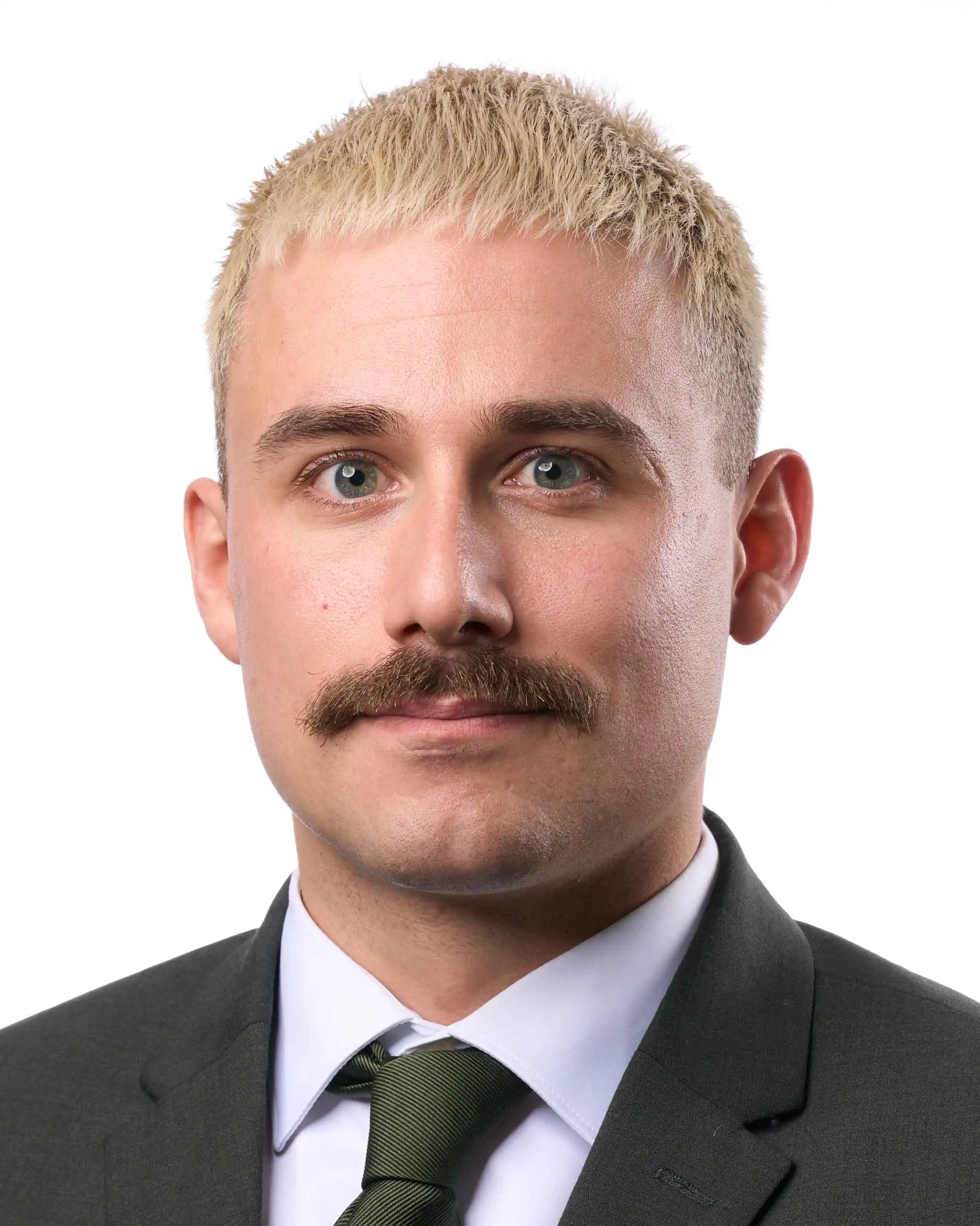
|
Lukas Sieper | Germany DE | Renew Europe (Renew) | 494 |
| 2 |
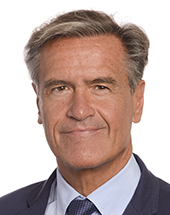
|
Juan Fernando López Aguilar | Spain ES | Progressive Alliance of Socialists and Democrats (S&D) | 463 |
| 3 |
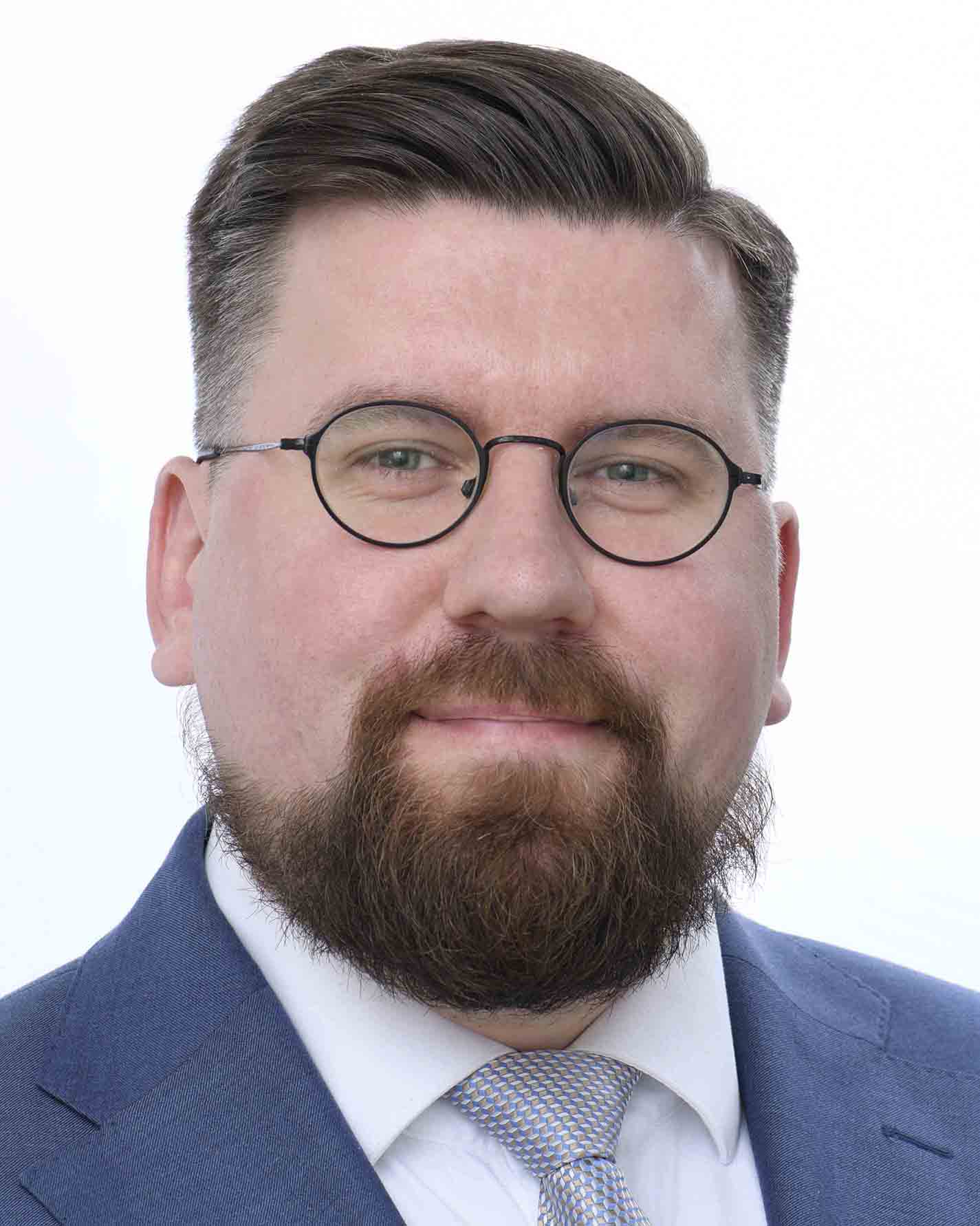
|
Sebastian Tynkkynen | Finland FI | European Conservatives and Reformists (ECR) | 460 |
| 4 |
|
João Oliveira | Portugal PT | The Left in the European Parliament (GUE/NGL) | 288 |
| 5 |
|
Vytenis Povilas Andriukaitis | Lithuania LT | Progressive Alliance of Socialists and Democrats (S&D) | 276 |
All Speeches (41)
Use of technologies for the processing of data for the purpose of combating online child sexual abuse (temporary derogation from Directive 2002/58/EC) (debate)
Date: N/A | Language: IT Written StatementsSexual abuse and exploitation of children, online and offline, are one of the most serious and intolerable violations of fundamental rights, whose victims risk seeing their lives dramatically scarred forever. Over the last decade, the EU has seen an impressive increase in reports of child sexual abuse online, setting the sad world record for hosted child sexual abuse material in 2019. The pandemic has further exacerbated the situation: Demand for child sexual abuse material has grown by up to 25%, leading to new abuses. There is therefore a need for an all-encompassing approach, including prevention, repression, protection and support to victims, and involving the public and private sectors, including online service providers. The temporary derogation from Directive 2002/58/EC allows them to continue to use technologies to detect, report and remove child sexual abuse and exploitation, tools that have so far proven valuable in identifying victims and also in preventing abuse. Long-term European legislation is now needed, outlining a common framework for an increasingly effective fight against these crimes, including through the creation of a dedicated European centre, as called for by the Intergroup on the Rights of the Child and the European Parliament.
International Day of Education, fighting inequalities in access to education (debate)
Date:
11.02.2026 16:16
| Language: IT
Speeches
Madam President, ladies and gentlemen, Commissioner, the right to education is a fundamental human right, enshrined globally in the 1948 Universal Declaration of Rights and the 1989 International Convention on the Rights of the Child. Yet today, still today, due to situations of poverty or extreme hardship, too many children and young people in Europe and in the world do not attend or leave school, remaining without education and prospects for the future. This is unacceptable. Well then theEducation Package, announced by the Commission, which includes a programme to support students, support teachers whose role in training and educating young people is key to modernising schools and, as you have said, to strengthen digital education for students to develop a critical spirit so that they can safely surf the net, in line with the 2030 roadmap on the future of digital education and skills, which will, among other things, promote artificial intelligence literacy and resilience to disinformation. Ensuring access to education, inclusive and quality education is essential not only for the personal, social and professional development of our children, but is a necessary condition for breaking the chains of inequalities, for socio-economic cohesion and for building a more just and sustainable society.
Presentation of the action plan against cyberbullying (debate)
Date:
10.02.2026 17:38
| Language: IT
Speeches
No text available
Extreme weather events in particular in Portugal, southern Italy, Malta and Greece: European response in strengthening readiness, preparedness and solidarity mechanisms (debate)
Date:
10.02.2026 10:25
| Language: IT
Speeches
No text available
Extreme weather events in particular in Portugal, southern Italy, Malta and Greece: European response in strengthening readiness, preparedness and solidarity mechanisms (debate)
Date:
10.02.2026 10:23
| Language: IT
Speeches
No text available
Murder of Mehdi Kessaci - urgent need for ambitious European action against drug trafficking (debate)
Date:
15.12.2025 17:57
| Language: IT
Speeches
Mr President, Commissioner, ladies and gentlemen, the murder of Mehdi Kessaci, tragically a few years after the murder of Brother Brahim – and my closeness to their family – reminds us of the urgent need for ambitious and coordinated measures at European level against drug trafficking. As the EU Drugs Agency points out, we all, directly or indirectly, suffer the impact of drug trafficking in terms of social, health and security costs, with violent and unscrupulous organised crime, which increasingly enlists young and very young people for even serious crimes. I would like to thank the Commission for the new strategy and the new action plan, which provides for the introduction of more modern and stricter rules against organised crime, the strengthening of Europol and Frontex support to national authorities in combating drug routes, but also in preventing the online recruitment of children, the intensification of police and judicial cooperation, including with third countries – starting with those of Latin America – and, again, the strengthening of port security, the fight against the spread of synthetic drugs, which are growing and increasingly dangerous, and then the establishment, at Eurojust, of the European judicial network in the field of organised crime, whose priority is precisely to combat drug trafficking. All these measures must be stepped up and implemented quickly to protect the health and safety of citizens and to remove from criminal groups what has always represented drug trafficking: A source of huge profits.
Mr President, ladies and gentlemen, we are well aware of this: The Internet is now an integral part of the lives of our children and adolescents. There are many opportunities, of course, but an early and excessive exposure to technological devices exposes them to risks for physical and mental health, such as sleep disorders, attention, anxiety, reduction of social relationships. Harmful addictive business practices, violent content, cyberbullying, recruitment for criminal purposes, solicitation and abuse represent additional dangers that children can fall victim to online. The rules already adopted – the Digital Services Act and the Artificial Intelligence Act – need to be fully implemented, but more needs to be done. As this report calls for, there is a need to introduce harmonised European digital age limits for access to social media, to further strengthen the protection of children, with an ambitious proposal on digital fairness, to tackle the most harmful online practices, such as gambling-like mechanisms. Ensuring maximum protection for children: This must be our priority.
Presentation of the Court of Auditors' annual report 2024 (debate)
Date:
22.10.2025 15:45
| Language: IT
Speeches
Mr President, Commissioner, Mr President of the European Court of Auditors, ladies and gentlemen, especially today, in the current context, with an unprecedented amount of resources allocated, the overlapping of different funding instruments, the succession of geopolitical uncertainties and the preparation of the new MFF, the Court of Auditors' annual report is of decisive importance for the valuable indications that we must draw from it. The error rate of traditional expenditure – which is certainly decreasing but still significant – and the close relationship between the complexity of procedures and the risk of error tell us that we need to do more for simplification and therefore correctly apply the new rules introduced by the new Financial Regulation on this point. At the same time, controls, as well as the work of audit authorities, need to be strengthened and improved, and the absorption and implementation of funds needs to be accelerated, especially in cohesion policy, including by supporting local administrations. As regards the RRF, without forgetting the context in which it was launched and the benefits it has produced so far, the Court’s findings on the definition and verification of milestones and targets, the traceability of funds, internal controls and the protection of the EU’s financial interests must also be a warning for future European programmes. It is our duty to ensure that the Union budget is well spent, without delays, errors, fraud and unlawful interference. That is why the work of the Court of Auditors, to which we are grateful, is a fundamental point of reference.
Changing security landscape and the role of police at the heart of the EU’s internal security strategy (debate)
Date:
21.10.2025 12:00
| Language: IT
Speeches
Mr President, Commissioner, ladies and gentlemen, as the daughter of a judge, Rocco Chinnici, killed by the Mafia with the men in his escort; as a magistrate, who for many years worked in direct contact with the judicial police; As the mother of a police officer and a police officer and now as a legislator, I firmly believe it is our duty to protect those who protect us. Women and men of law enforcement, fulfilling their duty, guarantee us security, rights and freedoms, facing risks and sometimes fatal dangers. Like the three Carabinieri who lost their lives in an operation last week in Italy and who, personally, in this Chamber today I would like to remember and pay tribute to. Provide national and European law enforcement authorities with the human, financial and technical resources needed to tackle crime, especially organised crime. Enhance, as foreseen in the ProtectEU strategy, cross-border operational law enforcement cooperation and Europol’s support to Member States. Strengthen the social and legal protection of members of the police force, recognising their professional risk.
From institution to inclusion: an EU action plan for deinstitutionalisation, family- and community-based care (debate)
Date:
07.07.2025 21:07
| Language: IT
Speeches
Madam President, Commissioner, ladies and gentlemen, the right to an independent life for persons with disabilities, the possibility of choosing where and with whom to live, in order to ensure their full participation in society, on the basis of the principles of equality and non-discrimination, must be a priority for the European Union, is indeed one of the key actions of the European Strategy for the Rights of Persons with Disabilities 2021‐2031. However, despite the progress made so far, there are still many – and I would say too many – people with disabilities living in institutions in Europe: older people, young people with physical and mental disabilities and, unfortunately, also children. There is no doubt that more needs to be done. A specific action plan for deinstitutionalisation at EU level is therefore welcome, to strengthen the transition process from institutional care to independent living and inclusion in the community. Efforts by Member States to take concrete steps to phase out existing institutional structures and services should be supported, while providing for the development of quality family-based care networks and community-based home support services. With particular attention, Commissioner, to the most vulnerable, children, providing specific support from early childhood to ensure their development as peaceful and inclusive as possible.
From institution to inclusion: an EU action plan for deinstitutionalisation, family- and community-based care (debate)
Date:
07.07.2025 21:07
| Language: IT
Speeches
Madam President, Commissioner, ladies and gentlemen, the right to an independent life for persons with disabilities, the possibility of choosing where and with whom to live, in order to ensure their full participation in society, on the basis of the principles of equality and non-discrimination, must be a priority for the European Union, is indeed one of the key actions of the European Strategy for the Rights of Persons with Disabilities 2021‐2031. However, despite the progress made so far, there are still many – and I would say too many – people with disabilities living in institutions in Europe: older people, young people with physical and mental disabilities and, unfortunately, also children. There is no doubt that more needs to be done. A specific action plan for deinstitutionalisation at EU level is therefore welcome, to strengthen the transition process from institutional care to independent living and inclusion in the community. Efforts by Member States to take concrete steps to phase out existing institutional structures and services should be supported, while providing for the development of quality family-based care networks and community-based home support services. With particular attention, Commissioner, to the most vulnerable, children, providing specific support from early childhood to ensure their development as peaceful and inclusive as possible.
Protection of the European Union’s financial interests – combating fraud – annual report 2023 (debate)
Date:
05.05.2025 19:06
| Language: IT
Speeches
No text available
Cryptocurrencies - need for global standards (debate)
Date:
23.01.2025 11:33
| Language: IT
Speeches
Mr President, Commissioner Brunner, ladies and gentlemen, follow the money: this is the method to really fight organized crime, as the Italian investigative and judicial experience has taught us for over forty years. And "focus on the money" is today the motto of the European Public Prosecutor's Office in the wake of that teaching. When money becomes virtual, the challenges for regulators and law enforcement become more complicated, while the opportunities for criminal organisations multiply: Decentralization, anonymity, low traceability, lack of controls, the ability to carry out rapid cross-border money transfers and to create complex chains of transactions are just some of the reasons that make cryptocurrencies and blockchain increasingly useful tools for transnational organized crime and global terrorist organizations. Cryptocurrencies pay for the trafficking of drugs, weapons and human beings and, through the operations that cryptocurrencies allow, illicit capital is easily laundered and reinvested in the legal economy. For this, it is necessary to regulate the phenomenon. Admittedly, with the regulation on markets in crypto-assets, the rules on transfers of crypto-assets and the new rules on anti-money laundering and confiscation we have started to do so, but the Union must continue to support the adoption of uniform rules and global standards, to prevent criminal organisations from exploiting loopholes and regulatory differences to their advantage, to stem the jurisdiction shopping and, thus, really fight economic and financial crime.
Need to update the European strategy for the rights of persons with disabilities (debate)
Date:
19.12.2024 10:17
| Language: IT
Speeches
Madam President, Commissioner, ladies and gentlemen, guaranteeing the right to independent living and full participation in society for persons with disabilities is a moral, rather than a legal, imperative for the Union. Although this principle is enshrined in the EU Charter of Fundamental Rights and Article 19 of the UN Convention on the Rights of Persons with Disabilities, 1.4 million persons with disabilities still live in institutions in the EU. An unacceptable situation. The Strategy for the Rights of Persons with Disabilities 2021‐2030 needs to be updated and strengthened to put an end to institutionalisation but, more generally, it is necessary to ensure optimal use of EU funds by Member States to support persons with disabilities through concrete actions, such as personal care programmes, family support, early childhood care, accessible social and individual housing, infrastructure, transport and much more. We still need to do more to build a Europe that is truly barrier-free.
Strengthening children’s rights in the EU - 35th anniversary of the adoption of the United Nations Convention on the Rights of the Child (debate)
Date:
28.11.2024 10:46
| Language: IT
Speeches
(IT) Mr President, Commissioner, ladies and gentlemen, on 20 November we celebrated the 35th anniversary of the UN Convention on the Rights of the Child, a historic text which recognised children as fully entitled to rights and established precise legal obligations for the signatory countries, in order to guarantee the protection and protection of the rights of all, all children, to ensure their peaceful and harmonious development. But still today too many children do not see their rights respected: children living in conflict zones; children who are victims of physical, psychological, exploitation and abuse violence, including online; Uneducated children in poverty and social exclusion. And the latest UNICEF report from February 2024 is shocking: One in four children in EU countries is at risk of poverty or social exclusion, i.e. 20 million children. And this is only in Europe: It is unacceptable. We all have a moral, as well as a legal, duty to listen to the voice of children and to intervene to protect their rights. That must be our priority.
Stepping up the fight against and the prevention of the recruitment of minors for criminal acts (debate)
Date:
27.11.2024 14:36
| Language: IT
Speeches
Madam President, ladies and gentlemen, Commissioner, the recruitment of children to commit crimes is particularly odious, because the first victims are the same children recruited, removed from their innocence and exploited by unscrupulous criminals. This is nothing new, of course, but in recent years the phenomenon has intensified: According to an alarming note issued by Europol a few days ago, children and young people are involved in more than 70% of criminal sectors: cybercrime, online fraud, drug trafficking, migrant smuggling, property crime and increasingly violent acts such as extortion and murder. Recruitment techniques are becoming increasingly sophisticated and subtle, with the massive use of apps. social media and online platforms that ensure anonymity and easy contact. The criminals then easily manipulate the younger ones, adopting their own language and techniques of so-called gamification. All this requires targeted enforcement actions and prevention measures but also interventions on social hardship and early school leaving. Because illegality often – and I know this from personal experience – finds fertile ground where children see no way out of loneliness and discomfort.
Presentation of the Court of Auditors' annual report 2023 (debate)
Date:
23.10.2024 15:09
| Language: IT
Speeches
Mr President, Commissioner, ladies and gentlemen, I would like to thank President Murphy for his report and the entire European Court of Auditors for its work. It is true that the last few years have been full of unprecedented transformations and challenges to which the European Union as a whole has been able to respond. However, the Court’s report reveals worrying data that call our attention: the significant increase in the level of error, especially in cohesion spending, the slowdown in the absorption of funds, with risks of decommitments, the increase in debt of the budget exposure rate, the record of outstanding commitments, the impact of inflation. As regards the RRF, eligibility deficiencies, weaknesses in national controls and reliability of information are signs to be taken seriously. In this regard, however, I would like to recall that, as acknowledged by the European Public Prosecutor's Office itself, the large number of investigations into the RRF in Italy is due to the ability of the Italian authorities to intercept fraud, certainly not to the absence of fraud in the other Member States. It is therefore necessary to strengthen management and control systems, ensure compliance with procurement rules, as well as eligibility conditions, improve transparency and reliability of information, simplify procedures, in particular for the benefit of small and medium-sized enterprises. Supervision and cooperation at all levels are essential to ensure sound and proper financial management and thus the effectiveness of Union policies.
Prevention of drug-related crimes, their effect on European citizens and the need for an effective European response (debate)
Date:
09.10.2024 18:43
| Language: IT
Speeches
Madam President, ladies and gentlemen, Commissioner, 'everywhere, everything, everyone', these are the key words of the 'European Drug Report 2024'. Drug trafficking and related problems involve all countries. Increasingly new synthetic substances are appearing, with increased health risks, but also challenges for legislators and law enforcement authorities. All of us, directly or indirectly, suffer the consequences in terms of increased drug addiction and crime, including youth crime, and social and health costs. According to Europol, half of the 821 most dangerous criminal networks in the EU are active in drug trafficking, and many of the cases dealt with by Eurojust in 2023 concerned drug trafficking. A widespread and pervasive phenomenon that crosses all national and European borders and requires a strong common response. Controls must be increased, it is true, especially in large ports. Law enforcement cooperation should be strengthened. The new network of prosecutors against organised crime promoted by Eurojust, with a specific focus on international drug trafficking, is therefore good. The new anti-drug action plan to be drawn up by the Commissioner-designate is a good one. But we also need to invest in prevention in order to prevent young people in particular from approaching drug use. And recovery services need to be strengthened to break the cycle of addictions. In short, an all-encompassing approach is needed to try to transform those keywords into "nowhere, nothing, no one".
Need to fight the systemic problem of gender-based violence in Europe (debate)
Date:
07.10.2024 20:44
| Language: IT
Speeches
(IT) Mr President, ladies and gentlemen, gender-based violence, in particular violence against women, continues to be a serious problem in all the countries of the Union. Unfortunately, the current legislation fails to effectively counteract this alarming phenomenon, which, moreover, when it explodes within the walls of the house, is also dramatically spilled over on children, innocent witnesses of very serious acts by which they will remain deeply marked. I thank Commissioner Dalli for the work she has done in the previous legislature with the adoption of the first directive on combating violence against women and domestic violence. But we now need to go further and provide for a common definition of rape at EU level, based on consensus, and we also need to strengthen EU and national instruments aimed at preventing such crimes in order to bring about a profound cultural change and to break down the stereotypes on which these very serious facts are often based. Zero tolerance in the Union, therefore, against all forms of violence perpetrated against women just because they are women.
Organised crime, a major threat to the internal security of the European Union and European citizens (topical debate)
Date:
18.09.2024 13:38
| Language: IT
Speeches
Madam President, Commissioner Hahn, ladies and gentlemen, the Europol report mentioned above shows that there are as many as 821 of the most dangerous criminal networks in the whole of the European Union, three quarters of which are active in more than one Member State. And this is yet another confirmation of the fact that organised crime is a serious threat to the security, freedom and dignity of citizens, of all citizens. With their violent crimes and trafficking in drugs, weapons and human beings, these criminal networks threaten people's lives and safety. By infiltrating the legal economy to launder their huge illicit profits, they threaten the freedom of economic operators, who cannot withstand this unfair competition, and by corruption they deny democratic rights and the equality of citizens. Organised crime knows no borders, it is a common threat that requires a common response. The 2021 strategy was a strong awareness of the threat and led to the adoption of important law enforcement measures. But all this work is not enough, it needs to be further strengthened. We must, in particular, combat the unscrupulous use that criminal groups make of new technologies. We need to ensure that the EPPO, Europol and Eurojust have adequate tools and resources. We must step up the fight against money laundering and we must – I would say finally – introduce a new and more effective common definition of a criminal organisation, adapted to its economic dimension and its entrepreneurial vocation, because the crime that shoots or imports drugs is the same crime that launders and invests money. Therefore, the revision of the current legislation on organized crime provided for in the mission letter to the Commissioner-designate: the fight against this threat must be at the top of the priorities of the new Commission. We owe it to the people of Europe. We owe it to those who have sacrificed their lives in the fight against organised crime. Like Judge Rocco Chinnici, my father.
Madam President, ladies and gentlemen, it is with emotion that I too wish to bring my personal remembrance to this House today. Borsellino and Falcone were the judges that my father, Rocco Chinnici, chose when he created the anti-mafia pool, profoundly innovating the method of fighting organized crime. I myself was entrusted to Paolo Borsellino as a young magistrate. In those months spent together studying files and working, I got to know him as a rigorous and tireless judge, but with a strong human trait. And that July 19, the mafia killed Paolo Borsellino, just under two months after Giovanni Falcone. At that moment, tragically, the circle began on July 29, 1983 with the murder of my father. Three attacks, three devastating explosions in an attempt to erase those who, first, had raised the bar against the mafia. A vain attempt, however, because the work started by Rocco Chinnici, carried out by Giovanni Falcone and Paolo Borsellino, has never stopped. And it is up to us today, European legislators, to strengthen more and more, even in Europe, the fight against all criminal organizations and to keep alive the memory of those who, for this fight, have sacrificed their lives.
The sixth Anti-Money Laundering Directive - Anti-Money Laundering Regulation - Establishing the Authority for Anti-Money Laundering and Countering the Financing of Terrorism (joint debate - Anti-money laundering)
Date:
24.04.2024 15:52
| Language: IT
Speeches
Mr President, Commissioner, ladies and gentlemen, "", the Latins used to say, "money does not smell", but when money is the result of trafficking in arms, drugs and human beings or violence, extortion, fraud and fraud, and is then put back on the market, the victims of those crimes are joined by others: honest entrepreneurs who cannot withstand unfair competition from illicit capital. And, as the EPPO also says, the criminal organizations that reinvest their profits in the legal economy, polluting it, are the same ones behind the most serious and violent crimes, so it is essential to break the vicious cycle of money laundering. With these new measures we overcome the shortcomings and criticalities of the current framework and strengthen the uniformity and effectiveness of the rules. With the establishment of AMLA, we will then carry out the coordinated European supervision that has so far been lacking. If the percentage of illicit profits that we are able to recover today is still too low, it is also due to increasingly sophisticated recycling systems. Preventing and hindering such systems is therefore another fundamental piece to target criminal groups where we can most harm them in their pockets.
Combating violence against women and domestic violence (debate)
Date:
23.04.2024 13:58
| Language: IT
Speeches
(IT) Mr President, ladies and gentlemen, with the directive on combating violence against women and domestic violence, the European Union has finally adopted a first fundamental legislative instrument to prevent and combat the unacceptable violence still suffered by too many women and girls throughout Europe and which, in the case of domestic violence, often also affects children, innocent witnesses of such very serious acts. The text I have worked on introduces a number of crimes such as female genital mutilation, forced marriages, but also online harassment, and includes rules to respond more effectively to the specific needs of victims, such as concrete measures on prevention, support, protection, access to justice. Of course, we wanted to achieve more. In the meantime, however, Member States will have to take specific measures to prevent rape and promote the central role of consent in sexual relations. But, and this is important, the directive, which is the starting point for work to be completed in the next legislature, definitively enshrines a fundamental principle: zero tolerance in the Union against all forms of violence against women.
Financial rules applicable to the general budget of the Union (recast) (debate)
Date:
13.03.2024 18:14
| Language: IT
Speeches
Madam President, Commissioner, ladies and gentlemen, help the national authorities to speed up the use of EU funds and remain vigilant, and carry out effective controls at all levels to ensure that the funds are spent according to the rules on time and for the achievement of the expected results. This, in a nutshell, is the warning contained in the latest annual report of the European Court of Auditors, and the agreement reached on the amendments to the Financial Regulation is an important step in this direction. The extension of the EDES system to shared management, which covers 70% of EU programmes for the protection of the budget against crimes such as fraud, corruption, money laundering and, on the other hand, the mandatory entry of data into the ARACHNE system, will increase the effectiveness of controls and ensure greater compliance with the rules. The introduction of forms of simplification to lighten the burden, particularly on small and medium-sized enterprises, could help to speed up the use of resources; by increasing transparency on the beneficiaries of the funds, through the creation of a centralised website, it will be easier to verify the results. And then, even more legal certainty, with the alignment of the Financial Regulation with the MFF package so as to have a single rulebook for all EU spending; new procurement rules for more efficient crisis management; digitalisation, the benefits of which, including for audit and control purposes as well as for cutting red tape, must be fully exploited; transparency, accountability, efficiency, protection of the financial interests of the Union and therefore of European citizens. These are the lines that must guide the spending of funds, especially at a difficult time like the present one, in which, however, the amount of financial resources deployed by the Union is unprecedented. I would therefore particularly like to thank the rapporteurs, Mr Hohlmeier and Mr Ušakovs, for the commitment and tenacity with which they have conducted and concluded the negotiations.
Automated data exchange for police cooperation (“Prüm II”) (debate)
Date:
07.02.2024 18:24
| Language: IT
Speeches
Mr President, ladies and gentlemen, Commissioner, more than 70% of criminal organisations have ramifications in more than three Member States. Their trades, like their business, know no bounds. The most recent news, then, reminds us how much the terrorist threat is still present. But if crime is so widespread and connected, so must the answer. Those who, like me, have experienced the great season of the fight against organized crime in their personal history, even before being professional, are well aware of how essential the exchange of information between police and judicial authorities is. Such cooperation must now make use of the most modern technologies. I would therefore like to thank the Commission, the co-legislators and, in particular, the rapporteur, Mr Rangel, for agreeing to this new regulation. New categories of data and new and more efficient communication channels, including with Europol, all accompanied by strong safeguards. The agreement goes in the right direction to improve the Prüm framework to increase the contribution it already makes to the fight against crime and terrorism. And I want to thank the Commissioner for her awareness, which is still reiterated today, of the seriousness of organised crime, as well as terrorism.