

| Rank | Name | Country | Group | Speeches | |
|---|---|---|---|---|---|
| 1 |
|
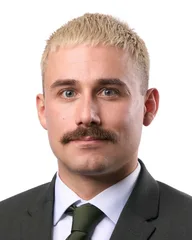
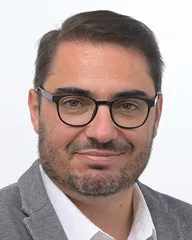
Lukas Sieper | Germany DEU | Non-attached Members (NI) | 390 |
| 2 |
|
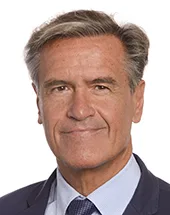
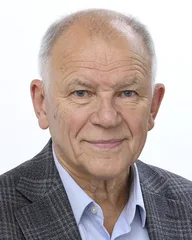
Juan Fernando López Aguilar | Spain ESP | Progressive Alliance of Socialists and Democrats (S&D) | 354 |
| 3 |
|
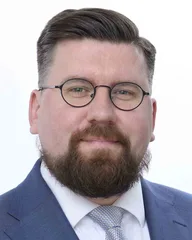
Sebastian Tynkkynen | Finland FIN | European Conservatives and Reformists (ECR) | 331 |
| 4 |
|
João Oliveira | Portugal PRT | The Left in the European Parliament (GUE/NGL) | 232 |
| 5 |
|
Vytenis Povilas Andriukaitis | Lithuania LTU | Progressive Alliance of Socialists and Democrats (S&D) | 227 |
All Contributions (96)
Findings of the Committee on the Elimination of Discrimination against Women on Poland's abortion law (debate)
Madam President, ladies and gentlemen, seven women have already died in Poland as a result of the ban on abortion. Polish law is one of the most restrictive in Europe, a law that not only restricts women's freedom, but heavily affects the duty of doctors to care for people. Criminalizing abortion does not eliminate abortion, but makes it clandestine and dangerous for women. An illegitimate intrusion of politics that recalls a debate these days in which an Italian minister even goes so far as to ask doctors to behave like spies. We all hoped that with the change of government something would change in Poland: It wasn't like that. The right has still disappointed women and girls, who have taken to the streets in Poland and throughout Europe, to remember that everyone must be guaranteed the fundamental right to self-determination. It is not just about health rights, it is about health services, it is about fundamental rights defended in the rule of law. Know that we women will no longer allow you to decide on our bodies.
World Mental Health Day - need for a comprehensive EU strategy on mental health (debate)
Mr President, ladies and gentlemen, according to the World Health Organisation, one in eight people suffers from mental disorders. A situation exacerbated by the pandemic but also by wars and extreme climate effects that also disproportionately affect our young people. The European Health Union must include the Pillar of Rights, in particular the right to state-of-the-art, quality public health for all, including mental health services. This is why we consider the cuts proposed by the Council on the budget for the EU4Health programme unacceptable, when health funds are expected to increase. We call on the next Commission to maintain a high level of focus on health, which is the most valuable asset for the majority of European citizens. This is why I think that one of the battles that we will have to carry out is that of a directive that establishes minimum health services at European level for all, against discrimination and inequalities that are unfortunately still very present.
Urgent need to revise the Medical Devices Regulation (debate)
Mr President, ladies and gentlemen, the right to health is a major concern for our citizens. Recently, Europe has approved a reform of the pharmaceutical legislation, but this reform effort cannot be complete without an update of the rules for medical devices. The objectives are common: accessibility, fair prices for all citizens, Europe's strategic autonomy and independence from third countries, the competitiveness of our businesses in the service of public interests. All this requires a public commitment to the research and development of medical devices and products, which does not replace private efforts, but rather supports and complements them. In the last parliamentary term, our group strongly proposed a public research infrastructure, acting in the public interest, which unfortunately was not included in the pharmaceutical package. I ask the Commission to re-evaluate, together with Parliament, this proposal, which can also serve in the field of medical devices, to relaunch an urgent and necessary project for the enjoyment of the right to health for all European citizens.
Need to fight the systemic problem of gender-based violence in Europe (debate)
Mr President, ladies and gentlemen, Commissioner, just this morning, on my way to Strasbourg, I read the news of a man who killed his wife in southern Italy. I didn't even make it here in time that I was reached by another news, this time in Northern Italy, in Genoa, concerning a rape that took place over the weekend. Gender-based violence is one of the few crimes that continues to be increasingly common across Europe. Underlying it is a patriarchal culture that keeps half the population trapped. This brutality, in many cases, leads to death. In other, more subtle cases, such as psychological or financial violence, it deprives women and girls of fundamental freedoms. There is one way, perhaps the most important of all: It's called prevention, it's called education. To make sure that our children can live in a world free of violence. Sexual and affective education in schools is the key so that young people of all kinds learn to respect their own body and that of others, learn to accept the "no", to preserve a psychophysical well-being, to live a healthy, conscious, respectful sexuality. Then it's up to us, colleagues, to politics. The crime of rape must be clearly and unequivocally defined, with consent at the centre, which, I recall, can be revoked at any time and cannot be fully manifested if the person is not free to express himself or herself due to fear, intimidation, disability and other vulnerable circumstances. It is called freedom of self-determination and must apply to everyone, including women.
The deteriorating situation of women in Afghanistan due to the recent adoption of the law on the “Promotion of Virtue and Prevention of Vice”
Mr President, ladies and gentlemen, gender apartheid: This is what is happening in Afghanistan. Since the Taliban took power three years ago, women have been engulfed in a spiral of violence and denial of rights and freedoms aimed at erasing their voice and figure from Afghan society. I ask this Parliament to reflect: What would you do if your daughter, your sister, your partner, or yourself were forbidden to exist? Imagine not being able to leave the house alone, not being able to speak in public, show your face, study or work. It would simply nullify your existence. The European Union cannot let these women be forgotten. Three years have passed and the situation is only getting worse. We are still indebted to the Afghan people who over the years have supported the international coalition and have been trapped in the country. For them, for activists and journalists, we must guarantee humanitarian visas. We need to rebuild a country destroyed by hunger, poverty, and to do so it is essential to involve women, who are not only victims, but can operate as agents of change. That is why we cannot accept that they are banned from participating in international dialogue and negotiation tables, as has unfortunately already happened. This form of apartheid against women and girls is not yet internationally recognised and this limits the tools to stop Taliban violence. The European Union must lead this battle. Gender apartheid has codified itself as a crime against humanity.
Ecodesign Regulation (A9-0218/2023 - Alessandra Moretti) (vote)
Mr President, ladies and gentlemen, thank you to all those who have contributed to this result. We are very pleased to give the green light to an ecodesign regulation. The time has come to free ourselves from the outdated "take, produce and dispose" model that is creating many problems for our planet, our health and our economy. We are paving the way for a new era in which every product is made in a more sustainable way and in which consumers can save energy, repair, make smart environmental choices. A win-win situation, both for the wallet and for the planet. In addition, by successfully including in the regulation the prohibition of senseless destruction of unsold fabrics and footwear, we want to contribute to a change in the way producers of fast fashion They produce their products with greater social and environmental sustainability. Thank you all for the work. I believe that the birth of the digital product passport, through which it will be possible to provide consumers with more information on sustainability, will ensure that it is consumers who choose which side to stand on and I hope on the side of environmental protection always.
The repressive environment in Afghanistan, including public executions and violence against women
Mr President, ladies and gentlemen, my friend Zara, who miraculously managed to escape from Kabul in August 2021, has a motto ‘Women for Women’. She turns it first of all to herself, because despite having managed to move to Italy and regain her freedoms, she cannot forget all the women, girls and girls who remained in Afghanistan. They have become faceless people, without rights, without a future. Yes, because by depriving young people of education, of the possibility of working or even of caring, their future, their life, is put at risk. Two and a half years have passed since the Taliban took power and I would like each of us in this Parliament to adopt the motto 'Women for Women'. It is we, born in the fortunate part of the world, we who can speak freely, write, express ourselves through art, it is we who must keep our attention high on the future of Afghan women and girls and make sure that they return to being creators of their destiny and protagonists of the rebirth of their country.
Deepening EU integration in view of future enlargement (debate)
Madam President, ladies and gentlemen, even during this plenary session we have repeatedly recalled Putin's war of aggression in Ukraine, we have renewed the call for a ceasefire on Gaza and we have voted for a report that rightly draws attention to Syria. It is clear that the international situation has drastically worsened and the need for a Europe that is determined and strong in its foreign policy is even more evident. We need to move forward with enlargement, which I remember as the main investment to ensure peace, stability, security and democracy. We must give answers to those countries that have been waiting for too many years to join our family and that risk losing the European push. It is important not only for our future, for their future. In the meantime, it is our duty to prepare the European Union for this enlargement. An enlarged, effective and decisive European Union is not conceivable if we maintain the existing rules.
War in the Gaza Strip and the need to reach a ceasefire, including recent developments in the region (debate)
Madam President, ladies and gentlemen, more than 30 000 people have been killed in the Gaza Strip since October. We have repeatedly reiterated that Israel's right to defend itself cannot be revenge, siege, massacre of innocent civilians in defiance of international humanitarian law. Israel's reaction cannot turn into genocide, because even war has its own rules and the Netanyahu government has trampled on them all. We must continue to call for an immediate and unconditional ceasefire, allowing civilians to receive humanitarian assistance and the release of the 130 hostages still held by Hamas. We take to the streets with the courage of those young Italians who have shouted their pain for the war and who, in response, have suffered the batons of the police. Violence and truncheons represent the failure of politics, of the rule of law, of right-wing governments that, like Netanyahu's, instead of working for dialogue and peace, have always sown hatred, intolerance and violence. Europe continues to remain the model of democracy and freedom capable of protecting its values and bringing them to the world as a sign of civilisation and justice.
Need to fight the increase of antisemitism and anti-Muslim hatred (debate)
Madam President, ladies and gentlemen, there is a dangerous virus that is becoming more and more entrenched in our societies. This is about hate: hatred towards the other, towards the different, towards those who do not think like you or towards those who pray to another God. It is a dangerous sentiment, often used with the aim of diverting attention from the real problems through fake news, sometimes fueled by Russian propaganda that finds its shores in the worst right, in parties such as that of Matteo Salvini. It is the same right that does not know how to give answers to the real problems, such as having an efficient health system, a decent job, a house overhead or the possibility for young people to start an independent life or to live free. And it is there, in the face of that inability to find solutions, that the right always blames someone else, on the governments that preceded them, or by addressing the most fragile and vulnerable instrumental and unfounded accusations. Hate generates hatred, does not help our businesses, does not offer a future to our children, does not solve the effects of climate change, does not generate growth or, much less, peace. Hate is fought with an effective policy against racism and religious intolerance, to build a just future for all.
The need for unwavering EU support for Ukraine, after two years of Russia’s war of aggression against Ukraine (debate)
Mr President, ladies and gentlemen, for two years now Ukraine has been courageously defending its territory and its citizens against Putin's illegitimate attack. In these 24 months we have witnessed very serious violations of international law by Russia, which has threatened not only European security and stability, but also all the values of peace and democracy that underlie it. Putin thought Ukraine would crumple on itself. Instead, the determination of its people and the firm European support did not allow it. From day one, all European institutions have sided with the Ukrainian resistance. A concrete support, which has translated into 80 billion between humanitarian, financial and military assistance. Europe is determined to stand up for democracy and will not leave Ukraine alone against an unscrupulous dictator like Putin. And this despite the attempt of some sovereignist leader, a friend of the Italian government, to block the necessary resources. It is not enough, dear colleagues, to concretely support the Ukrainian people: The rule of law must be defended in Europe, where there are still those who think of trampling on freedom and civil rights in general indifference.
International day for the elimination of violence against women (debate)
Mr President, ladies and gentlemen, these days my country has been shaken by the death of Giulia Cecchettin, who was killed by her ex-boyfriend. To find the author of a femicide you don't have to search far. Unfortunately, like Giulia, there is a woman who dies every three days at the hands of a husband, a partner, an ex. Giulia Cecchettin could be one of us, she could be our daughter, our sister, our friend. Laws are not enough, severe penalties are not enough. What is needed is a real educational revolution that unravels that patriarchal and misogynistic culture that continues to kill women. And we must first of all educate our male sons, because that of femicides is a problem of men, not of girls, not of our daughters. Men who are not able to accept a no. That is why we must introduce education in affectivity, mutual respect, as a compulsory school subject. Access to affective sex education must be a right of our children to preserve their health, well-being and, in some cases, their lives. Girls rebel, because freedom is won by raising your voice, destroying stereotypes, the retrograde culture that continues to kill. Boys join your friends, comrades, wives or sisters, because violence against women kills you too.
30 years of Copenhagen criteria - giving further impetus to EU enlargement policy (debate)
Mr President, ladies and gentlemen, 30 years have passed since the Copenhagen criteria for a State to become a member of the European Union. In these 30 years, many things have changed in Europe and in the world, but one thing has remained the same: Enlargement policy is one of the most important instruments for ensuring peace, security and prosperity for peoples. The Russian aggression against Ukraine is in fact also aimed at weakening the enlargement and accession process and this would lead some countries, a few steps from our borders, to fall into the arms of authoritarian regimes. I therefore turn to the Western Balkans, to Serbia in particular, asking them to continue in the accession process in order to ensure the strengthening of the rule of law, solidarity and common growth through a clear path without ambiguity. The Union needs a larger budget and sufficient own resources to meet future challenges. But above all, the reform of the Treaties is needed to simplify the decision-making procedures and bring this Europe closer to the needs and, above all, to the hopes of European citizens.
EU enlargement policy 2023 (debate)
Madam President, ladies and gentlemen, enlargement policy is a crucial instrument for the stability, prosperity and peace of our continent. Peace that unfortunately is often compromised, with all the tragic consequences that we now witness every day. Over the past year and a half, the European Union has extended its hand to Ukraine, which deserves all our support and commitment, but we cannot forget the Western Balkans, which twenty years ago was promised a place in the European family. It is necessary to speed up the step to show the citizens of these countries the advantages of being part of the Union, which focuses on freedoms and rights, so as to revive the desire for membership, a desire that in Serbia, for example, seems to have frozen. At the same time, however, we must be firm in calling for progress on essential reforms, for the normalisation of neighbourly relations to be put first through an immediate de-escalation of tensions between Serbia and Kosovo. We must demand that the press is not watered down by Russian or Chinese propaganda and that it embraces the only possible foreign policy line, the one supported by the European Union working for peace.
Resumption of the sitting
Mr President, ladies and gentlemen, as my colleague Mr De Meo said a moment ago, last night, at around eight o'clock, a tragedy took place in Mestre (Venice): a coach carrying several people from several European countries, due to circumstances still to be defined, crashed from an overpass and, after a flight of over 15 meters, crashed, catching fire. Twenty-one are dead, of which two are children, one is a newborn, and one is a teenager. Fifteen people were injured, five of whom were seriously injured, two of whom were brothers, Germans, aged 7 and 13. More than forty ambulances arrived on the scene along with firefighters, rescuers and local authorities, all engaged in rescue efforts to bring as many people as possible to safety. An apocalyptic scene, as the mayor of Venice defined it. From this Chamber of the European Parliament, which represents different histories and cultures, which dialogue with each other, and which knows how to show solidarity and help even in the most difficult moments, we want to express our closeness to the families of the victims, to the Venetian citizenry, to the mayor and to the local authorities, dedicating a great thank you to the rescuers who have worked to help the survivors. I ask the Presidency to observe a minute's silence to commemorate the victims of this tragedy.
Recent developments in the Serbia-Kosovo dialogue, including the situation in the northern municipalities in Kosovo (debate)
Mr President, ladies and gentlemen, what happened on 24 September in northern Kosovo is terrible. A frightening explosion of violence that has caused the death of several Serbian and Kosovar people. A violence that unfortunately is not new, since in recent years we have witnessed a frightening escalation, animated by an aggressive narrative, often watered down by propaganda and false reconstructions. All this, however, cannot make us lose the compass that has long pointed towards the normalization of relations between Belgrade and Pristina. We cannot hide behind the suffering caused by these actions to escape from a path that has been asking to be accomplished for years. It certainly takes a thorough and impartial investigation to ascertain responsibility and ensure that those responsible face the consequences. But it is also necessary to work to defeat the hatred that fuels these actions and cure what it leaves in the living flesh of people. There is no alternative to dialogue, not only in order to finally pave the way for accession to the European Union, but also because we do not want more deaths and do not want to return to the fear experienced in the 1990s and repeat the same mistakes as then.
Situation in Nagorno-Karabakh after Azerbaijan’s attack and the continuing threats against Armenia (debate)
Madam President, ladies and gentlemen, imagine that you are forced to leave your homes, your friends, the places where you grew up. This is what happened in a few hours to about 100,000 inhabitants of Nagorno-Karabakh, a population of Armenian culture and tradition but located in the Azerbaijani borders. It is not about migrants or refugees fleeing, but about ethnic cleansing, which constitutes a crime against humanity. The international community has also proved powerless during the nine months in which Azerbaijanis blocked the corridor that connects Nagorno-Karabakh with Armenia, the only possible entry for food, medicine and assistance in this unfortunate region. For years Russia has exerted its influence on these countries, failing in its mission of maintaining stability. We cannot let actors like Russia or Turkey take over. The European Union must prove to be a credible and decisive actor for peace and security. I condemn the unjustified military aggression by Azerbaijan and the abuses that have tormented the minority for years. We must now turn to the facts, offering humanitarian financial assistance, considering targeted sanctions and rethinking the energy supply agreements that many European countries benefit from.
Ecodesign Regulation (A9-0218/2023 - Alessandra Moretti) (vote)
Madam President, ladies and gentlemen, first of all I would like to thank my fellow Members, the shadow rapporteurs who have worked constructively on this file, the assistants, I and the Secretariat. We did a teamwork that allowed us, in less than a year, to approve an ambitious text that protects the environment and the health of citizens, while ensuring the competitiveness of our companies. Thanks to this regulation, colleagues, all the products that will be placed on the market will have to be environmentally sustainable, allowing consumers to save energy, to be able to repair their products and, through the digital passport, to have the awareness of what they buy. With this regulation, Mr President, Parliament shows that it lives up to the expectations and the responsibility that the citizens have entrusted to us.
Ecodesign Regulation (debate)
Mr President, ladies and gentlemen, I really want to thank all my fellow Members for their support, for their contribution and for the proposals that have improved the initial text. This has been a team effort, it is a work that has seen us, albeit in legitimate differences, united in the purpose of offering the market and consumers an ambitious regulation that focuses on the environment, the protection of ecosystems, consumer health. It is an important step that shows that, if there is the will, politics can live up to the challenges and the responsibility that citizens have entrusted to us. I am very confident that tomorrow we will prove it to the fullest.
Ecodesign Regulation (debate)
Mr President, Commissioner, ladies and gentlemen, what we are going to vote on tomorrow is a proposal that will have a major impact on our society, on our businesses and on our consumers. In fact, this regulation will radically change the way industry operates in many sectors, indicating to the production world the way to manage the entire life cycle of a product, including the end of life. A regulation that finds its raison d'être within the limits of our planet, by establishing a legislative framework that will help make products compliant with a climate-neutral, resource-efficient and circular economy. The products that will be progressively placed on the market, therefore, will have to be designed in such a way as to respect the environment, the ecosystem and protect the health of citizens. It will also allow consumers to save energy, to be able to repair the products they buy instead of having to throw them away and to give them the possibility, through the digital passport, to be fully aware of what they buy. The digital passport is an important innovation in the current landscape and a decisive tool to promote circularity: the new products that will be available can be sold only if accompanied by this tool, which must contain accurate and up-to-date information on the environmental impact of the products in circulation, in order to allow everyone to make informed choices. A recent study by the European Court of Auditors sadly showed that European strategies and funding have so far had a modest impact on the transition to the circular economy and that the biggest delay is in design. The proposal we are about to vote on not only invests in waste management, but also in circular design: however, it is not only important how we design the product, it is also relevant how we make it, in which companies and under which working conditions. Globally, for example, the textile sector employs 60 million people, mainly women, and the wages of textile workers are often far below living wages. We remind everyone of the tragedy of Rana Plaza, the textile factory in Bangladesh where more than 1 000 people died ten years ago. In that factory were made those clothes that, for a few euros and without asking too many questions, we buy here in Europe. I wanted to ask the Commission in the coming years to consider extending the scope of the proposal also to social sustainability and due diligence requirements. In Europe alone, then, each of us discards about twelve kilos of clothes every year and most of these discards increase the pollution of ecosystems around the world but, without hypocrisy, we must say that it pollutes above all the poorest countries, which have always become the receptacle of what we Westerners discard. There is also the issue of unsold products. This Regulation introduces a direct ban on the destruction of unsold consumer products, which should apply to textiles and electronic devices. At the end of their life cycle, products will no longer be waste, a source of pollution, but a new resource to be used in the production process. Finally, the proposal aims to improve the potential of the single market by strengthening market surveillance activities, ensuring that businesses, in particular small and medium-sized enterprises, carry out their activities on an equal footing with their non-European competitors. Dear colleagues, no change is impossible. It is up to us, each of us, to do our part and to do so we need to have all the information of a product available and thus make the right choices. With these choices we can improve the context in which we live, not just thinking about what we see before our eyes, but looking to the future, beyond our borders, where people are forced to work in unacceptable conditions, sacrificing rights and freedoms, to allow us to continue this unsustainable and unjust lifestyle.
COVID-19 pandemic: lessons learned and recommendations for the future (debate)
(IT) Mr President, ladies and gentlemen, after the dramatic experience of the pandemic, citizens are asking us not to repeat the mistakes and to learn from what happened, improving European health skills. In this report, there are concrete proposals to prepare the Union and the Member States to better protect health in the face of possible future health emergencies. First, the right to quality public health for all. Then collaboration and coordinated work for epidemiological monitoring and surveillance, but also the great potential of a united Europe for scientific research, for joint purchases of vaccines, medical devices and drugs, so as to make them accessible to all and at fair prices. We have called for greater transparency in all areas, both in the field of research and development, where the real costs, including those of private pharmaceutical companies, will have to be made public and serve as a basis for pricing, but also in the negotiation of contracts, in particular where public funds are concerned; We have called for the creation of a public research infrastructure to address market failures and work in the interest of citizens. Public funds will have to be adequately repaid for citizens, in particular for the availability of medicines at fair prices and their marketing in all Member States. On the social aspects we have focused on the most fragile parts of the population, we have included concrete proposals and targeted interventions to mitigate the consequences on people already marginalized, on women, on young people who have paid a high price, I am thinking in particular of mental health. This work could be a breakthrough for European and national capacities to react in times of crisis, not just health. Tomorrow's vote will be complicated. As always, we could have done better, but as socialists we will vote in favour of an ambitious text, aware that the interests of citizens come before political conveniences. This report, ladies and gentlemen, is a unique opportunity to continue building the European Health Union. We hope that the sense of responsibility will prevail, showing that we are up to the task that European citizens have entrusted to us.
Council of Europe Convention on preventing and combating violence against women and domestic violence – EU accession: institutions and public administration of the Union - Council of Europe Convention on preventing and combating violence against women and domestic violence - EU accession: judicial cooperation in criminal matters, asylum and non-refoulement (debate)
Madam President, ladies and gentlemen, when I am together with so many women, I think that, according to the data, one in three of them has suffered physical or sexual violence, often at the hands of a close person, perhaps a family member. Scary numbers are those that photograph the female condition. Violence against women is a human rights violation that we can no longer tolerate. Preventing this violence, protecting victims and prosecuting perpetrators is an act due to the 150 million girls who suffer rape or sexual violence every year in the world. The Istanbul Convention is the first legally relevant international instrument, ratified by the majority of European states, and what we are doing today is a decisive but not sufficient step. The convention must be accompanied by a strong cultural policy that is implemented first of all within schools with sexuality and sexual health education, to grow women and men capable of respecting themselves, capable of being respected, capable of defending their health. We need to grow a generation emancipated from violence, a society where everyone feels safe, free to be themselves, without fear of harassment, abuse, discrimination.
Council of Europe Convention on preventing and combating violence against women and domestic violence – EU accession: institutions and public administration of the Union - Council of Europe Convention on preventing and combating violence against women and domestic violence - EU accession: judicial cooperation in criminal matters, asylum and non-refoulement (debate)
– As the honourable Member has just stated that the Istanbul Convention is by no means useful as an instrument for combating violence against women, I would like to know from my colleague which, in his view, would be the most effective instrument.
Order of business
Madam President, ladies and gentlemen, a few days ago, after months of drought, violent rains hit Emilia Romagna and in just 36 hours it rained one fifth of the total amount of water that normally falls in a year. Two people lost their lives, 500 had to leave their homes to escape the fury of the floods. We often say this in this House, Mr President, droughts and floods are two sides of the same coin, they are catastrophic events that mark the pace of climate change and we need concrete actions and forward-looking strategies to tackle these challenges. We need to make the best use of European resources, such as the European Regional Development Fund, to prevent risks, securing our fragile territories against geo-hydrological instability. Finally, I hope, Mr President, that European authority will finally be able to convince even the world's superpowers to invest in the fight against climate change, because we cannot do it alone.
The crackdown on the right to education and education rights activists in Afghanistan, including the case of Matiullah Wesa
Mr President, it is a tragic collapse that we are witnessing in Afghanistan with regard to women's rights. In just over a year, Afghan women have been fired from their jobs and removed from administrative roles, banned from playing sports and buying contraceptives, removed from high schools and universities, and prevented from building a dignified future. Banning girls from accessing education is a violation of human rights. It means denying all hope to millions of young people. But not only that, these criminal norms endanger the very lives of women. Just think of their health: Afghan women cannot be visited by male doctors, but if women are not allowed to study medicine, who can they turn to? I call on the European Commission to support organisations which, with great effort, seek to offer alternative services for the education of young Afghans. I also call on all European institutions and Member States to put pressure on the Taliban to respect human rights. Culture, knowledge and skills are the only tools that can allow the Afghan people to recover from the economic and environmental crisis and the food emergency that hold the country hostage, and the contribution of women, again, is fundamental.