

| Rank | Name | Country | Group | Speeches | |
|---|---|---|---|---|---|
| 1 |
|
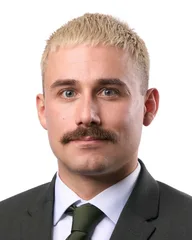
Lukas Sieper | Germany DEU | Non-attached Members (NI) | 390 |
| 2 |
|
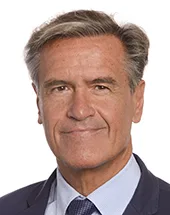
Juan Fernando López Aguilar | Spain ESP | Progressive Alliance of Socialists and Democrats (S&D) | 354 |
| 3 |
|
Sebastian Tynkkynen | Finland FIN | European Conservatives and Reformists (ECR) | 331 |
| 4 |
|
João Oliveira | Portugal PRT | The Left in the European Parliament (GUE/NGL) | 232 |
| 5 |
|
Vytenis Povilas Andriukaitis | Lithuania LTU | Progressive Alliance of Socialists and Democrats (S&D) | 227 |
All Contributions (431)
Resilience of critical entities (debate)
Mr President, Commissioner, ladies and gentlemen, we often speak very technically and perhaps less intelligible to citizens. In fact, what does the resilience of critical entities mean? It means that we are now thinking, through this directive, to increase the resilience of some sectors that ultimately have to do with their quality of life, their lives. Energy, health, food, space... 11 areas, as has been said, are covered by this directive, and it is clear that less resistance by a sector, by a critical entity in a given Member State will cascading effects throughout the space, throughout the internal market. That is why I very much believe that it is necessary for this directive to be well adopted in national law. But I also believe that the infrastructures in the areas I have mentioned here must be of the same quality and quality, in order to be a fair competition in the market and to have equal resistance in the market. That is why I very much believe that we must have one space, Commissioner, and I appeal to you again. I know that it was voted in the Council of Commissioners to enter the three states Romania, Bulgaria and Croatia into the Schengen area and to be able to work on increasing the quality of infrastructure in the 11 areas.
One-minute speeches on matters of political importance
Madam President, Commissioner, social cohesion is one of the objectives of the European Union. Social cohesion in the internal market in the 27 countries. But how can there be social cohesion when the market is fragmented? When do we have a double measure? When I see that my 11-year-old country is not in the Schengen area. We have two Europes, Schengen and Non-Schengen. And today we were discussing how to apply the regulation. We have a Schengen regulation, the regulation applies, it is not discussed, it is not negotiated. Why do we have this problem with the Schengen Regulation, that one country, two, want to control the other, and a Pandora's box opens. Is that how the regulations apply? I knew that the European Commission was the guardian of the application of the Treaties and regulations. I rightly ask that my country, like my citizens, no longer be treated second-hand and, as explained here, of course it will be an efficiency for the entire internal market. But, Commissioner, there is an enormous danger of developing Euroscepticism, citizens' mistrust and, of course, what is happening with the European project. That is why I am asking the Council to vote on the entry of Romania and Bulgaria into the Schengen area. Not because we are asking for this support, but because it is our right, the right of the citizens.
Implementation report on the European Innovation Council (short presentation)
Madam President, Commissioner, an extremely important subject. The biggest mistake in private management is that when there's a crisis, you cut funding from research, from innovation. Unfortunately, in the public space, and here too, the European Commission has even considered this programme to stop it. We cannot promote, first of all, the disappointment of the companies that waited and believed in this project. Secondly, without innovation money we cannot have start-ups, we cannot have small, medium or even very large companies with modern technology. It is absolutely incomprehensible why this very program had to be blocked and I certainly appeal because I work with the private sector. I am Vice-Chair of the Committee on the Internal Market, Vice-Chair of the SME Intergroup, and I know what it means to invest in innovation. So the key is with you, Commissioner. As a member of parliament, we support it. I do not think that there is any MEP who does not understand why precisely in the crisis we need money for innovation, for research, for refurbishment.
Borrowing strategy to finance NextGenerationEU (debate)
Madam President, Commissioner, ladies and gentlemen, I am sure that we are debating this report on the borrowing strategy for financing Next Generation, a necessary project, because yes, it is a crisis. But what we have to say to the citizens, because we don't talk in the abstract like that, we borrow 2 billion, 2000 billion, 450 billion. The citizen wants to know how he can influence this budget, his life, to be able to live better. And we know well that there are geographical areas where we have a lack of social cohesion and a hard life for citizens, winter is coming, we have the bills. How do we use this money? Efficiency! We need to focus on efficiency here. And yes, who knows how much interest will be until we repay in 2058? At the same time with the loan, those own sources of income had to be automatically found in order to be able to counteract the expenses with these large loans. And it's a black ball for the Council, which is blocking, and always lately, or at least since I've been here, the Council stands out as blocking everything. That is why, Commissioner, please insist that we go on our own resources so that we can be sure that we are not indebted to three generations after us.
A high common level of cybersecurity across the Union (debate)
Madam President, Commissioner, I agree with what you have presented here. Now, 30 years after we celebrate the Single Market, I will speak from the perspective of the Single Market, but also of the citizen. Of course, there is no safe single market unless we also have a cyber defence policy. The problem that I see now that we have, is that the 27 states are at different stages of digitization, because we cannot detach the cyber defence policy from digitization, and how can we apply this slogan, no one is left behind, in practice? How can we help Member States that do not yet have digitalisation to the level they need to be able to intervene in this cyber defence chain? And I think that here we need to think about directing the targeted funds, so that we can really have the complete chain, because one link, if it is missing, obviously this cyber-attack occurs that leads to insecurity both for the citizen, and for companies and, as a whole, for the European Union.
Racial justice, non-discrimination and anti-racism in the EU (debate)
Mr President, Commissioner, ladies and gentlemen, the subject is extremely important for humanity: hate, racism. From my point of view, being part of a humanist, social-liberal party in my country, I believe that man must be put at the centre of every action of us, of the Council, of the Commission, of Parliament, of everyone. But I wonder, does the European Council not discriminate against my country, a whole nation, that Romania does not enter Schengen, even though it meets the conditions, even though Parliament voted? What example can the European Council give when using a double measure? What example can the Commission give when using a double measure? And what example can Parliament give when there are MEPs who, even in today's debate, have stigmatised an entire country by not setting a positive example? I belong to a majority, but I feel discriminated against alongside the citizens of my country, even the European Council. Therefore, policies of discrimination, elimination of racism and hatred must be started from here in order to set an example to the citizens and to consider that everyone is important, regardless of religion, nation, color.
Conclusions of the European Council meeting of 20-21 October 2022 (debate)
Mr President, Commissioner, ladies and gentlemen, listening to today's debate, I am thinking about what a citizen would understand if he had listened to the debate. The President of the Council blames the Commission for not coming up with legislative proposals. Did the council find out now that winter is coming in three weeks? Why didn't he send the 9 measures that Mr. President was talking about sooner? On the other hand, the very strange President of the Commission says that we are very prepared for winter, that gas prices have fallen by two thirds, but nothing has happened on the bills. Mr Vice-President of the Commission, however, can we go back home and say something concrete about this critical situation? They are citizens, they are SMEs, they are small and medium-sized enterprises that close their doors, and citizens are in the cold, hospitals are in the cold, children are in the cold. What to say at home? Let us be serious and give citizens concrete measures and answers.
Conclusions of the European Council meeting of 20-21 October 2022 (debate)
Mr President, dear colleague, I have seen that you praise the work of the Council and the decisions taken at the last Council. That's the theme, too. And you said yes, the gas price went down. Are you aware that the bill for the citizen has also decreased? Because from the information I have, at least in my country, but maybe you tell me in Italy what is happening, the citizens' bills are exactly the same price. There is no effect yet on the measures taken by the Council. How can we solve this equation that you, behold, have shown to be already solved?
Preparation of the European Council meeting of 20-21 October 2022 (debate)
Madam President, Commissioner, today we are also debating something that we have been asking for for months. What the President of the Commission has presented to us, the citizens have heard before. We have also heard many times: proposals, proposals, proposals. The Council does not take any decision. Now, when we speak, the citizens of my country and other states have their bills regularized, prices come 4 to 10 times higher and there is no decision. What are we talking about here? Do we or do we not put people at the centre? And the President told us that she would create a joint purchasing platform. Will it be as non-transparent as vaccines? We won't know what prices are, we won't know how to divide? Everything was totally non-transparent in the pandemic and we do not want it to be this anymore, to cover the profits of some companies, as were the profits of health companies. So, Commissioner, the citizens ask me. I speak, but what answers do I get? And I tell them I'm not getting it. Perhaps today, however, you give an answer: when are concrete measures being taken to end this energy crisis?
Mental health (debate)
Mr President, Commissioner, health, we all say that it is a priority. Mental health is also a priority. But you yourself, Commissioner, have said that during the pandemic, during the COVID period, the number of cases has increased, and yes, it has increased because, or because, you have taken measures that are not justified, and even the WHO has said so. Is anyone in charge of these cases? Now people are pressured by energy costs, by the cost of living. Again, we will have an increase in cases, is anyone responsible for not taking action? You can't wash your hands and say: health is a national competence, as long as you have taken action at European Union level during the pandemic or if it was a pandemic. Commissioner, health must not only be spoken of, words must be covered by deeds, and that is why I am waiting for a concrete answer. I also asked at the other debate: Do we have solutions or not to solve the costs of the invoices? Do we now have unified solutions, at European Union level, related to mental health? Yes, these people are marginalized. These people cannot afford, and their families cannot afford, to provide care for them as they should.
Keep the bills down: social and economic consequences of the war in Ukraine and the introduction of a windfall tax (debate)
Mr President, Commissioner, we are talking about stopping the increase in bills, with social and economic consequences, but now that we are discussing, in very many Member States, bills are being regularised, bills are being raised, 10 times the cost of energy. And here, not only in my country, where citizens have notified me that electricity prices have increased 10 times, here, and in Belgium I received right now, when it is the debate, a letter from a citizen to whom the bill has been increased from 35 euros to 450 euros per month and a regularization bill of over 3 700 euros. What are the concrete measures? Because we can't stay in the cold season and discuss for eight months how we can lower our bills? I come from a meeting with SME Connect, in my capacity as Vice-President of the SME Intergroup, and the concrete question of entrepreneurs in Germany, in Austria, where did they come from, in Slovakia, how do we lower energy bills? And this must be the answer that we must give to both citizens and SMEs if we are not to have social and economic consequences.
The accession of Romania and Bulgaria to the Schengen area (debate)
Mr President, Commissioner, Minister, ladies and gentlemen, I do not know if you can understand me, but I have a feeling of frustration. And that's not just me, but all the citizens of my country. How many times have we debated? How many times have we voted in the European Parliament? This is the second time the Commission has written to the Council, to the 27 Heads of State and Government, which, here, is what democracy teaches us: A president or head of government matters more than tens of millions of citizens! Is this European democracy? Could he tell us - and I am now addressing the 27 heads of state and government, including the president of my country - what point of the treaty, what point of the Schengen Regulation Romania or Bulgaria does not meet? And I do not know if these heads of state have ever been in a concrete business, not of the other types, to understand what it means to waste time if you have a transport company, as a citizen. I don't know if they would understand, but I ask them as a former businessman: If we were to calculate the 11-year moral and financial damage caused to millions of citizens in my country, how could they pay? I urge Romania and the citizens of my country to enjoy the same... (The Chair withdrew the floor of the speaker).
Russia’s escalation of its war of aggression against Ukraine (debate)
Mr President, Commissioner, I want to ask you a question about what the President of the European Commission has said. The conflict in Ukraine is exacerbating the energy crisis. He said here, Madam President, that gas prices need to be capped, and I think everyone agrees. But I want to ask you what did the President mean by a ‘homogeneous level’ in the European Union market? What does a homogeneous level mean? There are countries where per capita consumption is four times lower than the average in the European Union, as is the consumption in my country. The one who consumes the least, can he still bear a discount? I believe that here we must be careful and the Commission must propose a mechanism that does not disadvantage the European citizens who currently have the lowest consumption, and these citizens are the ones in my country.
Situation of Roma people living in settlements in the EU (debate)
Dear colleagues, this is certainly not the first time we are debating the situation of the Roma in the European Union. We also have a plan, but, Commissioner, I want to draw attention to something that has also resulted from this debate. I have seen that the rapporteur and other colleagues have also nominated the countries of the East as being those that discriminate against the Roma. My country has been mentioned here several times, along with Slovakia, along with Bulgaria. Don't you think that Roma citizens are also European citizens and are allowed to live where they want - freedom of movement? I ask, and I don't ask the first time: why does France take Roma citizens on board and send them to Romania or Bulgaria? Why don't they integrate them? Why are they sending these people, who have their right to choose where to live, to the poorer countries of the East, and not giving budgets to integrate them into the country where these citizens chose to go? Because if we continue this way, with this segregation, to send all the Roma to the countries of the East, obviously, we will never succeed, because these people have the same rights as the citizens of each country.
AccessibleEU Centre in support of accessibility policies in the EU internal market (debate)
Madam President, Commissioner, ladies and gentlemen, we are talking about people, almost 80 million people in the European Union who have a greater or lesser disability. Almost 30%, Commissioner, are on the brink of poverty. Sure, we have a strategy for people with disabilities by 2030, but people need facts. I represent here in the European Parliament the Humanist Party in my country and we understand that we need facts, not words. Yes, we need to help Member States where they have no human resources, no budget to create these conditions for people with disabilities and we need to have this Centre and I congratulate the rapporteur for what she has presented here. I think we all need to support, to get to concrete things, because we also need more empathy from us. Yesterday I saw in Strasbourg how a person on an electric bicycle came across a person with a white cane. I think we all need to be more empathetic, but we need coherence in the European Union, true integration of these people and listening to them, because no one knows better than the associations of these people what obstacles they have and how they could be removed. Personally, I work in my country with associations of people with disabilities, but we need coherence across the European Union.
Radio Equipment Directive: common charger for electronic devices (debate)
Commissioner, President, colleagues, citizens are waiting for concrete things, and today we can demonstrate that together, Parliament, the Commission and the Council, we can offer citizens something concrete, namely savings. Citizens enjoyed it enormously, and I think you all know, when roaming was introduced, it was simply a euphoria, because the citizen felt he had something concrete. The same goes for this charger. Of course, it has been said, waste savings are made here, money savings are made, but I, as Vice-President for the Internal Market, think, Commissioner, of the citizen. They don't have to buy seven, eight chargers anymore. Look, today I forgot my charger at home and I have to ask how many colleagues, to see what charger it has, to fit on my phone. Sure, that's a good thing, but I want to draw your attention, Commissioner, let's not forget to follow this directive: Continuous refurbishment, digitization - we have them in the program; let us supplement this directive so that we are step by step ... and let us not forget that the speed of decision must be increased. For more than 10 years we have been talking about this amendment of the directive and, finally, it has happened, but we need to increase our speed of decision and we need to convey to the citizen concretely what we do for consumers, not only the protection of quality, but also the protection of the money that a citizen spends. Good luck and congratulations to the rapporteur and the whole team on this success. I'm sure there will be a vote.
One-minute speeches on matters of political importance
Madam President, Commissioner, the energy crisis is worsening, winter is knocking on the door. From my point of view and from the point of view of the citizens I represent, from Romania, the European Commission is mimicking solidarity. And I'll explain why, Commissioner. Romania has only half of the households that use biomass. Less than half of households, 44%, are connected to methane gas. One third of homes in Romania are directly connected to methane gas. Average household consumption of methane gas is below the EU average. Romania consumes less than one mega kilowatt per hour per inhabitant of electricity. There are other states that consume two, three times, four times, five times. And the Commission comes with the proposal to decrease consumption, all Member States, by 5%. Romania, if it consumes less than one mega kilowatt per inhabitant, if it decreases by 5%, equally, as would Sweden, which consumes 4%, what happens to the inhabitant, the citizen of my country? Don't you think solidarity means having equal consumption for all citizens in the 27 countries? Romanians are tired of the double measure: We're not in Schengen, we don't have visas for America, and you're making us live in the dark and by the candle.
Impact of new technologies on taxation: crypto and blockchain (debate)
Madam President, Commissioner, ladies and gentlemen, we are discussing the impact of new technologies on taxation. It has been said here, of course, we must not run away from new solutions, new technologies. The only problem is that in order to establish a proper taxation according to the solution, we must have studies done and we must have them before new technological solutions and new technologies enter the market. From my point of view, if we do an analysis now, we could see that instead of having a gain with the entry of new technologies, with cryptocurrencies, we unfortunately have, as has been said here, a lot of tax evasion and a lot of citizens who have lost their income. This system has not been mastered and I think it is good to first make the rules in the internal market, because even so we had enough evasion in the internal market on the classic tax policies, there was no need to add. That is why I believe that with this report we will also be able to come to a common definition, we must have systems of national competence, but under supervision, in order not to create distortions in the market, not to create tax evasion and, ultimately, to have a coherence and growth also through the appropriate tax policies.
State of the SME Union (debate)
Madam President, Commissioner, since I have been here in 2014, I have heard how important SMEs are. What strategy should we have for SMEs? Here you are again talking about the state of SMEs. You talked about the lack of access to finance, the huge bureaucracy, that's what we're talking about. I am Vice-President of the SME Intergroup and Vice-President for the Internal Market, but nothing is happening. What Mrs Ursula, Madam President, said yesterday went like a bullet in the press in my country. How to send us to Putin with the bills? What is the attitude of the Commission President, instead of saying precisely how to make this price cheaper, how to dismantle that fictitious market in the Netherlands so that SMEs do not pay these enormous bills? And yes, you should know that SMEs are tired of words and want facts. I do not believe in what you said today, because it turned out that every time we just talked and nothing happened and that is why I propose directly, Commissioner, if you want to support SMEs, do not pass the ball from the Member States to the European Union. Yes, make a mechanism now for direct access to the European Union, to a European Union budget for SMEs. Don't go through 17 bureaucrats.
Implementation of the Updated New Industrial Strategy for Europe: aligning spending to policy (debate)
Sorry, I was here at 9.00. I was on the phone but stayed here. I was the first person in Parliament.
Statute and funding of European political parties and European political foundations (debate)
Madam President, Commissioner, the quality of the political act depends on how we choose people, how we know them. Obviously, for this, citizens need information, and information is done when you have a budget. I agree to regulate and make transparent the financing of political parties both at national and European level. The problem is that funding is only for big parties. People new to politics, small parties entering politics do not receive money from the budget, either at national or European level, although they represent some citizens. That is why I believe very much that we must also have this look in the Member States, because, after all, the European institutions are endowed, so to speak, with the human resources of the Member States. I personally do not agree that small parties, non-parliamentary parties, cannot be financed either at national or European level. We will not be able to improve the political class.
State of the Union (debate)
Dear colleague, you said that the State of the Union speech has been the best since you have been in this House, and yes, if I think about it, the President has very often said ‘I need’ and ‘I want’, it is true. Now, however, when we speak, 25 million European citizens have the minimum wage and we cannot talk about the future and the 2030 and 2050 targets without knowing what we are doing now, because the pace at which decisions are taken from "I want" and "I need" to concrete measures is very slow. We will vote only in October a situation, a cold month already, a cold season. What do you think we should... (The Chair interrupted the speaker) ... however, should we do something concrete to help both citizens and SMEs?
EU response to the increase in energy prices in Europe (debate)
Madam President, Commissioner, ladies and gentlemen, the energy strategy must not be left-wing, right-wing, in the European Union or in the Member States. Energy policies and measures must be for people. I'm worried and I ask: Why do we discuss and pass 5-6 months in inventory the problems of the energy crisis and do not find the measures to apply them? We see that today we are debating, and it will only be in October that we will vote. Commissioner, it may be cold in October. How are people? Will it happen that in the situation of the COVID crisis no one will respond, if there will be children, will there be old people dying in the room, in the house, because they do not have heating? So there are solutions. I believe that we must not delay and find the right solutions. If citizens cannot pay their bills due to the energy crisis, neither on gas nor on energy, give money to install solar panels. Find concrete solutions, because this is how small and medium-sized enterprises and industry in the European Union will fall and we will have a humanitarian crisis. We will simply have a crisis for poor people who cannot pay their bills.
Adequate minimum wages in the European Union (debate)
Mr President, Commissioner, frankly, I am glad that we have come to have such a debate and tomorrow to have a vote. Yes, they're poor, a lot of people are poor. The adequate wage, obviously we have to see what it means appropriately, because if in Germany, the hourly wage is 12 euros, in Romania it is three. But I have to say one thing very clearly. If a country opposes the introduction of a minimum wage, it means that it does not respect its workers. We also have a problem here, that we have worker mobility and I want every worker, no matter in which country they work, to benefit from the existence of a collective agreement and the existence of a minimum wage. That is why I believe that tomorrow we must vote and I believe very much, Commissioner, that we must connect this decision also with measures to make the economy work, because these increases, which are now also energy, all costs, affect very much especially micro, small and medium-sized enterprises. That is why I believe that we must not forget also economic measures, but we need to have this minimum wage and the protection of workers, no matter where they work.
Energy efficiency (recast) (debate)
Mr. President, it wasn't a question, it was an explanation. I hope that when applying, of course, it is also the responsibility of the Member States, but I hope that when applying it it will be absolutely pragmatic and with the calculation of the impact, because we cannot misfortune a generation now in the states that cannot comply with these targets. In my country it will not be possible, that is very clear.