
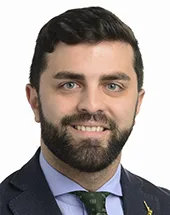

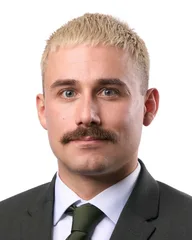
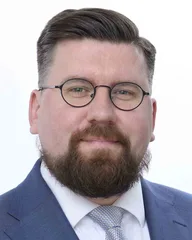
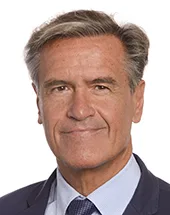
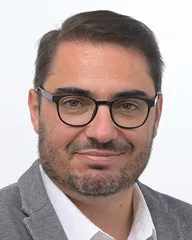
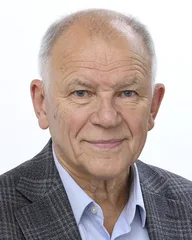
| Rank | Name | Country | Group | Speeches | |
|---|---|---|---|---|---|
| 1 |
|
Lukas Sieper | Germany DE | Renew Europe (Renew) | 487 |
| 2 |
|
Juan Fernando López Aguilar | Spain ES | Progressive Alliance of Socialists and Democrats (S&D) | 454 |
| 3 |
|
Sebastian Tynkkynen | Finland FI | European Conservatives and Reformists (ECR) | 451 |
| 4 |
|
João Oliveira | Portugal PT | The Left in the European Parliament (GUE/NGL) | 284 |
| 5 |
|
Vytenis Povilas Andriukaitis | Lithuania LT | Progressive Alliance of Socialists and Democrats (S&D) | 273 |
All Speeches (45)
Preparation of the European Council meeting of 20-21 October 2022 (debate)
Date:
19.10.2022 09:41
| Language: IT
Speeches
Madam President, Madam President von der Leyen, Mr President-in-Office of the Council, ladies and gentlemen, let me first reflect. Hearing some of my colleagues speak earlier, I was wondering what the people who saw the start of this debate today might think about European unity. We talk about it a lot, but then we are the first ones who, for futile and unjustified reasons, give an image of a divided Europe. Think about it when you make certain attacks and have more respect, you who stand as champions of democracy, for those who have a different idea, for those who democratically chose a government. Italians are very well able to choose for themselves, stop it. If I were in the socialist leadership, I would worry that the first leader to pay tribute to the Chinese dictator will be a socialist leader, German Chancellor Scholz. So, reflect on this before giving lessons of democratism to others. With regard to the next Council and the package that the European Commission has announced, before analysing this, however, let me take a moment to remind you, to make a prayer for the Ukrainian citizens who, again, in the face of a criminal attack, an unjustified attack, have perished. We must continue to ensure our support to ensure that this war ends as soon as possible and ends with a winning Ukraine. On the package, it's still a package of course in progressWe are also waiting for the Member States to give their green light, but allow me, Mr von der Leyen, to say that this package is not even remotely sufficient and I am trying to explain to you why we do not consider it sufficient. The first reason is that we even seem to have taken a few steps back from what you came here two weeks ago to announce to us. It is a package which, it is true, contains a proposal on the price cap – you mentioned it, we have been talking about it since March and today there is finally something on the table – but it is a price cap As it has been structured, it is unlikely that it will be implemented, assuming that there is then consensus in the Council and among the Member States to carry it forward. Solidarity, which is a very important element, will be a very important element not only to face the winter, but to face the next year that will perhaps be even more difficult. It is also a solidarity in purchases, which is important, but rightly goes to protect small states that, alone, in a competitive market, they could not do it, but little will be able to do to secure purchases, in a market that in 2023 will be even more competitive and competition will not only be within us, but will be especially with consumers. buyer Asians. And then, the protection of the competitiveness of our companies, this is a huge issue, a subject that also concerns industrial policy. And then, I close with two points. The first: the relevant part of this package is the re-use of the 2014-2020 cohesion funds. They are 40 billion, so little compared to the size of the problem, but they are the most important part. I believe that the Commission should also make a case for the 2021-2027 budget. Today there is an emergency. It is true that the European budget is structured differently, but in the face of the emergency, even with the 2021-2027 budget, we must respond. And then, I close with a point: What we can really do and the European Union can do is sit down with partners, with NATO allies, who are now gaining on the skin of Europeans, and speak clearly. The United States, Canada, Norway are now earning six to seven times as much as the normal gas prices they send us. I believe that if the European Union wants to do something concrete, it must sit down and speak clearly with all partners, we must make an agreement to block the price of gas that you send us, otherwise the European Union will no longer be able to guarantee the same support to Ukraine that we have guaranteed so far.
Russia’s escalation of its war of aggression against Ukraine (debate)
Date:
05.10.2022 09:44
| Language: IT
Speeches
(IT) Madam President, ladies and gentlemen, I am sorry that, once again, I have to steal time from my speech in order to respond to those who exploit politics at such a delicate time. But I would like to remind the Socialist Group that we do not accept lessons in morality from those who wink in Europe and outside the worst far-left regimes. We do not accept morality lessons about Russia from those who still host Russia's biggest lobbyist, former Chancellor Schröder. And we do not accept lessons from those who still in Europe turn a blind eye to the violations of some governments just because they are supported by socialist parties. Accept the democratic result of the elections in Italy and get out of the head that Italy, even with this government, is not the protagonist of positive construction in Europe and support for Ukraine. Turning to concrete matters, to today's problems, I have listened attentively to the speeches of President von der Leyen and the High Representative, but we are very concerned. Looks like the story hand is back. In these six to seven months, in February, unfortunately we found ourselves again facing a war within Europe that brought us back to what happened seventy years ago, more than seventy years ago: A disaster of history. And today, in the face of escalation, the nuclear threat, the threat of a cold war between nuclear powers, which we hoped to have left behind us, returns forcefully to present itself. And Europe must, also in this sense, show unity, as it has done in recent months, to prevent this threat from materialising. The High Representative spoke about the new package of sanctions and I believe that the European institutions have demonstrated the unity, leadership, pragmatism and realism that is needed on this issue in recent months, and therefore we must ensure that we continue to have important support for these measures. But, as I have already said, Mr President, in my previous speeches, in parallel today Europe needs to put in place measures to support businesses and families. If we want to maintain strong support, including from our own people, for the Ukrainian people in fighting this war, we need the weight of these measures not to fall on the citizens. Unfortunately, I do not share the optimism that you have outlined that we are going to have a relatively quiet winter, that we have all the tools to go through this winter unscathed. Unfortunately, the reality of the facts seems different to us. We really do call for support measures to be put in place and I appeal. I'm glad to hear that on price cap It will probably go on. We know how difficult it is to reach an agreement, we know that it will not be easy to impose an agreement. price cap imports from Russia, but in recent months citizens are asking themselves a question. As Western allies we have shown great unity, we have supported NATO, the European Union has supported NATO in the measures, but it does not seem to us that the allies have shared the burden of these measures. We know that Europe is suffering, we know that the allies have supported us in increasing gas supplies, energy supplies to the European Union, but we expect that from allies with whom we have shared a strong path there will also come support, a strong help to Europe. Today Norway, the United States, Canada, all NATO countries, earn six to seven times as much with the supplies they send to Europe. Well, it would be nice if the European Union pushed these allies to consider them a price cap and to provide, in these difficult months, in these critical months, all the necessary support, even reducing perhaps a little their profit margins, to ensure that Europe can continue to strongly support the approach of the West and NATO towards Ukraine.
Madam President, ladies and gentlemen, Mrs Zelenska, welcome, your testimony here today is important and it is important that you have also demonstrated today that this House and these institutions will continue to support, across the board, the Ukrainian people against Russian aggression. Before getting to the heart of the topics touched on by President von der Leyen, I would like to make a suggestion to the Green and Socialist friends who, in the absence of original ideas, continue to cry out to the fascist threat in Europe: Well, I suggest you talk to citizens, traders, businesses and you will find that none of them are worried about a fascist threat, but rather they are worried about having to bear the damage of years of devastating and destructive policies carried out by these groups in Europe. On what President van der Leyen said, we heard a good speech, but unfortunately, President, it remains a speech, words remain. You have announced measures that the Commission will propose to deal with a dramatic situation that this continent has never experienced in the past. But these measures – let me say – are not even remotely sufficient to be able to bring concrete help to those who today are suffering, through no fault of their own, from a situation that – I repeat – is dramatic. Businesses are closing down, they are stopping production, shops are closing down and citizens are no longer able to face the costs of living that are increasing exponentially across Europe. And it is true, as you have pointed out, that the main fault for this lies not in Europe but in those who have carried out unjustified aggression. But from 24 February onwards, Europe is responsible for protecting its citizens from the consequences that we could have imagined and that we knew from the beginning would be there. And Europe's fault was that it did not act in time. You reminded us a few days ago that democracy has a cost: It is true, if we want democracy there are processes that we have to endure, there is dialogue, there is confrontation and then things are done. But this must not be a justification for non-action and delay, which unfortunately is the responsibility of some European institutions. The cap on the price of gas, which is the only measure that will somehow help citizens and businesses against this crisis we are experiencing, still remains uncertain, still remains in discussions, still remains in a debate and a dialectic that does not give us hope and does not give hope to those who are suffering too clearly in the face of this crisis. And with regard to this cry for help, this call for concrete and rapid action in the face of a critical situation, I also make another reflection, more internal to the mechanisms of the European Union and to the work that the European Commission has carried out since 2019. In my country there is a saying that only fools and fools do not change their minds. Here, I believe that the European Commission should make this statement its own and look at what is proposed, at the pillars of what the programme was in 2019 and understand that some things need to be revised. The world of 2019, when these norms and plans were conceived, is a world that has totally changed, it is a world that we know will no longer exist. The hands of time will not turn back. We therefore need Europe and the Commission to look at the changed situation with pragmatism on the Green Deal and on some trade policies and, in a forward-looking way, to admit that there are different conditions and therefore certain things are not only no longer feasible but have not helped to date to protect the climate or to achieve the industrial and socio-economic transition that this continent desperately needs today.
Presentation of the programme of activities of the Czech Presidency (continuation of debate)
Date:
06.07.2022 09:54
| Language: IT
Speeches
Madam President, Madam President von der Leyen, Mr Vice-President, Prime Minister Fiala, as I said at the meeting we had a few weeks ago of useful discussion, good luck. Good luck for you and your country to manage the Presidency of the Council at one of the most critical moments that this continent, which this Union is facing both from an external point of view, the issue of the war in Ukraine, and from an internal point of view. You and your colleagues have listed the problems that the citizens and businesses of the Union are facing today with great difficulty and we share the priorities of this ambitious programme that the Czech Presidency is putting on the table in these six months, but now we need the facts, the citizens are asking us for concrete facts and concrete decisions. Too much time has been spent in these months in a certainly difficult situation in finding the right decisions and even today there are no answers on the two fundamental issues. On the war, we know that until we can end this war, inflation will not go down, energy prices will not go down, we will not be able to save the people of Ukraine, and we will not be able to save the people of Europe, our countries, our citizens. And we have to act on that. Protecting, defending Ukraine with the ultimate goal of achieving peace as soon as possible, this is what Ukrainian citizens are asking of us, this is what European citizens are asking of us. On the economy, as I have said several times here, the European institutions have been lacking. Today we need strong, exceptional measures, because the situation is dramatic. The costs of the energy bill have increased fivefold, tenfold, the activities are no longer able to reach the end of the month, to make balance sheets, the prospects for our economy are gray as they have not been for some time. The proposals are on the table, we need to act and immediately. President Weber recalled the proposal that the Italian government put on the table even at the last Council. The longer we wait to put a cap on the price of gas, the harder it will be to counter Russia and the more we will give Russia room to blackmail us into gas supplies. And I would like to add another proposal, which the Polish Prime Minister made very intelligently: We temporarily put a cap also the CO2 price, the ETS scheme. We need strong decisions. I close by saying that I do not agree that what the European institutions are doing about the green transition is not affecting the price of energy and is not part of the problem. And I'm not saying that, says the European Central Bank, which has officially confirmed several times in recent months that the pressure on inflation is also the cause of some policies that we are pursuing. We need pragmatism, we need concrete decisions because otherwise we will not be able to talk about Europe, otherwise we will not be able to perceive the value of being together with our citizens and our businesses.
Preparation of the European Council meeting of 23-24 June 2022, including the meeting with Western Balkan leaders on 23 June - Candidate status of Ukraine, the Republic of Moldova and Georgia (debate)
Date:
22.06.2022 17:17
| Language: IT
Speeches
Mr President, Mr von der Leyen, Minister, ladies and gentlemen, there are great expectations for what a delicate European Council will be, precisely because the phase we are currently facing is a delicate one, not only because of the political and symbolic significance of some of the choices that will be made – we hope that there will be a unanimous decision on granting the status of candidate country to Ukraine – but also because today it is time for the European institutions to take concrete decisions in the face of an increasingly deteriorating situation, which European citizens and businesses are facing. You, Minister, have spoken well and I want to focus on sanctions. The goal of the sanctioning instrument is clear and it is the only weapon we have today to bring Russia to a negotiating table. And you said well what should be the goal of sanctions: It must stop the flow of money that enters Russia's coffers and finances the war. If this is the goal that we shared and shared at the beginning, I believe the results are not entirely satisfactory and I believe that the impact that these sanctions have had on the price of energy is helping Putin not only to finance his war more and more, but also to use gas and energy as a weapon of blackmail. If the financial flows to Russia had not been so high, in recent months, in recent weeks, due to price increases, today Russia could not have cut energy resources and also endangered the plan that the European Commission had presented to us to secure our winter, supplies to be able to allow us to take those steps in terms of diversification of energy resources, in terms of building new infrastructure, in terms of ensuring energy independence for Europe. I think we need to think about this and I think it is finally time for an agreement on a cap on the price of energy, a proposal that my government has been bringing to the European tables for a long time. And I close with a very important aspect, always on concrete actions, which we ask, which the citizens ask of the European institutions. The economic scenario is deteriorating more and more, rising prices, rising inflation is biting more and more on the ankles of European citizens and businesses. Faced with the steps that we are strongly taking to protect, to defend Ukraine, I believe it is necessary to move forward today and agree on concrete actions to help European citizens and businesses to go through this moment of great difficulty that comes after two years of pandemic that have already bitten with the difficulties of European citizens and businesses. It is necessary for the institutions to carry out a project to ensure that we do not face a new economic crisis in the coming months.
This is Europe - Debate with the Taoiseach of Ireland, Micheál Martin (debate)
Date:
08.06.2022 09:45
| Language: IT
Speeches
Madam President, ladies and gentlemen, I would like to thank Prime Minister Martin for being here, because at this time of serious difficulty, in one of the most difficult times facing the European institutions, it is very important that we have a constant interinstitutional dialogue, especially between this Parliament and the representatives of the Member States. First of all, coordination and dialogue are important in order to strengthen a point where, in my opinion, the European institutions have been somewhat lacking in this difficult period, which is credibility. When facing a geopolitical challenge, a major challenge such as the one we are facing in the face of Russian aggression, credibility and unity are two factors of fundamental importance. Unfortunately, also because of the strategic and informational mistakes we have made in the past in building our Union and our model, we have seen this credibility and unity gradually lacking. So it is crucial that we work together, so that separate blocks are not created, as we are sometimes seeing in discussions about emergencies. Reflecting on why and how we can avoid these mistakes in the future becomes crucial. Decades of energy dependence on Russia, which have been a political choice made by the European Union in the past, have made us weak. Just today, when this Parliament is due to vote on one of the most important measures of the next legislature, we must take advantage of our past mistakes, so as not to repeat them in the future. The energy transition, on which this Commission has focused a lot in this legislature and on which this Parliament has been working for a long time, will be successful if it is not guided by ideology and if we learn from our mistakes of the past. At a time when we are trying to break free from Russia, tie our hands and feet to another geopolitical threat, which is the Chinese one, it is not exactly the right way to reshape the socio-economic future of the European Union. So we invite everyone to reflect and make a right strategic decision on our autonomy, including on this package. I close on the last point, very important. Today we are trying to support Ukraine and its people in the face of this aggression, and the European citizens have made a great effort and are enduring a great effort to this end, but we have long demanded that the European institutions take concrete action so that the burden of this latest crisis does not fall on the European citizens and our businesses. In the face of the challenges we are facing – inflation, rising costs, unemployment and loss of purchasing power – it is crucial that there are three priorities for the European institutions: work, work, work. We have a great opportunity to shape our new future model, which must be based on an autonomy that frees us from regimes and makes us independent in our geopolitical choices. If we are not able to shape this system by looking at the mistakes of the past, unfortunately the European Union will remain a weak geopolitical actor and will always depend on others. Thank you, we are counting on you.
This is Europe - Debate with the Prime Minister of Italy, Mario Draghi (debate)
Date:
03.05.2022 12:41
| Language: IT
Speeches
Madam President Metsola, Commissioner Gentiloni, President Draghi, welcome back to the European Parliament. As you mentioned, we are facing one of the most critical moments in European history, with a war a few kilometers from us, which today calls us to give a strong, thoughtful, but above all credible response to the dark period we are facing. Unfortunately, in recent weeks we have had to see that the initial conviction of being strong and united Member States, European institutions and leaders has dissolved as a result, in our opinion, of past and present strategic errors, of building our European system that continue to make us weak, inefficient and above all blackmailable. It is necessary to process these errors before looking to the future. Above all, we need to reflect on the choices made in the past. We need to find new solutions to old problems and above all to do it quickly. Dependence on countries like Russia has been a political decision of the past decades. We have made our prosperity dependent on cheap raw materials and energy, thus no longer having guaranteed any control over production levels, risking the paralysis of entire economic sectors, but the strategic autonomy that we all invoke today will not exist until we profoundly change our industrial development model and our socio-economic model. A few days before 1 May, I would like to draw attention to the issue of work and recall that the strategic security of the Union on wages and purchasing power requires that some fundamental productions are no longer made in a single country outside our borders, but on European soil. And we know that there will be a price to pay for this, that is, an inevitable increase in costs. So – and you know this well as an economist – the economic balance will require that they can be paid for more and that these goods are also available to the same workers who will have to be paid for better. Unfortunately, the downward levelling, which we have seen during the period of uncontrolled globalisation, must be reversed primarily for reasons of national security. First, however, I think we need to clarify one point: for this reversal to be sustainable we should all together think in terms of the race to the top, demand quality, bear the cost and of course demand remuneration. Today we realize that we must make ourselves more autonomous on supplies, but I invite everyone not to repeat the same mistakes of the past. Moving from Russian to Chinese dependency, for example, cannot be considered a winning strategy. The highest offices of the Union must reconsider the decisions of the past and reflect on the answers to the enormous questions that the dramatic conflict in Ukraine has posed to us. Is this still the right direction to follow? Was it wise to rely on the leadership of a single country to outline the political and strategic path of an entire continent? Is it really essential to insist on proposing ideological recipes to real problems? What is needed now is more pragmatism and less ideology, more concrete actions and less announcements on the issues you have touched on – work, energy, environment and defence – to find a solution, the EU can refer precisely to the energy issue. As we are seeing, energy mixes vary from country to country, needs and lifestyles are different depending on the capital we are in. Here, I hope that this state of affairs, which is both a reality and a metaphor, can finally push this European institution to abandon the rhetoric of the "one size fits all" which in many cases has made the completion of the European project itself an obstacle and not a resource as it should be. It is not a crime to admit mistakes and change course, but it must be done in time. I conclude, Mr Draghi, because the difficulty of the moment brings with it an opportunity to change things. You talked about the European treaties which are the end point, but there are so many little things we can do together before. I hope that the Union, like our country, will be able to follow the common sense of this renewed approach to dealing with the problems facing our countries and the whole of Europe. We will always be there on this.
Conclusions of the European Council meeting of 24-25 March 2022: including the latest developments of the war against Ukraine and the EU sanctions against Russia and their implementation (debate)
Date:
06.04.2022 09:57
| Language: IT
Speeches
Madam President, Madam President of the Commission, Mr President-in-Office of the Council, Mr High Representative, ladies and gentlemen, first of all I would like to thank President Metsola again for being the first representative of a European institution that wanted to send a strong message of closeness to the Ukrainian people and I believe that, in this situation, this is also very important. The terrible images that come to us from Bucha and Irpin touch us deeply and encourage us to increase our efforts to support Ukraine and the Ukrainian people in this war, in this confrontation with the Putin regime. But they also remind us that war is this: War is destruction, war is crime, war is devastation. That is why, I believe, the Union, together with support and sanctions packages, must step up its mediation efforts to find a peace solution, not least because we cannot allow these efforts to be left to other regimes, such as Turkey and China. Sanctions chapter: what has been proposed by the Commission, the fifth package, is certainly a step forward, but we must not hide that this issue is becoming a divisive issue, mainly for a reason: because we know that the impact of these sanction packages is asymmetric, it is different depending on the Member State and we have to take this into account. We must be clear to our citizens that this effort requires sacrifice and the European Union cannot allow this sacrifice to fall on the shoulders of citizens and businesses who are already suffering, which is why, today, in parallel, it is also necessary to speed up discussions on an aid package that reduces these asymmetries. I believe that this can help to reassure those Member States that are now more reticent in taking some steps in this direction. It is true that the ban on coal imports is also an important step, but you yourself, President von der Leyen, have given us the figures: We are talking about 4 billion euros per year in value of these imports and, if compared to the almost one billion euros that we pay to Russia every day, we understand that it is little and there will be no concrete impact. On sanctions, another topic: It is important that sanction packages are credible. Unfortunately, in recent weeks on some measures we have seen how in many cases the West has had to find solutions, let's say, innovative, to put it mildly, because it has noticed that some sanctions harmed our operators and our actors more than the Russian regime. So it is important that on new packages this element is predominant. On energy autonomy, it is important that it is not done with ideology but with pragmatism: not only do we need to diversify our sources, this is not enough, they depend on as many regimes that are unstable, for example Algeria. We must understand that Europe is a continent that is poor in energy today, but it is not poor in energy sources and we have an obligation to exploit them, these energy sources. In closing, this war has unveiled the veil of a weakness of the Union, which is mainly the model of industrial and economic development that we have decided to pursue over the last twenty, thirty years: A model that has made us dependent on everything: from energy, to defence, to food security, to our value chain. If we do not understand that this model needs to be changed, we will be weaker and weaker in the face of local threats. I close with China: The message that has been sent by the European institutions is very strong, but this request, this message must be credible. Today, faced with a possible confrontation with China, Europe would be weak and in a negotiating position of disadvantage. We have to work on this.
Thank you President, welcome President Trudeau, welcome back to the European Parliament. It is a great opportunity for this Parliament to debate with you on the eve of such important meetings that they need to show how the West is united in giving a coordinated and efficient response to the Russian invasion of Ukraine. A unity with which, until now, Europe is moving in concert with its own and many other important nations of the world. Mr Prime Minister, I would like to take this opportunity, in your presence, to remind you that, after years of crisis, we need to ensure that the Atlantic Alliance is strengthened not only in a period of crisis and emergency such as the present one, but in a constant and constructive way, and above all in the original sense of the Alliance, which is a deterrent and not an offensive sense. To enhance, therefore, the function of NATO as a union of forces that follow the path of peace in contrast to those who still today continue to put the common security at risk. Just yesterday, President Zelensky of Ukraine, speaking to the Parliament of my country, to the Italian Parliament, called on the European Union to make effective use of the instrument of diplomacy and dialogue, thereby implicitly reaffirming the very principles that underpin the mode of action of the Atlantic Alliance. Let me make another point, Mr Trudeau. Not even she, of course, will have missed how the world is rapidly shifting its axis towards new geopolitical balances. We have had, unfortunately, a recent demonstration of this when we look at the vote in the United Nations Assembly on the resolution condemning the Russian invasion. Western forces, on the one hand, expressed themselves without hesitation, compact, but a large number of states, the most populous ones, those that hold most of the planet's resources, wanted to give a different signal that goes far beyond the text of the resolution. A signal that must be understood in its deepest meaning, and I hope that this is a central theme of your debates in the coming days. The conflict in Ukraine is confronting us with important new choices and new challenges. We are now struggling with a world that is no longer based on the Western model alone, but has returned multipolar. This does not mean that the West should not be the point of reference, rather it must regain its conviction and strength to show that democratic models are the winning ones and that violence, oppression and dictatorships can never be the solution. To do this it is necessary to fully reappropriate our values and our identity on the political, social, cultural and even economic level with those who believe that the pride of a model of development that is not based on wars and oppression, but on respect for peoples and their freedoms, values that we can not question either now or never. In the face of madness – and I am starting to close President – it is time for rationality and we really hope that this is the fundamental principle that will guide your choices in these dramatic and important days. Good luck because we need a strong Western leadership that restores peace and balance to our continent and the world.
Debriefing of the European Council meeting in Paris on 10 March 2022 - Preparation of the European Council meeting 24-25 March 2022 (debate)
Date:
23.03.2022 16:08
| Language: IT
Speeches
Madam President, ladies and gentlemen, Madam President of the Commission, Mr President-in-Office of the Council, every day the images of the Russian devastation and aggression against Ukraine are more dramatic than ever and, despite the fact that a month has already passed since that tragic 24 February, we really cannot get used to this devastation which we must fight by all means. So it is good that on Thursday and Friday the Member States and the Council discuss how to increase support for the extraordinary resistance that the Ukrainian people are carrying out with a thousand difficulties. And this resistance to defending one's freedom must set an example for all of us. Of course there are these emergencies. Support for the Ukrainian people first and foremost. The issue of energy costs, because we know, and we have told ourselves from the beginning, that the choices we are making to support the Ukrainian people and counter Russia in its action have a cost for us, have a cost for our citizens, and we must do everything possible so that, after already two years of dramatic pandemic, these costs do not fall on the shoulders of the weakest. At the same time, I believe it is necessary to address the emergencies that remain. The priority is to look to the future, to look at what the European institutions need to change in order to ensure that the weaknesses we demonstrate today in the face of so many factors do not become an element of weakness in the future. The world was changing before February 24 and will change even faster after February 24. I believe that looking at the voting map on the Russian resolution at the UN, we need to ask ourselves some questions. It is good for the Council to start debating these future scenarios, because countries representing more than half of the world's population have not supported, abstained from or voted against that resolution. We must ask ourselves why these countries today do not look at the Western model as an example to follow, as an example of cooperation, but are attracted by authoritarian models, by models that we oppose. That must be the question. Friendly countries, countries that receive huge funds every year both from European states and from the European budget, which today do not show themselves to be cooperative, which today are fundamental in helping Russia to circumvent Western sanctions. I believe that the Council on Thursday and Friday should focus on the future. If we are not able to answer these questions and have a strategy for the next ten or twenty years, where we correct these mistakes, we cannot talk about autonomy, we cannot talk about a geopolitical future role for our continent, we cannot talk about a prosperous future. I'll close with a question. President Weber talked about it, and I've been talking about it for a long time. What happens tomorrow morning if China invades Taiwan? Are we ready to act and to be repaired against any event that what happened on February 24th puts us in front of? I believe that this is the moment when, in the face of the unchosen, we choose a path of courageous choices.
Madam President, Madam President of the European Commission, Mr President-in-Office of the Council, Mr High Representative, ladies and gentlemen, the despicable attack by the Russian regime on Ukraine is reviving Europe's worst images in its history. As President von der Leyen recalled, thirty years after the Balkan war, again, in 2022, we are talking about a war in Europe. Our support and extraordinary admiration goes to the Ukrainian people, to these people who today, with tenacity, defend their freedom and sovereignty in the face of unjustifiable aggression. Well, the unanimous condemnation and well the fact that, perhaps for the first time, in this way the European institutions have responded firmly and quickly to an emergency situation. You've all remembered it: the package of sanctions that has been launched is a package that, in terms of size, width and impact, has no equal in the history of Europe; We have never seen the approach and unity with which the European institutions have moved before. Support for the Ukrainian people must be total and we must ensure that, as soon as possible, the solution to this conflict is a peace that restores the territorial integrity of Ukraine. But at the same time, as some of you have recalled, we need to analyze the fact that February 24th changes and has changed our history and that there will be a "before" and a "after". And we have an obligation to analyse what our mistakes were, what our mistakes were in the former, in order to ensure that Europe and the European states are not unprepared for an aftermath. Russia is not the only authoritarian regime that threatens the global world, and we should take that into account. So, let's try to analyze them, these errors: we have spoken several times – and some have been highlighted by those who have spoken before me – about our dependence on Russia on energy, gas, oil, raw materials, as an outlet market for our products. But this dependency was our political choice: It was our choice not to use our energy resources to buy them from Russia or other countries. You see, Europe is not an energy-poor country: He decided to be an energy-poor country. Let me give you an example: In the 1990s, my country produced 20 billion cubic meters of gas per year. Today it produces 3 and not because the gas in Italy is finished, but because we decided not to use it. And with regard to sanctions: As we have said, a package that has never been seen, but we must be clear, will also have an impact on our economy and I repeat what Mr Lambert said: After two years of pandemic and an unprecedented economic crisis, we cannot allow the consequences of these sanctions to still weigh on our businesses and our citizens, and I hope that just as swiftly, as it has acted on sanctions, the Commission will act to ensure that this does not happen and that our businesses and citizens are supported. I close with two thoughts. The first: What we have seen with Russia must be a lesson for the future. There is another illiberal regime that threatens the West, namely the Chinese one: We do not make the same mistakes we made with Russia under this regime, and reducing Europe's dependence on this country is an obligation. The second point, and I conclude, is more personal. These are the moments in history when politics, politicians, are divided between big and small; In my country it is said between "men" and "ominicchi". Unfortunately, I have to say, Mr President, that once again, in the face of this dramatic moment, some in this Parliament wanted to be remembered as little men: preventing my political group from supporting with conviction the resolution that we are going to vote is a gesture of small politicians, which does not so much harm to me, nor to the group that I chair, but harms this institution which, perhaps, for once in its history, could have taken a strong position unanimously.
EU-Russia relations, European security and Russia’s military threat against Ukraine (debate)
Date:
16.02.2022 09:59
| Language: IT
Speeches
Madam President, ladies and gentlemen, Madam President von der Leyen, Mr President Michel, I believe that today the message that the European institutions must give to the Ukrainian people is a message of solidarity and we cannot leave room for the ambiguities that, very often in the past and also in recent discussions, Europe and the West have given on this issue. I have listened carefully to what President von der Leyen said, what President Michel and High Representative Borrell said, and I do not agree with the optimism of how Europe has acted in this situation. There are still many ambiguities in the approach we put on the ground to the Russian issue and the threats that the Putin regime poses on our borders today. We must firmly and firmly make Ukraine understand that Europe is ready to do anything to protect its territorial integrity and freedom, and these are principles on which we cannot compromise. We also need to analyse carefully what our mistakes were and why this ambiguity, the fact that Europe has not been able to give, in the face of this crisis, a unified and concrete message. Clearly there were mistakes. We have talked about the dependencies that our Member States have on the Russian regime, but these situations are not new, we have not discovered them today, they are situations that we have known for years and we have done nothing to reduce this dependency. Ambiguity is a problem, because it is true that the dynamics of dictatorial regimes are difficult to understand for us who belong to free countries, but it is equally true that we are able to understand very well that our weaknesses and ambiguities give space to threats, give space and power to those who want to bring war to our borders. It is sad to see that twenty years after the last war we have experienced within Europe, the war in Kosovo and the war in the Balkans, there are still winds of war on our borders, and this is a failure of all, it is a failure of Europe, it is a failure of the West. That is why I believe that, of course, what we must avoid today is a war, an escalation that leads to a military conflict, which no one wants and which no one today is able to face. But we must firmly correct the mistakes we have made in Europe and we must also have the courage to say that this ambiguity is very clear, but very often we hide it under the carpet, such as the fact that Putin's first lobbyist in Europe unfortunately is a former head of government of the most important country in this European Union. I believe that there is still room to work on a peaceful solution, not transient on our principles, that there is room to bring the hands back, that there is room to do so and to show that the West is united, but Europe must leave behind its ambiguities, it must give a message of compactness with Western allies and together, within the framework of NATO, we must resolve this situation. Otherwise, our ambiguity will always be a weakness and we will never succeed in being protagonists, in a positive way, in the resolution of conflicts and in the protection of the freedoms of which we should be harbingers.
Election of the President of Parliament (announcement of results)
Date:
18.01.2022 11:34
| Language: IT
Speeches
Madam President, happy birthday, congratulations on your election and good luck. He will need it because His task itself is not easy, but it will not be easy in the next two and a half years for two main reasons. The first is that he obviously has a heavy legacy, that of President Sassoli, but I am sure he will be able to honor him. The second is because the European institutions will face a very important debate in the coming years: the exit from a pandemic, both as regards the functioning of these institutions, and as regards the political challenges, the reform of our rules, looking to the past, to the mistakes made and trying to build a better future and, of course, the management of a situation that will not be simple. Many grey clouds are approaching the geopolitical future of Europe and our allies, so really good luck. As for what I expect from you, even after hearing and appreciating your inauguration speech, it is of course respect for this institution and for all 705 Members. You see, Mr Lamberts pointed out one very important thing: It is certainly an extraordinary event, in the true sense of the word, for a woman to be elected to the head of this institution. Less important event, but equally extraordinary I think it's my agreement with Philippe, I think I can completely subscribe to his words: What we expect from those who really believe in this institution is respect for the rights of all, as is the case in all democratic parliaments, and I am sure that you will be able to guarantee this in these two and a half years. Good work.
Madam President, as this House demonstrates today, I believe that the respect and sorrow for the disappearance of the institutional figure of the person of David Sassoli must bring us together today in a shared memory, covering the entire political arc of this Parliament and going beyond the family to which David belonged. The political vision of the group I represent, as you know, is not akin to that of David. Nevertheless, we have always had the respectful awareness that figures like his, that of a kind, cultured man, who really believed in his own ideas, with genuine passion, and who carried them forward with devotion and seriousness, gave and give luster to politics as a whole. The unanimous testimonies of esteem and affection for him – not least the sincere greeting that, as part of the institutions, we paid him on Friday in Rome during the State funeral – express better than any word the sign that the Sassoli man has left impressed on each of us, far beyond the sphere of his personal affections, to which we renew our condolences today. Just a few weeks ago, in December, as often happened, we had had the opportunity to meet and exchange some opinions here in Strasbourg, during the last plenary session of the year and just a few days later, on the occasion of the Christmas holidays, we had felt to exchange New Year's greetings. The confrontation with David has always been marked by great cordiality, sincere and mutual respect, and I still remember his smiling eyes, the pats on the back, the simplicity with which he approached anyone inside these buildings. A simplicity that has always distinguished him, despite the high-profile role he had dedicated himself to in this institution. A dedication which, as President of the European Parliament, he has shown concretely and courageously until his last days and for which we are grateful today. Good luck David, may your smile and tenacity be an inspiration to all of us for a long time to come. (Applause)
Preparation of the European Council meeting of 16-17 December 2021 - The EU's response to the global resurgence of Covid-19 and the new emerging Covid variants (debate)
Date:
15.12.2021 09:47
| Language: IT
Speeches
Mr President, Madam President von der Leyen, Minister, ladies and gentlemen, first of all I would like to thank the Slovenian Presidency, because it was not an easy time and I believe that the Slovenian structure has done an excellent job in a very complex situation. We are at the turning point of this legislature, a very difficult first part both for the way in which this Parliament has had to work and for the crises we have had to face, extraordinary crises that have obviously pressed the European institutions and this Parliament in an important way. Obviously the first and most important was the Covid crisis and again, for the second consecutive Christmas, we will experience the drama of restrictions, the drama of deaths, the drama of not yet having a definitive response to this crisis and I believe that it is now clear that the only long-term solution is to find a way to live with this virus, which unfortunately will still accompany us for some time. Therefore, the vaccination campaign is not enough, it is no longer a solution that can take us fully out of this crisis and, on this issue, I believe that Europe must do more, on treatments, on how to find a solution that is complementary to that of vaccines to allow the situation to normalize and to allow even in the face of the emergence of new variants to have more weapons to counter this virus. And I think Europe needs to improve its ability to detect and target new variants, because we are still far behind on this, once again the United Kingdom has shown greater ability to analyze the developments of this virus. On the subject of energy – President Lamberts, who gave the Greens' point of view, spoke a lot about it – I believe that we are facing a dramatic emergency and this dramatic emergency does not come with surprise, but is the result of years of inaction and wrong choices on the subject of autonomy. We have known for a long time what the European situation is in terms of energy supplies and we have known for a long time that we are too dependent on countries that are being blackmailed and with which we have deep geopolitical divergences. We can set up and buffer any situation temporarily, but without a long-term solution we will always be dependent on the anti-democratic regime on duty and therefore blackmailable. True, I agree with President Weber on the subject of Russia and Belarus: Europe must stand at that table, but it must stand at that table and earn a place. Unfortunately, today the European countries are not reliable partners on this issue of our Atlantic ally. We must do more on this, and we must make it clear that the Atlantic Alliance is at the heart of our response to the undemocratic regimes that threaten our stability. I will close with the issue of immigration, which remains a fundamental issue. I am sorry that the Council departs from the June conclusions. We do not need to start from these conclusions, but we need a change of direction. Frontex data are dramatic and the situation in the Central Mediterranean is dramatic. I close with a Merry Christmas wish to all of you, hoping that the next two and a half years will be better than those we have experienced.
Conclusions of the European Council meeting of 21-22 October 2021 (debate)
Date:
23.11.2021 15:54
| Language: IT
Speeches
Mr President, welcome back, Mr Michel, for the European Commission I no longer see President von der Leyen, ladies and gentlemen, two general reflections on the conclusions of this Council and they are, in my view, worrying reflections. The first is that it seems to me that there is a constant in these conclusions: There is a chronic inability of the Council to find a minimum common denominator for making decisions or resolving the issues we face today. The second general reflection concerns the fact that, all too often, the weaknesses of the European Union are reflected in the fact that we are easily blackmailed by the dictator on duty, whether it is Turkey, whether it is Belarus, whether it is in Libya, whether it is in Russia. Unfortunately, this has become a constant. The Union should give strength and instead our weaknesses allow us to be constantly blackmailed on various issues. I now turn to the concrete issues that have been discussed. On the pandemic and vaccines, my colleagues have already spoken extensively about it, unfortunately in the Council conclusions only a general mention is made of disinformation and nothing is reported about the fact that one of the main and pivotal measures that the Commission had put in place, and that here we voted by a large majority, is likely to dissolve after a few months, that of the green certificate. We are waiting for the Commission's new proposal, but it seems to me that we are going in a direction where everyone does what they want and it is still difficult to find a common plan among the European countries. We are very concerned, and unfortunately we have also seen it in Brussels in recent days, about the violent waves that are coming in protest for this situation. Violence and violent protests are to be condemned without ifs and buts, but I wonder if, from an information point of view, the European institutions cannot do more to prevent discontent from translating into these despicable acts. As far as energy and raw materials are concerned, here too I have said it several times: We don't need the dream book, we need concrete solutions. To think that what we are doing here in terms of energy transition does not have an impact on these dynamics is not to understand the size of this problem. The energy transition is an important point, but we must do it with pragmatism and taking into account the current situation. This is not the case and we risk creating problems both in the short term and to fail the objectives of the transition. The last point concerns immigration. Full solidarity with Poland and the Baltic States. What is happening is unacceptable. On this point we see an important gap. If the President of the Peoples and yourself President, compared to the past, consider some necessary measures to protect our external borders, this is certainly a positive fact. Frontex data are worrying, it published them today, not only with regard to Belarus but also with regard to the Mediterranean. From here we would like more participation and protection of our external borders by the European institutions.
Preparation of the European Council meeting of 21-22 October 2021 (debate)
Date:
20.10.2021 09:39
| Language: IT
Speeches
Madam President, Madam President von der Leyen, Mr President Logar, before moving on to the Council's issues, a reflection on yesterday's debate, given that so many colleagues still want to touch on that subject today. I believe that this House and these institutions should look at the issues raised in yesterday's debate, in the debate we constantly have on Poland, with less hypocrisy. Because not recognizing the forcings and mistakes that we have made in the last thirty years in pursuing European integration means not understanding that the situation in which Europe is today is the cause of this approach, it is the cause of an approach that, not being able to convince the European States and citizens of the goodness of European integration with the goodness of the results, has tried to pursue it by forcing the Treaties, using backdoor, which is not really the most appropriate path to pursue this objective. And I wonder what so many colleagues have to say when they hear what one of the champions of European law, Michel Barnier, says today in his campaign for the French presidential elections, when, in front of his associates, the members of his party, who are now in the ranks of the European People's Party, he says and speaks of the supremacy of French law over European law. I believe that it would receive very different treatment from what we are giving today to Poland or other Member States that say the same thing. I believe that, without hypocrisy, we must recognise, for the sake of the future of European integration, the fact that it is the Member States, the national constitutions that legitimise these institutions and not the other way around, and if we are able to recognise this, I believe that European integration also benefits. Turning to the Council's issues, there are many important issues, but I believe that a fundamental one is missing, which is that of the economy and economic recovery. Here, on this issue I see too much complacency on the part of European governments and institutions, because it is true that today we are experiencing a period of growth that in the last twenty or thirty years we had never seen in Europe, but it is equally true that this growth comes after a memorable thud and that still in terms of employment we are far from recovering pre-pandemic levels and in some cases even pre-crisis levels of the eurozone in 2010. I believe that a deeper reflection should be made on the sustainability of the socio-economic model that the Union has pursued so far, namely that of making ourselves dependent through a mercantilist model on foreign influences, because someone has to absorb our huge trade surplus. Quickly on other topics. Energy and costs: I also do not believe that the situation we are living in today is a temporary and exceptional situation. I believe that unfortunately it is becoming a structural situation, which can continue in the medium to long term, and even if a prestigious newspaper like The Economist on the front page questions the effectiveness and the foundations of the green transition proposed by the European Union, I believe that we must reflect on the pragmatism of this transition. The last two themes: Immigration and External Relations. On immigration, I am very happy that at least the European Council has finally decided to change gear and to change its approach and has understood that the only way to solve this problem is to protect our external borders. Irregular immigration is outlawed, it is against our right and we must fight it. The last point: external relations. The Indo-Pacific is a fundamental point, I believe that the Council must continue to cooperate with the Quad Group, perhaps not following the whims of a president like Macron, because it is essential that Europe actively participates in countering the Chinese regime and its expansionism.
Mr President, ladies and gentlemen, Mr Vice-President Borrell, cooperation between the Union and the United States is, has always been, must be and must continue to be the fundamental pillar guaranteeing a democratic balance in the world. Unfortunately, I still see a chronic failure on the part of the Union leadership to understand US political dynamics. A simplification, at times, and an approach that do not allow to fully reap the benefits of close collaboration between these two great powers. Trump was not the problem and was not an enemy before, as he cannot be and is not the problem today the Biden administration. Unfortunately we must understand that for Americans, whatever their political affiliation, there are red lines, that the national interest comes first, and therefore of this we must be aware, without drawing our policies on supporters towards one administration or another. What happened in Afghanistan is certainly a wake-up call, but it only brings to light problems we have seen for a long time, mistakes we have seen for a long time. On the subject of defence, I have already said that our European defence is called and can only be called NATO. However, to do this, to make our defence and also the autonomy of our interests functional and efficient, we do not need much, we need money, we need investments, which unfortunately the majority of European countries have not done today. No one prevented us from sending 50,000 or 100,000 troops to Afghanistan. The Member States had this capacity. The fact that we did not send them was a political choice, it was a choice dictated by the fact that it was not our war. So starting from this mistake for a wrong analysis, saying that what happened in Afghanistan shows that we need a European defense or that, if we had a European defense in Afghanistan, the management of the withdrawal would have been different, it is a mistake, it is not telling the truth. That said, I think the next steps are important. As Mr Bütikofer pointed out, it is good to focus on what is the geopolitical challenge of the future, namely the threat to the democratic balance posed by the Chinese communist regime. In this we must strengthen, without jealousy and without conflict, cooperation, not only with the United States, but also looking at the valuable initiatives that this great country is doing in the Indo-Pacific area and be credible to have a role at that table. That's the challenge we have to play, but before we claim a seat at that table we have to prove that we are reliable partners.
Madam President, Madam President von der Leyen, ladies and gentlemen, we have listened carefully to your speech and I will try to follow the points you raised in your words. First of all, the most pressing issues: the COVID response and the economic crisis. I still see too much complacency in the Commission's words, in the words you have used: I would avoid calling the situation we are in today a success. Of course, there has been a change of course, you came here to this Parliament in January acknowledging the mistakes and shortcomings of the Union, but it is still not enough today. And even today we must say thank you to the States that have put in place a vaccination machine, which is certainly not thanks to the coordination of the European Commission. Fixing the shot cannot be defined as a success, but rather something to think about in the future. On the economic crisis, even today, you have rightly given rise to what has been the Next Generation EU but let's analyze what it is: The first money came a year and a half after the crisis, it's not enough. We lost time and even today we are very far away, in terms of jobs, in recovering the level we had pre-pandemic. A new theme, a topic of today, that of defense: I think you have launched a project that will be discussed. I say that the Western force of action already exists, it is called NATO, because European defence and military cooperation cannot be separated from the United Kingdom and cooperation with the United States. There was only one problem, which is as always a money problem: All too often we have taken advantage of the umbrella of the American ally and the states have not done their duty to invest in defense, and you, as a former defense minister of an important country, know this very well. On the green, on the environment, another point on which this Commission has worked a lot, here too, just ideological approaches. It is an important topic, but it should be treated with pragmatism: the transition that the Union and the Commission have built today is an ecological transition for the rich, it is not a correct ecological transition, it is not an ecological transition that must weigh on the poorest citizens and it is inconceivable that Vice-President Timmermans, number two of a Commission that you yourself defined in 2019 as a policy, would say that this is not the responsibility of the Commission but it is the politicians who have to decide how to redistribute the costs of this transition. I close on the topic of the future, on the topic of integration, we are discussing it and we will discuss it. Today we are all more or less aware of the need to reform the Union, with different ideas. Let me give you a suggestion: it is enough to proceed with European integration and evolution through back doorby forcing the citizens. The citizens must be convinced of this project, a political project cannot be carried out by forcing the will of the citizens. (The President took the floor from the speaker)
Presentation of the programme of activities of the Slovenian Presidency (debate)
Date:
06.07.2021 10:07
| Language: IT
Speeches
Mr President, ladies and gentlemen, Mr Janša, welcome, although you are certainly a seasoned politician, I would like to give you a little advice, you see that this is the only Parliament in democratic Europe that denies institutional representation to minorities; It is the only Parliament in democratic Europe that does a medical cordon to some parties just because they have different ideas. So, surely do not give rope to these instrumental attacks because here no one can give lessons of democracy. Having said that, I would like to move on to the issues that I hope will be developed during your Presidency, issues that you have spoken about. He reflected on the pandemic, the pandemic was certainly a devastating moment. She was quoting an image of these wagons in a row and this image comes from the city where I come from. We have suffered a lot, but if we have to look at the positive side, we have discovered through the pandemic that things were not going well in Europe. You touched on the subject of the economy, you recalled that it was Europe that invented the social market economy. But we have noticed that this model may not work properly, if it is true, as the numbers show, that Europe is the continent that has grown less in recent decades than our competitors, both already developed economies such as the United States and developing economies. We need a radical change in the rules that govern our model of socio-economic development. He also talked about industry, which is a very important issue. Here too, with the pandemic, we realized that our model was not working, that we had outsourced too much, that we were too dependent on technologies developed by other countries and here too we appreciate and hope for a great cooperation between your Presidency and Commissioner Breton who has put good ideas on the ground. However, there is a problem and a contradiction, because you mentioned the semiconductor sector, but we cannot develop an industry or recover the technological gap we have with third countries in certain sectors, if we do not change our state aid rules and therefore a need for change that I hope will be at the heart of your Presidency and of these six months of policy. In conclusion, I would like to wish you all the best. We know that we can count on you and despite this cold reception that someone has shown you, I hope that this really is a successful semester and that, beyond the individual factors, it shows that there is an alternative that I consider better to European cooperation than the one that we have seen in recent years. It is important to show that we can do Europe good, that we can build good European cooperation respecting our diversity and respecting our traditions and above all respecting our nations which, like it or not, remain the bulwark, the founding and fundamental core of our democracies. Thank you again and good luck.