

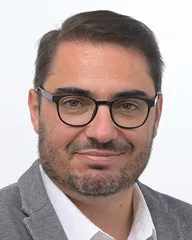
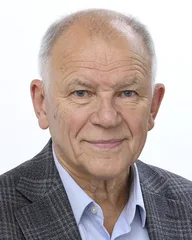
| Rank | Name | Country | Group | Speeches | |
|---|---|---|---|---|---|
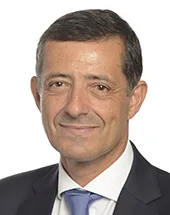
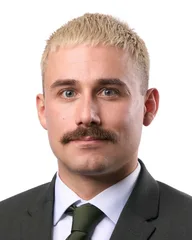
| 1 |
|
Lukas Sieper | Germany DE | Renew Europe (Renew) | 487 |
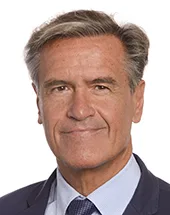
| 2 |
|
Juan Fernando López Aguilar | Spain ES | Progressive Alliance of Socialists and Democrats (S&D) | 454 |
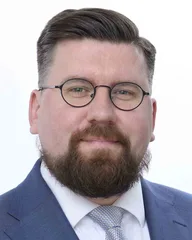
| 3 |
|
Sebastian Tynkkynen | Finland FI | European Conservatives and Reformists (ECR) | 451 |
| 4 |
|
João Oliveira | Portugal PT | The Left in the European Parliament (GUE/NGL) | 284 |
| 5 |
|
Vytenis Povilas Andriukaitis | Lithuania LT | Progressive Alliance of Socialists and Democrats (S&D) | 273 |
All Speeches (84)
Mr President, Commissioner, a year after being nebulously detained, Paul Rusesabagina, who saved over a thousand lives in 1994 from his country's genocide, was sentenced to 25 years in prison on charges of terrorism and criminal activities. A Belgian national residing in the United States, he was arrested on arrival in Rwanda on a trip in 2020. Since then, we have seen a series of abuses of the rule of law and the country's judicial system, along with a clear disregard for the detainee's rights. This process has been criticized by the international community as a way of silencing political dissent and opposition to installed power. We cannot condone this action by the Rwandan Government. I call for the separation of powers to be guaranteed, for the political opposition and the right of opinion to be fully respected and for the citizen Paul Rusesabagina to be guaranteed all the rights inherent in his condition: the right to access their medication, the right to prepare their defence with all the human and material means at their disposal, and above all, at this time, the right to a fair and free remedy.
European solutions to the rise of energy prices for businesses and consumers: the role of energy efficiency and renewable energy and the need to tackle energy poverty (debate)
Date:
06.10.2021 11:44
| Language: PT
Speeches
Madam President, Commissioner, in scheduling this debate the European Parliament has given an important signal that it has understood what concerns the citizens and wants to be on the side of the solution. I regret that the proposal of the Socialists and Democrats to add a resolution to this debate has not been made possible. But that is no excuse for not taking action, because it is necessary. Many say that the peak in energy prices is a natural consequence of the market and as such has to be accepted. It is true that there has been a peak in demand, a sign of recovery of the European economy, but it is also true that this circumstance has been ridden by multiple movements to exploit market failures, to generate short-term profits or to condition the energy transition in the medium and long term. We need to stop these dynamics with concrete answers: It continues to focus on renewables, which already bring lower prices than fossil fuels to the clean energy market today. Using the carbon market and the funds it generates as an emergency resource to address energy poverty and support companies in greatest difficulty. investing in the development of storage capacity for renewable energy, including green hydrogen and batteries. Multiplying interconnections to make the market more fluid and resistant to manoeuvres like those we are denouncing here today. And promoting more transparent distributed energy systems with greater community involvement. This price spike is a wake-up call. This is not a time to hesitate in the European commitment to the energy transition, but an opportunity to respond to its enemies with measures to promote people's dignity, economic innovation and environmental sustainability.
Madam President, Commissioner, since 6 July, when we discussed the situation in Tigray in this House, the conflict in this region of Ethiopia has worsened, the humanitarian situation has deteriorated and the reports coming from the ground are deeply worrying and appalling. According to the latest available data, there are currently more than five million people in extreme hunger and there are reports of mass killings that should be urgently investigated and treated as war crimes. I recall that Addis Ababa was the first capital to which the President of the European Commission went after being elected, marking her willingness to assert a geopolitical Commission. I believe that the situation in Tigray now justifies, Commissioner, a political and diplomatic mission by the European Union on the ground in addition to humanitarian aid. I encourage you to set it in motion. Ethiopia must urgently return to the rule of law, in strict compliance with the Cotonou Agreement to which it is a signatory. The European Union, which has the largest beneficiary of its Emergency Trust Fund in Ethiopia, must continue to work to raise awareness among the parties to put an end to this escalation of violence and its tragic consequences. I end by calling on the parties to the conflict to have an immediate ceasefire accompanied by measures to restore peace in the country.
The role of development policy in the response to biodiversity loss in developing countries, in the context of the achievement of the 2030 Agenda (debate)
Date:
04.10.2021 17:22
| Language: PT
Speeches
Mr President, Commissioner, in 2015 the Member States of the United Nations adopted the 2030 Agenda for Sustainable Development, the aim of which is to leave no one behind by increasing global development and the quality of life of citizens. I emphasise the European Parliament's commitment to scrutinising the external dimension of the European Union's policies related to combating biodiversity loss in developing countries. This report expresses a commitment to the successful implementation of the 2030 Agenda. A commitment that has also resulted in 10% of the European resources to be invested in the next decade, under the new generation funds, for the promotion and protection of biodiversity. The direct dependence on the subsistence of biological diversity of about 70% of the world's poor population requires a holistic and in-depth approach to policies that directly interfere with nature and the lives of those most in need and dependent. I welcome the reference made in this report to the importance of protecting indigenous peoples and local communities, the chief custodians of biodiversity, and investing in policies that guarantee food sovereignty, including fishing, pastoralism and agriculture, and protecting areas of the world that are most vulnerable to deforestation and climate change. I conclude, Mr President, by saying that the future of humanity also depends on us. Let us now begin to guarantee it to future generations.
Madam President, Commissioner, the Kakuma refugee camp, the third largest in the world, hosts asylum seekers of 20 different nationalities who arrive there. Many have lived there for years and years with no solution in sight of returning or relocating out of the countryside to start a new life. It is in this camp in Kenya that there have been repeated attacks on minorities in recent months, jeopardising their security, dignity and freedom, which is already so limited by the walls of the refugee reception centre. Violence in the Kakuma camp has increased exponentially with the Covid-19 pandemic and homophobic attacks are increasingly recurrent. A refugee was murdered in April this year. Since that month the threat of closure of the camp by the Kenyan authorities has loomed, leaving refugees in a huge degree of anxiety and uncertainty about their future. It is essential to ensure that the Kenyan authorities guarantee the safety, dignity and protection of the lives of the refugees that it hosts in this camp and for which it has been receiving funding from the European Union since 2012. Funding to ensure food security, health, the fight against malnutrition, access to clean water, hygiene, protection and education. We therefore count on the Kenyan authorities to make the commitments made in the Cotonou Agreement and also in the African Charter to protect the rights, freedoms and guarantees of refugees in search of a dignified and better life. Freedoms and guarantees that we cannot allow to be called into question again in the reception camp, after the forced flight by wars, hunger and the most diverse persecutions in the neighbouring countries.
EU contribution to transforming global food systems to achieve the Sustainable Development Goals (debate)
Date:
15.09.2021 21:16
| Language: PT
Speeches
Mr President, Commissioner, only a systemic approach to the 2030 Agenda can create the conditions for mobilisation and dignity on a global scale capable of reversing trends and rescuing the future. The challenge we are leaving to the European Commission today in the run-up to the UN Food Systems Summit is therefore an enormous opportunity. Eradicating hunger and ensuring everyone's right to adequate food means vigorously innovating in the fight against inequalities and the development of sustainable food systems. It also involves making choices in terms of trade policy and cooperation and development aid policy. As Chair of the European Parliament Delegation to the ACP-EU Joint Parliamentary Assembly, I welcome the provisions to develop a partnership of equals for empowerment and sustainable development contained in the post-Cotonou agreement. The entry into force of this agreement should not be delayed, Commissioner. Now is the time to move quickly from political agreements to implementation on the ground. People and the planet cannot wait.
Madam President, I congratulate you on having learned your lesson. The solidarity response to this crisis has made a difference compared to the response to the previous crisis. It was therefore right to propose the continuation of a path of solidarity, a path, to quote its happy expression, ‘to give soul to the Union’, setting in motion the Health Union, the Union for technological leadership in chips and other strategic areas, the Social Union and tax justice, the Union for the sustainability of the planet and the dignity of people, the Union for youth, the Union for common security and defence, the Union for connectivity and fair trade, the Union for gender equality and against violence, the Union against energy poverty. I therefore hope, Madam President, that you have also learned from the lessons of the past in the new governance model that you have announced to us. It has to be effective in its implementation, it has to be supportive, collaborative, convergent and without budgetary constraints, because budgetary constraints will recover the specter of impoverishment of unemployment and injustice among peoples.
A new ERA for Research and Innovation (continuation of debate)
Date:
07.07.2021 19:28
| Language: PT
Speeches
Mr President, Commissioner, never has an articulated commitment by the European Union in the field of research been so important and recognised as such by the citizens. Research must use the new networking tools to give full meaning to the concept of a European Research Area, involving territories, knowledge centres, researchers and interacting transparently with European society. This resolution consistently encourages networking, synergies, engagement, commitment, transparency, monitoring and reporting of results and demonstration of benefits to people. It should therefore be an inspiring benchmark for the Commission and the Member States to use the resources available for research and development with global ambition, respecting academic freedom and the Union’s values and ethical principles. It should also be reflected in a mobilising framework for young researchers, entrepreneurs and innovators in general so that, in a demanding combination with public policies, it is the basis for a convergent and solidarity-based recovery of the European Union, preparing it to successfully face the current challenges and those of the coming decades.
Situation in Tigray, Ethiopia (continuation of debate)
Date:
06.07.2021 19:47
| Language: PT
Speeches
Mr President, Commissioner, Minister, the Tigray conflict is a painful and sad moment in contemporary history when hunger is being used as a weapon of war and endangering the lives of thousands of people. The situation on the ground is very unstable, access to food, energy or the Internet extremely limited and the armed conflict has generated numerous human rights abuses, massacres, rapes, thousands of wounded, killed, displaced or refugees. The international community has to act urgently and stop considering this issue as an internal issue of the Ethiopian state. This is a serious regional conflict, with the participation of Eritrean troops alongside government troops, with severe implications for civil society. The electoral process of 21 June, important in the construction of the democratic process, did not ensure the path of pacification of the current situation, nor did it pave the way for the urgent humanitarian response. It is therefore urgent to forge international diplomatic bridges capable of bringing the two parties to this conflict to the table and finding a peaceful solution. The Ethiopian Prime Minister, Nobel Peace laureate for having contributed to the solution of the conflict with Eritrea, now has a golden moment to be considered, in his own home, the peacemaker and not the warlord.