

| Rank | Name | Country | Group | Speeches | |
|---|---|---|---|---|---|
| 1 |
|
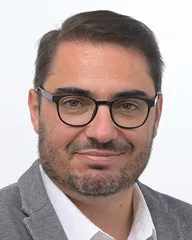
Lukas Sieper | Germany DEU | Non-attached Members (NI) | 390 |
| 2 |
|
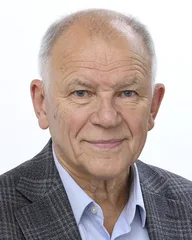
Juan Fernando López Aguilar | Spain ESP | Progressive Alliance of Socialists and Democrats (S&D) | 354 |
| 3 |
|
Sebastian Tynkkynen | Finland FIN | European Conservatives and Reformists (ECR) | 331 |
| 4 |
|
João Oliveira | Portugal PRT | The Left in the European Parliament (GUE/NGL) | 232 |
| 5 |
|
Vytenis Povilas Andriukaitis | Lithuania LTU | Progressive Alliance of Socialists and Democrats (S&D) | 227 |
All Contributions (242)
EU-US trade negotiations (debate)
Dear colleagues, dear Commissioner, The EU is a very strong trade power globally. We have a lot of trade agreements with many countries, world-wide. Trump is arrogant and unpredictable, and it is his weakness, but you, commissioner, are reliable and experienced, and that is your strength. We trust you. A deal is possible, the EU goal is to reintroduce tariff levels, explore commercial opportunities, but we can‘t accept any negotiations on our legislation, on our high food safety standards and on our issues related to digital technologies. Our strength is „reciprocal“ tariffs, WTO rules and our trade agreements, with new global partners.
Prevention and treatment of obesity (debate)
Madam President, Commissioner, it is time to recognise obesity as a chronic, relapsing and separate non-communicable disease within the European Union Health Policy Framework and as a gateway disease to many other NCDs. Addressing obesity at the centre of NCDs as an integral part of the European Union cardiovascular health plan will reduce the overall NCD burden and will improve outcomes for people living with obesity. Action on obesity must address the entire disease spectrum and life course. Addressing obesity throughout the life course is key to improving population health and reducing related chronic diseases, including cardiovascular diseases, diabetes, cancer and others. Prevention of obesity and care for people living with obesity must go hand in hand.
Activities of the European Ombudsman – annual report 2024 (debate)
No text available
Immunity of International Criminal Court officials and the activation of the EU Blocking Statute to strengthen EU strategic autonomy (debate)
No text available
Multilateral negotiations in view of the WTO’s 14th Ministerial Conference in Yaoundé, 26 to 29 March 2026 (debate)
No text available
Savings and Investments Union: time to accelerate the process to deepen market integration (debate)
No text available
One-minute speeches on matters of political importance
Mr President, Commissioner, dear colleagues, The European Union's eastern border region, countries bordering Russia and Belarus face persisting security threats, heightened pressure, economic strain and declining investments. At the same time, these regions are expected to strengthen their security, maintain social cohesion and keep economic development. These countries have already committed substantial national resources to reinforce external borders and strengthen their defence While necessary, these changes inevitably limit investment in long-term regional development and competitiveness. The Commission has proposed initiatives to help, but the scale of the challenge, especially today, is above what national budgets or current instruments can provide. That is why the next MFF must provide for increased and targeted EU-level support to ensure that strong eastern border regions continue to support a safe and resilient Europe.
Gender pay and pension gap in the EU: state of play, challenges and the way forward, and developing guidelines for the better evaluation and fairer remuneration of work in female-dominated sectors (debate)
President of the meeting, Commissioner. I would not like to repeat how many rapporteurs have already raised the issue of discrimination against women and pay. However, I would like to point out that, in fact, the Commission has ample leverage to increase pressure on Member States in the context of the European Semester, because their commitments in the implementation of the Social Pillar need to be subject to more stringent controls. National progress programmes must clearly state how, in what time, Member States will actually try to close the gap, because it is shameful to talk about the fact that poverty among women, among single women, among women of retirement age, is simply a moral problem and has been going on for decades. We must really try to strengthen control and influence and pressure through the European Semester, through the National Progress Programme.
Cooperation among enforcement authorities regarding unfair trading practices in the agri-food supply chain (debate)
No text available
Recommendation to the Council on EU priorities for the 70th session of the UN Commission on the Status of Women (debate)
No text available
Addressing subcontracting chains and the role of intermediaries in order to protect workers’ rights (debate)
Mr President, Commissioner. It is indeed necessary to have a directive and to provide for liability issues from the first contractor to the subcontractor. And that issue of responsibility must be clearly qualified, so that those who have started subcontracting do not ‘wash off’ the responsibility by transferring it. And in that chain of seventeen contractors, it is quite clear that this is a model in which much is interlinked, i.e. the shadow economy is the best example for us. This is all the more so because it also distorts the social market and creates problems for exploitation and exploitation. And it is also especially bad when we do not have any registers of mediators to see what is. The need for a directive is therefore obvious, the issue of responsibility must be very clear and, above all, responsibility in that chain for those who start that chain and then in a proportionate way... then those who hire will know that they are primarily responsible.
Spain’s large-scale regularisation policy and its impact on the Schengen Area and EU migration policy (debate)
Madam President, colleagues, the first far-right claim: 'This endangers the Schengen Area'. Those who are granted a residence permit are authorised to travel to other Schengen countries only for a short days. They do not have the right to live or work in other EU Member States without meeting that specific country's immigration requirements. The second far-right claim: 'This will be a pull factor'. There is no pull factor, because the measures are retrospective. The third claim: 'This legalises criminals'. A clean criminal record is a prerequisite. Any applicant with a criminal history is not eligible for regularisation. Commissioner Brunner, you can see the impressive neo-fascistic spectacle from the far right. Adolf Hitler would be proud – many followers. It's shame to listen to those speeches.
One-minute speeches on matters of political importance
No text available
Amending the Measuring Instruments Directive (short presentation)
No text available
World Cancer Day (debate)
Mr President, thank you, colleagues, four in ten new cancer cases are linked to preventable causes. Prevention is therefore crucial and the most effective way of addressing such serious illnesses. Nearly half of preventable cancer cases are accounted for by lung, stomach and cervical cancer. Cancer is not just a problem for one country – it is a European problem, so action must be taken at European level to prevent and cure it in a much more energetic way. There are still huge disparities among national cancer beating plans, and especially keeping in mind issues of screening – a very big issue. I am asking Commissioner Várhelyi to assist Member States in keeping this issue high on the political agenda of the Council and in analysing and eliminating the root causes of these disparities. The cross-border cooperation of Member States is crucial, and I ask Commissioner Várhelyi to be very smart and strong in this field.
Attempted takeover of Lithuania’s public broadcaster and the threat to democracy in Lithuania (debate)
Dear colleague, I would like to ask you briefly. Would you agree with the practice that out of 578 procurements, 516 were implemented through unannounced surveys? And would you support the practice of exceptionally recruiting 38% of your staff without a competition, without criteria? Would you support this practice personally, as a former minister and parliamentarian defending transparency? Yes or no?
Attempted takeover of Lithuania’s public broadcaster and the threat to democracy in Lithuania (debate)
I will ask you to take a look at the conclusions of the National Audit Office and there you will find the words about the fundamental and systemic violations. Try to read them and then you can interpret them. Second point: your party appears to have been in the ruling majority since September 2024. Am I wrong? I'm probably not wrong. Now that you have left the coalition, you obviously have a chance to politicise, but that politicisation does not solve the problem of freedom and the application of Article 5 of European media freedom, because it applies not to the Administrative Director, but to the Council and the President of the Council, because they are the guarantors of a free press. Lawyers can help you explain this.
Attempted takeover of Lithuania’s public broadcaster and the threat to democracy in Lithuania (debate)
Colleagues, you asked about the corrections made by the ruling majority in July 2024. At the end of the full term, it was the voting procedures in the Radio and Television Council of Lithuania that were amended and it was there that the open vote was introduced. As was previously the case in the Regulation, it is up to the Council to decide whether to vote freely or by secret ballot or by open ballot. In this House, in the European Parliament, we approve personnel by secret ballot. I have never seen anyone doubt that a secret ballot in the European Parliament is against democracy. Or do you want to propose amendments to the Statute in the European Parliament in order to be able to vote openly when approving staff? You'll probably agree. As a result, even one of the leaders of the LRT Council was threatened when he asked for conclusions from the administration that they would be approved.
Attempted takeover of Lithuania’s public broadcaster and the threat to democracy in Lithuania (debate)
Dear Chairman of the meeting. This debate is very timely. I think, of course, it is intended for the internal situation of Lithuania, because it is nice that everyone who has spoken the Lithuanian language so far. I will say very clearly that the discussion here is not about the violation of freedom of speech at all, nor about the constitutional violation, respected Dainiau, and other things. We will certainly be able to say that there are many legal analyses, not just those carried out by one expert group. There are many of them. Now the facts are such that would force everyone to listen to the fact that Lithuania consistently occupies high positions in the world rankings of press freedom. 2025 Reporters without Borders Lithuania ranks 14th out of 180 countries in the World Press Freedom Index, and the overall score has increased. Next: Freedom House Lithuania is also classified as a free country with a vibrant media protected from government pressure. These are facts. You can read them just now. I recently visited... The Venice Commission visited Lithuania this week. Its findings will also be available to you. So I answer that the fact that the National Audit Office carried out an audit and revealed huge cases of corruption, bribery, violation of the law makes it necessary to talk about administrative problems that the government has to solve. Freedom of the press is a cornerstone that we have defended and will defend throughout our lives.
Territorial integrity and sovereignty of Greenland and the Kingdom of Denmark: the need for a united EU response to US blackmail attempts (debate)
Mr President, honourable Commissioner, colleagues. First of all, let me thank Denmark and Iceland on behalf of Lithuania, especially Uffe Ellemann-Jensen and Icelander Jón Baldvin Hannibalsson. They were the first to recognize the three Baltic states and their independence. Then the Baltic people stood unarmed, although the Soviet troops of the Soviet Union were around hundreds of thousands, but the force of the people showed that there is something to be said today: 450 million Europeans are a huge force! And we need to send a clear signal to the American Republicans, because there are also like-minded people there. Because our strength is trade bazooka, and I call on the Commission to take action as soon as possible, because the introduction of a tariff against eight means against us all. The response must be as strong and rigorous as possible.
One-minute speeches on matters of political importance
Mr President, colleagues, the current clinical trial rules in our 27 Member States make it extremely difficult to implement multi-country clinical trials. They are costly in both time and resources and impede the growth of medical innovation. Today we had discussions on the Critical Medicines Act and the 28th Regime for innovative companies, and I would like to advocate for each to be created, as well as for multi-country clinical trials. This framework would unify a currently diverse regulatory landscape that exists among our Member States by streamlining the approval process for new therapies and technologies for all patients. We could reduce bureaucratic hurdles that stifle innovation. A cohesive ecosystem would not only enhance the efficiency of multi-country clinical trials, but also improve patient access to groundbreaking treatment, and also restore EU leadership in global health innovation without encroaching on the Member States' rights to set up their own requirements. At the heart of this regime is the need for a robust digital infrastructure that facilitates real-time data sharing and communication among all stakeholders by leveraging advanced technologies such as artificial intelligence and machine learning, which can enhance critical design and patient monitoring, and significantly reduce such loss of time and effectiveness.
Framework for strengthening the availability and security of supply of critical medicinal products as well as the availability of, and accessibility of, medicinal products of common interest (debate)
Madam President, colleagues, we need to ensure that all patients in Europe – it doesn't matter where they live – can rely on access to a medicine they need when necessary. It is our obligation. This act aims to strengthen our security of supply by reducing dependencies on third countries and supporting resilient, diversified supply chains. We must step up investment in European manufacturing capacity, while ensuring that public funding is used in a responsible, transparent manner, keeping the interests of patients at the core. We must keep not only availability but also affordability as part of joint procurement. Addressing fragmentation in the market is a very challenging issue. I want to stress that attacks from the extremist side of this room on the European environmental and chemical legislation in the area of pharmaceuticals production are unacceptable. Ideological attacks do not strengthen health security. Europe needs medicine that is available, accessible, affordable and sustained to all of us.
The 28th Regime: a new legal framework for innovative companies (debate)
No text available
European Democracy Shield – very large online platform algorithms, foreign interference and the spread of disinformation (debate)
No text available