
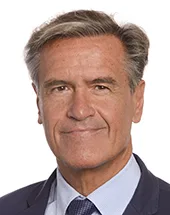
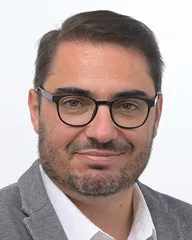
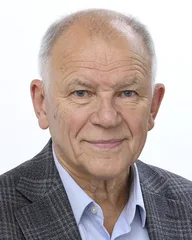
| Rank | Name | Country | Group | Speeches | |
|---|---|---|---|---|---|
| 1 |
|
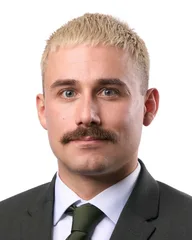
Lukas Sieper | Germany DEU | Non-attached Members (NI) | 390 |
| 2 |
|
Juan Fernando López Aguilar | Spain ESP | Progressive Alliance of Socialists and Democrats (S&D) | 354 |
| 3 |
|
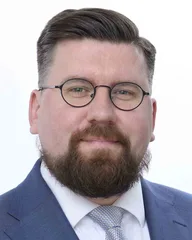
Sebastian Tynkkynen | Finland FIN | European Conservatives and Reformists (ECR) | 331 |
| 4 |
|
João Oliveira | Portugal PRT | The Left in the European Parliament (GUE/NGL) | 232 |
| 5 |
|
Vytenis Povilas Andriukaitis | Lithuania LTU | Progressive Alliance of Socialists and Democrats (S&D) | 227 |
All Contributions (65)
World Mental Health Day - need for a comprehensive EU strategy on mental health (debate)
Dear President, we live in a time of great economic uncertainty, fear of wars, climate change, social isolation. Therefore, it is not surprising that mental health disorders have become a serious social problem. Depression is one of the leading causes of disability. The European Mental Health Strategy was a step forward, but could have been more ambitious. Adequate funding and binding measures were lacking. We continue to see huge disparities and inequalities between Member States. For some, it's still a taboo subject. Some are examples of good practice. We still don't have enough child psychologists in schools. I welcome the updated tools to monitor progress in the implementation of 20 key initiatives. But that alone, I'm sure, will not force states to do more about mental health. Mental health should be recognized as a basic human need, just like physical health, which we face today. What we are facing is a serious European problem and should be addressed accordingly.
Ensuring sustainable, decent and affordable housing in Europe - encouraging investment, private property and public housing programmes (debate)
Dear Chair, Mr Commissioner, millions of citizens across Europe are living under pressure from high house prices, high rents and utilities. Many live in debt slavery, while banks make enormous profits. This is not a challenge that our citizens should face on their own. And it is absurd that today young people have drastically fewer opportunities when it comes to housing than their grandparents, fathers and mothers had. That's not fair, is it? Housing as a fundamental human right must not depend on one's earnings, on market and speculative movements. It's not enough to just talk about it anymore. Politics must take responsibility for safe, dignified and affordable housing for all. The Charter of Social Rights states that the state has a duty to protect citizens from poverty and social exclusion. It is important that the European Union helps them in this, and it can do so with knowledge, finances and by incorporating affordable housing, as one of the fundamental human rights, into European legislation. And I wonder, what are we waiting for?
European Digital Identity framework (debate)
Madam President, I would like to thank all the colleagues who took the floor tonight, and especially I would like to thank the shadows for their excellent cooperation. By working together, we are one step closer to a European Digital Identity for all European citizens, valid and recognised everywhere in Europe by all 27 national public administrations. And finally, dear colleagues, digital or not, it’s no longer a choice. It’s a necessity and a process that cannot be undone. Technology is here and that’s a fact. So let’s take the best of the modern technology and let us not waste this opportunity. I invite you to support the deal tomorrow.
European Digital Identity framework (debate)
Madam President, dear colleagues, in today’s digital era the term ‘digital identity’ frequently arises in relation to many of our daily activities. Whether we talk about online banking, shopping online, accessing government services online, or simply signing up for a new social media account, we all use our digital identity on a daily basis. But our increased presence online raises multiple security challenges: identity theft, cyber-attacks and monetisation of personal data. It is our duty to protect citizens and empower them by giving them full control over the use and sharing of their personal data. Under the new law, the biggest innovation is the European Digital Identity Wallet. This virtual and personal digital wallet, in the form of a mobile application, will allow citizens to identify themselves to safely store, manage and share personal data and documents in digital form across the EU. These include a driving licence, medical prescriptions, passports or university diplomas. While many large tech companies today are offering their own digital wallets, the truth is that too often our personal data is used to track our online activity and is sold to marketing companies that use that data to target us with aggressive advertising. We spend a lot of time debating about privacy and security. We insisted on including in the regulation two important principles. The first is cybersecurity by design, meaning that the wallet should be designed with the goal of preventing a cybersecurity breach, rather than repairing the problem once it occurs. The second is privacy by design, which does not allow the issuer of the wallet to track user behaviour and to observe transactions taking place within the wallet. This concept will enforce data minimisation and help address the issue of excessive mining of personal data by big platforms. The ambition of Parliament, and myself as rapporteur, was to give an alternative to all Europeans and to challenge the status quo. We wanted the digital wallet to be a practical tool that both European citizens and businesses will be able to use on a regular basis to solve their most practical day-to-day situations. And I think we achieved that objective. Citizens will be able to prove their identity in a secure and privacy-friendly way, and share and electronically sign personal documents from their digital wallets with the click of a button on their mobile phone. Europeans will be able to access both public and private online services across the EU. Examples of these could be applying for a loan, submitting tax declarations, enrolling for a university, renting an apartment, online voting in elections or registering a newly born child. It is important to emphasise that the holding of the wallet will be entirely a voluntary choice of the citizens. Moreover, this regulation has enormous potential to improve the quality, access and transparency of public services through digitalisation. This is crucial because not all Europeans have access to modern and efficient public services, such as Estonia or Denmark. We need to change this. Finally, we also need to address the lack of interoperability. Today, only a small fraction of online public services can be accessed cross border. We need to overcome these virtual barriers across Europe by enabling access to interoperable public, private and cross-border digital services. Thanks to the new regulation and harmonised standards, citizens will finally be able to use their nationally issued digital IDs seamlessly in all Member States. And let’s face it, our societal interests, such as the right to privacy, lost out in the favour of big commercial interests. Now it’s time for us to mobilise and to make technology adapt to people, instead of the reverse.
EU2040 climate target (debate)
Mr. Chairman, Mr. Commissioner, it is of utmost importance that the European Union remains consistent with the idea behind the European Green Deal and that we become the world’s first climate-neutral continent by 2050. Some think this plan isn't ambitious enough. I don't agree with them. Reducing greenhouse gas emissions by 90 percent by 2040 is very ambitious, but I would like to know and it is not clear enough to me how these ambitious plans are planned to be achieved. Indeed, we are aware that in many Member States not all citizens have an understanding of the objectives of the green transition. Certain sectors will be directly affected by these goals, and it is obvious that the mechanisms of compensation in the transition that has been emphasized to be just are not well designed and not even communicated. It is precisely on this that many radical right, we have just heard, and populist parties will persevere in the upcoming elections and pick political points. Therefore, we need to be clear and concrete when planning such ambitious climate targets. Without it, we will certainly not be successful.
Framework for ensuring a secure and sustainable supply of critical raw materials (debate)
In the long term, our economies cannot function without a secure, competitive and environmentally friendly supply of critical raw materials. Strategic autonomy in all sectors is therefore of the utmost importance for the future of our European family. Lessons learned from our experience and dependence on Russian energy, this week in the European Parliament we respond to increasingly aggressive Chinese trade practices and adopt a law that reduces our dependence by more efficient use of resources, sustainable products and innovation. If we are to achieve the objectives of the European Green Deal, we also need to secure supply chains for critical raw materials, while mitigating the consequences of increased demand for them through better efficiency and recycling of existing ores. By adopting this law, we are one step closer to achieving European strategic autonomy and strengthening our own position in current and future geopolitical turmoil.
Ambient air quality and cleaner air for Europe (debate)
Dear Chairman, I am speaking today not only as a Member of Parliament, but also as a doctor and a concerned citizen of Europe. Too many of our fellow citizens have died from the consequences associated with poor air quality to turn our heads on this issue. The quality of the air we breathe and the water we use is crucial for our future. This is the basic prerequisite for life. The primary, vital element of our well-being and a symbol of our commitment to a healthier and more sustainable future. Without a healthy environment, there is no healthy development. Polluted air and water affect everything from the youngest to the oldest, from urban centres to rural corners. This is a challenge that we must face not only for ourselves, but also for generations to come. Together with the Ambient Air Quality Directive, the European Green Deal is a beacon of hope, a blueprint for a sustainable future, as clean air and water are invisible guardians of our health and the planet. Let's show responsibility and support this directive in the vote.
Decision to enter into interinstitutional negotiations: European Digital Identity framework (A9-0038/2023 - Romana Jerković) (vote)
Mr President, the new digital identity framework is a real game-changer. Why? Because it will put citizens in full control of their own data and give them the freedom to decide exactly what information to share with whom and when. By using the wallet, they will be able to link their national identities with documents such as driving licence and university diplomas and bank accounts, electronic health records, and solve their real problems in life in all European countries. I want to highlight that the using of digital wallet will be strictly on a voluntary basis. And because we understand the risks, we introduced important safeguards. And going digital is no longer a choice, it’s a necessity and the process cannot be undone. But it’s up to us to find the most suitable regulation framework that will allow us to benefit from the transformational potential of technology. And while some see nothing but threats and obstacles in the digital identity framework, others, like me, see the endless opportunities. So, colleagues, I would ask your support to enter into the negotiations.
Establishing the Digital Decade Policy Programme 2030 (debate)
Madam President, dear colleagues, Commissioner, as the energy and economic crisis continue to loom large, there is a growing risk that many European citizens and companies will fall behind and not reap the benefits of the digital transformation. To accelerate the pace of digital innovation and adoption, it is crucial that we match the 2030 target with a set of investments that will help close the digital divide and keep our ambitions high. First, we need to invest in people and education so that our citizens have the digital skills necessary to actively participate in the digital society. The digital decade must be inclusive and make digital technology work for people and for businesses. Second, the quality, access and transparency of public services through digitalisation should be improved and modernised across the EU. The point is not to win the digital race. The point is to develop and safeguard our societies.
Data Governance Act (debate)
Madam President, over the last few years, digital technologies have changed the way we work, the way we fight disease, the way we use public services. Data is at the core of this transformation. The Data Governance Act is Europe’s chance to deliver on the promise of data-driven innovation and to create a single European data space in which data flows without barriers. How do we can deliver on this promise? By ensuring that data sharing is rooted in European values and the highest level of data security and privacy. The ultimate political goal of this act must be to empower individuals and to respond to their repeated calls to have more control over the use and sharing of personal data. Europe needs to continue building a data governance framework that promotes innovation, celebrates diversity, and upholds social justice.
General Union Environment Action Programme to 2030 (debate)
Dear Chairman, we are living in extremely crisis times with the threat of global war and pandemic, which unfortunately pushes climate change to the next level. And right now, more than ever, is the moment to truly separate economic development from resource use and environmental degradation. While we have the most ambitious environmental policy in the world, the European economy bears €55 billion in health and other environmental costs every year due to non-implementation of environmental regulations and directives. Our efforts must therefore be focused on implementation and monitoring of results, and this 8th Union Environment Action Programme offers us exactly that, contains a strong mechanism for monitoring the implementation of environmental policies and provides guidance for achieving the Sustainable Development Goals, while protecting the social well-being of our citizens. It is also important that we support this programme as it upholds the right to live in a healthy environment and a sustainable economy.
Rising energy prices and market manipulation on the gas market (debate)
Dear Chairman, the war we have witnessed in the last thirteen days has only confirmed what we already knew. Someone else is managing our strategic interests and yes, that makes us very vulnerable. And it is clear as a day that without energy sovereignty and without stable energy prices, there is neither development nor progress. For this we need a completely new approach to energy policy and for this we need a sixth speed. We need to accelerate the transition to renewable energy sources, diversify supply sources, better manage strategic stocks and invest in building Europe's energy infrastructure and interconnections. For this we need clear goals and even clearer deadlines. I would say, no more business as usual. Madam Commissioner, can you tell citizens today from this lectern that Europe has a solution to this energy crisis and has a vision of how to protect citizens and provide them with affordable energy?
Strengthening Europe in the fight against cancer(debate)
The Honourable Chair, the Honourable Véronique, Commissioners, colleagues, we have tolerated too many inequalities between Member States in cancer treatment in Europe for too long. The European Plan is a generational opportunity to reduce these inequalities and improve access to oncological care for all EU citizens, regardless of their country of origin. This report is progressive, ambitious, science-based and gives us the opportunity to turn a new page in the fight against cancer. We can reverse bad trends and reduce the alarming increase in the number of cancer patients. But we must be persistent in this, especially when it comes to cigarettes, heated tobacco products, alcohol or the polluted environment, and that is why when voting, each of us should ask ourselves what is more important to us: the health of our citizens or meeting the interests of the lobbies? Today I am filled with the hope that we are on the right track, and although he is both long and full of unknowns, with this report we are making a great leap forward today. Let's continue to walk boldly and together!
UN Climate Change Conference in Glasgow, the UK (COP26) (continuation of debate)
Dear Mr. Chairman, colleagues, if we compare our successes in the fight against climate change today with those of ten years ago, we see progress. But we all agree that the efforts made are far from sufficient. There are many demands ahead, such as abolishing all fossil fuel subsidies, reducing greenhouse gas emissions and increasing investment in renewable energy sources. According to the International Energy Agency, we need to triple investment in clean technologies over the next decade to prevent a temperature rise of more than 1.5 degrees by 2050. Therefore, the UN Conference is an opportunity for world leaders to embrace more ambitious commitments, and perhaps one that refers to the transformation of the current neoliberal economic model into a model based on criteria such as social fairness and people's satisfaction. Let's not miss that opportunity! Today we need to call on all governments to increase their national contributions and understand the situation as alarming.
European solutions to the rise of energy prices for businesses and consumers: the role of energy efficiency and renewable energy and the need to tackle energy poverty (debate)
Dear Chairman, the debate on the rise in energy prices is urgent because it is a matter that directly affects many families. Energy prices have increased by more than 100% this year, and citizens feel the price shock on a daily basis when going to gas stations, when performing construction works in the house or when going to the procurement where the basic foods have increased by up to 30%. We need to adopt urgent targeted measures to protect socially vulnerable groups and the economy, without compromising the ambitions of the European Union to become a climate-neutral continent by 2050. To ensure affordable energy use for citizens and to ensure the competitiveness of our companies, we need to reduce import dependency and increase energy efficiency, and use national recovery plans to invest more in renewables. Finally, in order to be successful, the energy transition must be both socially sensitive and just. We're taking care of that.