
| Rank | Name | Country | Group | Speeches | |
|---|---|---|---|---|---|
| 1 |
|
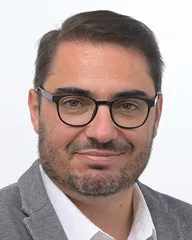
Lukas Sieper | Germany DE | Renew Europe (Renew) | 494 |
| 2 |
|
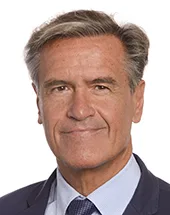
Juan Fernando López Aguilar | Spain ES | Progressive Alliance of Socialists and Democrats (S&D) | 463 |
| 3 |
|
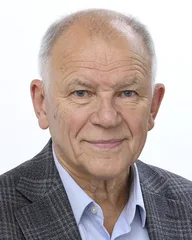
Sebastian Tynkkynen | Finland FI | European Conservatives and Reformists (ECR) | 460 |
| 4 |
|
João Oliveira | Portugal PT | The Left in the European Parliament (GUE/NGL) | 288 |
| 5 |
|
Vytenis Povilas Andriukaitis | Lithuania LT | Progressive Alliance of Socialists and Democrats (S&D) | 276 |
All Speeches (156)
Deepening EU integration in view of future enlargement (debate)
Date:
28.02.2024 19:34
| Language: EN
Speeches
Madam President, this report represents ongoing support for the future EU enlargement, continuing on the ideas of the new enlargement strategy report. Today, I would like to make several key points. Every candidate country should be judged on their own merit. Our fundamental values, such as the rule of law and democratic standards, must be a pillar of our assessment if the country is ready to join the European Union. Building bridges and highways is welcomed, but respect for fundamental values must be a precondition for that. The European Union is more than an economic union. It’s the Union of values and the Union of shared risks. Once the candidate country fulfils all the criteria, there should be no political delays to its accession. The necessary EU reforms must take place in parallel. European Union enlargement is one of the most successful EU policies, but it must continue. On that note, we expect concrete results from the Council meeting in March.
The murder of Alexei Navalny and the need for EU action in support of political prisoners and oppressed civil society in Russia (debate)
Date:
28.02.2024 13:38
| Language: EN
Speeches
Mr President, dear colleagues, the murder of Alexei Navalny is another chapter of Putin’s inhuman, repressive and brutal regime. The Stalinist methods, lack of transparency and circumstances surrounding it show that the ultimate responsibility lies on dictator and the Russian state. The aftermath and the horrendous pressure imposed to his family, friends and lawyers is a sharp reminder of whom we are dealing with. Therefore, I welcome today’s address of Ms Yulia Navalnaya, a very courageous woman, in our House. I think it’s also clear that democratic Russia is unfortunately very far from reality. This House has always supported Russian democratic activists, independent civil society and all courageous citizens opposing the brutal dictatorship of Putin. Unfortunately, for now, it seems that the struggle will take more time than expected. Anyway, we need to keep the Kremlin under pressure and hold dictatorship accountable. Dear colleagues, with the European elections approaching, as well as with the US elections in November, we have to be able to expect the unexpected. But let us not lose the focus and always remember that we are a union of the values. We must not stay silent to brutal dictatorship in our immediate neighbourhood. Our citizens are counting on our voice and they are expecting our response.
Strengthening European Defence in a volatile geopolitical landscape - Implementation of the common foreign and security policy – annual report 2023 - Implementation of the common security and defence policy – annual report 2023 (joint debate - European security and defence)
Date:
28.02.2024 10:19
| Language: EN
Speeches
Mr President, back in 2016 I had an honour of working on the report of this House on the European defence union. Then, the phrase itself raised many concerns. Unfortunately, time has proven us right. Even though the geopolitical challenges in this mandate led to several positive steps in the field of common defence, the European Union should be more proactive and less reactive. Common foreign security and defence policies cannot remain the weakest links of our integrations. Institutional reforms that will increase our cohesion and coherence are absolutely needed. Still, they must be based on a clear assessment of Europe’s needs rather than being used as a political power tool. Only a strategically autonomous European Union can be the best guarantor of peace on our continent, and the best partner to our allies in the NATO. For the EU, it’s high time to go the extra mile for the sake of its own security and relevance.
Geographical Indications for wine, spirit drinks and agricultural products (debate)
Date:
27.02.2024 14:50
| Language: HR
Speeches
Dear Chairman, colleagues, first of all congratulations to the rapporteur - any reform that simplifies rules, shortens procedures and helps manufacturers is welcome. The new regulation is good news for manufacturers of over three and a half thousand already protected products. Among them there are 71 from Croatia. The quality of European agriculture is its main asset on the world market. This quality does not stem from mere geography, but from a deep-rooted tradition in local communities. We are talking about generational knowledge that we inherit on a small but diverse continent. I therefore particularly welcome Article 13, on homonyms, which allows the protection of products with similar names provided that there are clear differences in the conditions of use and that customers are not misled. This is good news for the Croatian dessert wine Prošek of centuries-old tradition in Dalmatia, whose protection I have been working on since 2013. proseccom, Italian aperitif, indeed, shares only a similarity in the name. Indeed, there is no reason why every good meal could not start with a glass of good Prosecca and finish with a glass of good prosecco.
Russiagate: allegations of Russian interference in the democratic processes of the European Union (debate)
Date:
06.02.2024 18:03
| Language: EN
Speeches
Mr President, Mr Commissioner, dear colleagues, as we approach the end of our parliamentary term, I believe we learned many lessons while witnessing historical events. Our geopolitical environment is very different than 2019 and naivety should disappear for good. Russia, but not only Russia, is conducting different schemes to exert influence and to interfere in our political processes. European Union institutions are under frequent threat, particularly our democratically elected body. The Kremlin has perfected a cheap tool that allows it to strengthen other authoritarian regimes, amplify illiberal voices in full-fledged democracies, poison information ecosystems and undermine elections and other democratic institutions. Putin counted and still counts not only on the army in uniforms, but also on the army without uniforms. Whether it’s about money, ideology or particular interest, their work undermines the European Union and poses an increasing security threat. That is why we need to do more to protect our democracy and integrity of the European Union. Focus should be on fostering democratic resilience. Definitely the work of the INGE Committee, of which I was a proud member, needs to be continued in the next mandate as these issues will not go away. On the contrary, we can expect the unexpected. That is the reason why we have to be particularly cautious. The European Union elections are in four months and that’s the next big challenge to address.
The need for unwavering EU support for Ukraine, after two years of Russia’s war of aggression against Ukraine (debate)
Date:
06.02.2024 12:11
| Language: EN
Speeches
Mr President, dear colleagues, our support for Ukraine is as important as it was on the first day of the aggression. Though the situation at the battlefield is a stalemate, the EU has proven that it will be forged in crisis, as Jean Monnet said. Just see the collective defence efforts, energy imports, and sanctions. But we need to do more. The Council’s decision last week is a strong message from the EU in all directions – to Ukraine, which is fighting for freedom, to Russia, which counted on the fatigue of the EU with the war and perhaps on its general collapse, but also to Washington – that the EU does not give up its efforts for Kyiv and that the US must also overcome internal divisions and continue supporting Ukraine. With this decision, EU engagement gains new momentum. In this super-election year, the EU should confirm at the global level that it still has a relevant significance. Slava Ukraini.
Dear Chairman, the debate of the European Parliament on the elections in Serbia is justified because it is an election in a candidate country for membership of the European Union. International observers have assessed the elections in Serbia as a scathing election with numerous violations of democratic principles and electoral rules. International agreements on the protection of minorities are also being violated. The elections in Serbia, which are held at short intervals, are conducive to maintaining the atmosphere of a state of emergency in society. This is the third parliamentary election in just four years, and all of them have served as a tool for strengthening the personal power of the president of the country. Namely, parliamentary elections in Serbia weaken parliamentarism and serve to consolidate the autocratic power of Aleksandar Vucic. But this should not only be a discussion about the last elections in Serbia, but also about the European Union's relationship with Serbia. Maintaining the stability of the Vučić regime means maintaining instability in other countries in the Western Balkans, Bosnia and Herzegovina, Montenegro and Kosovo. Serbia is also increasingly divided over its path to the European Union, while support for Putin's Russia remains high.
Humanitarian situation in Gaza, the need to reach a ceasefire and the risks of regional escalation (debate)
Date:
16.01.2024 16:31
| Language: EN
Speeches
Mr President, the humanitarian situation in Gaza continues, and we must keep this urgent topic on our agenda. Along with our strongest condemnation of the events on 7 October, we reiterate our calls to Hamas to realise to release all the remaining hostages. The ongoing conflict has become regional, accompanied with even more significant global implications. These will mostly be to the detriment of the European Union. Humanitarian aid cannot be part of political games. Instead, it must be based on clear conditionality rules that are being respected. Further to the facilitation of humanitarian aid, we need a political solution and the ceasing of the series of military actions that continue causing civilian victims. Every country, including Israel, has the right to defend itself within the limits of international law. The only viable, hopefully feasible solution is for two sovereign and democratic states living side by side in peace and security. The European Union should mobilise all its efforts to achieve it.
Keeping commitments and delivering military assistance to Ukraine (debate)
Date:
16.01.2024 11:24
| Language: EN
Speeches
Mr President, almost two years after the Russian aggression began, Ukraine became a media through which not only our relations with Imperial Russia are reflected, but also our internal relations are shaped. The best example is the possible MFF revisions that are still pending. Therefore, it’s high time to start implementing the conclusions from the Conference on the Future of Europe, to improve our structure and make it more efficient. Ukrainians are fighting daily to defend their country. Their success is of exceptional importance for the European Union, too, as the defence of Ukraine essentially defines the security and perspective of the entire European project. Financial and military aid to Ukraine should absolutely be continued, and here we should be honest and transparent about contributions so that concrete actions of all follow their declarations. It is one of the best ways to honour Jacques Delors and contribute to his vision of Europe.
Mr. President, this is a time of great geopolitical peril. It is also true that complex democratic systems often do not cooperate easily or quickly. Our relations are under pressure coming from events on the global scene, but they also feel the influence of growing authoritarian and even more radical options within our own democratic systems. The stakes are simply too high. The importance of our relations is too big to fall. We are convinced that the EU US relationship can survive the occasional quarrel. On the whole, lively debate between the United States and Europe, even disagreements, tends to produce better outcomes and creates a world that is more secure and prosperous. Nevertheless, a lot has been achieved since the last report in 2021. We see many concrete results and several open questions remain to be addressed. As said in the beginning, we are more optimistic but also realistic regarding all our partnerships’ challenges. As Parliament’s standing rapporteur for relations with the United States, I am particularly satisfied with the high level of cooperation between all shadow rapporteurs involved in the negotiations on this report. I would like to thank all our assistants for their contributions too.
Mr President, High Representative, representatives of institutions, dear colleagues, the idea of this report was to summarise some expectations and recommendations on transatlantic relations as our position ahead of the elections next year on both sides of the Atlantic. Our imperative is to send a clear message on how we see our cooperation, and what it should be in the months and years to come to protect this long standing fundamental alliance and make it as resilient as possible to the various elections outcomes. Strong transatlantic cooperation is founded on the principle that a partnership of joint leadership and responsibility is necessary to weather the storm of multiple crises on both sides of the Atlantic. We must not refrain from repeating that the US is the EU’s most significant political and economic partner, and vice versa. Russian aggression on Ukraine changed many things. It’s the most direct attack on international law. It’s also the clearest example of reversing the multilateral system since the fall of the Berlin Wall. For 70 years, international order, representation of democratic values, open societies and the protection of human and minority rights has been based on cooperation between the USA and EU. That cooperation has come under pressure in the recent years, but one, and probably the only, positive outcome following the aggression is additional revitalisation of transatlantic relations. The solidarity wave across the EU and globally, and the European Union’s joint responsive and Member States commitments are unprecedented. We stood united in the most challenging times and this crisis has proven it once again. It is essential to emphasise that we see the difficulties with approving new tranches of help in Congress, and we are still awaiting the outcome of the Council. Standing together against Russia’s war of aggression and helping Ukraine will be even more crucial in the months to come, and must remain our joint commitment. Overall, our relations have been in a good shape lately. We can only commend all the concrete outcomes of the increased cooperation, such as two EU-US summits, Trade and Technology Council dialogues on Indo-Pacific China and defence and collaboration on critical raw materials. However, we cannot miss to mention the challenges that remain, particularly with ERA adoption, where most of our concerns were not taken into account and pending issues on tariffs remain. This report contains clear recommendations on what our partnership should entail in relation to China. In the Pacific region, Western Balkans, Africa and other global partners, as well as on security and defence. In light of multiple threats and crises confronting both sides of the Atlantic, we must continue strong transatlantic cooperation. Together, we must defend multilateralism and tackle the dangerous geopolitical realities that affect common values, interests, security and prosperity. This is why both sides must reinforce the resilience of their democratic systems to resist both external and internal threats, like increased disinformation and foreign interference from authoritarian political forces and regimes in the electoral process. It would be excellent as well, if the European Union were doing some contingency planning from our side in case things do not go as desired, because the alternative is an administration that sees our partnership values, security and the world very differently. We want more cooperation and leadership in equal partnership whenever possible. However, we also expect the EU to build its open strategic autonomy. A strong European Union is the best answer to all challenges and also the best partners for the United States.
Need to release all hostages, to achieve a humanitarian ceasefire and prospect of the two-state solution (debate)
Date:
12.12.2023 17:02
| Language: EN
Speeches
Mr President, High Representative, dear colleagues, the title of this debate says it all. After two months of military conflicts and thousands of innocent civilian victims, we need to continue investing all our efforts to achieve a humanitarian ceasefire and facilitate the release of all hostages. We witnessed that pauses are possible as well as the hostage exchanges, and our aim should be to support negotiations so that these processes continue as long as innocent civilians are being held hostage. There are multiple interpretations of the conflict, some short-sighted, focusing only on the past two months. It goes without saying that we were rightfully condemning those atrocities without excuses. On the opposite side, others go centuries back on why this happened. But no one can justify such killings, especially of women and children. There are too many interpretations of who is right and who did wrong looking into the past. We cannot lose time trying to resolve historical riddles. Looking instead into the future, one fact is sure: the latest events should reinvigorate the two-state solution talks as the only possibility for peaceful coexistence of both peoples. Unfortunately, the contradictory positions within the European Union institutions and Member States does not help. One way or another, following the formal revision of its assistance, the European Union must continue its humanitarian efforts to facilitate an exit strategy from this situation. But we need to move also beyond the role of payer and act as an active mediator in these conflicts. Hopefully, this week’s Council meeting will be a new opportunity to step in the right direction.
30 years of Copenhagen criteria - giving further impetus to EU enlargement policy (debate)
Date:
22.11.2023 19:31
| Language: EN
Speeches
Mr President, Madam Commissioner, Copenhagen Criteria were a remarkable set of rules and political commitments that set the tone and prepared the European Union for accepting 10 new Member States for following years. The list of priorities was political, economic and then administrative criteria as the last step. Already then, special importance was given to the European Union’s absorption capacity. Thirty years later, we have not done much to increase our absorption capacity. We did not fully deliver on our commitments, but nor did the candidate countries deliver on the needed reforms. We keep prioritising economic agenda, thus maintaining so-called stableocracy. This is most evident in the case of Serbia. We have to bring back to the centre clear political criteria guaranteeing democracy and the rule of law. In December, the Council has a historic opportunity to deliver on its commitments to Ukraine, Moldova, Georgia, and especially to Bosnia and Herzegovina. It’s an opportunity that we cannot miss.
Humanitarian situation in Gaza, the need for the release of hostages and for an immediate humanitarian truce leading to a ceasefire and the prospects for peace and security in the Middle East (debate)
Date:
22.11.2023 09:42
| Language: EN
Speeches
Mr President, Mr High Representative, Mr Commissioner, first of all I would like to commend your statements and personal efforts since the crisis escalated. The role of the European Union in this crisis could have enormous importance for our global role, our relations with the Middle Eastern countries and other global partners. EU must be more engaged, but the neighbouring countries should also assist more in mitigating the effects of this humanitarian disaster. Of course Israel has a right to defend himself, targeting terrorists from Hamas, but the way it does must be regarded through a clear set of rules that are internationally recognised. Depriving civilians of essential commodities to survive cannot be justified, especially if more than half of civilian victims are children. The exchange of hostages and temporary ceasefire are the first positive steps, but many more are needed to accomplish a sovereign Palestinian State that is in peace with the State of Israel, a goal that we must continue pursuing.
Mr President, Madam Commissioner, representative of the Council, colleagues, the US is the most fundamental partner for the European Union. How we address global challenges and our relations still sets the foundation of the multilateral order. Next month, we will adopt a report on EU-US relations, setting our expectations and goals ahead of the election year on both sides of the Atlantic. We do share the feeling on how our relations got restored with the current administration, especially while joining together to assist Ukraine in its fight against Russian aggression. However, other challenges are emerging: escalation of conflict and humanitarian crises in the Middle East; our relations with China and the Global South; how to defend our democracies and make our economies more sustainable and resilient. While we share the basics, we must also work closely to align our policies further to achieve them while strengthening ourselves. The European Union has to match its ambition with concrete reforms and investments, because a strong Europe is the best partner to the United States, and vice versa.
In particular, I welcome the Commission’s recommendations to open negotiations with Ukraine and Moldova, as well as Georgia’s candidate status. I also support the plan for the growth of the Western Balkans. I welcome the renewal of the enlargement policy and the new proposals on the sectoral inclusion of candidate countries ahead of formal accession. They reflect the recommendations for a new enlargement strategy of the European Union adopted by Parliament. However, the package presented today contains controversies, especially vis-à-vis Serbia, whose president actively exports instability to the rest of the region, plans an election campaign with convicted war criminals and signs a trade agreement with China. No equivalent restrictive measures were imposed on Serbia after Banjska. The terrorist attack is being relativized, sanctions on Russia have still not been imposed, but it praises Belgrade's progress in aligning with the European Union's foreign policy. For enlargement policy to be successful, it must be credible and coherent. Bosnia and Herzegovina deserves to start negotiations as soon as possible. Additional financial instruments are welcome, but what we really need is a real political determination that will stop sponsoring stabilocracy and pave the way for genuine reforms in line with European values.
Conclusions of the European Council meeting of 26-27 October 2023 - Humanitarian crisis in Gaza and the need for a humanitarian pause (joint debate - Conclusions of the European Council and the humanitarian crisis in Gaza and the need for a humanitarian pause)
Date:
08.11.2023 17:10
| Language: EN
Speeches
Mr President, President Michel, Commissioner, colleagues, I reiterate our strong condemnation of the Hamas terrorist attacks on 7 October and repeat the call we made as the European Parliament for the immediate, unconditional and safe release of Israeli hostages held in Gaza. Nothing can justify the deliberate torture, killing, injuring, kidnapping of civilians. Terrorists and their supporters must be stopped. However, the European Union must act now against the massive attacks that destroy civilian housing and infrastructure in Gaza, which come at tremendous cost to human life. International humanitarian law is based on the distinction between civilian and military objects. Understandable right of self-defence and international law cannot cover such indiscriminate attacks. UN sources tell us that attacks on targets within Gaza have destroyed or damaged 45% of all housing units, internally displaced about 1.5 million and killed over 10 000 people, including over 90 UN staff. 67% of all fatalities are reportedly children or women. The call for a humanitarian pause adopted in the recent European Parliament resolution must be followed by concrete measures. We also support the pressing call of UN Secretary-General António Guterres for a humanitarian ceasefire, which is more urgent than ever. The EU’s credibility is at stake here. We also need, as Europeans, to help pave the way of lasting peace and a two-state solution for Israelis and Palestinians.
Madam President, Mr High Representative, dear colleagues, we are again witnessing severe geopolitical turmoil leading to horrible atrocities with political consequences. There are several reasons why the European Union has to live up to its geopolitical ambitions. The division of power is clear: unlike last week’s statement on the attacks on Israel by the Commission’s representatives, we need political coherency. We also need continued efficiency, and we need to rebuild trust among our partners. Dynamic times call for vigorous reaction, particularly when adopting decisions. Our decisions on Ukraine have proven we can. We need to work on credibility: our most significant leverage is in our immediate neighbourhood with the countries that aspire to join the European Union. Most importantly, we have institutional limitations that we need to overcome, as our decisions can be vetoed and blackmailed by one hand. It is high time to make our foreign, security and defence policies truly common, and not the weakest link in our integration.
The despicable terrorist attacks by Hamas against Israel, Israel’s right to defend itself in line with humanitarian and international law and the humanitarian situation in Gaza (debate)
Date:
18.10.2023 09:36
| Language: EN
Speeches
Mr President, first of all, I would like to explicitly condemn the brutal attacks of Hamas on Israel 11 days ago. That was the deadliest day for them since the Shoah. Sincerest condolences to the families of the victims and full support for all efforts to release the hostages. Terror must be stopped, but this debate would not be complete without a broader context: an important distinction between Hamas and other terrorist groups from Palestinians deprived of most essential resources and used as human shields in this brutal conflict, as even hospitals are being attacked. International law must be applied and the International Criminal Court should be in charge. Most urgently, we have to do our best to ensure that humanitarian corridors are functional and to support the work of the UN, UNRWA and all humanitarian workers there. It is essential, of course, that the European Union starts speaking with a unified voice, thus beginning to live up to its geopolitical ambitions.
Dear Chairman, a few final sentences. Indeed, as the European Parliament's standing rapporteur for relations with Montenegro, I am indeed satisfied with the very high level of coordination by all political groups represented in the Parliament, of course relevant, pro-European, whose representatives have participated not only in the negotiations on this report, but also in previous years. Thanks again. I think that with this report we managed to cover with our views a dynamic year, which for Montenegro, unfortunately, in contrast to the great internal political turmoil, was still a year of stagnation on the European path. I hope that in the coming period Montenegro will develop all its capacities and manage to overcome internal divisions in practice, and not only declaratively and truly commit to the realization of everything it wants. Not because of the European Union, but above all the citizens of Montenegro. Candidate countries for membership in the European Union, and Montenegro, especially because of its role as a leader in the process, must not primarily find themselves in the gap between ambitions and the capacity to achieve them. Because there is only one historically important date when we talk about the path to membership. This is the date of entry into the European Union. It is a process in which the path is as important as the goal, and Montenegro needs to wish all the best on that path.
Dear President, Dear representatives of the European institutions, colleagues and colleagues, by taking up the position of standing rapporteur for Montenegro four years ago, I expected and hoped that my last speech on the situation in the country during this mandate would start with congratulations to Podgorica on bringing the long, demanding and exhaustive membership negotiations to an end and that together we would celebrate the closing of all negotiating chapters. Unfortunately, the real situation as it is today has largely denied my, but not only my expectations. Montenegro has, admittedly, opened all negotiating chapters, but none of them have been closed in the last six years. It remains formally at the forefront of the European enlargement policy process. In practice, the enlargement of the European Union has gained new political relevance. Following Russia’s aggression against Ukraine, the list of candidate countries has expanded, but almost all other countries have progressed from previous positions, while Montenegro is missing out on opportunities. Meanwhile, the political situation in Montenegro is continuously burdened by blockades, and the political scene is dominated mainly by internal conflicts and political turbulence. Support for progress towards membership was often maintained only on formal declarations, while some elected political representatives were spokespersons for foreign interference policies. Here I want to make it clear that the European Parliament welcomed the results of all elections held in Montenegro in the meantime and we respected the legitimacy of all elected officials entrusted to them by the citizens of Montenegro. Equally, we respect the will of almost 80 percent of Montenegrin citizens who unequivocally support their country's accession to the European Union. This should bind all political actors in Montenegro and could serve as a cohesive factor in a highly polarised society. I would like to stress this in particular in the context of the formation of a new government and the expected vote in the Assembly next week. I also emphasize the role of the Serbian Orthodox Church, which, unfortunately, is an active political factor in Montenegro and is often used as a means of foreign interference in domestic political processes. As for the content of the report itself, positive things should be praised. Montenegro is fully aligned with the common foreign policy of the European Union, including in terms of sanctions against Russia, and we certainly appreciate this. We also welcome the appointment of three new judges to the Constitutional Court as a step towards resolving the constitutional crisis. We take note of the improvement in the prevention of corruption and the positive trend in the work of the Agency for Prevention of Corruption. We also welcome the adoption of the new Public Administration Reform Strategy 2022-2026, but regret the lack of progress in its implementation. We welcome some positive steps, such as the introduction of stricter penalties for attacks and threats against journalists and the establishment of ad hoc the Commission for the Monitoring of Violence against Journalists. We take note of the signing of the urgent agreement between the European Union and Montenegro on operational cooperation on border management with the European Border and Coast Guard Agency. We support the improvement of economic parameters and particularly welcome the decision to discontinue citizenship-by-investment schemes. All these positive steps would mean much more if we worked in parallel to solve systemic problems, primarily detected in the criteria in Chapters 23 and 24. In order to eliminate any doubts about census, we are not talking about its boycott, but we support the implementation of the list as a contribution to the development policy of each country. What we propose is that the list should not be used as another political tool to further polarize society. Removing political blockages would be a constructive precondition for maintaining it in an open and transparent manner, without any political interference. Finally, despite the fact that the vast majority of us sincerely wanted to hear better news from Montenegro in this mandate, I stress that it has been an exceptional honour for me to serve as the European Parliament's standing rapporteur for Montenegro over the past four years. I would like to thank all my colleagues for their continuous and unequivocal support for European Montenegro and my work. My main goal was to help Montenegro with its own experience in order to achieve as soon as possible the convincing desire of most of its citizens for full membership in the European Union.
Mr President, despite the horrible atrocities happening now in the Middle East, we cannot and must not turn our attention from the ongoing Russian aggression in Ukraine, which entered its 601st day. We need to continue pressuring Russia by all means possible. We should also continue with further measures on Belarus – a Kremlin puppet regime whom we must also keep accountable. Sanctions are taking place in economically challenging times when our citizens are increasingly anxious, but we have to keep them going as a justified response to brutal aggression. Sanctions do work, but the efficiency of sanctions needs to be strengthened, including through a shared approach with our allies. There are still too many loopholes that need to be addressed, particularly regarding fossil fuels, energy imports through third countries and price caps. Finally, I share the view with many others that Russian frozen assets of today can be used to rebuild Ukraine of tomorrow.
Recent developments in the Serbia-Kosovo dialogue, including the situation in the northern municipalities in Kosovo (debate)
Date:
03.10.2023 19:23
| Language: EN
Speeches
Mr President, Commissioner, the latest events of 24 September are evidence of pertinent tension always on the verge of escalation. So far, we have witnessed severe incidents with the attack on KFOR forces, the abduction of Kosovo police officers and the latest terrorist attack. With great concern, we monitor news on the location of the Serbian army along the border. Formally, on paper, things look better than they are in practice. There is a political appetite for enlargement, the Ohrid Agreement was reached. But in reality, there is no real movement forward. We have seen restrictive measures on Kosovo. At least the same, or even more extensive ones, should be applied to Serbia after the latest events. For real success, our policy needs to be coherent. We cannot have such divergent policies towards Serbia and Kosovo among our Member States. Finally, we can stop funding infrastructure projects if there is no improvement in fundamentals and dialogue provisions.
Situation in Nagorno-Karabakh after Azerbaijan’s attack and the continuing threats against Armenia (debate)
Date:
03.10.2023 18:01
| Language: EN
Speeches
Madam President, nine months of blockade of the Lachin corridor were a clear warning of what, unfortunately, followed last month. We should denounce in strongest terms Azerbaijan’s use of military escalation, preceded by deprivation of essential goods as a means to force the exodus of the local population. This unfortunate course of events also uncovers the Russian peacekeeping forces’ real political agenda in the region. We need a credible peacekeeping mission, and more humanitarian assistance and political support to Armenia as soon as possible. We also support urgent sanctions against all wrongdoers and their facilitators. Furthermore, a thorough assessment of our policy towards Azerbaijan is a must. If we are so keen on making human rights a fundamental pillar of foreign affairs and trade policy, then we should reconsider our ‘special partnership’ and suspend all the ongoing negotiations. Otherwise, we once again continue falling into the trap of selling our values for gas and oil.
Madam President, dear colleagues, on behalf of the S&D Group, I would like to request the addition of the resolution to be voted on in October II linked to Tuesday’s debate, Council and Commission statements: recent developments in the Serbia-Kosovo dialogue, including the situation in the northern municipalities in Kosovo. Colleagues, you very well know the recent developments, even during the past days in northern Kosovo, and we think it is important to adopt a resolution also on the matter in the next plenary, in two weeks, to give groups time to prepare.