
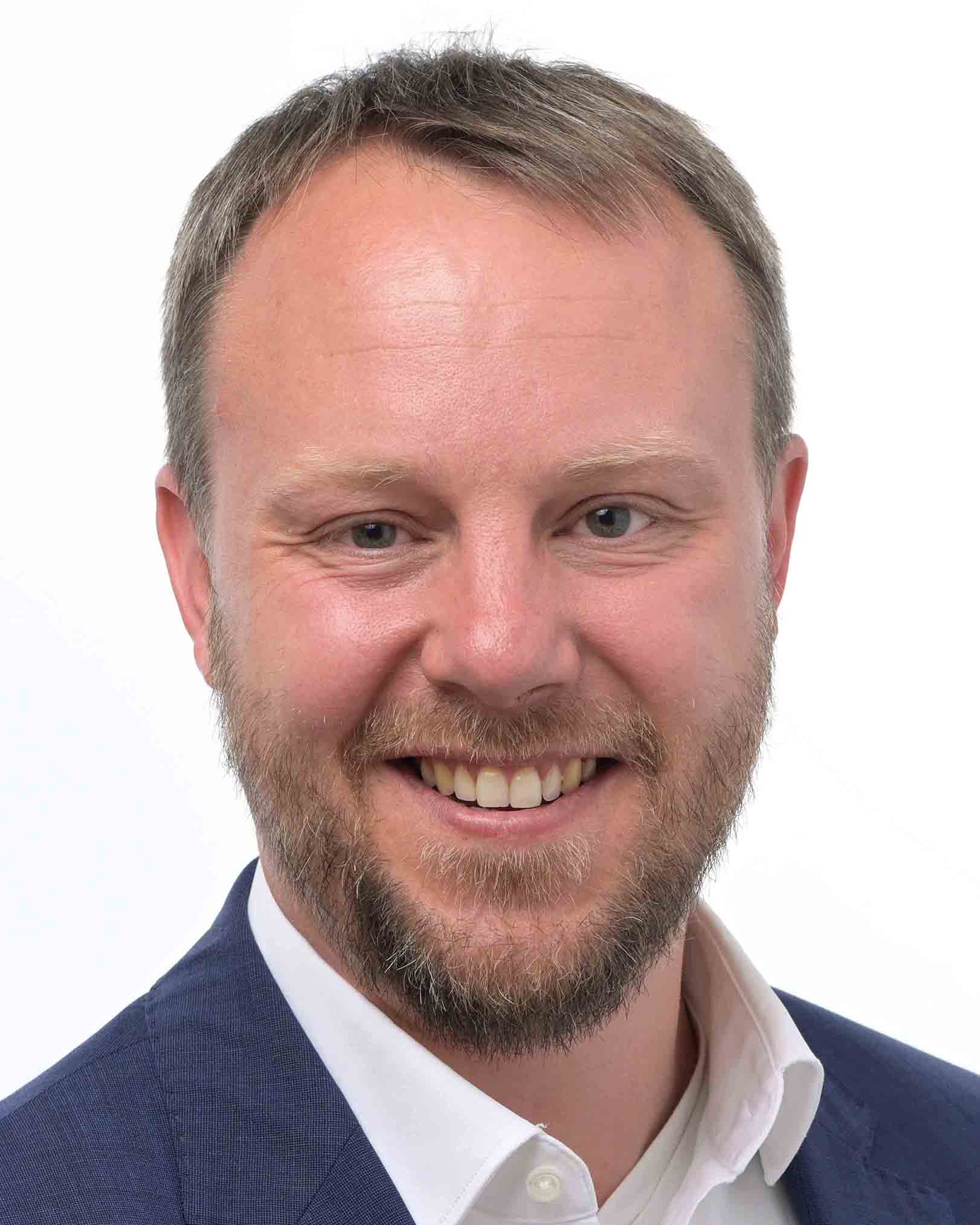

| Rank | Name | Country | Group | Speeches | |
|---|---|---|---|---|---|
| 1 |

|
Lukas Sieper | Germany DEU | Non-attached Members (NI) | 390 |
| 2 |

|
Juan Fernando López Aguilar | Spain ESP | Progressive Alliance of Socialists and Democrats (S&D) | 354 |
| 3 |

|
Sebastian Tynkkynen | Finland FIN | European Conservatives and Reformists (ECR) | 331 |
| 4 |

|
João Oliveira | Portugal PRT | The Left in the European Parliament (GUE/NGL) | 232 |
| 5 |

|
Vytenis Povilas Andriukaitis | Lithuania LTU | Progressive Alliance of Socialists and Democrats (S&D) | 227 |
All Contributions (163)
The Rule of Law and the consequences of the ECJ ruling (debate)
Madam President, Mr Hahn! The mechanism has been in place for 14 months now. Since then, the Commission has been here with us in plenary on the subject nine times. Nine times we were told: It is now quite soon so far, still briefly the guidelines in autumn, in a few weeks. Again and again they said: No case is lost. Now we're back here today, and we've heard it again: You have to analyze it carefully, you have to analyze it. guidelines Finish it. Commissioner, since the mechanism came into force, you, as Commissioner for the Budget, have transferred 6 billion euros to Hungary - 6 billion, of which you know, will not reach where you really want to go. You meticulously wrote in the letter to the Orbán government that the award system does not work. There is no longer an independent judiciary, there is no real fight against corruption, let alone against corruption in the immediate vicinity of Viktor Orbán. And yet you continue to transfer money: 16.8 million euros per day. They know that Orbán uses the money to maintain his power. They know that he is doing everything he can to buy his election victory in a few weeks with this money. And yet you're not doing anything. Now Mrs. von der Leyen is basically throwing you here today in front of the bus. Now you have to defend a policy that you don't want. You want to trigger the mechanism, but the President of the Commission won't let you. There is a point where you say: The failure of the European Commission to protect the rule of law in the European Union, is something I no longer bear with me?
Corruption and human rights (continuation of debate)
Mr President, too many Europeans think that corruption is something that happens far away, that leaders stealing from their citizens is something that doesn’t happen in the European Union. Too few Europeans, unfortunately, know that we make it possible. European banks launder the money. European accountants develop the shell companies structures to hide the money. European real estate companies help to create safe havens for the stolen assets, and European countries provide the golden visas or sell the passports that allow people to enjoy the stolen proceeds. But this does not only create devastation in the rest of the world. It actually has a real impact on our citizens because, for example, it inflates real estate prices in pretty much every city on this continent. So this is one of the direct effects that global corruption has on the life of our citizens, and this has to stop. The EU must not be a safe haven for stolen assets. Dirty money should not be allowed and should not be welcome on our continent, and the EU should lead the fight against kleptocracies, wherever they exist. I think Katalin Cseh has made an excellent list of things that we can do to be better in that fight against kleptocracy, and we should get going right away on putting this into place.
State of play of the RRF (Recovery and Resilience Facility) (debate)
Madam President, the Recovery Fund has so much potential. We’re jointly fighting climate change and investing in our digital future, investing all across the European Union. Well, almost, because Viktor Orbán’s government, for example, has prevented the European Union from paying out any money in Hungary. He’s keeping over EUR 6 billion from Hungarian citizens and businesses. And what’s even more upsetting is that Orbán is lying about the reason why the money isn’t coming. He says, and I quote: “The subsidies are being held up because of Hungary’s anti-LGBTIQ legislation”. What utter nonsense – that we have heard here in the Chamber today as well. The money is being held back – and rightfully so – because Orbán is corrupt and because the funds are meant for European citizens and businesses and not to add another wing to one of the Orbán family palaces. Commissioners, we must stand firm. No money for the corrupt. No money for those that undermine the rule of law. Only then can the Recovery Fund be a real success story.
Presentation of the Court of Auditors' annual report 2020 (debate)
Madam President, I like it very much when the numbers add up, and I’m grateful that the European Court of Auditors checks that EU money is going where it’s supposed to go and if this money is well spent. The number that stands out from the annual report is obviously the error rate. 2.7% of the money is not going where it’s supposed to go. It is mismanaged, stolen or somehow lost along the way. That is an awful lot of money for the taxpayer. 2.7% might sound low, but we’re speaking about more than EUR 4 billion every year that is lost. And that doesn’t even cover the real effect for the taxpayer, because what often happens is that the EU recoups the money so the damage to the EU taxpayer may be limited, but then it is, in a way, offloaded on the national taxpayer because too often Member States don’t claim that money back from the companies and from the fraudsters. We have to stop this. We need better oversight, better management and more digital tools. This has all been managed here. Ideally, all this should be overseen by EPPO. As I said in the earlier debate, Denmark, Ireland and Sweden urgently need to join the EPPO. Worryingly, though – and I think what EPPO is showing us at the moment – is that the 2.7% error rate is probably in reality even higher because, if I look at the investigations that EPPO has already opened, the amount of money that is concerned, well, that’s larger than the error rate that ECA is giving us so we also need to look into that method and really find all the errors.
Fundamental rights and the rule of law in Slovenia, in particular the delayed nomination of EPPO prosecutors (debate)
Mr President, Minister Logar, you stood here earlier and said that EPPO membership and respect for the rule of law is of utmost importance for your government. Yet the Slovenian Government used a personal vendetta of the Prime Minister against the EPPO candidates to block their nomination for six months, preventing the fight against corruption, money laundering and VAT fraud in Slovenia. I find it irritating that Prime Minister Janša has to face basically zero consequences for this action. No punishment whatsoever. The Commissioner hasn’t used the rule of law conditionality. The other governments in the Council have not even dared to criticise their colleague. The EPP remains silent, says maybe it’s a bit unfortunate, but everything is great; nothing to see here. We have to be honest about these things. We have to speak up, regardless of whether people sit in our own party family, and those that attack the rule of law and the independence of the judiciary have to be sanctioned for that. We have to remember that Ireland, Denmark and Sweden are still not members of EPPO. They serve as a fig leaf for the corrupt and rule of law-attacking governments in Poland and Hungary. I can only say to all those that are serious about the rule of law in the European Union: join EPPO and speak out when you see something that’s going wrong.
The revision of the Financial Regulation in view of the entry into force of the 2021-2027 multiannual financial framework (debate)
Madam President, Orbán’s son-in-law has committed fraud against the EU budget at least 35 times, worth over EUR 40 million. After all this, he can still apply for EU funds. He can continue to commit fraud on even more projects because the blacklisting that currently applies is a joke as long as it doesn’t apply to 90% of the EU budget. Orbán’s father also gets millions from the EU budget through construction projects. We actually do not really know how much money he is getting because the final real beneficiaries are still unknown. Those are just two examples that show corruption, fraud and the rule of law crisis in the European Union have gotten out of control. We must be faster than the criminals. We need better rules, better oversight and much quicker closing of the loopholes. The EU must not be the foundation of criminal empires. So Mr Hahn, we expect a proposal that stops oligarchs from stealing our money.
The Rule of law crisis in Poland and the primacy of EU law (debate)
Mr President, I would like to say to the Prime Minister that I think the defining line of his speech today was please do not disturb me. I think you, Prime Minister, have made it very clear how much your government, how much your party, has radicalised. You see it from the allies that you have here in the house, basically, the enemies of the European Union, but you see it also by the refusal to engage in a real debate with what is the large majority of this House and the political families in the European Union. Democracy is not just that the majority can do whatever it wants, basically calling everyone that disagrees with you a communist. None of that is democracy. Sehr geehrte Frau Kommissionspräsidentin, Sie haben ja heute deutlich gesehen, wohin uns sechs Jahre Dialog mit dieser Regierung, wohin uns Dutzende Vertragsverletzungsverfahren, wohin uns ein verschlepptes Artikel-7-Verfahren gebracht haben. Sie sagen, Sie sind sehr besorgt, und Sie nennen Optionen. Aber ich bin besorgt, dass es, wenn wir nicht handeln, bald an Rechtsstaat und an Demokratie in der Europäischen Union nichts mehr zu verteidigen gibt.
The state of play on the submitted RRF recovery plans awaiting approval (debate)
Madam President, we’re discussing a simple question today: is it a good idea right now to pay out many billions of euros to Poland and Hungary, countries that have no independent judiciary, that are defiant of decisions of the European Court of Justice, and where, in the case of Hungary, Orbán and his family and friends are stealing EU money on an industrial scale? So I would ask: how are we even discussing this right now? The Commission says that the use of the rule of law conditionality is imminent or it will be shortly used, and we’re still discussing giving away the main leverage, the biggest lever that we have to protect the rule of law, democracy, freedom of the press and the integrity of the EU budget, in Poland and Hungary. This is just a ridiculous idea. Don’t fund corruption. Don’t fund attacks on the rule of law. Don’t fund the attack on our freedoms and don’t give EU money if it’s being misused in those countries.
Pandora Papers: implications on the efforts to combat money laundering, tax evasion and avoidance (debate)
Madam President, from 2014 to 2017 Andrej Babiš was the finance minister of the Czech Republic and as such was sitting on the Council, negotiating anti-money laundering, tax evasion, the fight against tax havens. But while he was sitting on the Council, Andrej Babiš had a secret because he himself, while saying that he was fighting tax evasion, used a letterbox company to buy a EUR 15 million château in the south of France, hiding his identity and shielding the source of the funding. It would not be the last time, of course, that Andrej Babiš was hiding a conflict of interest from his colleagues on the Council. We know from the Commission now, it is certified, his ongoing conflicts of interest, but nothing happens. He isn’t stepping down. He isn’t selling his companies. And he clearly hasn’t stopped taking EU money. He is actually making the Czech Republic fight for it. The rules are clear. Conflicts of interest should not persist, particularly not at the heart of decision-making in the European Council. And if Andrej Babiš doesn’t resolve that conflict of interest, well, then the others need to force him. The Council should stop sitting down and negotiating with him, while the conflict of interest persists.
United States sanctions and the Rule of law (debate)
Madam President, colleagues, Commissioner Johansson, the situation in Bulgaria is much worse than what is reported in all the monitoring of the European Commission. And thanks to the change in government, we can better grasp today the scope of corruption, of nepotism, of money laundering that is taking place in the country. And it also shows the failure of the Commission to really do anything about this. I was in Sofia two weeks ago. I spoke with a number of officials from the interim government, and the stories that you hear are shocking. There are stories of bags full of cash in government offices. There are state assets being looted. There are – or there were – criminals with direct access to the former Prime Minister. And it’s in this environment that the US sanctions came, and to quote a Bulgarian politician, it dropped a political bomb. So these Magnitsky sanctions against three corrupt oligarchs – one of them, Vassil Bojkov, known for bribing the government, known for his connections to Russia. I think these sanctions had the desired effect. The individuals were named, shamed and sanctioned. And if you see that Bulgarian officials are actually hoping for a second round, at least the Americans are doing something when the Europeans so far remain inactive. So it is a shame that this decisive action doesn’t come from Brussels, it doesn’t come from Europe: we rely on the Americans to help out with the fight against corruption and the stealing – including of EU taxpayer money – in the country. So dear colleagues, I think we can all agree that this doesn’t look good for the European Commission. It shows that the measures are not working. You have said today that you will monitor the situation, but monitoring isn’t preventing or fixing anything. And you have also said that you will make full use of all the tools – but clearly, you are not making use of all the tools. The rule-of-law conditionality mechanism has already been mentioned, but let me also say that the Bulgarian officials actually told me that they had asked for help – not only the Commission, also the Member State’s government – they want technical assistance on money laundering, on public procurement officials, on how to reform the administration, and they are saying that they’re not getting that help. So how is this possible? Why don’t we protect effectively EU taxpayer money, including in Bulgaria? Why does it take US sanctions to tackle corruption, and why aren’t we helping with that? And why don’t we at least help a Member State government, when it’s asking for help and for technical assistance?
Announcement of voting results
Madam President, two years ago this House defended the integrity of the EU institutions when we were examining the Commissioner candidates. Three of those candidates were rejected because of conflicts of interest. Those conflicts, of course could have reduced the ability to do politics in the best interest of European citizens, so two years ago we made European politics cleaner, more trustworthy and more upright. Today, again, we have the chance to make European politics more transparent, because we’re voting today on this report to establish an independent EU ethics body. This should clearly send the message: EU politics is not for sale. Good rules need independent control to be clearly enforced. Some might argue that the rules that we have on lobbying, on conflicts of interest, on revolving doors are already really good, and I would agree. Brussels is leading by example on this. But in the past we have also witnessed that these good rules are not properly enforced. Our rules did not stop Adam Farkas, for example, from switching right from Banking Supervisor to chief lobbyist for the banking industry. Our rules have also not stopped former Commissioner Oettinger from accepting 17 new jobs during his cooling-off period, seven of which are for organisations on the EU lobby register, including his own lobby consultancy. Our rules failed because the current system of self-policing does not work. If former top officials start their own lobby business, it automatically creates the impression that politics are for sale. And that has really bad consequences – we all know that, we hear it in our constituencies – and the few black sheep should not ruin all the good and hard work that all of us do here every day. So I hope that a large majority of this House will today accept this report and that we can then start the negotiations with the other institutions on this.
Media freedom and further deterioration of the Rule of law in Poland (debate)
Madam President, ladies and gentlemen, The German chancellor was in Warsaw a few days ago and stressed that the solution to the dispute with the Polish government must first and foremost take place in dialogue. The European Commission has been in dialogue for years now, and so far I cannot see any change in reducing the rule of law, restricting media freedom and attacking minorities. In that sense, I believe it is very right that the Commission has now applied for the fines in disregard of the ECJ judgment. However, even if the fines come, this can only address the situation of this one court ruling and not the long list of problems in Poland. We have, since 1 January, a rule of law conditionality tool that would be more effective in addressing the long list of rule of law problems and threats to the financial interests of the Union. This morning, Commission President von der Leyen announced that the rule of law and the Union's budget would soon be protected. I wonder what we're waiting for? Why not start this protection here and now, today, because the rule of law in the European Union and in Poland is in a deep crisis.
The creation of guidelines for the application of the general regime of conditionality for the protection of the Union budget (continuation of debate)
Mr President, what do Lukashenko, Assad and Kim Jong—un have in common? Well, all three are autocrats, they hate free media and they hate our democracy, but they have also for many years been members of a club, the annual list of the worst enemies of press freedom published by Reporters Without Borders. Since yesterday, there is a new member of this club, Viktor Orbán. Let that sink in: a Prime Minister in the European Union is now labelled a press freedom predator. That in itself is scandalous, but it’s even worse when you think that, unlike Lukashenko, unlike Assad, unlike Kim Jong—un, the European Union is actually not sanctioning him for his authoritarian behaviour. The Commission – you, Mr Hahn – has the tools to sanction him, but you refuse to act. You say that we still need those guidelines and we need to work on those cases. We have heard this now for seven months and the facts keep being created on the ground. I’ve said it before: the inaction is having a direct and severe effect on the situation in Hungary. Now there are a lot Hungarian citizens that are eagerly waiting for those EUR 7.2 billion of recovery money that are scheduled to come in. They want to save their businesses and they want to invest in the future. But you know that the management of EU funds in Hungary is dismal. You know that more than half the tenders only have a single bidder and that far too often it is a friend or a family member of Viktor Orbán that wins those tenders. You know that, when corruption is actually uncovered, the prosecutors don’t pick it up because Orbán controls the prosecution. In those rare cases where a case does make it in front of a judge, courts that have been stacked by Viktor Orbán with his allies throw the cases out. They don’t punish those that steal our taxpayers’ money on an industrial scale. So, Commissioner Hahn, we have to stop this charade. We have to stop this postponing and the tweaking of internal rules and guidelines. We need to use the rule of law conditionality. Let’s do that now.