

| Rank | Name | Country | Group | Speeches | |
|---|---|---|---|---|---|
| 1 |

|
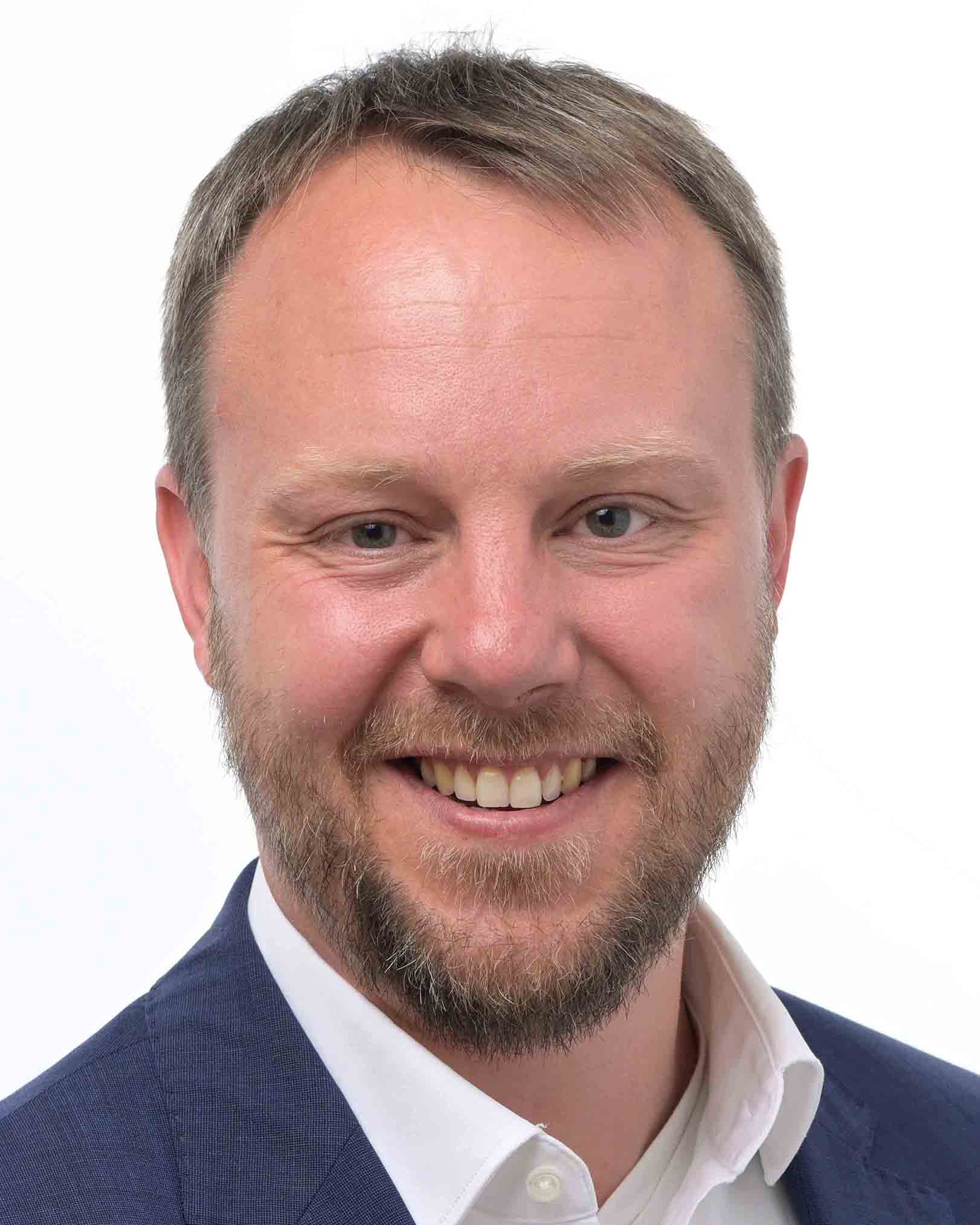
Lukas Sieper | Germany DE | Renew Europe (Renew) | 487 |
| 2 |

|
Juan Fernando López Aguilar | Spain ES | Progressive Alliance of Socialists and Democrats (S&D) | 454 |
| 3 |

|
Sebastian Tynkkynen | Finland FI | European Conservatives and Reformists (ECR) | 451 |
| 4 |

|
João Oliveira | Portugal PT | The Left in the European Parliament (GUE/NGL) | 284 |
| 5 |

|
Vytenis Povilas Andriukaitis | Lithuania LT | Progressive Alliance of Socialists and Democrats (S&D) | 273 |
All Speeches (140)
Transparency and targeting of political advertising (debate)
Date:
01.02.2023 17:30
| Language: DE
Speeches
Madam President, ladies and gentlemen, The next European election campaign is just around the corner, and that means, of course, for us here, that it will be more heated in the European Parliament in the coming months. We're going to fight even more, we're going to attack each other, we're going to run campaigns. All of this is part of democracy, the fight for the best vision for Europe. What cannot be, however, is that campaigns are paid for by third parties, from outside, by dictators in doubt, who have no other goal than to destroy our democracy. The right-wingers in the house know this very well. You can also take luxury trips, hotels sponsored by Putin on the way to Moscow. After all, this must be disclosed, but if Putin finances them the next hate campaign on the Internet, then we can't see it so far. And it is good that this should finally become transparent, that you can see in the future who finances such election campaigns. European citizens have a right to know who is simply sowing hatred or who is striving for a good vision for the European Union, and that is why this is a good legislative proposal.
New developments in allegations of corruption and foreign interference, including those related to Morocco, and the need to increase transparency, integrity and accountability in the European institutions (debate)
Date:
17.01.2023 16:58
| Language: DE
Speeches
Madam President, ladies and gentlemen, More and more offences by MEPs against the rules of conduct are coming to light. Gifts were not declared, luxury trips, paid for by dictators, not specified – always new things that damage the reputation of all of us here. My face, if this is not to end in disaster at the next European elections, then there can only be one benchmark for us here: Full transparency. The culture of impunity that we have unfortunately had here so far must come to an end. If someone violates the rules of conduct, it must have financial consequences. Apparently, the rules are not adhered to otherwise. We almost unanimously decided on reforms in December, and now the first ones are starting to say again: Oh, we're not doing that now, it's going too far. We need the disclosure of assets. We need to disclose all meetings with lobbyists. We finally need effective protection of whistleblowers, and above all we need independent control of the rules. Yes, there are majorities here in the House for these reforms, for some of them for years, and yet certain reforms continue to send out. That's why I think it has to be clear now: It is not about any working group in the Bureau, but about an open debate in the committee, an open vote on what needs to change here in the House.
Defending the European Union against the abuse of national vetoes (debate)
Date:
14.12.2022 15:06
| Language: EN
Speeches
Mr President, dear colleagues, if Vladimir Putin had designed the European Union, I think he would have given Viktor Orbán a veto because it makes it so easy for him to paralyse us, because he only needs to turn one person in the room – blackmail, bribery, cheap gas, I don’t know what, but this is a threat for us. Of course, back in the days maybe this might have served to protect the interest of the smallest Member State. But I think today in a Union of 27 the reality looks very different. It’s no longer to protect minorities, it’s a tool for extortion and blackmail. We managed this time, luckily, we have overcome the veto on the Ukraine aid. But we’ll be back at the same point in the beginning of February when we have to prolong the Russia sanctions. It will be exactly the same. So if Viktor Orbán wants to do the deeds of Vladimir Putin, that’s his choice. But for all of us other ones that want to help Ukraine, you know, this should not be the obstacle for us to do it. In times of war, veto on essential decisions is a security threat for the European Union. So let’s not keep talking about it. We have discussed this for years in the conference, there is an overwhelming majority of citizens that want this. There is the national parliaments that want this. We here in the European Parliament have been very clear we want this. We have taken a vote with a large majority. Let’s call a convention, answer to our vote and our proposal under Article 48 and let us put an end to national vetoes in the European Union.
Suspicions of corruption from Qatar and the broader need for transparency and accountability in the European institutions (debate) (debate)
Date:
13.12.2022 17:33
| Language: DE
Speeches
Mr President, ladies and gentlemen. Corruption is the greatest threat to our democracy. Corruption is punishable. And whoever is bribed with bags full of money belongs in prison. But this case does not take place for the European Parliament on its own accord on the day on which the Belgian authorities finished their work. Unfortunately, there are some in this House who do not seem to be aware of what Members are allowed to do and what simply does not belong. But how can it be that members of parliament are invited here by bloody dictators on luxury trips? How can it be that a number of MEPs do not publish a single lobby meeting at all? How can it be that 25 violations of the rules of conduct here in the house were not even sanctioned, there were no consequences? Ladies and gentlemen, I am personally quite fed up with the fact that a few here are putting Parliament's reputation in the dirt. It must be over at last. Third-country lobbying must be entered in the lobby register. The lobby appointments are published, also with the representatives of Qatar. And the lobby rules must finally be monitored independently. There must be no more lazy excuses, otherwise, I fear, we stand here again for a few months and have the next scandal. So let's change that now.
Assessment of Hungary's compliance with the rule of law conditions under the Conditionality Regulation and state of play of the Hungarian RRP (debate)
Date:
21.11.2022 17:44
| Language: DE
Speeches
Madam President, ladies and gentlemen, Mr Reynders! The hour of truth has come. Do we accept the first EU autocrat, Viktor Orbán, and his incomprehensible corruption, or do we freeze him EU funds? The whole thing is now decided on the basis of 17 measures. 17 measures of which you, Mr Reynders, should know that you do not rule the rule of law in Hungary, that you do not stop corruption. And why? Because Viktor Orbán basically wrote this corruption into the Hungarian constitution. For seven years he has ruled only by decree. It has given national importance to 1083 projects; In other words, there are no rules at all anymore. For example, the Lipizzaner Riding Centre in Szilvásvárad, built by his oligarch friend Mészáros. This Mészáros won over 120 million euros in tenders last week alone. Where is the will to reform? Mr Reynders, do you not believe that this corruption can now be stopped with training for civil servants, with an action plan, with the promotion of small businesses? Most of the measures have not been implemented, and seven have deadlines alone, some of which go until mid-2026. But now you have to tell me where you stand. Money must finally be frozen. It is the only language that Viktor Orbán understands. We can release money at any time if we really see change. But it can't be that you don't do anything now, because Orbán promises us the blue from the sky. I want him to finally deliver. So submit an honest assessment and a new proposal for sanctions adapted to it! This is the only way we can finally get what we all want: No tax money for autocrats in the EU.
Presentation of the Court of Auditors' annual report 2021 (debate)
Date:
19.10.2022 15:29
| Language: EN
Speeches
Madam President, dear colleagues, just yesterday, something surprising happened: 75 billion of Polish cohesion money are frozen. And how did this happen? Not because of the Article 7 procedure that is blocked for seven years, not because of the Conditionality Regulation that the Commission refuses to apply to Poland for two years now and not because of the ECJ rulings that the Polish government keeps ignoring to the tune of more than EUR 1 million a day. No, it seems that a brave Commission official applies properly the Common Provisions Regulation, which clearly says if you do not respect the fundamental rights and the fundamental rights charter, you cannot have money. Also, when your control mechanisms break down, there should be no transfers. Mr Hahn, of course, this should have happened much, much earlier. It is good that it is happening now, and of course, this should not only happen when the Member State in question fills out the questionnaire, admitting itself that it is breaking the rule of law. Mr. Murphy, you should keep a close look at the Commission for properly applying those standards in all Member States and protecting the EU budget. We have the rules, we have the instruments and we should make sure that this is not just up to the brave civil servants, but that they get the full political support for upholding the rule of law.
The Rule of Law in Malta, five years after the assassination of Daphne Caruana Galizia (debate)
Date:
17.10.2022 19:06
| Language: EN
Speeches
Mr President, dear colleagues, Daphne Caruana Galizia was an anti—corruption fighter. She dedicated her work to uncovering corruption, and she was murdered for it by greedy politicians and businessmen that wanted to keep stealing public funds without being exposed. This must never happen again. It’s our duty – it’s the duty of the European Union – not only to protect journalists, but also to make sure that the rule of law is strong everywhere in our Union. I spoke to Daphne’s sons just earlier today. They told me that there still hasn’t been a single corruption prosecution in Malta since the murder of their mother. The mastermind behind the assassination is still at large and some of the policies that enabled the corruption in Malta are still there. You can still buy a passport. The cooperation with the European prosecutor is still not ideal. But I want to say one sentence to you, Manfred Weber. You spoke out very strongly for the rule of law in the fight against corruption. We need to do that wherever it happens, not only when it’s a government from the S&D or from the liberals. We only win this fight when we stand together as democrats.
Commission proposal for measures under the Rule of Law Conditionality Regulation in the case of Hungary (debate)
Date:
04.10.2022 16:54
| Language: EN
Speeches
, dear colleagues, dear Commissioner Hahn, almost two years ago we gave you a very powerful tool to protect the rule of law and EU money. And yet today we witness that you are dismantling this tool in front of our eyes. Yes, a couple of weeks ago you announced that you want to suspend EUR 7.5 billion to the Orbán regime, and that sounds nice. But really what you’re doing is you’re breaking the most powerful tool we actually have to protect the EU’s budget from the kleptocrat that is Viktor Orbán and his friends and family. Dear colleagues, let me tell you why I fear that the Commission is actually not doing its duty. First, and the colleague has just said it, EUR 7.5 billion is only 15% of the EU funds that Hungary receives, so the lion’s share goes untouched and into a corrupt system. Second, if you look at the 17 measures that Orbán now has to fulfil, it’s actually impossible to monitor this over just a couple of weeks. So the Commission will end the procedure in December based on mere promises from Viktor Orbán. And to count on Orbán’s word after 12 years, after time and again having been fooled by him, I think that’s pretty ridiculous now to just trust his word and not his action. Third, the anti-corruption authority that is the central pillar of the reform has no power to prosecute. So it relies on a prosecutor that we know is politically controlled by Orbán; it relies on courts where we know that they are politically controlled by Orbán. Which brings me to the fourth point, which is in this conditionality procedure on the rule of law, it seems that the Commission has somehow forgotten the rule-of-law part, because there is not a single measure concerning the rule of law, the independence of justice. So, Mr Hahn, I fear that there is a very small window of opportunity here to use this tool and to do some good and to protect the rule of law in the Union. But if you are aware – and I know you are aware – of the corruption but you do nothing, then I think if this is out of fear to make full use of the tools that you have, well then you might not be the right person to protect the financial interests of the Union. Thank you very much.
Existence of a clear risk of a serious breach by Hungary of the values on which the Union is founded (debate)
Date:
14.09.2022 14:05
| Language: EN
Speeches
Madam President, dear Commissioner, dear colleagues, Hungary is not a functioning democracy anymore, and Hungary does not respect the fundamental values that all Member States agreed on to overcome war, despotism and state terror. That’s been the opinion of this House for five years now, and it is an existential threat to the European Union. Since 2018, since we launched the Article 7, Hungary has received EUR 30 billion of EU taxpayers’ money. Experts estimate that about eight of those have been stolen or misused. They have made Orbán’s friends and family millionaires, some of them billionaires. And the Commission, well, has testified extensively about that. They have written reports, many letters to the Hungarian Government by now. You have launched nine infringements since 2018 yet Orbán continues to steal, he continues to violate our fundamental values. Following the pressure from this House, including through an inactivity lawsuit, you have finally triggered the rule—of—law conditionality. And I understand that the Commission will decide in the coming days what to propose to the Council in terms of freezing Hungarian EU funds. Von der Leyen said this morning again, third time, in her State of the Union, that the protection of the rule of law is fundamental. It is high time that we follow with action to those words. No more EU money for corrupt autocrats, not just a little less. And I am afraid neither the Commission nor the Council must fall for false promises now, because just a few reforms, maybe an anti-corruption body, all this is not going to remedy what Orbán has done in the last 12 years. So let’s fight for our values.
Protection of the EU’s financial interests – combating fraud – annual report 2020 (debate)
Date:
06.07.2022 19:49
| Language: EN
Speeches
Madam President, the Commissioner spoke of the remarkable track record of the Commission in the fight against fraud. That’s quite a bold statement, I have to say, Commissioner. I mean, Transparency International says that in Hungary, for example, at least 25% of EU funds are frauded, embezzled, stolen, to a large extent by Orbán, his family and his friends, and saying that that is a remarkable track record – I would not agree. Actually, this House does not agree. You spoke of the conditionality mechanism, which clearly shows that this is not a question of a lack of tools, it’s a question of a lack of political will, because this House sued your Commission last year for inactivity, for not using this tool of the conditionality mechanism. It took the Commission a year and a half almost to launch the procedure. Now we’re at the stage where the Commission has to decide how much of the EU funding is going to be frozen to Hungary. Once again, Parliament did the homework for the Commission. We launched a study today that every single cent of Hungarian EU funds has to be frozen. Can I give you the study now? Show us that there is a real political will in the Commission to do something about fraud, not only in Hungary but in all EU Member States.
Presentation of the programme of activities of the Czech Presidency (continuation of debate)
Date:
06.07.2022 10:24
| Language: EN
Speeches
Madam President, thank you. Dear Mr Fiala, you promised your voters that you would kick out the corrupt. That you will defend the rule of law. And you won against Andrej Babiš. Now you are taking over the Presidency of the Council. And I am sure you know that corruption is not only an issue in the Czech Republic, but in the entire EU. Where Babiš tried to prevent justice, the Polish Government is trying to take over the entire justice system, and where Babiš took millions, Orbán and his cronies are taking billions, not just millions. Autocrats are the biggest threat to the EU and I am very thankful that you are taking the autocrat that is invading our neighbour Ukraine very seriously. But I think you need to take those following the Putin playbook inside the EU equally seriously. It’s up to you to set this on the agenda and to make sure that the attacks on democracy and rule of law by the Polish and Hungarian Governments play a role in your presidency. And the decision on freezing funds to Hungary will come to the table during your presidency. Make sure that the promise you gave to your voters doesn’t stop at the Czech border and that you’re delivering on that promise also during your presidency.
The call for a Convention for the revision of the Treaties (debate)
Date:
09.06.2022 09:47
| Language: EN
Speeches
Dear colleague, you spoke of the European Citizens Initiative and the 1 million signatures one can gather. I wanted to ask you if you’re aware that, unfortunately, the European Citizens Initiative doesn’t currently allow to propose any changes to the Treaty, and how you suggest to deal with that? Don’t we need a convention, then, to actually change the possibility for the European Citizens Initiative precisely to make those kind of changes that you talked about?
The call for a Convention for the revision of the Treaties (debate)
Date:
09.06.2022 09:16
| Language: EN
Speeches
Mr President, dear colleagues, it’s surprisingly easy to say why the EU needs reform in four words: Orbán has a veto. One ‘no’ from a dictator can block what 450 million Europeans want. And what might have been conceived initially to protect minority rights has now become a tool for extortion. Vetoes are misused for extra cash. Vetoes are misused to destroy the rule of law in the European Union. Today, we will start to change this, because we in the European Parliament want to change the Treaties. We want to fix the most important design flaw of the European Union and to get rid of vetoes. Not because we here in the Parliament want this, but because European citizens want this with an overwhelming majority. They told us over and over again at the Conference. And when change is coming, well, there is resistance. And to get to this historic moment today of triggering Article 48 was incredibly hard work. But the next few weeks are going to get even harder because some governments do not want to listen to what their citizens want. They do not want European democracy. They want to call the shots. And I think, in this situation, it’s important to say their names. Sweden, do you really want to prevent better social rights for all Europeans as inscribed in a social progress protocol? Latvia, do you think it’s a good idea that the dictator in Hungary has a veto on sanctions and threatens your security as a border state of Russia? Denmark, do you really think it’s a good idea that one country can ensure that Apple only pays 0.05% taxes? Of course, they’ll tell you that’s not what they want, but that is what they are doing. They are preventing what Europeans want: a better Europe. And after Trump, after Brexit, after the pandemic, and now with war, it is time for reform. We need to change the Treaties, because I really fear we might not get a second chance.
The rule of law and the potential approval of the Polish national Recovery Plan (RRF) (debate)
Date:
07.06.2022 18:41
| Language: DE
Speeches
Madam President, The European Union was created to prevent war in Europe. Common laws and a common court that enforces them – that is at the heart of the post-World War II European peace order. European law instead of the law of the strongest: This is questioned by the Polish government. And under the guise of war, the Minister of Justice has now intensified the attacks after many years. The Polish government ignores the ECJ, it ignores the European treaties. And now one has to ask oneself the question: in this war situation, one must now put the unity of the Europeans above the rule of law. And I fear that if we put aside the rule of law before unity, we will lose both. Because we are not driving Poland and Hungary apart. We provide Orbán with the perfect excuse for not sticking to anything in the area of justice anymore. We do not encourage Poland to continue to take such good care of the refugees, but we encourage the Minister of Justice, Ziobro, to throw out the last judges. Nor do we maintain unity, but we are leading the Member States now, even more so at their own expense, not to abide by the rules. That can't be. It must not be part of our response to Putin's war that we give up the rule of law.
Madam President, ladies and gentlemen, Unfortunately, the European Union has maneuvered into a self-built dead end. With Viktor Orbán's veto of the Russian oil embargo, we currently only have the choice between two bad options: Either we give up the unity of the Europeans, the unity, make the embargo in doubt without Hungary, or we give in to its blackmails. How expensive this will be, we do not know exactly. But we know where the money will end up, in the pockets of its corrupt clique. I'm tired of getting into these situations again and again. After all, it would have been avoidable if the European Commission, if the Member States had listened to what the European Parliament has been saying for years – then long ago we would have shown Viktor Orbán the limits, then we would have sanctioned his attacks on democracy and the rule of law with the withdrawal of funds or deprived him of the right to vote. So that this does not happen again in a few months, so that we do not end up in the same situation again, we have now put a number of proposals on the table. Terry Reintke has made a long list, because Orbán does not change his behaviour because we are now writing a report for the third time, but that must finally have consequences. I very much hope, Commissioner, that we can do this and ensure that the next autocrat does not paralyze the EU.
Madam President, Mr Lehne, you said in your introduction that I had lied. You said that would be a lie that your apartment is financed by the EU. You will receive 3 428.40 EUR per month residence allowance. I have concluded from this that the residence, i.e. your apartment in Luxembourg, will be paid for. If I have misunderstood something and this is used for something else, then we can gladly clarify this bilaterally again. Secondly, you asked what questions are still open and said that the Court of Auditors cannot see where there are still open questions. Let's take a first example: How does Mr Lehne explain the over-proportional amount of meetings with CDU politicians when on mission in Dusseldorf? Here was the Court of Auditors' reply: Not applicable. That would be such a question. We also asked about the missions that the RH members have undertaken for the past few years. We were told that for the last year it was on the website, before that it was on the website, now it would only be made available to the chairman and the rapporteur. We then have the missions thanks to the Google wayback machine But you can still see, because they were just in the cache on Google from the old ones. So you can see that, for example, you gave a speech at JU-AG, the Junge Union Düsseldorf, in February 2019. The mission, which was founded on this, was five days long. Between 2018 and 2021, they were on mission in Germany 26 times, 16 of them in Düsseldorf. I also think that NRW is the most beautiful federal state in Germany. But you have never been to any of the other provincial capitals – never in Munich, never in Stuttgart, never in Hanover. And I wonder if you always go to Düsseldorf, whether it has to do with the fact that there is such a high interest of the Düsseldorfers in the Court of Auditors, or whether it is your interest to go to Düsseldorf. These are the questions we still have open.
Madam President, ladies and gentlemen, The European Union is working. It is so far the best, most beautiful and most valuable thing that Europe has produced. I myself am a fervent European, and I am convinced that the European Union should spend much more money together instead of paying a surcharge 27 times. But precisely because I am a convinced European, I think that where we spend money, we also have to take a special look and ensure that everything runs smoothly in terms of EU spending. And unfortunately, there are a few things that you should address openly and honestly. Billions of euros that don't get exactly where they want to go. In case of doubt, we don't know exactly who gets the EU money. And unfortunately you have to say: Millions of dollars are stolen. Three concrete examples: Let me start with the European Parliament. Yes, the European Parliament is one of the most modern parliaments in the world. We managed to digitize our work in the pandemic within weeks. We are a small parliament in relation to the 450 million Europeans. And – this is particularly important to me: We are particularly transparent – one of the most transparent parliaments in the world. And yet there is an item in our budget where we spend over EUR 40 million every year without any initial accountability. Each of us here in the house receives a flat-rate office fee of EUR 4 778 per month, earmarked for parliamentary work, but without control. And it is not too much to demand that these expenses for computers, mobile phones, constituency offices be documented. And even more curiously, the plenary is saying it year after year, but the Bureau is simply ignoring it. The second example is the European Court of Auditors. The EU Court of Auditors is a great institution. He watches over every single euro spent. And I find that it cannot be that the members of the Court of Auditors, including the President, do not lead by example: private use of the transport service, subletting the EU-funded apartment to its staff, business trips home or to events organised by the local CDU. It is right and important that something be done about this now, because the Court of Auditors is one of our firewalls against cheap anti-EU populism. And you can rightly expect the Court of Auditors in particular to spend EU funds with the highest standards, instead of just exhausting the rules in order to get as much money out as possible. And I want to do the third part in English. On the European Commission because, in terms of misspending, the problems we see at ECA and at the Parliament are of course peanuts to what happens at the Commission, where billions of euros are going into defunct systems and we don’t know where billions of euros are going. Although the Commission knows that some of the money is being stolen, defrauded or mismanaged, it continues. Commissioner Hahn, from the notification you just sent to Hungary under the conditionality mechanism, between 2014 and 2020 there were serious deficiencies in the management and control system. They were systematic and not only insulated connecting. So why did you keep sending money? Under the financial rules, the Commons Provisions Regulation, you’re obliged to stop this. I really think this is the biggest single danger for the European Union. Our way of spending money feeds corruption and the attacks on democracy of Viktor Orbán. Our money has made Babiš an EU—funded billionaire with a documented conflict of interest. This House has recently said, in Sarvamaa’s report, that EU funds create oligarchic structures. This has to stop. That is why we, as Greens, refuse to grant discharge until we stop funding corruption and autocrats in the European Union, precisely because we are convinced pro-Europeans.
The follow up of the Conference on the Future of Europe (debate)
Date:
03.05.2022 17:10
| Language: DE
Speeches
Madam President, ladies and gentlemen, What happens when randomly selected citizens are asked about the future of the EU? There are some right-wingers in this House who always claim full-bodiedly that they represent the true will of the people and that they know what they really want; They say at every opportunity that what we're doing here isn't what the people out there want. Now we've tried it, all last year. We have done Europe's largest democracy experiment. On a green proposal, we selected and invited 800 citizens representatively and asked them about the future of the EU, what kind of policy they want. And what came out? Well, now it turns out that the abolition of national vetoes, transnational lists in the European elections, that a real European citizenship, that investments in Europe's future and not in corrupt autocrats, that a more social, a transparent Europe is not some federalist conspiracy, but what the majority of citizens want. 70, 80, 90 % of the citizens voted in favour of the proposals on the table. And not only the citizens, but also the national parliamentarians, civil society and governments agreed to these proposals at the end. It would actually be good if the screaming necks from the right took this as an opportunity to throw their nationalist hate propaganda over the heap and to represent what the majority of citizens really want. Governments, too, must now make a clear commitment to colour. Are they on the side of democracy and closeness to citizens? Because if these conclusions are not implemented now, if this is now blocked by governments, then you are really doing irreparable damage to Europe – that cannot be the case. And it is precisely the most ambitious proposals that will now show whether this process is taken seriously. So it is precisely about the proposals that are not simply changed with a law, but where we have to change the treaties. And that is why it is so essential that we now go to the Convention that we really implement the most ambitious proposals in the coming months. This requires the Convention. It is for the citizens. It is for the future of the European Union.
Threats to the safety of journalists and media freedom, on the occasion of the World Press Freedom Day (debate)
Date:
03.05.2022 09:19
| Language: EN
Speeches
Madam President, the end of democracy begins when politicians go after journalists. First, they discredit them as mainstream or liberal or Western. Next, they call them liars or fake news. Then they try to stop their publications with strategic lawsuits. Next, they cut their funding or take away their broadcasting licence and, eventually, some don’t shy away from physical attacks, intimidation or even murder. Dear colleagues, this playbook has not only been used by Putin or Xi Jinping. This is a playbook that is used right here inside the European Union. Autocrats build their empires on lies and corruption, and they’ll, of course, do everything to silence those that try to expose them. Corruption is the reason that Ján Kuciak was murdered, corruption is the reason that Daphne Caruana Galizia was murdered, corruption is the reason that Klubrádió lost its broadcasting licence, and corruption is the reason why Hungarian journalists are spied on with Pegasus. It’s on all of us, as democrats, to protect journalists and free media. It’s on us to stand with them, even when they write things we might not like – which happens as a politician – because protecting free media and protecting journalists is about protecting our democracy. We need to join journalists in their fight against corruption. After 12 years and the near total control of Fidesz over Hungarian media, the European Union finally needs to act. And let’s act on rule of law issues in Poland before the last independent TV channel has to stop broadcasting because the end of autocrats is when democratic politicians stand with journalists.
Election of the Members of the European Parliament by direct universal suffrage (debate)
Date:
02.05.2022 18:48
| Language: EN
Speeches
Mr President, if you break it down, what is democracy? Well, it is candidates running for an election based on a programme. And us MEPs have been elected like that since 1979. But the European Commission doesn’t have that link yet. In the last election, ten of the Commissioners actually ran in the election, but Ursula von der Leyen was not on the ballot anywhere in Europe. There were 420 names on the ballot that I voted on in Germany, but Ursula von der Leyen wasn’t on it, even Manfred Weber wasn’t on it, because I live in a different state of Germany than he does. And I, as an MEP, am not just elected to blindly defend the interests of the people in my hometown or the Germans that could vote for me. I’m here in this European Parliament to make laws that are good for all Europeans. So it’s more than the sum of the 27. And to those now that say, like Paolo Rangel, let’s elect the Commission President directly, I think that’s a bad idea because it weakens this European Parliament, this House that I’m a proud Member of.
Election of the Members of the European Parliament by direct universal suffrage (debate)
Date:
02.05.2022 18:17
| Language: EN
Speeches
I wanted to ask, I mean, we’re elected today in two different constituencies. You’re elected in Slovakia, I’m elected in Germany. I could argue now that my constituency is slightly larger than the one that you were elected in and yet we have the exact same rights, powers, our vote counts exactly the same. So how do you think that Members elected on a transnational list would be any different from that?
Election of the Members of the European Parliament by direct universal suffrage (debate)
Date:
02.05.2022 17:57
| Language: EN
Questions
Mr President, for the last two years, Paolo Rangel has argued against the transnational lists. But what I actually want to ask you is, what is your alternative? You campaigned for Manfred Weber, I suppose, in the last European election. He was dismissed in the Council. And I guess most of your voters had no idea who he is, couldn’t vote for him. There wasn’t a single election poster for him in Portugal. So how can this not be a good idea? And on that question of not giving a chance to small countries, there have been three presidents of the European Commission from Luxembourg. Isn’t it time to also give larger countries a bit of a chance for Commission Presidency?
Cooperation and similarities between the Putin regime and extreme right and separatist movements in Europe (topical debate)
Date:
06.04.2022 16:02
| Language: EN
Speeches
Madam President, the biggest friend of Vladimir Putin in the European Council is Viktor Orbán. If you just look at who sent the first congratulations after the election, those came from Putin, they came from Salvini and they came from Le Pen – all Putin’s friends, all supported by Vladimir Putin, because Putin hates democracy and he hates that we work together in Europe. So, of course, he supports everyone that works against the European Union, that works against us Europeans being strong together towards Putin ... Zwei Sätze an die Kolleginnen und Kollegen, die die Debatte so geframet haben, darüber, die Unabhängigkeitsbewegung mit da reinzuschmeißen. Nun können wir alle mit dem Finger darauf zeigen, dass es auch bei den Sozialdemokraten, auch bei den Konservativen Putin-Versteher gibt und Leute, die das lange unterstützt haben. Aber ich glaube, wir sollten darüber nicht aus dem Auge verlieren, wo die stärksten Alliierten von Wladimir Putin sitzen. Und das ist die extreme Rechte. Dank Orbán sitzt Putin im Europäischen Rat ja quasi mit am Tisch. Dank der Fidesz-Regierung hat Putin direkten Zugriff auf vertrauliche Dokumente aus NATO und EU. Das kann doch einfach nicht wahr sein, und das muss unterbunden werden.
MFF 2021-2027: fight against oligarch structures, protection of EU funds from fraud and conflict of interest (debate)
Date:
23.03.2022 22:57
| Language: DE
Speeches
Madam President, Oligarchs own a football club, oligarchs have a super yacht, oligarchs build palaces. In the case of oligarchs, one thinks directly of Putin, of Abramovich, of the enemies of democracy. But oligarchs do not only exist with Russian oil, but oligarchs also exist with EU agricultural funds. The EU has bred its own caste of super-rich oligarchs. Viktor Orbán is building a football stadium in front of his house. His foreign minister drives the super yacht through the Adriatic Sea. Orbán's father converts a former royal palace into a golf course. And we are financing the enemies of the EU a luxury life with our taxpayers' money. Mr Hahn, you are the Commissioner for the Budget. They transfer 527 million euros to the Orbán government every month. The money is actually intended for Hungarians. But far too often they don't get it. Instead, the money may be used to finance the next private jet. Or at worst, the Orbán oligarchs buy the last independent daily newspaper in the country. The Russian oligarchs are being frozen and the superyachts are being taken away. It would really be time for us to finally take the fight against the EU oligarchs seriously and freeze EU money where it ends up blatantly in corruption. Let's finally trigger the rule of law mechanism.
Transparency and administrative standards - the treatment of public access requests based on Regulation (EC) No 1049/2001 (debate)
Date:
10.03.2022 09:27
| Language: DE
Speeches
Mr President, ladies and gentlemen. Dear Commissioner Jourová, I see that you have your mobile phone at your fingertips and probably have already written dozens of messages today. As with all of us, the mobile phone is available 24 hours a day. I hope it will also be available to the President of the Commission 24 hours a day, because, after all, it must be accessible. Like all of us here in the House, each and every one of us, the President of the Commission uses her mobile phone to contact her team, to exchange important ideas, to make policy. And we already know that she also used it to organise the purchase of vaccines for 450 million Europeans and thus improve their lives. What happens on Ms von der Leyen’s phone is politics, and at the same time the Commission’s Legal Service is now claiming that short messages ‘in principle do not contain important information about the Commission’s policies, activities or decisions’. Then I can only assume that the mobile phone is exclusively for Candy crush is used. I don't think so. Access to documents is one of the fundamental rights of any democratic system. It cannot be that journalists get flimsy justifications and are swept away. It cannot be that the Commission itself ignores the Ombudsman’s recommendation. And it cannot be that access to central documents is again prevented by Ursula von der Leyen deleting SMS. Let us finally create transparency about what is happening on Commissioners' phones.