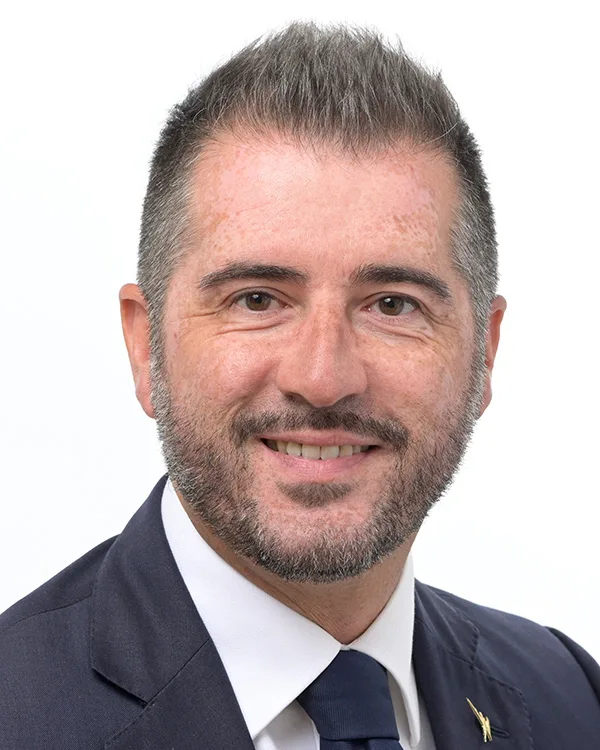

| Rank | Name | Country | Group | Speeches | |
|---|---|---|---|---|---|
| 1 |
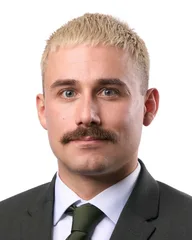
|
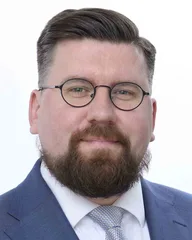
Lukas Sieper | Germany DEU | Non-attached Members (NI) | 390 |
| 2 |
|
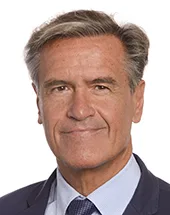
Juan Fernando López Aguilar | Spain ESP | Progressive Alliance of Socialists and Democrats (S&D) | 354 |
| 3 |
|
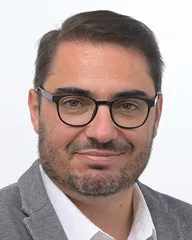
Sebastian Tynkkynen | Finland FIN | European Conservatives and Reformists (ECR) | 331 |
| 4 |
|
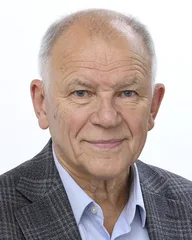
João Oliveira | Portugal PRT | The Left in the European Parliament (GUE/NGL) | 232 |
| 5 |
|
Vytenis Povilas Andriukaitis | Lithuania LTU | Progressive Alliance of Socialists and Democrats (S&D) | 227 |
All Contributions (97)
EUCO and situation in the Middle East (joint debate)
No text available
Presentation of the Energy Package (debate)
No text available
Urgent actions to revive EU competitiveness, deepen the EU Single Market and reduce the cost of living - from the Draghi report to reality (debate)
Look, colleague, it seems to me that I have answered very clearly, but I am reformulating it without any problem. I have cited the example of research just to cite an example that is part of my daily life in this Parliament. I come from the North-East of Italy, which has developed its production model enjoying the benefits of the single market. Then I know that there may be prejudice in this House, because people think that whoever is sitting in a part of this House is an ugly, nasty ogre. But, I repeat, here you have to have the ability and lucidity to understand how to churn out the best situations. Then, I repeat, I do not set myself on fire and I do not attack myself on an ideological level if something is done at the community level or at the state level. I hope I've been clear, otherwise I'll buy you a coffee.
Urgent actions to revive EU competitiveness, deepen the EU Single Market and reduce the cost of living - from the Draghi report to reality (debate)
Thank you colleague for the question. Look, I advise you to have a coffee maybe with some colleagues who are part of the ITRE committee, where for example one of the areas in which we legislate is that of research. The League has been claiming for years that in the field of research we have produced excellence, we have produced results. So, here we have to overcome the classic cloth because people, entrepreneurs, everyone asks us for results. Then, if a brilliant solution comes from Parliament, the Commission or the Council, we are all happier. There is the principle of subsidiarity, we did not invent it, it is enshrined in the Treaties. Here, to get out of the crisis you need to do things, you need to do well, then no matter who does it. Thanks for the question.
Urgent actions to revive EU competitiveness, deepen the EU Single Market and reduce the cost of living - from the Draghi report to reality (debate)
Madam President, ladies and gentlemen, more than a year has passed since the Draghi report. For some it was the Bible, many others have read it, reread it, straletto, but evidently they did not understand it. And what changes? Change that we are in the crisis, we are in the crisis even more than before. On the other side of the world, both China and the United States are competing with us, but we must admit that they are not struggling that much, because now Europe has become the global champion in self-sabotage. Then entrepreneurs and workers can despair as much as they want, but that's the situation. I also remind many colleagues that, however, many of the measures that are being challenged today were not voted on their own, but someone raised their hand, someone pressed the button. So, this morning in the Chamber it is fashionable to criticise von der Leyen, even rightly so, but I repeat that these measures have perpetrators and have culprits. Then it is cloying, there is little point in debating whether things should be done at the level of states or at the level of the European Commission, someone talks about the United States of Europe, but here it does not matter who does things, here it counts to do the right things, which is not happening. And then you wonder if the cost of living explodes. Now suspicion becomes inevitable, corroborated by this debate: in Brussels it seems that it is not interested in reviving the European economy, rather here it seems that we are here, you are here, only to administer its decline.
Spain’s large-scale regularisation policy and its impact on the Schengen Area and EU migration policy (debate)
Madam President, ladies and gentlemen, we are witnessing a short circuit on the left, where we are talking about rights, about inclusion, we are even talking about love. That's so nice! But only a few days ago, a colleague, of course from the left, spoke of "replacement". Who did you want to replace? Who breaks the law? Who doesn't follow the rules? Who's behaving badly? No, my colleague was talking about replacing those who have a different thought from hers. But I ask you: Is everything normal? I'm asking on the left. Colleagues, we are witnessing a resounding short circuit between the European Commission and part of the majority that supports it, because the Commissioner told us that two thirds of Europeans are concerned about uncontrolled immigration, but at the same time, on the other hand, we have those who think that Schengen is an electoral ATM, those who want to trade, those who want to buy consent by giving residence permits. Stop this rhetoric. Stop it, because the migrant who arrives in Europe and wants to get busy is welcome. However, at the same time, we must not close our eyes, because from cities all over Europe it is now a daily war bulletin, between violence, robberies and harassment. Colleagues on the left, go and tell the silent victims that every day they suffer these episodes. Go and tell them that those who come from far away and are not regular then pay us pensions.
Restoring control of migration: returns, visa policy and third-country cooperation (topical debate)
Mr President, ladies and gentlemen, it is a pleasure for the friends of the EPP to realise that there is a problem with returns. It is also strange that this cry of alarm comes from Scandinavia. We have all heard the words of Danish Prime Minister Frederiksen, from the left, who talks about how problematic the management of immigrants is in her country. And so, after years of open doors where everyone entered, both the deserving and the undeserving - with few immigrants working and too many exploiting and plucking the welfare state built by the sacrifices of generations and generations of Europeans - now the alarm rings. After years of many subsidies and few duties, now let's see if you actually want to change something. Today we are talking about regaining control, but the numbers, the statistics of the Commission tell us that 4 out of 5, when they are expelled, they are not actually repatriated. But when we talk about repatriations, in fact, of safe countries of origin, we need a change of direction, because the broths that have been proposed to us so far do not represent the solutions. Let my colleagues on the left do it for a reason. Because the European voters have been clear in drawing up the composition of this Parliament. There is a clear centre-right majority and if the friends of the EPP decide to implement a serious and rigorous immigration policy, we are there. If they decide to continue acting as crutches for left-wing groups, we obviously don't speak the same language.
European Council meeting (joint debate)
Allow me, but the question is a trivial moment since we have been talking about it for weeks. The position of the League has been known for years. Then governments – at least democratic governments, so maybe not the ones you particularly like – are governed by coalitions. In coalitions there are parties with different sensitivities and the League has always expressed itself so clearly. In fact, yesterday we were at the side of the farmers. I don't know if you were there, but we spoke very clearly.
European Council meeting (joint debate)
Mr President, ladies and gentlemen, I listened carefully to Mrs von der Leyen's speech on the subject of Mercosur in particular, and I was amazed when she spoke of farmers being listened to. The question is: But then, if they have been so listened to, why have they been demonstrating for two days? Why are they losing hours of work? Why did they spend the night outside this Parliament below zero? This is not a free trade agreement, this is legalized unfair competition. We are talking about one of the sectors most under pressure from competition, from the legislation approved by this Parliament as well. I realize that we cannot satisfy all sectors. But at the same time I wonder: But why should agriculture always be slaughtered anyway? Then, Mr Costa, you referred to the EUR 90 billion loan for Ukraine. I, allow me, would like to call you back to a greater dose of realism, because if we think of recovering this money without an international legal basis, freezing Russian assets, forgetting that there are also European assets frozen in Moscow and without thinking about retaliation, then I think we sin of naivety. Excuse me, but thank goodness that you are not the bank manager because I would not feel very serene if I were your accountant.
EU/Jordan Agreement for scientific and technological cooperation: terms and conditions for the participation of Jordan in the Partnership for Research and Innovation in the Mediterranean Area (PRIMA) (A10-0228/2025 - Paolo Borchia) (vote)
Madam President, ladies and gentlemen, PRIMA is a Euro-Mediterranean partnership on water management, agricultural systems and food supply chains, sectors closely linked to the socio-economic stability of the countries on the southern shore of the Mediterranean. It has a budget of EUR 700 million, co-financed jointly by the Union and the participating countries. Since 2018 PRIMA has produced over 270 projects aimed at obtaining technologies for water saving, the improvement of agricultural practices and governance tools applicable at local level. Independent evaluations, colleagues, confirm its effectiveness. In conclusion, Jordan, the country for which we vote to extend the programme, will contribute €4.5 million for the three-year period 2025-2027. So, no welfare, but a shared financial commitment. In a particular regional context, Jordan has proven to be a reliable partner and the continuation of this cooperation is in the Union's strategic interest.
Presentation of the automotive package (debate)
No text available
Phasing out Russian natural gas imports and improving monitoring of potential energy dependencies (debate)
No text available
Outcome of the UN Climate Change Conference - Belém (COP30) (debate)
(IT) Mr President, ladies and gentlemen, the first metaphor that comes to mind to sum up this COP is that of a high jumper – a normal athlete, perhaps a mediocre one – who wakes up one morning and thinks of setting a new world record. I think this may be the first summary of the COP: A COP that, once again, saw yet another escape from the crucial issues, because a useless declaration of principle was pursued when instead we had to deal with honesty about the numbers. Let me explain and give you an example: on fossil fuels for 40 years, their consumption has stalled at 80% – it takes only five minutes to World Energy Outlook of the International Energy Agency to be aware of this. And here, based on these numbers, the metaphor of the top jumper returns. This is a COP that is coming to an end - I say this also to you, Commissioner - denoting its limits, limits also of working method because we have seen a lethal mix between bureaucracy and diplomacy. I believe that, when we do not honestly compare the numbers, these are the results because the years pass, but final declarations of principle then, unfortunately, only crumbs remain.
Effective use of the EU trade and industrial policy to tackle China’s export restrictions (debate)
Madam President, ladies and gentlemen, Europe can no longer be the playground where everyone comes to do business without respecting the rules, where the interests of the producing countries are regularly sacrificed on the altar of the interests of the importing countries. We are not charitable fishing for Chinese overcapacity generated with state subsidies; We are a union of sovereign states with workers, businesses and an industrial history to defend. The effectiveness of our trade policy is not measured by the number of treaties that are signed, and the rhetoric of the fair play, when the opponent plays with made-up dice, it has now reached the end of the line. So, if we want to get out of humiliating addiction, the only path we need is that of courage: reciprocity, strict controls and massive investments in our supply chains. For decades, Commissioner, the mantra that has been repeated in Brussels has been one: opening without conditions. We were under the illusion that trade could develop as a peaceful round table and so Brussels, piece by piece, gave up whole slices of our production – steel, electronics and, now, with inertia, we are giving up the future of the battery and mobility sector. Either we finally decide to armor strategic assets, or today's debate will be yet another chat about the abyss on which we are sliding.
Conclusions of the European Council meeting of 23 October 2025 (debate)
Madam President, ladies and gentlemen, I do not understand why President von der Leyen did not stay here. I think that an hour of his time could have dedicated it to us, also because there are many questions to ask today. I heard from the President herself that, since the ETS was introduced, GDP would increase by 27%. Well, if we had been in Italy I would have had the impression of being on the set of the well-known show "Scherzi a parte", because von der Leyen would have had to say "despite the ETS", not "since when". In summary, I think that we must take a bath of humility, an exercise in realism, and come to the conclusion that the transition must be rethought, it must not be accelerated, also because in this House many think in this way, many have promised it in the election campaign, but then it is preached well but it scratches badly. Mr von der Leyen, if you had stayed in the Chamber, I would have also pointed out to you that you spoke of decarbonisation and competitiveness, but by continuing in this direction you are either decarbonised or you are competitive.
Allegations of espionage by the Hungarian government within the EU institutions (debate)
Madam President, ladies and gentlemen, there is no mistrust in you - we would miss it - but let me slightly doubt the good faith of this debate, because the alleged events that happened eight years ago, strangely, coincidentally, emerge a few months after the elections in Hungary. But, ladies and gentlemen, if we are going to engage this House every time journalistic rumours come up - look - we are done working! We are serious, because it usually works that, first you try an accusation, you reconstruct how things went, you draw conclusions and then, possibly, there is a debate in the Chamber. On the other hand, we must realise that a European government which has been overturned by a people, the Hungarian people, is under constant attack by this Parliament. Do we have to tell the truth? Take the agendas of the last plenary sessions and let's see how many times and what Hungary has been talked about. Now, it is right that there should be inquiries, it is right that there should be in-depth investigations of the case. Let's see if, digging, some "James Bond" or some "Mata Hari" in Hungarian sauce will come out. But as long as we dig, let us try to engage this House with serious arguments that exist and not with assumptions.
Preparation of the European Council meeting of 23 October 2025 (debate)
Madam President, ladies and gentlemen, Mr Von der Leyen, if you had stayed in the Chamber, I would have told you that tomorrow evening, like all my colleagues, I would have returned to my territory to meet farmers, students, mayors, the real country, and those who will ask how the plenary session went. A context where purchasing power is becoming increasingly worrying, where students want to flee abroad for more decent salaries, where mayors are increasingly struggling to guarantee services for their citizens: But what can I tell this cross-section of society? That the President of the European Commission came to the House and welcomed the fact that the market for wind turbines is increasing by 10%? That the Global South, which is struggling to eat, requires clean energy? This House and this Commission are complicit in a Europe that does not know how to respond: From the obsession with armaments, to the anxiety for decarbonization at all costs, to a brainy and stubborn approach that has never been questioned, which above all has never wanted to listen to those who think differently. This is the reality, this is what is happening. It is an approach that destroys those who produce: -32% for the automotive market in Italy. We will never be your accomplices!
Time to complete a fully integrated Single Market: Europe’s key to growth and future prosperity (debate)
Madam President, ladies and gentlemen, Commissioner, I am an expression of the small business of north-eastern Italy, that is to say one of the contexts that has historically been best able to exploit the potential of the single market. However, I was struck, but not surprised, by the fact that you attributed responsibility to the Member States for the obstacles to the single market. I believe, however, that the focus should be placed on another theme: bureaucracy, hyper-regulation, overregulation. We have 60% of the barriers in the services market that are the same as they were 20 years ago. We have the relationship between Europe and the United States, between unicorn start-ups, i.e. those companies with a value of more than one billion that are not listed on the stock exchange, which is one to six: One in Europe, six in the United States. This implies that the companies of the future, unfortunately, are not born in Europe, and therefore it is obvious that it cannot be the fault of the States alone. I believe that the single market is not completed by more bureaucracy, but by putting all businesses on an equal footing, without tax havens, avoiding the brainy choices that damage our businesses and above all constitute the worst hidden internal tariffs.
State of the Union (debate)
Madam President, ladies and gentlemen, President von der Leyen is not offended, but it was 75 minutes of agony: So much theory mixed with hypocrisy, because those who created the problems are now explaining how to solve them. I have heard many contradictions, because it speaks of electric cars and respect for the roadmap of the green deal Just as his Chancellor Merz, the same party, calls for more flexibility on time. It talks to us about the media resilience programme, but at the same time cuts the funds for agriculture; is superficial on Mercosur and above all speaks a lot, too!, of weapons. You turn to a pro-European majority because inventing enemies, especially when you are weak, is always convenient, but this weakness, remember, is reflected in the divisions of the fragile and colorful majority that unconvincedly supports it.
Conclusions of the European Council meeting of 26 June 2025 (debate)
Madam President, ladies and gentlemen, if the future of the Union is what we heard this morning, we need to worry. And there is so much to worry about, because we had a President of the European Council who spoke only of weapons - and I miss the times when the European left was pacifist - and a lady, von der Leyen, who has now left us, who talks about how it would be nice to pay less bills and have less bureaucracy, when it was the European Union, the European Commission, that created those same problems that now explains how to solve them. There is a line that unites everything: It starts with the pandemic, then comes the climate emergency and now the feared invasion of Russia across Europe. When peoples are frightened, when emergencies are generated, then it is the peoples themselves who are perhaps more likely to bend their heads. And that seems to be your goal. In conclusion, Mr Costa: A Europe that finds money and flexibility for arms is a Europe that betrays its origins and betrays its principles, because it forgets pensions and salaries, it forgets the Europe that suffers in the name of the Europe of arms.
Clean Industrial Deal (debate)
Mr President, ladies and gentlemen, it seems to me that we are witnessing the chronicle of an announced death. I say this without rejoicing, which would be out of place, because we are talking about European industry, its competitiveness and jobs. Between Asian competition and the need for rearmament ‐ necessity, we must say, even inflated by an anxious communication that we have witnessed in recent months ‐ the Clean Industrial Deal, which has a name and a programme, has a character which is conditional on the compatibility of environmental measures with the survival of the European industrial apparatus. Personally I am amazed by so many criticisms of the entire system of the Green Deal by those who voted for it, because sometimes I have the impression that the more than thirty regulations and directives that compose it have voted for themselves. Then, Commissioner, industrial companies in Europe pay up to three times more than their competitors in third countries. This structural gap undermines competitiveness, the ability to attract investment and to avoid relocations in particular. To sustain the clean energy transition, we need modern, digitalised electricity grids capable of managing the variability of renewables. In conclusion, Commissioner, if we do not want Europe to become the restricted traffic zone of the world, we need to change the mentality and above all we need to stop talking in terms of ambition, which at this stage is only a dangerous illusion.
Freedom of assembly in Hungary and the need for the Commission to act (debate)
Mr President, ladies and gentlemen, the invention of emergencies, a lot of talk about fundamental rights, but you have forgotten one: It is called democracy, it is called respect for the choices of the voters who in Hungary, for the fourth time in a row, have chosen the government. You are sometimes a majority in this Parliament, but very often you are not in real life. So, what lessons do you want to give to the Hungarian people, their history, their values and their choices? And, last but not least, I learn that a large number of colleagues have asked the President of this Parliament to ensure exceptional security measures on the occasion of the trip to the 'Budapest Pride', even if you were going to war. So, this is just to give another crack to the credibility of this poor Parliament.
Russian energy phase-out, Nord Stream and the EU's energy sovereignty (debate)
(IT) Mr President, ladies and gentlemen, this is a debate in which I hear so much - too much I would say - about Russia but little about Europe: We have major problems in terms of industrial competitiveness, we have increasing energy poverty. But the only answer I have heard is in the direction of much more expensive solutions than the current ones, with the Commission and the majority of this Parliament giving me the impression that they can only act impulsively. It attacks, jeopardizes the contractual autonomy of individual States, harboring the illusion that in the simplistic response of "more Europe" we can find solutions for States that perhaps have a greater potential for photovoltaic generation, but they must also deal with States that perhaps do not have an outlet to the sea. For years, the use of deposits in the Eastern Mediterranean has been ostracized. In conclusion I must tell you that opinions are opinions but reality and numbers are different things and 16 packages of sanctions did not end this bloody war.
Resilience and the need to improve the interconnection of energy grid infrastructure in the EU: the first lessons from the blackout in the Iberian Peninsula (debate)
Madam President, ladies and gentlemen, 50 million people are in the dark and the first trial is taking place today. blackout the History of the Age of Green Deal. And then, beyond – let me put it bluntly – the need to shed light on responsibilities, there are elements that clearly emerge. First of all, the illusion of being able to replace gas with renewables has been leading to imbalances in the energy system for years: The first effect is excessive price volatility. Then Sánchez and Greenpeace did not understand what the nuclear power plants are for, which must guarantee continuous power, they do not serve to buffer the oscillations of the system. And then I heard some criticism of private operators but Red Electrica de Espana, the transmission operator, is controlled by the State and expresses to the Presidency a well-known representative of the Spanish Socialist Party. And it is the duty of the grid operator to determine how much production from renewables does not feed into the grid. In conclusion, today the myth of Spain able to keep prices low thanks to an abundant generation of renewables collapses: This model has too many weaknesses, particularly in terms of energy security. If renewables increase uncontrollably, perhaps also thanks to incentives, and are not called to guarantee the security of the system, we face the failure of energy policy. And on this the Sánchez government cannot hide behind fatality.
Recent legislative changes in Hungary and their impact on fundamental rights (debate)
(IT) Madam President, ladies and gentlemen, I apologize, but perhaps I misread the title of the debate, because I thought I was witnessing yet another - now I have lost count, we are in a few dozen debates - debate on Hungary, but instead I witnessed an advance of an out-of-season electoral campaign by the Hungarian opposition. Then, for the rest, it seems to me that there is always a need for an enemy and those who have a different vision of Europe are regularly branded, trivially, as right-wing extremists. Commissioner, you are right: He said something beautiful when he said you have to be yourself. I agree very much, but then why don't you accept that the Hungarian people are themselves and vote for the political representatives they intend to vote for? I believe that, once again, this House is showing today that it has major problems with democracy, because the cordons will not suffice, the millions of Soros will not suffice, because the peoples of Europe have a bad vice, and this vice is that of voting with their own heads, of thinking with their own heads. And above all, the head, not to bend it to the will and arrogance of Brussels.