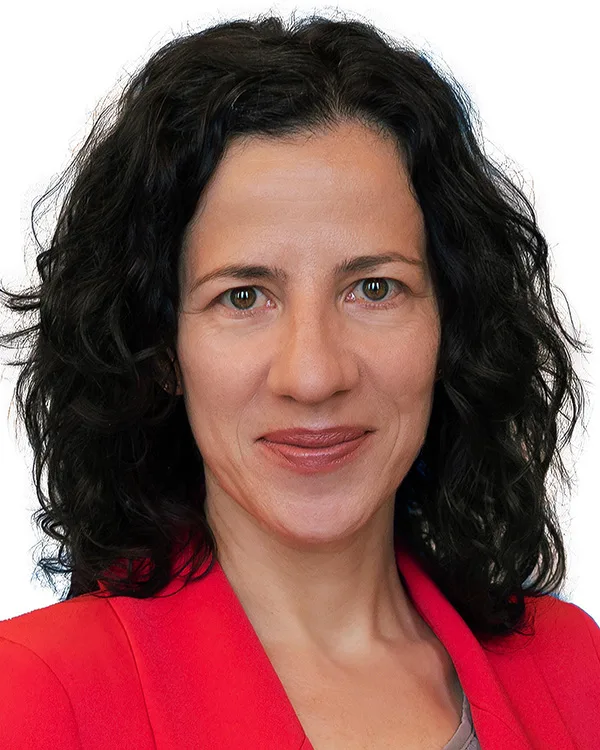
Mr President, what a debate. Thank you so much. From its start in 1987, 18 million participants benefited from Erasmus. To me, this is very little. This is a small number to me, a Romanian that has never had the chance to travel to Europe until she was 25. Never the dream of being able to participate in Erasmus. This seems very little. If we are now to divide – OK, we cannot exactly divide – the t
Mr President, honourable Members, Erasmus+, the most loved, the most well known, the most cherished of EU programmes, the one that has a very direct impact in people's lives, especially young people, be they students, pupils, but also teachers, volunteers, all those who are engaged in youth organisations, for 40 years, a programme that has built a sense of belonging for all of us in Europe. And be
ENSpeech
Boosting skills in the Union – opportunities for vocational education and training in times of transition (debate)
Madam President, colleagues, you have mentioned so many policies that we are now working on and they are all connected, of course: the education package, the quality jobs act, the future budget, which is very important for our ambition. But to be very focused, I think that I want first to underline that we are very committed to making vocational education and training an attractive option, and we
ENSpeech
Boosting skills in the Union – opportunities for vocational education and training in times of transition (debate)
Madam President, congratulations to the rapporteur, dear Brigitte, for this important topic. And many thanks to the EMPL colleagues, of course, and to the CULT and FEMM colleagues as well, who contributed to this very important report. I thank you for the entire cooperation. I would share everything that Brigitte has already said. We can add to the motivation that she presented in a very passionat
ENSpeech
Pilot project on European Schools Alliances and its contribution to citizenship education, democratic competences and European values (debate)
Madam President, honourable Members, thank you for your contributions. I have met many teachers and many students whose life is not easy in the teaching profession, in the material conditions that they were facing every day, for whom the experience of Erasmus, whether it was some mobility, whether it was just cooperation, some co-creation with some partners from across the Union, was the biggest m
ENSpeech
Pilot project on European Schools Alliances and its contribution to citizenship education, democratic competences and European values (debate)
Mr President, honourable Members, the European School Alliances are an important pillar of the education package that we are working on and that we will present early November this year. Towards that objective, I want to thank this House for the very strong interest it has taken on the European Partnerships for School Development, which is really a step towards the work that we are preparing to de
FRSpeech
Escalating student riots in France: arson attacks on schools, assaults against firefighters, police officers and teachers, including in La Ciotat, and the role of far-left parties in inciting violence (debate)
Mr President, ladies and gentlemen, violence is unacceptable. This is unacceptable to those who educate and protect our children. This is unacceptable when it happens against our children. And that's valid regardless of the motivations. Schools are at the heart of the future of Europe – of course, of France too. It is in schools that democracy, cohesion and resilience are built. The challenges, I
ENSpeech
Escalating student riots in France: arson attacks on schools, assaults against firefighters, police officers and teachers, including in La Ciotat, and the role of far-left parties in inciting violence (debate)
Mr President, honourable Members, maintaining public order and safeguarding internal security is, first and foremost, a national responsibility as our Treaties make very clear. The situation in France with student protests and the unrest that has accompanied some of them, is a national debate to be held and resolved at national level through the French democratic process. We welcome the dialogue i
ENSpeech
Psychosocial risks, stress and mental health at work (debate)
Madam President, thank you so much for a debate that captured, I think, a shared understanding that health is health and mental health is health and that, in the workplace, we need to look at how we ensure workers' well‑being, how we are protecting them, and making sure that their minds are as protected as their bodies. This was something that I think was shared by the interventions. Of course, ho
ENSpeech
Psychosocial risks, stress and mental health at work (debate)
Madam President, honourable Members, I want first to thank the rapporteur, Estelle Ceulemans, and the entire European Parliament for this important contribution to the debate that we have throughout the European Union on psychosocial risk, on mental health, on stress and work‑related mental health problems and solutions. Mental health at work is not one of those topics that we can just position as
ENSpeech
Presentation of the Fair Labour Mobility Package (debate)
Mr President, many thanks for the many questions and observations. I would emphasise ELA – the European Labour Authority – will really have enhanced capacity. I would give just some examples. It will be able to initiate inspections – of course, it has to do so with Member States' inspectors, but this is a reality. It will have access to data so that it can assess very well the risks and go where i
ENSpeech
Presentation of the Fair Labour Mobility Package (debate)
Mr President, honourable Members, I'm coming directly from the College where we have just adopted our fair labour mobility package. I'm happy that I can immediately come here to exchange with you on the very important topics of this package. We often say that the single market is one of Europe's best and most important achievements. Almost 20 million Europeans live in another EU country across the
ENSpeech
The cases of human rights and environmental defenders Andrie Yunus and Muhammad Rosidi in Indonesia
Mr President, honourable Members of the European Parliament, the European Union and Indonesia have had a comprehensive partnership since 2014. This means regular dialogue and broad cooperation, including systematically on human rights. They held the 11th round of consultations on human rights in February, in the framework of the Partnership and Cooperation Agreement, allowing both sides to address
ENSpeech
Situation of women and girls in Afghanistan following the Taliban's adoption of the Criminal Procedure Code for Courts
Mr President, colleagues, thank you so much for this debate and for the many calls that you that you have made, which I have heard and I acknowledge here. Indeed, step by step, decree by decree, women and girls in Afghanistan are being pushed further out of public life, out of education, out of employment, and now increasingly out of access to justice itself. The introduction of the Criminal Proce
ENSpeech
Repression and execution of protesters, dissidents, political prisoners and religious minorities in Iran
Mr President, honourable Members, the human rights situation in Iran has been deeply worrying for years. The repression of internal dissent, restrictions of civic space and freedom of expression are of particular concern. Widespread discrimination and restrictions against persons belonging to ethnic and religious minorities persist, adding to a very grim picture. The situation of women and girls,
ENSpeech
The need to reduce work-related fatalities (debate)
Mr President, honourable Members, thank you for the interesting and fruitful debate and for your strong commitment to support workers' health and safety in the workplace. You illustrated also with numbers and concrete examples that although we have achieved a lot, a lot more still needs to be done and our work is far from being finished. The Commission will continue to pursue this Vision Zero appr
ENSpeech
The need to reduce work-related fatalities (debate)
Mr President, honourable Members, today's debate is about an objective that we all share: reducing and ultimately, very importantly, eliminating work‑related fatalities and diseases. Let me be very clear – protecting workers' health and workers' safety remains a core priority for the European Commission. Over the past decades, the European Union and the Member States have built one of the world's
ENSpeech
Advancing towards a care society: addressing the gender care gap (debate)
Mr President, indeed, there is a problem. Thank you for the debate on such an important topic. We refer to two categories of people that are involved in care work. Yes, the formal care workers, whether they be men or women, and their working conditions, their salaries. In our Member States, we have a diverse landscape, but in most situations this is not the best-paid job, this is not the ideal job
ENSpeech
Advancing towards a care society: addressing the gender care gap (debate)
Madam President, I cannot express enough my gratitude for this important topic today and tomorrow. The care society, one that doesn't limit opportunities but rather creates opportunities and the gender gap that exists and needs to be addressed. So I will thank Parliament for this debate. I will thank the two rapporteurs for their work on the report, and I want to underline the important challenges
ENSpeech
Recent proposals to fight poverty in the EU (debate)
Mr President, thank you so much. One important call that I heard very loud is the budget. So clearly this Parliament has sent a very, very strong message that when we act to fight poverty, we also need to invest and support our Member States, and I really take note of this important call. Because in the end, if we look today at what the European Social Fund Plus does to help people – I was in Rest
ENSpeech
Recent proposals to fight poverty in the EU (debate)
Mr President, thank you for this opportunity to be able to discuss with you here in the plenary the EU anti-poverty strategy and the overall social package that we adopted in the European Commission on 6 May. I must start with the figure, with the numbers of truth that drive our action. That is that one out of five Europeans (that is, 93 million people in Europe) are at risk of poverty, at risk of
ENSpeech
European Semester for economic policy coordination 2026 - European Semester for economic policy coordination: employment and social priorities for 2026 (joint debate)
Mr President, thank you so much for the input from this debate on the European Semester process. Just a few remarks on some important topics which are reflected in the European Semester process, but are also present in our citizens' everyday lives. We are looking at topics such as energy prices, housing, but also their security, skills and how we prepare them for the transformations of our economy
ENSpeech
European Semester for economic policy coordination 2026 - European Semester for economic policy coordination: employment and social priorities for 2026 (joint debate)
Madam President, honourable Members, I would like to thank the two rapporteurs for their reports, which provide a valuable contribution in view of the European Semester priorities for 2026. This cycle was launched in a context marked by increased global uncertainties and by multiple economic, social and security challenges. Our competitiveness and our sustainable prosperity are fundamentally chall
ENSpeech
Addressing subcontracting chains and the role of intermediaries in order to protect workers’ rights (debate)
Mr President, thank you for the debate. What is clear, of course, is that we need to work to design a targeted and balanced policy response to all the challenges linked to subcontracting that you've mentioned. Our aim in the Commission is – I've said it and I repeat it – twofold. First of all, to protect the workers who are deprived of their rights in subcontracting chains. At the same time, to re
ENSpeech
Addressing subcontracting chains and the role of intermediaries in order to protect workers’ rights (debate)
Madam President, honourable Members, let me express my gratitude to the rapporteur – Johan – and to the shadows for this report, which is very timely for the Commission. On 4 December last year, I presented the Quality Jobs Roadmap and on the same day we launched the first-phase consultation for a Quality Jobs Act. At the same time, we launched our preparatory work for our fair labour mobility pac

 EN
 Deutsch
 Español
 Français
 Italiano